


 Log in
 Sign Up




When buying a used car, the odometer is one of the first things you should check. Mileage affects a vehicle's value, expected lifespan, and maintenance costs, but understanding the number on the dashboard is not always as simple as it seems. This guide explains what an odometer is, how it works, how to verify mileage, and how to spot potential fraud so you can make a smarter and safer vehicle purchase.
What Is an Odometer?
When shopping for a used car, one of the first numbers you will notice is the mileage. That number comes from the vehicle's odometer. Whether you are buying from a dealership, a private seller, or an online auto auction, understanding how an odometer works can help you make a smarter buying decision and avoid costly mistakes.
An odometer is a device that records the total distance a vehicle has traveled during its lifetime. Every mile or kilometer driven is tracked and added to the vehicle's cumulative mileage. Because mileage is closely linked to wear and tear, odometer readings play a major role in determining a vehicle's value, condition, and maintenance needs.
What Does an Odometer Measure?
An odometer measures the total distance traveled by a vehicle since it was first put into service. Depending on the country and vehicle settings, the distance may be displayed in miles or kilometers.
Unlike a trip meter, which can be reset to track a specific journey, an odometer continuously records the vehicle's lifetime mileage. The reading increases every time the vehicle moves, providing a record of how much the car has been used over the years.
For example, if a vehicle's odometer shows 85,000 miles, it means the car has traveled approximately 85,000 miles since it left the factory. This information helps buyers estimate how much wear critical components such as the engine, transmission, suspension, and brakes may have experienced.
Mileage can also provide insight into how a vehicle was used. A car with 120,000 highway miles may actually be in better condition than a vehicle with 60,000 miles of stop-and-go city driving. That is why experienced buyers look at mileage together with maintenance history and overall vehicle condition.
Where Is the Odometer Located in a Vehicle?
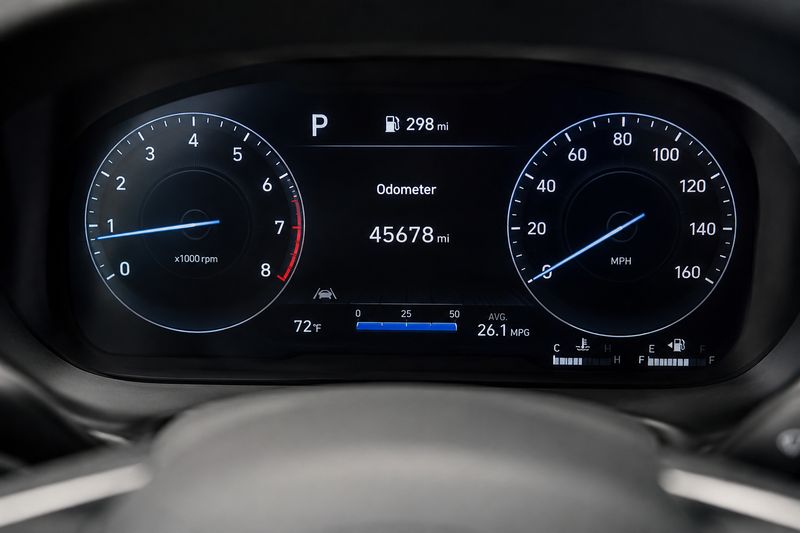
The odometer is typically located within the instrument cluster directly behind the steering wheel. In older vehicles, it appears as a series of rotating number wheels on the dashboard. In modern vehicles, the mileage is usually displayed on a digital screen integrated into the gauge cluster.
Many newer vehicles also allow drivers to view mileage information through multifunction displays located between the speedometer and tachometer. Some advanced vehicles can even show odometer data through infotainment systems or mobile applications connected to the car.
Regardless of the display style, the odometer is designed to remain visible and easy to access because mileage information is important for vehicle maintenance, registration, insurance, and resale transactions.
If you are reviewing auction photos before bidding on a vehicle, checking the dashboard image is often one of the quickest ways to verify the current odometer reading. However, it is always wise to compare that number with vehicle history reports and title records to ensure consistency.
Why Odometer Readings Matter
Odometer readings are one of the most important factors buyers consider when evaluating a used vehicle. Mileage affects vehicle value, expected maintenance costs, and long-term reliability.
In general, lower-mileage vehicles sell for higher prices because they are often assumed to have less wear. Higher-mileage vehicles are usually more affordable, which can make them attractive to budget-conscious buyers. However, mileage alone does not tell the complete story.
Consider two vehicles of the same model. One has 70,000 miles but a poor maintenance history. The other has 130,000 miles but comes with complete service records showing regular oil changes, inspections, and repairs. In many cases, the higher-mileage vehicle may be the safer purchase.
Odometer readings are also important because they help buyers identify potential fraud. Unscrupulous sellers sometimes alter mileage to make a vehicle appear less used than it actually is. This practice, known as odometer rollback, can artificially increase a vehicle's value and hide excessive wear.
For auction buyers, mileage verification is especially important. Before placing a bid, it is a good idea to review vehicle history reports, title documents, maintenance records, and previous auction listings. Comparing mileage across multiple sources can help uncover discrepancies and reduce the risk of buying a vehicle with an inaccurate odometer reading.
Verify Vehicle Mileage Before You Place a Bid
A low odometer reading does not always tell the full story. Auto4Export helps buyers review vehicle history reports, auction records, title information, and mileage documentation before making a purchase decision.
- ✅ Free vehicle history reports
- ✅ Access to previous auction records
- ✅ Help reviewing title and mileage status
- ✅ Support identifying potential red flags
How Does an Odometer Work?
Most drivers see the mileage displayed on the dashboard every day, but few understand how that number is actually calculated. While odometers have become more advanced over the years, their basic purpose remains the same: measuring the total distance a vehicle travels.
The technology behind odometers has evolved from simple mechanical gears to sophisticated electronic systems connected to sensors and onboard computers. Understanding how an odometer works can help buyers better evaluate mileage records and identify potential issues when purchasing a used vehicle.
How Mechanical Odometers Measure Distance
Mechanical odometers were used in vehicles for decades before digital systems became common. These odometers rely on a series of gears connected to the vehicle's transmission or wheel assembly.
As the wheels rotate, they turn a drive cable that spins a set of gears inside the dashboard. The gears are calibrated so that after a specific number of wheel rotations, the mileage display advances by one mile or one kilometer.
The mileage is displayed using numbered drums that rotate as the vehicle accumulates distance. Each drum represents a digit. When one digit completes a full cycle, it advances the next digit, similar to how an analog clock works.
For example, when a vehicle reaches 99,999 miles, the next mile causes the display to roll over to 100,000 miles.
Mechanical odometers are generally reliable, but they can become inaccurate if tires of a different size are installed. Larger or smaller tires change the number of wheel rotations needed to travel a given distance, which can slightly affect mileage calculations.
One disadvantage of older mechanical systems is that they were relatively easy to manipulate. Unscrupulous sellers could physically roll back the numbers, making the vehicle appear to have lower mileage than it actually did. This vulnerability led manufacturers to develop more secure electronic systems.
How Electronic and Digital Odometers Work
Beginning in the late 1980s and becoming widespread during the 1990s and 2000s, vehicle manufacturers gradually replaced mechanical odometers with electronic and digital versions.
Instead of relying on gears and rotating drums, electronic odometers use sensors that monitor wheel movement and vehicle speed. These sensors send signals to the vehicle's electronic control modules, which calculate the distance traveled and store the information digitally.
The mileage is then displayed on a digital screen within the instrument cluster. Because the data is stored electronically, digital odometers are generally more accurate than mechanical systems and can provide additional information such as trip mileage, fuel economy, and maintenance reminders.
Electronic odometers also make unauthorized mileage changes more difficult. Although odometer fraud still occurs, altering digital mileage often requires specialized equipment and may leave evidence in vehicle computer systems.
For used-car buyers, digital odometers offer another advantage. Many modern vehicles store mileage information in multiple electronic modules, making it easier to detect discrepancies during inspections or diagnostic scans.
How Modern Vehicles Calculate Mileage
Today's vehicles use advanced electronic systems that continuously monitor wheel movement and speed data. Rather than simply counting wheel rotations through a mechanical cable, modern cars rely on multiple sensors and computer calculations to determine how far the vehicle has traveled.
The vehicle's computer processes information thousands of times per minute, ensuring that mileage records remain accurate under different driving conditions.
Modern mileage calculations are highly precise and are designed to account for factors such as wheel speed, vehicle motion, and system calibration. While slight variations can occur due to tire size changes or sensor issues, today's odometers are generally very reliable.
Sensors and Vehicle Speed Data
One of the key components of a modern odometer system is the wheel speed sensor. These sensors are commonly located near each wheel and are also used by systems such as anti-lock brakes (ABS), traction control, and stability control.
As the wheels rotate, the sensors generate electronic signals that indicate how fast the vehicle is moving. The onboard computer receives these signals and calculates the distance traveled based on the number of wheel rotations.
For example, if the computer knows that one wheel rotation equals a specific distance, it can accurately determine how far the vehicle has traveled after thousands of rotations.
This process occurs automatically and continuously while the vehicle is in motion. The calculated distance is then added to the vehicle's total mileage record stored in memory.
Because the system depends on accurate wheel measurements, installing significantly oversized or undersized tires may affect mileage calculations. However, the impact is usually small unless the tire size differs substantially from factory specifications.
Distance Tracking Systems in Modern Cars
Many modern vehicles use integrated distance-tracking systems that work alongside the odometer. These systems combine information from wheel sensors, vehicle control modules, and onboard computers to maintain accurate mileage records.
Some vehicles also incorporate GPS-based technologies for navigation and fleet management purposes. However, in most passenger vehicles, the official odometer reading still comes primarily from wheel-speed and distance calculations rather than GPS tracking alone.
Advanced vehicle systems often store mileage data in several electronic modules throughout the vehicle. This redundancy helps protect against data loss and can assist technicians when verifying mileage during inspections.
For used-car buyers, these systems provide an additional layer of protection. If a vehicle's displayed mileage does not match records stored in other modules or vehicle history reports, the discrepancy may indicate tampering or previous repairs involving the instrument cluster.
This is particularly important when buying vehicles at online auto auctions. Before placing a bid, buyers should compare the displayed mileage with title records, service documents, auction photos, and vehicle history reports. Consistent mileage records across multiple sources are often a good sign that the odometer reading is accurate.
Types of Odometers
Not all odometers work the same way. Over the years, vehicle manufacturers have developed several types of odometers, ranging from simple mechanical devices to advanced digital systems integrated with vehicle computers and tracking technologies.
Understanding the different types of odometers can help used-car buyers better interpret mileage readings, recognize potential issues, and understand how mileage data is collected and stored. While modern vehicles primarily use digital and electronic systems, older cars and some specialized vehicles may use other methods to track distance traveled.
Mechanical Odometers
Mechanical odometers were the standard mileage-tracking system for most vehicles throughout the twentieth century. These systems use a series of gears, cables, and numbered drums to record distance traveled.
As the vehicle moves, wheel rotations are transferred through a cable connected to the transmission. This cable turns a series of gears inside the instrument cluster. The gears gradually rotate numbered wheels that display the vehicle's accumulated mileage.
Mechanical odometers are easy to recognize because they display mileage using physical number drums rather than electronic screens. The numbers roll forward as the vehicle travels additional miles.
One advantage of mechanical odometers is their simplicity. They can operate for many years without requiring complex electronics or software. However, they also have several drawbacks. Components can wear out over time, causing inaccurate readings or complete failure.
Mechanical systems are also more vulnerable to fraud. In the past, dishonest sellers could physically manipulate the number drums to reduce the displayed mileage. This practice, known as odometer rollback, became a major concern in the used-car market and contributed to the development of more secure electronic systems.
Today, mechanical odometers are primarily found in older vehicles, classic cars, and certain specialty equipment.
Digital Odometers
Digital odometers replaced mechanical number drums with electronic displays. Instead of showing mileage through rotating wheels, digital systems present mileage on an LCD, LED, or electronic dashboard screen.
Most vehicles manufactured during the last two decades use digital odometers. These systems provide a cleaner display and are often easier to read, especially at night or in poor lighting conditions.
Digital odometers can also display additional information alongside total mileage. Depending on the vehicle, drivers may see trip mileage, fuel economy data, maintenance reminders, average speed, and other driving information on the same screen.
For used-car buyers, digital displays offer greater convenience. Mileage can often be viewed quickly in auction photos, dealership listings, and inspection reports without needing to interpret partially rolled mechanical digits.
While digital odometers are generally more secure than older mechanical systems, they are not completely immune to tampering. Some fraudulent sellers may attempt to alter electronic mileage records using specialized equipment. For this reason, buyers should always compare the displayed mileage with vehicle history reports and service records.
Electronic Odometers
Although the terms "digital odometer" and "electronic odometer" are often used interchangeably, they are not exactly the same.
A digital odometer refers to how the mileage is displayed. An electronic odometer refers to how the mileage data is collected, processed, and stored.
Electronic odometers use sensors and onboard computers to calculate distance traveled. Wheel-speed sensors continuously monitor wheel rotations and send data to the vehicle's control modules. The computer then calculates the distance traveled and updates the mileage record accordingly.
The calculated mileage is stored electronically within the vehicle's memory systems. In many modern vehicles, mileage information is stored in multiple modules rather than a single location. This redundancy helps preserve data and makes fraudulent alterations more difficult.
Electronic odometers generally offer greater accuracy than mechanical systems because they rely on precise electronic calculations rather than physical gears. They are also less susceptible to wear and mechanical failure.
For buyers considering auction vehicles, electronic mileage records provide an additional level of verification. During inspections, technicians may compare mileage stored in various vehicle modules to identify inconsistencies that could indicate tampering or unauthorized repairs.
GPS-Based Odometers and Tracking Systems
Some modern vehicles and fleet-management systems use GPS technology to track distance traveled. GPS-based odometers calculate mileage by monitoring the vehicle's location and movement through satellite positioning systems.
Unlike traditional odometers that primarily rely on wheel rotations, GPS-based systems determine distance by measuring changes in geographic position over time.
These systems are commonly used in commercial trucking, fleet management, rental vehicles, delivery services, and telematics applications. Fleet operators often use GPS tracking to monitor vehicle usage, optimize routes, schedule maintenance, and verify mileage for business purposes.
GPS-based tracking systems can provide valuable data, including:
- Distance traveled
- Route history
- Vehicle location
- Driving time
- Idle time
- Speed information
However, most passenger vehicles still use traditional electronic odometers as the official source of mileage information. GPS tracking is usually considered a supplemental system rather than a replacement for the factory-installed odometer.
GPS-based measurements can occasionally vary from official odometer readings due to signal interruptions, route calculations, or mapping limitations. As a result, vehicle titles, registration documents, and mileage disclosures typically rely on the factory odometer rather than GPS estimates.
For used-car buyers, understanding GPS tracking systems can be helpful when reviewing commercial fleet vehicles or vehicles equipped with aftermarket telematics systems. In some cases, GPS records may provide additional evidence to support or verify the vehicle's reported mileage history.
What Is the Difference Between an Odometer and a Trip Meter?
Many drivers use the terms "odometer" and "trip meter" interchangeably, but they serve different purposes. Both display distance information and are often located in the same area of the dashboard, yet they track mileage in very different ways.
Understanding the difference between an odometer and a trip meter is important for vehicle owners and used-car buyers. While the odometer records the vehicle's lifetime mileage, the trip meter is designed to track shorter distances and can be reset whenever needed.
What Is a Trip Meter?
A trip meter is a secondary distance-tracking feature that measures how far a vehicle has traveled during a specific trip or period of time. Unlike the odometer, which continuously records total mileage throughout the life of the vehicle, a trip meter can be manually reset to zero.
Most modern vehicles include at least one trip meter, and many offer two separate trip counters, often labeled "Trip A" and "Trip B." This allows drivers to track different journeys simultaneously.
For example, a driver may use Trip A to monitor mileage during a vacation while using Trip B to track mileage between fuel fill-ups. Once the trip is completed, either meter can be reset and used again.
Trip meters are commonly displayed on the same screen as the odometer and can usually be controlled through buttons on the dashboard, steering wheel, or instrument cluster menu.
Because trip meters are resettable, they are not considered official mileage records and are not used for vehicle valuation, title documentation, or ownership transfers.
When Should You Use a Trip Meter?
A trip meter can be useful in many everyday driving situations. While it does not replace the odometer, it provides valuable information that helps drivers monitor vehicle usage and operating costs.
One of the most common uses for a trip meter is tracking fuel consumption. Many drivers reset the trip meter each time they fill the fuel tank. When they refuel again, they can see exactly how many miles were driven and calculate fuel economy.
For example, if a driver travels 350 miles on a tank of fuel and adds 14 gallons at the next fill-up, they can estimate that the vehicle achieved approximately 25 miles per gallon.
Trip meters are also useful for:
- Tracking mileage during road trips
- Monitoring daily commuting distance
- Recording business-related travel
- Measuring distances between maintenance intervals
- Following navigation instructions that reference mileage
- Monitoring vehicle usage for reimbursement purposes
For budget-conscious car owners, trip meters can help identify changes in fuel efficiency. If a vehicle suddenly uses more fuel than normal over the same distance, it may indicate a maintenance issue that requires attention.
Drivers purchasing used vehicles can also use the trip meter after purchase to monitor performance and estimate future operating costs.
Odometer vs. Trip Meter: Key Differences
Although both devices measure distance traveled, their functions are very different.
The odometer records the total distance the vehicle has traveled since it was manufactured or since the odometer was legally replaced. This reading cannot be reset by the driver and serves as the official mileage record used for vehicle registration, title transfers, maintenance tracking, insurance purposes, and resale valuation.
The trip meter, on the other hand, measures distance over a specific period selected by the driver. It can be reset at any time and is intended purely as a convenience feature.
Consider a vehicle with an odometer reading of 125,000 miles. If the owner resets the trip meter before a weekend road trip and drives 420 miles, the trip meter will show 420 miles while the odometer will increase to 125,420 miles.
The key differences include:
|
Feature |
Odometer |
Trip Meter |
|
Measures lifetime mileage |
Yes |
No |
|
Can be reset by the driver |
No |
Yes |
|
Used for vehicle valuation |
Yes |
No |
|
Used for title and registration records |
Yes |
No |
|
Tracks specific trips |
No |
Yes |
|
Helps calculate fuel economy |
Indirectly |
Yes |
For used-car buyers, the odometer is far more important because it reflects the vehicle's overall usage and directly affects market value. Sellers, dealerships, insurance companies, lenders, and auction platforms rely on odometer readings when assessing a vehicle.
However, trip meters still provide useful information for everyday driving and vehicle management. They allow drivers to track mileage over short periods without affecting the official mileage record.
Odometer vs. Trip Computer
Modern vehicles provide far more information than simply total mileage. In addition to the odometer and trip meter, many cars are equipped with a trip computer that continuously collects and displays driving data.
Because these systems often appear on the same dashboard screen, many drivers confuse them with one another. However, an odometer and a trip computer serve very different purposes. The odometer's primary job is to record the total distance traveled by the vehicle, while the trip computer functions as an information center that helps drivers monitor vehicle performance and driving habits.
Understanding the difference between these systems can help used-car buyers better interpret dashboard displays and avoid confusion when evaluating vehicle mileage.
What Information Does a Trip Computer Provide?
A trip computer is an onboard system that gathers information from various sensors and control modules throughout the vehicle. It processes this data and presents useful driving information to the driver through the instrument cluster or infotainment screen.
The exact features vary by manufacturer and model, but most trip computers provide information such as:
- Average fuel economy
- Instant fuel economy
- Distance to empty
- Average speed
- Driving time
- Outside temperature
- Trip distance
- Fuel consumption
- Tire pressure alerts
- Maintenance reminders
More advanced systems may also display navigation information, driving efficiency scores, battery usage data in hybrid or electric vehicles, and real-time vehicle diagnostics.
For example, if a driver is planning a long road trip, the trip computer can estimate how many miles remain before the fuel tank is empty. If fuel consumption suddenly increases, the driver may notice the change on the trip computer before a larger mechanical issue develops.
Many budget-conscious drivers use trip computer data to reduce fuel expenses. By monitoring fuel economy and average speed, they can adjust driving habits to maximize efficiency and lower operating costs.
Trip computers can also be helpful when evaluating a used vehicle. Consistently low fuel economy compared to manufacturer expectations may indicate maintenance issues, excessive wear, or driving conditions that deserve further investigation.
However, it is important to remember that trip computer data is dynamic. Most values are calculated based on recent driving activity and can change significantly depending on driving style, traffic conditions, weather, and terrain.
Can a Trip Computer Replace an Odometer?
No. A trip computer cannot replace an odometer.
Although a trip computer can display distance-related information, it does not serve the same legal or practical purpose as an odometer. The odometer remains the official record of a vehicle's lifetime mileage and is required for vehicle registration, title transfers, mileage disclosures, warranty tracking, and resale valuation.
A trip computer relies on information collected during specific periods of vehicle operation. Many of its calculations can be reset by the driver, including average fuel economy, average speed, trip distance, and driving time.
An odometer, by contrast, continuously records total vehicle mileage and generally cannot be reset without following strict legal procedures.
Consider a vehicle that has traveled 150,000 miles during its lifetime. The trip computer may show:
- Average fuel economy: 28 MPG
- Distance to empty: 310 miles
- Trip distance: 75 miles
- Average speed: 42 MPH
While this information is useful for the current driver, it does not provide the vehicle's complete mileage history. Only the odometer can show the total 150,000 miles accumulated over the life of the vehicle.
This distinction becomes especially important when buying a used car. Sellers, dealerships, insurance companies, lenders, and government agencies rely on odometer readings to determine a vehicle's value and verify its history. Trip computer data has little relevance in these situations because it can be reset and does not represent lifetime vehicle usage.
For auction buyers, understanding this difference is particularly important. Auction photos may show both odometer and trip computer screens. The odometer reading should always receive the most attention because it represents the official mileage record. Trip computer information may provide additional insight into the vehicle's recent operation, but it should never be used as a substitute for verified mileage records.
Why Odometer Mileage Is Important When Buying a Used Car
When shopping for a used vehicle, few numbers receive more attention than the odometer reading. Mileage is often one of the first details buyers check because it provides insight into how much a vehicle has been used throughout its life.
However, mileage should never be viewed in isolation. While it can influence price, reliability expectations, and future maintenance costs, it is only one piece of the overall picture. Understanding how mileage affects a vehicle's value can help buyers avoid overpaying and identify the best opportunities in the used-car market.
For budget-conscious buyers, learning how to properly evaluate mileage is especially important. A vehicle with higher mileage may offer excellent value if it has been well maintained, while a low-mileage vehicle may hide expensive problems if it has been neglected.
How Mileage Affects Vehicle Value
Mileage is one of the primary factors used to determine a vehicle's market value. In general, lower-mileage vehicles command higher prices because they are perceived to have less wear and a longer remaining lifespan.
As mileage increases, vehicle values typically decrease. Buyers often assume that components such as the engine, transmission, suspension, steering system, and braking system have experienced more wear after many years of use.
For example, consider two identical vehicles of the same year, make, model, and trim level:
- Vehicle A has 45,000 miles.
- Vehicle B has 125,000 miles.
All other factors being equal, Vehicle A will usually sell for significantly more because buyers expect fewer maintenance needs and longer service life.
This relationship between mileage and value is reflected in dealership pricing, insurance valuations, lender assessments, and auction bidding activity.
However, the price difference is not always proportional to the mileage difference. In some cases, a well-maintained higher-mileage vehicle can represent a much better value than an expensive low-mileage alternative.
This is particularly relevant for buyers looking to save money at auto auctions. Choosing a vehicle with moderate or higher mileage can sometimes reduce purchase costs by thousands of dollars while still providing many years of reliable service.
What Is Considered High Mileage?
There is no universal definition of high mileage because vehicle durability varies by manufacturer, model, maintenance history, and driving conditions. However, many buyers use annual mileage averages as a general guideline.
In the United States, the average driver covers approximately 12,000 to 15,000 miles per year. Using this benchmark, a five-year-old vehicle would typically have between 60,000 and 75,000 miles.
A vehicle may be considered high mileage if its odometer reading significantly exceeds the average for its age.
For example:
- A 5-year-old vehicle with 120,000 miles would generally be considered high mileage.
- A 10-year-old vehicle with 150,000 miles may be considered fairly typical.
- A 15-year-old vehicle with 80,000 miles may be considered unusually low mileage.
Many modern vehicles can exceed 200,000 miles when properly maintained. Brands known for durability, such as Toyota, Honda, and Lexus, often remain reliable well beyond the mileage levels that many buyers consider "high."
Because of advances in engineering and manufacturing, mileage thresholds that were once considered excessive are far less concerning today than they were decades ago.
Low-Mileage vs. High-Mileage Vehicles
Many buyers automatically assume that a low-mileage vehicle is always the better choice. While lower mileage can be beneficial, the reality is often more complicated.
Low-mileage vehicles typically offer:
- Less overall wear on major components
- Higher resale value
- Greater appeal to future buyers
- Potentially longer service life
However, low mileage does not automatically mean better condition.
Some low-mileage vehicles spend long periods sitting unused. Extended inactivity can create problems such as:
- Dried seals and gaskets
- Corroded brake components
- Weak batteries
- Aging tires
- Fuel system issues
For example, a ten-year-old vehicle with only 30,000 miles may initially seem like a bargain. However, if it spent years parked without regular maintenance, it could require substantial repairs shortly after purchase.
High-mileage vehicles often have the opposite profile. While they may have accumulated significant mileage, they may also have received consistent maintenance and regular use.
Consider two auction vehicles:
- Vehicle A has 65,000 miles but limited maintenance records.
- Vehicle B has 145,000 miles with documented oil changes, transmission service, and routine inspections.
Many experienced buyers would feel more comfortable purchasing Vehicle B because its maintenance history provides greater confidence in its condition.
For buyers with limited budgets, well-maintained higher-mileage vehicles often represent some of the best values available in the used-car market.
Why Mileage Alone Does Not Tell the Whole Story
Mileage is important, but it should never be the sole factor when evaluating a used vehicle.
Two vehicles with identical mileage can have dramatically different levels of wear depending on how they were driven and maintained.
Several factors often matter just as much as mileage:
- Maintenance history
- Number of previous owners
- Accident history
- Driving conditions
- Climate exposure
- Vehicle storage practices
- Service records
- Title history
For example, a vehicle with 140,000 mostly highway miles may experience less wear than a vehicle with 80,000 miles of city driving. Highway driving typically involves fewer cold starts, less braking, and more consistent engine operation.
Similarly, a vehicle with complete service records may be a safer purchase than a lower-mileage vehicle with no maintenance documentation.
This principle is particularly important when buying vehicles at online auto auctions. Buyers often focus heavily on mileage because it is easy to compare. However, successful auction buyers also examine:
- Vehicle history reports
- Previous auction records
- Service documentation
- Title information
- Damage reports
- Overall condition
How to Read an Odometer Correctly
Reading an odometer may seem straightforward, but many used-car buyers misunderstand what they are seeing on the dashboard. Modern vehicles display mileage in different ways, and certain messages or indicators can provide important clues about a vehicle's history and condition.
Knowing how to properly interpret an odometer reading is especially important when buying a used car from a dealership, private seller, or online auction. A simple mistake when reading mileage could lead to incorrect assumptions about the vehicle's value, maintenance needs, or overall reliability.
By understanding how mileage is displayed and what common odometer messages mean, buyers can make more informed purchasing decisions and reduce the risk of costly surprises.
Understanding Total Mileage Readings
The primary purpose of an odometer is to display the total distance a vehicle has traveled throughout its lifetime. This figure is commonly referred to as total mileage or accumulated mileage.
For example, if an odometer displays 87,452 miles, it means the vehicle has traveled approximately 87,452 miles since it was first put into service or since a legally documented odometer replacement occurred.
When evaluating a used vehicle, the total mileage should always be considered alongside the vehicle's age.
For instance:
- A three-year-old vehicle with 90,000 miles has been driven significantly more than average.
- A ten-year-old vehicle with 90,000 miles may actually have relatively low mileage for its age.
Many buyers use a rough guideline of 12,000 to 15,000 miles per year when assessing whether mileage is above or below average.
However, mileage should never be viewed in isolation. A vehicle with 150,000 miles and excellent maintenance records may be a better purchase than a vehicle with 70,000 miles that has been poorly maintained.
When reviewing auction listings, it is also important to compare the displayed mileage with vehicle history reports, title records, inspection documents, and previous auction records. Consistent mileage information across multiple sources is often a good sign that the reading is accurate.
How Digital Displays Show Mileage
Most modern vehicles use digital odometers rather than traditional mechanical number drums. Digital systems display mileage on an electronic screen located within the instrument cluster.
The mileage may appear:
- On a dedicated odometer display
- On a multifunction information screen
- Within a digital dashboard
- Through a menu controlled by steering wheel buttons
In many vehicles, drivers can switch between several displays, including:
- Total odometer mileage
- Trip A mileage
- Trip B mileage
- Fuel economy information
- Average speed
- Distance-to-empty estimates
Because multiple mileage-related numbers may appear on the dashboard, buyers should confirm that they are viewing the actual odometer reading rather than a resettable trip meter.
For example, a display showing 324.7 miles may represent a recent trip rather than the vehicle's total mileage. The true odometer reading could be 132,450 miles displayed elsewhere in the instrument cluster.
When reviewing online auction photos, always zoom in on dashboard images to verify which number represents the actual odometer reading. If the display is unclear, vehicle history reports can often help confirm the correct mileage.
Another advantage of digital systems is that they frequently display mileage more precisely than older mechanical odometers. Some vehicles show tenths of a mile, while others display only whole numbers.
Common Odometer Indicators and Messages
Modern vehicles may display various mileage-related messages, warnings, and indicators. Understanding these messages can help buyers identify potential concerns before purchasing a vehicle.
One common indicator is an odometer exemption notice. This typically applies to older vehicles that are no longer required by law to report mileage during ownership transfers. In such cases, the displayed mileage may not be legally guaranteed.
Buyers may also encounter messages related to odometer repairs or instrument cluster replacements. If the odometer has been replaced, federal and state regulations generally require documentation of the previous mileage and the circumstances of the replacement.
In auction listings and vehicle history reports, buyers may encounter mileage-related terms such as:
Actual Mileage (AM)
This indicates that the recorded mileage is believed to accurately reflect the vehicle's true distance traveled.
Not Actual Mileage (NAM)
This designation means the reported mileage cannot be verified and should not be considered accurate.
Mileage Exceeds Mechanical Limits
This status is commonly associated with older mechanical odometers that rolled over after reaching their maximum display limit.
For example, a five-digit mechanical odometer may return to 00000 after reaching 99,999 miles. If documentation is incomplete, the true mileage could be much higher than the displayed number.
Odometer Discrepancy
This warning appears when mileage records from different sources do not match. Discrepancies may result from recording errors, repairs, odometer replacement, or possible fraud.
Exempt Mileage
This indicates that mileage reporting requirements do not apply due to the vehicle's age or other qualifying factors under applicable laws.
Buyers should also pay attention to unusual dashboard behavior. A blank display, flickering numbers, missing digits, or instrument cluster malfunction messages may indicate electronic issues that require further investigation.
When purchasing a used vehicle—especially through an online auction—it is wise to compare dashboard mileage with title records, service documents, vehicle history reports, and previous auction listings. The more consistent the records are, the more confidence buyers can have in the accuracy of the odometer reading.
What Is an Odometer Disclosure Statement?
When buying or selling a used vehicle in the United States, mileage is more than just a number on the dashboard. In many transactions, federal law requires the seller to formally disclose the vehicle's mileage through an odometer disclosure statement.
This document helps protect buyers from odometer fraud and provides a written record of the mileage reported at the time of ownership transfer. Because vehicle value is heavily influenced by mileage, accurate disclosure is an important part of maintaining transparency in the used-car market.
Whether you are purchasing a vehicle from a dealership, private seller, or auto auction, understanding odometer disclosure requirements can help you avoid surprises and verify that the reported mileage is consistent with the vehicle's history.
When Is an Odometer Disclosure Required?
An odometer disclosure statement is generally required whenever ownership of a vehicle is transferred. The purpose is to document the mileage shown on the odometer at the time of sale and to certify whether the seller believes the mileage is accurate.
In most cases, the disclosure is completed during the title transfer process. The seller records the mileage shown on the vehicle's odometer and certifies one of the following:
- The mileage reflects the vehicle's actual mileage.
- The actual mileage is unknown.
- The odometer reading exceeds mechanical limits.
For example, if a seller transfers ownership of a vehicle showing 85,420 miles, that mileage is typically recorded on the title or on a separate disclosure form.
The disclosure requirement applies to many used vehicle transactions, including:
- Private-party sales
- Dealer sales
- Trade-ins
- Vehicle donations
- Certain auction transactions
- Ownership transfers between businesses
The goal is to create a documented mileage history that follows the vehicle throughout its life.
Information Included in an Odometer Disclosure
An odometer disclosure statement contains several important pieces of information designed to identify the vehicle and record its mileage status.
While forms may vary slightly by state, they generally include:
- Vehicle Identification Number (VIN)
- Vehicle year
- Make and model
- Current odometer reading
- Date of transfer
- Seller information
- Buyer information
- Seller certification regarding mileage accuracy
- Signatures of the involved parties
The mileage certification is one of the most important sections of the disclosure.
The seller may certify that:
Actual Mileage
The odometer reading accurately reflects the distance the vehicle has traveled.
Not Actual Mileage
The seller knows or suspects that the displayed mileage is incorrect.
Mileage Exceeds Mechanical Limits
The vehicle's actual mileage is greater than the number displayed because the odometer has rolled over or reached its display limit.
For buyers, this information provides valuable insight into the reliability of the reported mileage and may reveal potential concerns before the purchase is finalized.
Federal Requirements for Mileage Disclosure
Odometer disclosure requirements are governed by federal law under the Federal Odometer Act, which was established to combat odometer fraud and protect consumers.
Federal regulations require mileage disclosure during many vehicle ownership transfers and impose penalties on individuals who knowingly provide false mileage information.
The law is intended to:
- Prevent odometer tampering
- Promote accurate mileage reporting
- Protect consumers from fraud
- Preserve vehicle history records
- Improve transparency in used-car transactions
Under federal regulations, sellers are prohibited from:
- Rolling back an odometer
- Disconnecting an odometer to reduce mileage accumulation
- Misrepresenting a vehicle's mileage
- Falsifying mileage disclosure documents
Violations can result in significant civil penalties, criminal penalties, lawsuits, and financial liability.
Over the years, federal mileage disclosure rules have evolved to accommodate newer vehicle designs and longer vehicle lifespans. As a result, mileage reporting requirements may differ depending on the vehicle's age and applicable regulations at the time of transfer.
Because laws can change, buyers should always review the title and disclosure documents provided with the vehicle to understand how mileage is being reported.
Odometer Disclosure Rules When Buying at Auction
Vehicle auctions can introduce additional complexity to mileage disclosures because multiple parties may be involved in the sale process.
In many auction transactions, the auction company acts as an intermediary rather than the vehicle owner. As a result, mileage information is often provided by the seller or consignor rather than independently verified by the auction platform.
When reviewing auction vehicles, buyers may encounter mileage designations such as:
- Actual Mileage
- Not Actual Mileage (NAM)
- Exempt
- Odometer Discrepancy
- Mileage Exceeds Mechanical Limits
These designations are often shown in auction listings, vehicle condition reports, title documents, or vehicle history reports.
For example, an auction listing may display:
- Odometer: 92,145 miles
- Odometer Status: Actual
Or:
- Odometer: 87,500 miles
- Odometer Status: Not Actual Mileage
The second example should prompt additional investigation before bidding.
Because most auction vehicles are sold "as is," buyers should not rely solely on the odometer reading displayed in the listing. Smart buyers compare mileage information across multiple sources, including:
- Vehicle history reports
- Previous auction records
- Title documents
- Maintenance records
- Service invoices
- Inspection reports
This is particularly important for budget-conscious buyers searching for deals at online auto auctions. A vehicle that appears inexpensive due to low mileage may become a costly mistake if the mileage history contains discrepancies or signs of tampering.
Federal Odometer Laws and Regulations
Accurate mileage reporting is one of the foundations of the used-car market. Because vehicle value is heavily influenced by mileage, federal laws were created to protect buyers from fraud and ensure that odometer readings are reported honestly during vehicle sales and ownership transfers.
Before these regulations were established, odometer tampering was a widespread problem. Unscrupulous sellers could reduce a vehicle's displayed mileage, making heavily used vehicles appear newer and more valuable than they actually were. To address this issue, federal lawmakers introduced rules requiring truthful mileage reporting and imposing penalties for odometer fraud.
Today, these regulations help create transparency in the marketplace and provide important protections for consumers purchasing used vehicles from dealerships, private sellers, and auto auctions.
What Are the Federal Odometer Laws?
Federal odometer laws are a set of regulations designed to prevent mileage fraud and protect vehicle buyers. The primary federal legislation governing odometer disclosures is commonly known as the Federal Odometer Act, which is part of the Truth in Mileage (TIM) program administered by federal authorities.
The purpose of these laws is to ensure that mileage information provided during vehicle transactions is accurate and reliable.
Federal odometer regulations generally require:
- Accurate mileage disclosure during ownership transfers
- Written certification of odometer readings
- Retention of mileage records in certain transactions
- Disclosure when mileage is known to be inaccurate
- Proper documentation of odometer repairs or replacements
The laws apply to many types of vehicle transactions, including:
- Private sales
- Dealer sales
- Trade-ins
- Vehicle donations
- Fleet vehicle sales
- Certain auction transactions
These requirements help create a documented mileage history that follows the vehicle throughout its life.
For example, if a vehicle changes ownership several times over a ten-year period, each mileage disclosure helps establish a record that can later be reviewed by buyers, dealers, lenders, and vehicle history reporting services.
Truth in Mileage Requirements
One of the central principles behind federal odometer laws is the concept of "Truth in Mileage."
Truth in Mileage requirements are intended to ensure that buyers receive honest information about a vehicle's actual mileage at the time of sale.
Under these requirements, sellers must accurately disclose the mileage shown on the odometer and indicate whether they believe the mileage reflects the vehicle's true distance traveled.
The seller may certify:
Actual Mileage
The odometer reading accurately reflects the vehicle's total mileage.
Not Actual Mileage
The seller knows or suspects that the mileage is inaccurate.
Mileage Exceeds Mechanical Limits
The actual mileage is greater than the odometer display can show due to rollover limitations on older mechanical systems.
These disclosures help buyers identify potential concerns before completing a purchase.
For example, imagine two similar vehicles being sold:
- Vehicle A is listed with 95,000 miles and certified as Actual Mileage.
- Vehicle B is listed with 95,000 miles but marked Not Actual Mileage.
Even though the displayed mileage is identical, Vehicle B carries significantly more uncertainty because the true mileage cannot be verified.
Truth in Mileage requirements help prevent sellers from presenting uncertain mileage as fact and allow buyers to make more informed decisions.
Dealer Responsibilities
Licensed dealerships have important responsibilities when it comes to mileage reporting and odometer compliance.
Dealers are expected to maintain accurate records and properly disclose mileage information during vehicle sales. They must not knowingly misrepresent mileage or ignore evidence that an odometer reading may be inaccurate.
Dealer responsibilities often include:
- Recording mileage during vehicle acquisition
- Disclosing mileage during resale
- Completing required odometer disclosure forms
- Maintaining transaction records
- Reporting mileage accurately on title documents
- Identifying known mileage discrepancies
For example, if a dealer receives a vehicle showing 80,000 miles but discovers service records indicating 150,000 miles, the dealer cannot legally represent the vehicle as having 80,000 actual miles.
Instead, the vehicle would typically require a mileage disclosure indicating that the mileage is not actual or cannot be verified.
Professional dealerships often use multiple sources to verify mileage, including:
- Vehicle history reports
- Title records
- Service records
- Auction documentation
- Inspection reports
- Previous ownership records
This verification process helps protect both the dealer and the buyer from future disputes.
When purchasing a vehicle, buyers should always review the mileage disclosures provided by the dealership and compare them with available vehicle history information.
Penalties for Odometer Fraud and Tampering
Federal law treats odometer fraud as a serious offense because it can significantly mislead consumers and artificially inflate vehicle values.
Odometer fraud typically involves actions such as:
- Rolling back mileage
- Altering electronic mileage records
- Disconnecting an odometer to prevent mileage accumulation
- Replacing mileage data without proper disclosure
- Falsifying mileage documentation
- Misrepresenting known mileage discrepancies
The financial impact can be substantial. A vehicle showing 80,000 miles may be worth thousands of dollars more than the same vehicle with 180,000 miles. Because of this difference, fraudulent mileage manipulation can result in significant consumer losses.
Individuals or businesses found guilty of odometer fraud may face:
- Civil penalties
- Criminal penalties
- Lawsuits from buyers
- Financial damages
- Regulatory enforcement actions
- License-related consequences for dealers
In some cases, buyers who have been harmed by odometer fraud may pursue legal remedies and seek compensation for losses resulting from the misrepresented mileage.
For used-car buyers, one of the best protections against odometer fraud is careful verification. Before purchasing a vehicle, especially at an online auction, buyers should compare mileage information across multiple sources, including:
- Vehicle history reports
- Title records
- Service documents
- Previous auction listings
- Maintenance records
- Dashboard photos
Any unexplained discrepancy should be investigated before proceeding with the purchase.
Odometer Fraud Explained
For many used-car buyers, mileage is one of the most important factors when evaluating a vehicle. Lower mileage often means a higher resale value and can make a vehicle appear more attractive to potential buyers. Unfortunately, this creates an incentive for dishonest sellers to manipulate odometer readings and misrepresent a vehicle's true usage history.
Odometer fraud remains a concern in the used-car market despite modern technology and stricter regulations. While today's electronic systems are more secure than older mechanical odometers, mileage manipulation still occurs and can cost buyers thousands of dollars.
Understanding how odometer fraud works and recognizing common warning signs can help buyers avoid vehicles with inaccurate mileage histories and make more informed purchasing decisions.
What Is Odometer Rollback?
Odometer rollback is the practice of reducing a vehicle's displayed mileage to make it appear that the vehicle has traveled fewer miles than it actually has.
The goal is usually to increase the vehicle's market value. Because lower-mileage vehicles generally sell for higher prices, reducing the odometer reading can make an older or heavily used vehicle appear significantly more desirable.
For example, imagine a vehicle that has actually traveled 185,000 miles. If the odometer is altered to display 85,000 miles, an unsuspecting buyer may believe the vehicle has far less wear and may be willing to pay thousands of dollars more than its true value.
Historically, odometer rollback was often performed on mechanical odometers by physically manipulating the number drums. Today, fraud typically involves altering electronic mileage records using specialized software or hardware devices.
Although federal and state laws prohibit odometer tampering, fraudulent activity still occurs in some vehicle transactions, particularly when documentation is incomplete or buyers fail to verify mileage history.
How Odometer Fraud Happens
Modern odometer fraud can occur in several ways.
In older vehicles equipped with mechanical odometers, dishonest individuals could physically roll back the mileage by manipulating the gear system or manually rotating the number wheels.
In modern vehicles, electronic odometers require a different approach. Some fraudsters use specialized diagnostic equipment or software tools to alter mileage information stored within the vehicle's electronic modules.
In some cases, an instrument cluster may be replaced with another unit showing lower mileage. If the replacement is not properly documented and disclosed, buyers may be misled about the vehicle's actual usage history.
Fraud can also occur through paperwork manipulation rather than direct odometer alteration. For example, a seller may falsely certify mileage as actual even when records show significant discrepancies.
Common situations where mileage fraud may occur include:
- Private-party sales
- Vehicles with incomplete maintenance records
- Imported vehicles
- Fleet vehicles
- Older vehicles with limited documentation
- Vehicles that have changed ownership multiple times
- Vehicles sold through intermediaries without proper verification
Online auctions and wholesale auctions can also present risks if buyers rely solely on the displayed odometer reading without reviewing supporting records.
This does not mean auction vehicles are inherently problematic. However, buyers should always verify mileage using multiple independent sources before making a purchase.
Common Signs of Odometer Tampering
Mileage fraud is not always easy to detect, especially when documentation has been altered or records are missing. However, there are several warning signs that may indicate an odometer reading is inaccurate.
No single indicator proves fraud by itself. Instead, buyers should look for patterns and inconsistencies that suggest further investigation is needed.
Excessive Wear Compared to Mileage
One of the most common warning signs is wear that appears inconsistent with the displayed mileage.
A vehicle showing 45,000 miles should generally look and feel different from a vehicle that has traveled 145,000 miles. While driving habits and maintenance play a role, excessive wear can sometimes indicate that the odometer does not reflect the vehicle's true usage.
Areas worth inspecting include:
- Driver's seat cushions
- Steering wheel surfaces
- Gear shifters
- Pedal pads
- Door handles
- Window switches
- Interior buttons and controls
For example, a vehicle showing only 50,000 miles but displaying heavily worn pedals, a shiny worn steering wheel, and significant seat damage may deserve closer scrutiny.
Similarly, excessive paint wear, stone chips, suspension wear, and other age-related deterioration may not align with unusually low mileage claims.
This is one reason experienced auction buyers review both mileage information and vehicle condition photos before placing a bid.
Inconsistent Vehicle History Records
Mileage records should generally increase steadily over time.
One of the most effective ways to identify potential fraud is by reviewing vehicle history reports and comparing mileage entries from different sources.
Useful records include:
- Vehicle history reports
- Title transfers
- Registration records
- Service invoices
- Inspection reports
- Previous auction listings
- Emissions testing records
For example, a vehicle history report may show:
- 2019: 92,000 miles
- 2021: 118,000 miles
- 2024: 74,000 miles
Because mileage should not decrease under normal circumstances, this type of discrepancy would be a significant red flag.
Even smaller inconsistencies may indicate data-entry errors, undocumented repairs, or potential mileage manipulation.
When reviewing auction vehicles, buyers should compare current mileage with previous auction records whenever possible. Historical auction photos often provide valuable evidence regarding past mileage readings.
Dashboard and Instrument Cluster Issues
Problems involving the dashboard or instrument cluster may also signal possible mileage concerns.
Although legitimate repairs and replacements do occur, buyers should pay attention to signs that the instrument cluster has been removed, replaced, or modified.
Potential warning signs include:
- Loose dashboard trim
- Scratched mounting hardware
- Misaligned instrument panels
- Missing screws or fasteners
- Different illumination colors within the cluster
- Blank or malfunctioning odometer displays
- Error messages related to mileage data
For example, if a vehicle history report shows 120,000 miles but the replacement instrument cluster displays only 60,000 miles, the discrepancy must be properly documented to avoid misleading future buyers.
Some vehicles store mileage data in multiple electronic modules. During a professional inspection, technicians may compare mileage information stored throughout the vehicle to identify inconsistencies.
For budget-conscious buyers, paying for a pre-purchase inspection can be a worthwhile investment when mileage history appears questionable.
How to Check for Odometer Fraud
Detecting odometer fraud is one of the most important steps when buying a used vehicle. While modern mileage tracking systems are more secure than older mechanical odometers, mileage discrepancies and fraudulent alterations still occur. A vehicle with an inaccurate odometer reading may be worth significantly less than the asking price and could require expensive repairs much sooner than expected.
The good news is that odometer fraud often leaves clues behind. Buyers who take the time to verify mileage through multiple sources can dramatically reduce the risk of purchasing a vehicle with a questionable history.
Rather than relying solely on the number displayed on the dashboard, smart buyers compare records, inspect the vehicle carefully, and look for inconsistencies that may indicate mileage manipulation.
Compare Vehicle History Reports
One of the most effective ways to identify potential odometer fraud is by reviewing vehicle history reports.
Services such as CARFAX and AutoCheck collect mileage information from numerous sources throughout a vehicle's life, including:
- Registration records
- Title transfers
- Service facilities
- Inspection stations
- Dealership records
- Insurance reports
- Auction data
By reviewing the mileage timeline, buyers can see whether the recorded mileage increases consistently over time.
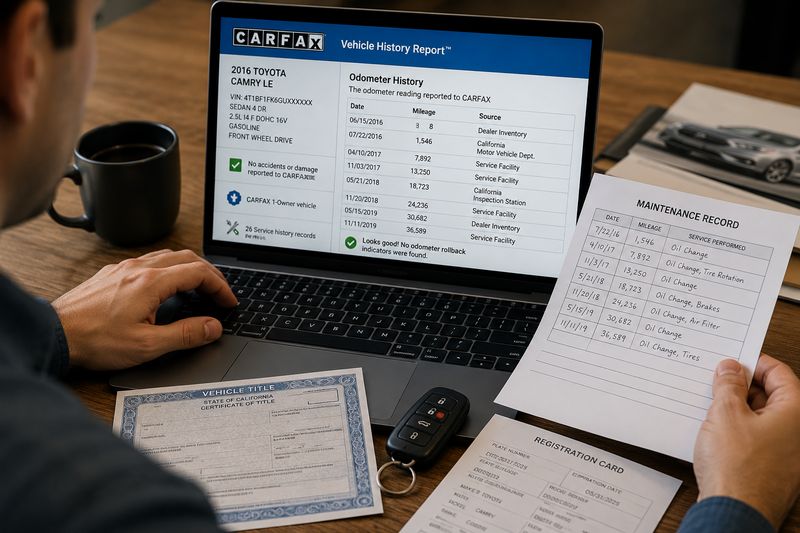
For example, a vehicle history report might show:
- 2020: 42,000 miles
- 2021: 58,000 miles
- 2022: 73,000 miles
- 2023: 89,000 miles
This pattern generally indicates normal mileage accumulation.
However, a report showing:
- 2020: 95,000 miles
- 2021: 112,000 miles
- 2022: 78,000 miles
would be a major warning sign because mileage should not decrease under normal circumstances.
Even if a discrepancy results from a clerical error rather than fraud, buyers should investigate before proceeding with the purchase.
Vehicle history reports are not perfect, but they are often the first place where mileage inconsistencies become visible.
Review Maintenance and Inspection Records
Maintenance records can provide another valuable source of mileage verification.
Whenever a vehicle receives service, repair shops frequently document the odometer reading on invoices and work orders. Over time, these records create a timeline of mileage entries that can help confirm the accuracy of the current odometer reading.
Useful documents may include:
- Oil change receipts
- Brake service records
- Tire replacement invoices
- Dealer maintenance records
- State inspection reports
- Emissions testing records
- Warranty repair documentation
For example, a service invoice from three years ago showing 130,000 miles would clearly conflict with a current odometer reading of 95,000 miles.
Inspection records can be especially useful because they are often created by independent third parties rather than vehicle owners.
A vehicle with a long history of consistent mileage documentation is generally a safer purchase than one with missing or incomplete records.
For budget-conscious buyers, a vehicle with higher mileage and complete maintenance documentation is often a better choice than a lower-mileage vehicle with no service history at all.
Verify Mileage Through Auction Listings
Auction records can be an excellent tool for identifying mileage discrepancies, particularly when buying vehicles through online auction platforms.
Many vehicles appear at auction more than once during their lifetime. Previous auction listings may include:
- Odometer readings
- Dashboard photos
- Condition reports
- Vehicle descriptions
- Sale dates
By comparing historical auction records with current mileage information, buyers can often identify inconsistencies that may not appear elsewhere.
For example, a vehicle listed at auction two years ago with 115,000 miles should not appear today with only 90,000 miles unless there is a documented explanation.
Historical auction photos are especially valuable because they often show the dashboard display. These images can provide direct visual evidence of past mileage readings.
Experienced auction buyers frequently compare:
- Current odometer readings
- Previous auction photos
- Vehicle history reports
- Title records
- Service records
This multi-source approach greatly improves the chances of identifying potential mileage problems before bidding.
Inspect Vehicle Wear and Condition
A vehicle's physical condition can often reveal whether the reported mileage makes sense.
Although wear varies depending on driving habits and maintenance, the overall condition of the vehicle should generally be consistent with the mileage displayed on the odometer.
Areas worth examining include:
- Driver's seat
- Steering wheel
- Gear selector
- Brake pedal
- Accelerator pedal
- Floor mats
- Door handles
- Dashboard controls
- Window switches
For example, a vehicle showing only 40,000 miles should typically have minimal interior wear. If the driver's seat is heavily worn, the steering wheel surface is polished smooth, and the pedals show significant deterioration, the mileage may deserve further scrutiny.
Exterior condition can also provide clues.
Potential warning signs include:
- Excessive stone chips
- Significant paint wear
- Heavy suspension wear
- Worn weather stripping
- Extensive interior fading
These signs do not automatically indicate fraud, but they may suggest that the vehicle has experienced more use than the odometer indicates.
When evaluating auction vehicles remotely, carefully reviewing detailed photos can often reveal wear patterns that are inconsistent with unusually low mileage claims.
Check Title and Registration Documents
Title and registration records often contain important mileage information that can help verify a vehicle's history.
During many ownership transfers, mileage is recorded on title documents as part of the odometer disclosure process. These records can provide another checkpoint when verifying mileage accuracy.
Buyers should review titles for designations such as:
- Actual Mileage
- Not Actual Mileage (NAM)
- Odometer Discrepancy
- Mileage Exceeds Mechanical Limits
- Exempt Mileage
A title marked "Actual Mileage" generally indicates that the reported mileage was believed to be accurate at the time of transfer.
A title marked "Not Actual Mileage" or "Odometer Discrepancy" should prompt additional investigation because it indicates uncertainty regarding the vehicle's true mileage.
Registration records may also contain mileage entries from inspections or renewal processes, depending on the state.
When reviewing title documents, buyers should verify that:
- Mileage records increase logically over time
- VIN numbers match across all documents
- Odometer disclosures are complete
- No unexplained mileage gaps exist
For auction buyers, title review is especially important because title brands and mileage disclosures often provide the earliest indication of potential problems.
Research Every Vehicle Like a Professional Buyer
Mileage discrepancies, title issues, and hidden damage can turn a bargain into an expensive mistake. Use Auto4Export's tools and auction expertise to evaluate vehicles before bidding.
- ✅ Free CARFAX reports on eligible vehicles
- ✅ Auction history and damage verification
- ✅ Transparent pricing before purchase
- ✅ Expert bidding assistance available
How to Verify an Odometer Reading Before Buying a Car
The mileage displayed on a vehicle's odometer can significantly influence its value, reliability expectations, and future maintenance costs. Unfortunately, the number shown on the dashboard is not always enough to confirm a vehicle's true mileage history.
Before buying any used vehicle—especially one purchased online or through an auto auction—buyers should take steps to verify that the odometer reading is accurate. A few minutes of research can help uncover mileage discrepancies, identify potential fraud, and prevent expensive mistakes.
The most reliable approach is to compare mileage information from multiple independent sources. When all records tell the same story, buyers can feel more confident about the vehicle's history. When they do not, further investigation is necessary.
Using CARFAX and AutoCheck Reports
One of the first steps in verifying mileage is reviewing a vehicle history report from services such as CARFAX or AutoCheck.
These reports collect information from a variety of sources, including:
- State motor vehicle agencies
- Title records
- Registration records
- Insurance companies
- Service facilities
- Inspection stations
- Auction databases
- Dealership records
Because mileage is often recorded whenever a vehicle changes ownership or receives service, these reports can create a timeline of mileage entries throughout the vehicle's life.
For example, a report may show:
- 2019: 28,000 miles
- 2020: 41,000 miles
- 2021: 55,000 miles
- 2022: 68,000 miles
- 2023: 81,000 miles
This type of steady progression is generally a positive sign.
Buyers should pay close attention to any unusual entries, including:
- Mileage decreases
- Large unexplained jumps
- Odometer discrepancy warnings
- Not Actual Mileage designations
- Title brands related to mileage issues
For example, if a report shows 140,000 miles in one year and 95,000 miles in a later record, the discrepancy should be investigated before proceeding with the purchase.
Vehicle history reports are not perfect because not every service event gets reported, but they remain one of the most valuable tools for mileage verification.
Checking Previous Auction Photos and Records
Auction records can provide another powerful method of verifying mileage.
Many vehicles sold through insurance auctions, dealer auctions, and online auction platforms appear in multiple listings over time. Previous auction records often include:
- Odometer readings
- Dashboard photos
- Condition reports
- Vehicle descriptions
- Sale dates
- Damage information
These records can help buyers compare current mileage claims against historical data.
For example, suppose a vehicle currently listed for sale shows 88,000 miles. If auction records from two years earlier show the same vehicle with 105,000 miles, the discrepancy immediately raises concerns.
Dashboard photos are particularly useful because they provide visual evidence of the mileage displayed at the time of the auction.
Experienced auction buyers often review:
- Current auction photos
- Previous auction photos
- Vehicle history reports
- Title records
When all mileage records match, confidence in the odometer reading increases significantly.
For buyers searching for affordable vehicles at online auctions, historical auction records can be one of the most effective ways to uncover hidden mileage problems before placing a bid.
Reviewing Service History
A well-documented service history can provide valuable evidence that supports the accuracy of an odometer reading.
Repair shops, dealerships, and maintenance facilities frequently record mileage whenever work is performed on a vehicle. Over time, these records create a detailed mileage trail.
Documents worth reviewing include:
- Oil change receipts
- Tire service records
- Brake repair invoices
- Dealership maintenance reports
- Warranty repair documents
- Major repair invoices
For example, if a repair invoice from three years ago shows 118,000 miles and the current odometer displays 82,000 miles, something is clearly wrong.
Conversely, a service history showing mileage increasing steadily over time helps confirm that the vehicle's odometer is likely accurate.
A strong service history offers additional benefits beyond mileage verification. It can also reveal:
- Maintenance consistency
- Ownership habits
- Major repairs
- Potential future maintenance needs
For budget-conscious buyers, a vehicle with complete service records is often a safer choice than a lower-mileage vehicle with no documented maintenance history.
Comparing Mileage Across Documents
One of the most reliable verification methods is comparing mileage across all available documents.
Rather than relying on a single source, buyers should cross-reference mileage information from:
- Odometer display
- Vehicle history reports
- Title documents
- Registration records
- Service records
- Inspection reports
- Auction listings
- Insurance records
The goal is simple: every mileage record should support the same general timeline.
For example:
|
Source |
Mileage |
|
Vehicle History Report |
96,200 miles |
|
Service Record |
96,050 miles |
|
Auction Listing |
96,180 miles |
|
Dashboard Display |
96,215 miles |
Minor differences are normal because records are created on different dates. However, large discrepancies may indicate an error, undocumented repair, or possible fraud.
Buyers should be especially cautious if they encounter:
- Mileage that decreases over time
- Missing mileage history
- Odometer discrepancy warnings
- Not Actual Mileage designations
- Inconsistent title records
When reviewing auction vehicles, comparing multiple documents is particularly important because many auction vehicles are sold "as is." The more independent sources that confirm the mileage, the lower the risk of encountering an unpleasant surprise after purchase.
What Does It Mean When an Odometer Is Exempt?
When researching used vehicles, buyers sometimes encounter mileage designations such as "Exempt" or "Odometer Exempt." For first-time buyers, this status can be confusing because it seems to suggest that mileage no longer matters.
In reality, an odometer exemption does not mean the vehicle's mileage is unimportant. Instead, it means that federal or state laws no longer require the seller to certify the vehicle's mileage during ownership transfers.
Because mileage disclosures may not be required for exempt vehicles, buyers often have less information available when verifying a vehicle's true usage history. Understanding how odometer exemptions work can help buyers evaluate older vehicles more carefully and avoid potential surprises.
Odometer Exemption Rules by Vehicle Age
Federal odometer disclosure requirements generally apply to vehicles during a specific portion of their lifespan. Once a vehicle reaches a certain age, it may become exempt from mileage reporting requirements.
Historically, many vehicles became exempt when they reached ten years of age. However, federal regulations were later updated, and many newer vehicles now remain subject to mileage disclosure requirements for a longer period.
As a result, exemption rules can vary depending on:
- The vehicle's model year
- Federal regulations in effect at the time
- State-specific title requirements
- The type of vehicle involved
For example, a relatively new vehicle typically requires mileage disclosure whenever ownership is transferred. An older vehicle may qualify for an exemption, meaning the seller is no longer legally required to certify the accuracy of the odometer reading.
This exemption was created because verifying the exact mileage of very old vehicles often becomes increasingly difficult over time due to:
- Missing records
- Odometer replacements
- Mechanical odometer rollovers
- Multiple ownership transfers
- Incomplete maintenance histories
Classic cars, antique vehicles, and older collector vehicles commonly carry exempt mileage designations.
Buyers should remember that exemption status is based on legal reporting requirements, not on the accuracy of the mileage itself. An exempt vehicle may still have accurate mileage, but the seller is generally not required to guarantee it.
Exempt Titles and Mileage Reporting
When a vehicle qualifies for an odometer exemption, the title may include an "Exempt" designation instead of an actual mileage certification.
For example, a title may indicate:
- Mileage: Exempt
- Odometer Status: Exempt
- Odometer Disclosure: Exempt
This means the mileage shown on the odometer is not being legally certified as actual mileage during the transfer process.
As a result, buyers should understand that the displayed mileage may be:
- Accurate
- Estimated
- Incomplete
- Unverifiable
For example, a classic vehicle may display 68,000 miles on the dashboard. However, because the vehicle is exempt, there may be no way to prove whether the odometer has rolled over once, twice, or multiple times during its lifetime.
A mechanical five-digit odometer can illustrate this issue well. If the odometer reaches 99,999 miles, it returns to 00,000 miles and begins counting again. Without supporting records, a displayed mileage of 35,000 miles could actually represent:
- 35,000 miles
- 135,000 miles
- 235,000 miles
or even more.
Because exempt titles do not guarantee mileage accuracy, buyers should focus heavily on supporting documentation and overall vehicle condition.
Helpful records may include:
- Service invoices
- Registration records
- Vehicle history reports
- Inspection reports
- Restoration documentation
- Previous ownership records
The more documentation available, the easier it becomes to estimate the vehicle's true history.
Risks of Buying an Odometer-Exempt Vehicle
An odometer-exempt vehicle is not necessarily a bad purchase. Many excellent classic cars, older trucks, and collector vehicles carry exempt mileage designations.
However, buyers should understand the additional risks involved.
The primary risk is uncertainty.
Without a legally certified mileage record, determining the vehicle's actual usage history can become much more difficult.
Potential concerns include:
- Unknown total mileage
- Prior odometer rollovers
- Undocumented odometer replacement
- Missing service records
- Incomplete ownership history
- Difficulty verifying wear and tear
For example, a buyer may find two similar vehicles for sale:
- Vehicle A has certified actual mileage of 92,000 miles.
- Vehicle B has an exempt title and shows 92,000 miles on the dashboard.
Although the displayed mileage is identical, Vehicle A provides far more certainty because the mileage has been formally documented.
Another consideration is resale value. Some future buyers may be hesitant to purchase exempt vehicles because mileage cannot be independently verified. This can affect marketability and buyer confidence.
Auction buyers should be particularly cautious when evaluating exempt vehicles. Since many auction vehicles are sold "as is," buyers should perform additional due diligence before bidding.
Recommended verification steps include:
- Reviewing vehicle history reports
- Examining service records
- Comparing previous auction records
- Inspecting wear patterns
- Verifying title information
- Conducting a professional inspection when possible
For budget-conscious buyers, an exempt vehicle can still represent a good value if its condition, maintenance history, and documentation support the seller's claims.
Odometer Statuses You May See on Vehicle Titles
When buying a used vehicle, most buyers focus on the mileage shown on the dashboard. However, the mileage status listed on the vehicle title can be just as important as the actual odometer reading.
A title's odometer status helps explain whether the reported mileage is believed to be accurate, whether there are known discrepancies, or whether the vehicle is exempt from mileage reporting requirements altogether.
Understanding these designations can help buyers avoid costly mistakes and better evaluate the risks associated with a particular vehicle. This is especially important when purchasing vehicles from online auto auctions, where buyers often rely heavily on vehicle records and documentation before placing a bid.
Actual Mileage
"Actual Mileage" is generally the most desirable odometer status a buyer can see on a vehicle title.
This designation means that the seller believes the odometer reading accurately reflects the vehicle's true distance traveled. It indicates there are no known issues, discrepancies, or reasons to question the mileage being reported.
For example, if a vehicle's odometer displays 87,450 miles and the title lists the mileage status as Actual Mileage, the mileage is considered accurate based on the information available at the time of the ownership transfer.
An Actual Mileage designation often provides buyers with greater confidence because:
- The mileage has been properly disclosed.
- No known inconsistencies exist.
- The title does not indicate mileage concerns.
- Vehicle valuation can be based on the reported mileage.
However, buyers should still perform due diligence. Even when a title shows Actual Mileage, it is wise to review:
- Vehicle history reports
- Service records
- Previous auction records
- Inspection documents
A clean mileage designation is helpful, but supporting documentation remains important when verifying a vehicle's history.
Not Actual Mileage (NAM)
"Not Actual Mileage," often abbreviated as NAM, is one of the most important title designations buyers should understand.
This status indicates that the reported mileage cannot be verified as accurate. The vehicle may have an odometer discrepancy, missing records, a replacement instrument cluster, or other issues that prevent the mileage from being certified.
For example, a vehicle may display 95,000 miles on the dashboard, but if records suggest the actual mileage could be significantly different, the title may be marked Not Actual Mileage.
A NAM designation does not automatically mean fraud occurred. There are several legitimate reasons why mileage may be classified as not actual:
- Odometer replacement without complete documentation
- Missing ownership records
- Conflicting mileage reports
- Clerical errors in prior records
- Instrument cluster repairs
- Incomplete service history
However, buyers should proceed carefully because the true mileage may be much higher than the displayed reading.
When evaluating a NAM vehicle, it is especially important to:
- Review vehicle history reports
- Compare mileage records from multiple sources
- Examine maintenance records
- Inspect overall vehicle condition
For budget-conscious buyers, a NAM vehicle may still be worth considering if priced appropriately, but it generally carries more uncertainty than a vehicle with an Actual Mileage designation.
Mileage Exceeds Mechanical Limits
This designation is most commonly associated with older vehicles equipped with mechanical odometers.
Many older mechanical odometers were limited to five digits. Once they reached 99,999 miles, they rolled back to 00,000 miles and began counting again.
As a result, the displayed mileage may not represent the vehicle's actual lifetime mileage.
For example:
- Displayed mileage: 42,000 miles
- Actual mileage: 142,000 miles or more
Without supporting documentation, there may be no way to determine exactly how many times the odometer has rolled over.
A title marked Mileage Exceeds Mechanical Limits indicates that the actual mileage is greater than the number shown on the odometer.
This designation is common on:
- Older vehicles
- Classic cars
- Antique vehicles
- Trucks with mechanical odometers
Buyers should understand that the displayed mileage should not be treated as the vehicle's true lifetime mileage unless additional records support it.
When evaluating such vehicles, maintenance history and overall condition often provide more useful information than the odometer reading itself.
Exempt Mileage
An Exempt Mileage designation means the vehicle is no longer subject to federal or state mileage disclosure requirements.
This status usually applies to older vehicles that qualify for odometer reporting exemptions based on age.
When a title is marked Exempt Mileage:
- The seller is generally not required to certify mileage accuracy.
- The displayed mileage is not legally guaranteed.
- The actual mileage may be unknown.
- Mileage verification may be more difficult.
For example, a 25-year-old vehicle may display 76,000 miles on the dashboard, but because the title is exempt, there may be no legal certification confirming that the mileage is accurate.
This does not necessarily mean the mileage is incorrect. Many exempt vehicles have accurate odometer readings. The designation simply reflects that mileage disclosure requirements no longer apply.
When buying an exempt vehicle, buyers should place greater emphasis on:
- Service records
- Vehicle condition
- Ownership history
- Inspection reports
- Restoration documentation
The more supporting records available, the easier it becomes to estimate the vehicle's true usage history.
Odometer Discrepancy
An Odometer Discrepancy status indicates that mileage records from different sources do not agree.
This is one of the most serious mileage-related warnings a buyer may encounter because it suggests uncertainty regarding the vehicle's actual mileage.
A discrepancy may occur when:
- Mileage decreases between records
- Service records conflict with title records
- The instrument cluster has been replaced
- Documentation is incomplete
- Errors occur during title processing
For example, a vehicle history report might show:
- 2021: 112,000 miles
- 2022: 125,000 miles
- 2024: 89,000 miles
Because mileage should normally increase over time, such a record would likely trigger an odometer discrepancy designation.
Not every discrepancy results from fraud. Administrative mistakes and documentation errors can also create inconsistencies. However, buyers should never ignore an odometer discrepancy.
Whenever this designation appears, buyers should:
- Review vehicle history reports carefully
- Verify service records
- Compare title information
- Examine previous auction listings
- Consider a professional inspection
For auction buyers, an odometer discrepancy often warrants additional research before placing a bid.
Can an Odometer Be Repaired or Replaced?
Many buyers assume that an odometer should never be touched once a vehicle leaves the factory. In reality, odometers can fail, malfunction, or become damaged over time. Like any other vehicle component, they may sometimes require repair or replacement.
However, because mileage directly affects a vehicle's value, federal and state laws strictly regulate how odometer repairs and replacements must be handled. The goal is to ensure that repairs do not create confusion about a vehicle's true mileage or provide opportunities for fraud.
For used-car buyers, understanding how odometer repairs are documented can help explain mileage discrepancies and prevent misunderstandings when reviewing vehicle history records.
When Odometer Repairs Are Necessary
An odometer may need repair when it stops functioning properly or begins displaying incorrect information.
In older vehicles with mechanical odometers, problems often result from worn gears, broken cables, or internal mechanical failures. In newer vehicles, odometer issues are more commonly related to electronic components, instrument clusters, wiring problems, or software malfunctions.
Common reasons for odometer repairs include:
- Blank mileage display
- Flickering digital display
- Broken instrument cluster
- Failed electronic modules
- Damaged dashboard components
- Water or flood damage
- Electrical system failures
- Mechanical gear wear in older vehicles
For example, a vehicle involved in a flood may develop corrosion inside the instrument cluster, causing the digital odometer display to stop working. Similarly, an older vehicle may experience a failure of the gears that drive a mechanical odometer, preventing the mileage from increasing as the vehicle is driven.
In these situations, repairs are not only legal but often necessary to maintain accurate mileage records.
Prompt repairs are important because driving with a non-functioning odometer can create gaps in the vehicle's mileage history. The longer the problem goes unresolved, the harder it becomes to accurately document the vehicle's actual mileage.
Legal Requirements After Odometer Replacement
Because mileage information affects vehicle value, odometer replacement is heavily regulated.
When an odometer or instrument cluster is replaced, the goal is to preserve the vehicle's mileage history as accurately as possible. The exact procedures vary by state and vehicle manufacturer, but certain principles generally apply.
Whenever possible, the replacement odometer should be programmed to display the vehicle's actual mileage at the time of replacement.
For example, if a vehicle had 123,450 miles when the original odometer failed, the replacement unit may be configured to show that same mileage.
However, this is not always possible. Some replacement units cannot be programmed to match the previous reading. In those situations, federal and state regulations typically require documentation explaining:
- The original mileage
- The replacement date
- The reason for replacement
- The mileage shown on the new odometer
A label or disclosure notice may also be placed on the vehicle to indicate that the odometer has been replaced.
For example, a replacement odometer might display 0 miles even though the vehicle actually has 123,450 miles. Proper documentation ensures future owners understand the vehicle's true mileage history.
When reviewing vehicle records, buyers may encounter references to:
- Odometer replacement
- Instrument cluster replacement
- Mileage adjustment
- Mileage disclosure statements
These records are not necessarily cause for concern. A properly documented replacement is often a routine repair rather than evidence of fraud.
The key issue is transparency. Buyers should always verify that replacement-related mileage records are consistent with the vehicle's overall history.
Maintenance and Repair Exemptions
Not every repair involving the dashboard or instrument cluster requires mileage disclosures beyond standard documentation.
Many maintenance procedures do not affect the odometer reading itself and therefore do not create mileage-reporting concerns.
Examples include:
- Dashboard lighting repairs
- Gauge repairs unrelated to mileage
- Wiring repairs
- Sensor replacements
- Software updates
- Display screen repairs that preserve mileage data
For instance, replacing a faulty speedometer needle generally does not affect the vehicle's recorded mileage. Likewise, repairing dashboard electronics may not alter the odometer reading if the mileage data remains intact.
Some older vehicles may also qualify for mileage-related exemptions due to age. In these cases, odometer disclosure requirements may be reduced or eliminated because the vehicle is legally exempt from mileage certification.
However, even exempt vehicles benefit from accurate documentation. Buyers should still review available records to understand whether repairs or replacements have occurred.
When evaluating a used vehicle, especially one purchased through an online auction, buyers should pay attention to any references to odometer repairs or instrument cluster replacements. Questions worth investigating include:
- Was the replacement properly documented?
- Does the mileage history remain consistent?
- Are there any title brands related to mileage?
- Do service records support the reported mileage?
- Does the vehicle history report mention odometer replacement?
A documented repair is usually far less concerning than an undocumented one.
Common Odometer Problems and Errors
Although odometers are designed to provide accurate lifetime mileage information, they are not immune to problems. Like any mechanical or electronic component, odometer systems can fail due to age, wear, electrical issues, physical damage, or manufacturing defects.
When an odometer malfunctions, it can create confusion about a vehicle's true mileage and complicate maintenance records, title transfers, and resale transactions. For used-car buyers, recognizing common odometer problems is important because certain issues may affect the accuracy of the mileage displayed on the dashboard.
Fortunately, many odometer problems can be repaired. However, buyers should always investigate any mileage-related issue carefully to ensure the vehicle's history remains accurate and properly documented.
Odometer Stops Working
One of the most common odometer issues is a complete failure where the mileage no longer increases while the vehicle is being driven.
In older vehicles with mechanical odometers, this problem is often caused by:
- Broken odometer gears
- Worn drive cables
- Damaged transmission drive mechanisms
- Internal mechanical wear
For example, a vehicle may continue operating normally while the odometer remains frozen at 128,450 miles. As the vehicle accumulates additional miles, the displayed mileage becomes increasingly inaccurate.
In modern vehicles, an odometer may stop working due to:
- Faulty wheel speed sensors
- Wiring problems
- Failed instrument clusters
- Software issues
- Defective electronic control modules
When an odometer stops recording mileage, repairs should be performed as soon as possible. Delaying repairs can create gaps in mileage records that make future verification more difficult.
For buyers, a history report showing long periods without mileage updates may warrant additional investigation, particularly if no documentation explains the issue.
Incorrect Mileage Display
Sometimes an odometer continues functioning but displays mileage that appears incorrect or inconsistent.
Incorrect mileage readings may occur due to:
- Programming errors
- Instrument cluster replacement
- Faulty electronic modules
- Data corruption
- Calibration problems
- Previous repair mistakes
For example, a vehicle that previously showed 120,000 miles may suddenly display 20,000 miles after an improperly programmed instrument cluster replacement.
In other cases, the displayed mileage may jump unexpectedly or fail to match records stored elsewhere in the vehicle.
When buyers encounter suspicious mileage readings, they should compare the displayed mileage against:
- Vehicle history reports
- Service records
- Title documents
- Auction records
- Previous inspection reports
A mismatch does not automatically indicate fraud. Sometimes legitimate repairs create discrepancies that are later documented correctly. However, any unexplained inconsistency should be investigated before purchasing the vehicle.
Professional diagnostic equipment can often help technicians verify mileage stored in other vehicle modules and determine whether the displayed reading is accurate.
Digital Display Failure
Modern vehicles rely heavily on digital displays to present mileage information. When the display itself fails, the odometer data may become difficult or impossible to read.
Common digital display issues include:
- Blank screens
- Missing digits
- Flickering numbers
- Faded displays
- Partial character loss
- Intermittent operation
For example, a vehicle may show only part of the mileage because several LCD segments have failed. A reading intended to display 156,284 miles could appear incomplete, making it difficult to determine the actual mileage.
Digital display failures are particularly common in older vehicles where heat, sunlight exposure, and aging electronic components gradually degrade screen performance.
In many cases, the mileage data itself remains intact even though the display no longer functions properly. Repairing or replacing the display can often restore visibility without affecting the stored mileage records.
When reviewing auction photos, buyers should pay close attention to dashboard images. A faded or unreadable odometer display may indicate the need for future repairs and could make mileage verification more challenging.
If the mileage cannot be clearly read, buyers should rely on supporting records such as vehicle history reports and title documentation.
Instrument Cluster Malfunctions
The instrument cluster houses several important vehicle displays, including the speedometer, tachometer, fuel gauge, warning lights, and odometer.
When the instrument cluster malfunctions, the odometer may be affected even if the mileage data itself remains accurate.
Common instrument cluster problems include:
- Power failures
- Circuit board damage
- Software errors
- Communication faults between modules
- Water intrusion
- Electrical shorts
Symptoms may include:
- Intermittent mileage display
- Random gauge behavior
- Dashboard warning lights
- Display resets
- Blank screens
- Frozen odometer readings
For example, a damaged instrument cluster may cause the odometer display to turn off periodically even though mileage continues to be recorded in the vehicle's computer systems.
In some cases, replacing the instrument cluster becomes necessary. When this occurs, proper documentation is critical because buyers need to understand whether the replacement affected the displayed mileage.
Used-car buyers should pay attention to any mention of:
- Instrument cluster replacement
- Dashboard repairs
- Odometer service
- Electrical system repairs
A documented repair is usually not a problem. However, an undocumented replacement can make mileage verification more difficult.
When evaluating a vehicle, especially one purchased through an online auction, it is wise to review vehicle history reports and service records for any indication that the instrument cluster has been repaired or replaced.
Conclusion: Why Understanding Odometers Helps You Buy a Better Used Car
An odometer is much more than a simple mileage counter. It provides valuable information about how much a vehicle has been used, helps determine market value, and plays a major role in evaluating long-term reliability. Whether you are buying from a dealership, a private seller, or an online auto auction, understanding odometer readings can help you make smarter purchasing decisions and avoid costly mistakes.
Throughout the used-car buying process, mileage should be viewed as one piece of a larger puzzle. A vehicle's maintenance history, condition, title status, and ownership records are often just as important as the number displayed on the dashboard.
Buyers who take the time to verify mileage, review vehicle history reports, and understand common odometer-related issues are far more likely to find a reliable vehicle that offers good value for money.
Key Takeaways for Used Car Buyers
One of the most important lessons for used-car buyers is that mileage alone does not determine whether a vehicle is a good purchase.
A low-mileage vehicle may seem attractive, but it is not automatically the best option. Likewise, a higher-mileage vehicle should not be dismissed without further investigation.
When evaluating a used vehicle, remember these key points:
- The odometer measures the total distance a vehicle has traveled.
- Mileage affects vehicle value, but it is only one factor.
- Maintenance history is often just as important as mileage.
- Vehicle history reports can help verify mileage accuracy.
- Title mileage statuses provide important information about odometer reliability.
- Odometer fraud still exists and should be taken seriously.
- Multiple sources should be used to verify mileage.
- A well-maintained high-mileage vehicle can be a better purchase than a neglected low-mileage vehicle.
For example, many buyers automatically choose a vehicle with 70,000 miles over a similar vehicle with 130,000 miles. However, if the higher-mileage vehicle has complete maintenance records, a clean history report, and evidence of proper care, it may actually be the safer long-term investment.
Budget-conscious buyers often find excellent opportunities by looking beyond mileage alone and focusing on overall vehicle condition.
The most successful buyers ask questions such as:
- Does the mileage make sense for the vehicle's age?
- Are service records available?
- Is the title mileage status clean?
- Does the vehicle history report support the odometer reading?
- Does the vehicle's condition match the reported mileage?
Answering these questions can significantly reduce the risk of buying a problematic vehicle.
How to Avoid Mileage-Related Risks at Auto Auctions
Auto auctions offer access to thousands of vehicles, often at prices well below traditional retail values. However, because many auction vehicles are sold "as is," buyers must perform their own due diligence before placing a bid.
Mileage verification should always be part of that process.
Before bidding on any auction vehicle, buyers should:
- Review the vehicle history report.
- Compare mileage records over time.
- Examine title documents carefully.
- Check for Actual Mileage, NAM, Exempt, or Discrepancy designations.
- Review service and maintenance records when available.
- Compare current mileage with previous auction listings.
- Inspect dashboard photos closely.
- Look for signs of excessive wear that do not match the reported mileage.
For example, if a vehicle shows only 55,000 miles but the driver's seat, steering wheel, and pedals appear heavily worn, additional investigation may be warranted.
Likewise, if auction records show inconsistent mileage over time, buyers should determine whether the discrepancy resulted from a clerical error, an odometer replacement, or something more serious.
One of the biggest mistakes first-time auction buyers make is focusing only on low mileage. Experienced buyers know that the best value often comes from vehicles with honest histories, strong maintenance records, and realistic pricing—not simply the lowest odometer reading.
When purchasing through online auto auctions, taking a few extra minutes to verify mileage can save thousands of dollars in unexpected repairs and prevent costly purchasing mistakes.
Ultimately, understanding how odometers work, how mileage is reported, and how to identify potential problems allows buyers to make more confident decisions. The more information you have about a vehicle's mileage history, the easier it becomes to separate a genuine bargain from a potentially expensive risk. By combining mileage verification with careful research and documentation review, you can improve your chances of finding a reliable used vehicle at the right price.
Access Thousands of Auction Vehicles Worldwide
Whether you are looking for a low-mileage daily driver, a repairable vehicle, or a budget-friendly car for export, Auto4Export gives you direct access to major U.S. auto auctions with full support throughout the buying process.
- ✅ 150,000+ vehicles available daily
- ✅ Free membership and unlimited bidding
- ✅ Worldwide shipping assistance
- ✅ Support from purchase to delivery
Further Reading
Why Is Mileage Important When Buying a Used Car? Complete Guide for Budget Buyers
What Does “Not Actual Mileage” Mean on a Title?
Odometer Rolled Over Meaning: What It Is and Why It Matters for Car Buyers
Unlocking the Secrets: Understanding Vehicle History Reports

Do You Have Any Questions?
 Ask Question