


 Log in
 Sign Up


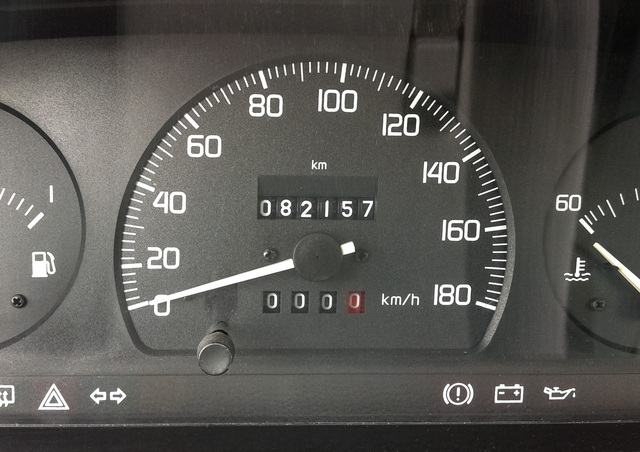


Buying a used car on a budget can be risky if you don’t understand mileage. This quick guide explains what mileage really means, how it affects price, repairs, and reliability, and how to choose the best option for your money. You’ll learn how to avoid overpaying and find a car that fits your budget without costly surprises.
What Does Mileage Mean in a Used Car?
Before you look at price or features, mileage is one of the first numbers you’ll see on a used car listing. For budget buyers, this number can tell you a lot about what to expect — from future repair costs to how long the car may last. But mileage is more than just a number on the dashboard. To make a smart decision, you need to understand what it really means and how to read it correctly.
Definition of Mileage (Odometer Reading)
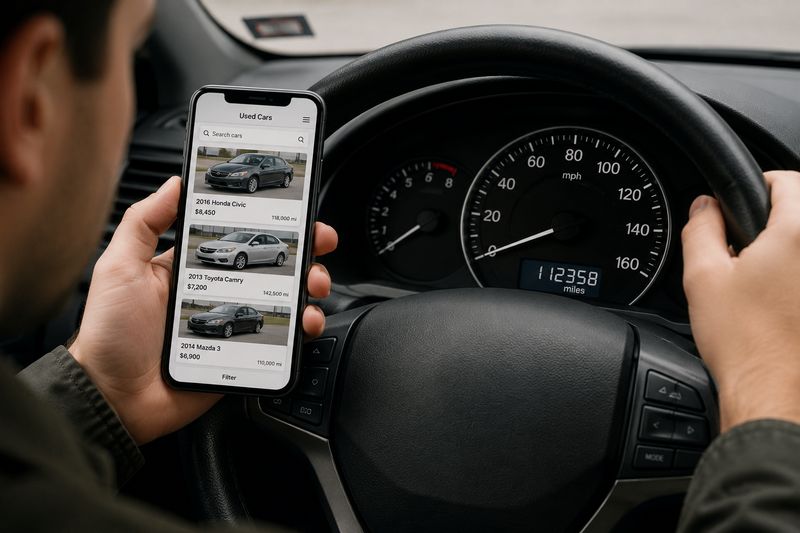
Mileage is the total number of miles a car has traveled since it was first driven. This number is shown on the odometer — a digital or mechanical display on the dashboard.
For example, if you see a car with 120,000 miles, it means the vehicle has been driven that distance over its lifetime. For a budget buyer, this is important because higher mileage usually means more wear on key components like the engine, transmission, and suspension.
But mileage alone doesn’t tell the full story. A car with 120,000 miles that was well maintained can be a better deal than a 70,000-mile car that was neglected. Think of mileage as a starting point, not the final verdict.
Types of Mileage (City vs Highway)
Not all miles are equal. The way those miles were driven makes a big difference.
City miles come from stop-and-go driving. This includes traffic lights, short trips, and frequent braking. These conditions put more stress on the engine, brakes, and transmission. For example, a car used for daily commuting in heavy traffic may wear out faster, even if the mileage isn’t very high.
Highway miles, on the other hand, are usually easier on a car. Driving at steady speeds with fewer stops means less strain on most components. A car with 100,000 highway miles can often be in better condition than a car with 60,000 city miles.
Imagine two similar cars:
- One was used for long highway trips
- The other was used for short daily errands in the city
The first one may actually last longer, even with higher mileage.
Average Miles Per Year Explained
To understand whether mileage is “high” or “low,” you need to look at the car’s age.
On average, most cars in the U.S. are driven about 12,000 to 15,000 miles per year. This gives you a simple benchmark.
Here’s a quick example:
- A 5-year-old car with 60,000–75,000 miles → normal usage
- A 5-year-old car with 100,000+ miles → high usage
- A 5-year-old car with 30,000 miles → low usage
For budget buyers, this helps avoid overpaying. If a seller is asking a premium price for a “low mileage” car, check if it’s truly low for its age.
How Mileage Reflects Vehicle Usage
Mileage is not just about distance — it’s a clue to how the car was used.
High mileage often means:
- The car was driven regularly
- Parts may be closer to replacement (timing belt, suspension, etc.)
Low mileage can mean:
- Less wear on major components
- Or the car sat unused for long periods
And that’s where many buyers make a mistake.
A very low-mileage car might sound perfect, but if it sat in a garage for years, it could have hidden issues — dried seals, weak battery, or old fluids. For example, someone might buy a cheap “only 25,000 miles” car and later spend hundreds fixing leaks and rubber parts.
Why Mileage Matters When Buying a Used Car
Mileage is one of the fastest ways to understand what you’re really buying. For budget buyers, it’s not just about how “old” the car looks — it’s about how much life is left in it and how much money you’ll spend after the purchase. Ignoring mileage can lead to unexpected repairs, while understanding it can help you find real value.
Impact on Vehicle Wear and Tear
Every mile a car drives creates wear on its parts. The higher the mileage, the more stress the vehicle has gone through.
Key components affected by mileage include:
- Engine internals
- Transmission
- Suspension (shocks, struts)
- Braking system
For example, a car with 150,000 miles has likely gone through thousands of stop-and-go cycles, bumps, and long drives. Even if it still runs, many parts may already be close to replacement.
For a buyer on a tight budget, this matters a lot. A cheaper high-mileage car might look like a good deal, but if you need to replace suspension parts or fix the transmission soon, your “cheap” car quickly becomes expensive.
Connection Between Mileage and Mechanical Condition
Mileage and condition are closely related — but not always in a simple way.
In general:
- Higher mileage = more wear
- Lower mileage = less use
But here’s the catch: condition depends on how the car was treated.
Two cars with the same mileage can be completely different:
- One owner followed maintenance schedules, changed oil on time, and drove carefully
- Another skipped service and drove aggressively
For example, a 120,000-mile car with full service records can be more reliable than an 80,000-mile car with no history. That’s why smart buyers don’t just look at mileage — they connect it with maintenance and overall condition.
Fuel Efficiency and Performance Over Time
As mileage increases, performance usually drops — slowly but steadily.
Common changes include:
- Slightly lower fuel efficiency
- Reduced engine power
- Slower acceleration
This happens because engine parts wear down over time. Fuel injectors, spark plugs, and sensors may not work as efficiently as they did when the car was new.
For example, you might buy a high-mileage car thinking you’ll save money, but then notice it uses more fuel than expected. Over time, this adds up — especially if you drive daily.
Maintenance Costs and Future Repairs
Mileage is one of the best predictors of upcoming expenses.
As cars reach certain mileage points, major services are often required:
- Around 60,000–100,000 miles → brakes, tires, fluids
- Around 100,000–150,000 miles → timing belt, water pump, suspension parts
- Beyond 150,000 miles → higher risk of engine or transmission repairs
If you’re buying a car with 130,000 miles, you should expect some of these costs soon.
A common real-life scenario:
You buy a car for $5,000 because it seems like a bargain. Within a few months, you spend another $2,000 on repairs. Now the total cost is $7,000 — and that “deal” doesn’t look so good anymore.
That’s why budget buyers should always think beyond the purchase price.
Resale Value and Market Price
Mileage has a direct impact on how much a car is worth — both when you buy it and when you sell it later.
In the market:
- Lower mileage cars → higher prices
- Higher mileage cars → lower prices
This creates opportunities — and risks.
On one hand, high-mileage cars are cheaper upfront, which is great if your budget is limited. On the other hand, they also lose value faster and are harder to resell.
For example:
- A car with 60,000 miles may sell quickly at a strong price
- The same car with 160,000 miles may sit longer and sell for much less
If you plan to resell the car in a few years, mileage becomes even more important. Buying a car that already has very high mileage limits your resale options later.
Mileage vs Age: What Matters More?
Many budget buyers face the same question: is it better to choose a newer car with high mileage or an older car with low mileage? There’s no single correct answer. Both mileage and age affect how a car performs, how much it costs to maintain, and how long it will last. The key is understanding how they work together.
High Mileage Newer Cars vs Low Mileage Older Cars
At first glance, a low-mileage car always looks like the better deal. But when you compare it with a newer car that has higher mileage, things get more interesting.
A newer high-mileage car often means:
- The car was driven regularly (likely highway use)
- More modern technology and safety features
- Less time for parts to age and degrade
An older low-mileage car often means:
- The car sat unused for long periods
- Fewer miles, but more time-related wear
- Older design and outdated components
For example, imagine choosing between:
- A 2018 car with 110,000 miles
- A 2010 car with 55,000 miles
Many buyers will go for the lower mileage option. But the 2018 car may actually be more reliable if it was maintained properly and driven consistently. Meanwhile, the 2010 car may have hidden issues from sitting too long.
How Age Affects Rubber Parts, Seals, and Electronics
Even if a car isn’t driven much, time still affects it.
As cars age, certain parts naturally deteriorate:
- Rubber seals can dry out and crack
- Hoses can become brittle
- Gaskets may start leaking
- Tires lose elasticity, even with good tread
Electronics also suffer over time:
- Sensors may fail
- Wiring can degrade
- Older systems may be less reliable
This means a 10–15-year-old car with low mileage can still require repairs — not because it was driven a lot, but because materials simply don’t last forever.
A common example:
A buyer finds a “perfect” low-mileage car owned by an elderly driver. After purchase, they discover oil leaks, weak rubber hoses, and electrical issues. The car wasn’t used much — but age caught up with it.
When Mileage Matters More Than Age
Mileage becomes more important when it directly affects major mechanical components.
You should pay closer attention to mileage when:
- The car is used for daily driving
- The mileage is extremely high (150,000+ miles)
- There are no clear maintenance records
High mileage increases the risk of:
- Engine wear
- Transmission problems
- Suspension failure
For example, if you’re choosing between two cars of similar age, and one has 90,000 miles while the other has 180,000 miles, the lower mileage option is usually the safer choice — especially for a tight budget.
When Age Matters More Than Mileage
Age becomes more important when the car is older, even if the mileage looks attractive.
You should focus more on age when:
- The car is over 10–15 years old
- The mileage is unusually low for its age
- The car has been sitting unused
In these cases, you may face:
- Fluid degradation
- Rust issues
- Electrical problems
- Worn-out rubber components
For example, a 2008 car with only 40,000 miles may seem like a great deal. But you could still end up replacing seals, hoses, battery, and even parts of the fuel system due to age.
Finding the Right Balance
For budget buyers, the goal is not to find the lowest mileage or the newest car — it’s to find the best balance.
A smart choice usually looks like this:
- Moderate mileage for its age
- Consistent usage (not sitting idle for years)
- Good maintenance history
A practical example:
Instead of choosing:
- A very old car with extremely low mileage
or - A very new car with extremely high mileage
Look for something in the middle — a car that has been driven regularly, maintained properly, and priced fairly.
Don’t Judge a Car by Mileage Alone
Mileage is just one part of the story. Auto4Export helps you evaluate the full picture — condition, history, and real total cost — so you can avoid risky purchases and find better-value cars at U.S. auctions.
- ✅ Access to 200,000+ vehicles from U.S. auctions
- ✅ Help analyzing condition beyond mileage
- ✅ Vehicle history verification and export support
- ✅ Guidance for budget buyers and first-time importers
What Is Considered Good Mileage for a Used Car?
When you’re shopping on a budget, it’s easy to get confused by mileage numbers. One car has 40,000 miles, another has 120,000 — but which one is actually a better deal? “Good mileage” isn’t a fixed number. It depends on the car’s age, how it was used, and how well it was maintained. Still, there are simple benchmarks that can help you avoid overpaying or buying a risky vehicle.
Average Mileage Benchmarks by Year
A good starting point is understanding how many miles a car typically drives each year.
In the U.S., the average is about 12,000 to 15,000 miles per year. You can use this as a quick rule to evaluate any used car.
Here’s how it works in practice:
- 3-year-old car → around 36,000–45,000 miles
- 5-year-old car → around 60,000–75,000 miles
- 8-year-old car → around 96,000–120,000 miles
If the mileage is close to these numbers, it’s considered normal.
If it’s much lower, it may be a low-mileage car.
If it’s much higher, it’s a high-mileage car.
For example, if you see a 6-year-old car with 150,000 miles, that’s clearly above average — and you should expect more wear and possible repairs soon.
Low Mileage vs High Mileage Cars
Many buyers automatically think “lower mileage = better car.” But it’s not always that simple.
Low mileage cars:
- Less wear on major components
- Higher purchase price
- May have sat unused for long periods
High mileage cars:
- Lower upfront cost
- More wear and tear
- Often used regularly (which can be good if maintained)
For a budget buyer, high mileage cars can actually be a smart choice — if they were well maintained.
Example:
You’re choosing between:
- A 2017 car with 50,000 miles for $14,000
- A 2017 car with 110,000 miles for $9,000
If the second car has full service records and drives well, it might save you thousands — even after minor repairs.
The key is not to fear mileage, but to understand what comes with it.
How Many Miles Is Too Much?
There’s no exact number where a car suddenly becomes “bad,” but there are general guidelines.
- Under 60,000 miles → low mileage, usually lower risk
- 60,000–120,000 miles → normal range for used cars
- 120,000–150,000 miles → higher risk, expect maintenance
- 150,000+ miles → high mileage, buy only with caution
That said, modern cars are built to last longer than before. Many vehicles today can reach 200,000 miles or more if properly maintained.
So “too much” mileage really depends on:
- Maintenance history
- Driving conditions (city vs highway)
- Brand reliability
For example, a well-maintained car with 140,000 miles can still be a better deal than a neglected car with 90,000 miles.
Is Very Low Mileage Always a Good Sign?
Surprisingly, no — very low mileage can sometimes be a warning sign.
If a car has far fewer miles than expected for its age, it may have:
- Been sitting unused for long periods
- Developed issues with seals, fluids, or the battery
- Hidden problems that only appear after regular driving
For example, a 10-year-old car with only 25,000 miles may look like a “perfect find.” But after purchase, you might deal with oil leaks, worn rubber parts, or fuel system issues because the car wasn’t used regularly.
What High Mileage Really Means for Vehicle Life
High mileage often scares buyers — especially when you’re trying to avoid expensive mistakes. But mileage alone doesn’t decide how long a car will last. Today, many vehicles can go much further than people expect. For budget buyers, understanding what “high mileage” really means can help you find cheaper cars that still have plenty of life left.
Modern Cars and Longer Lifespan
Cars today are built better than they were 15–20 years ago. Improved engines, better materials, and smarter electronics mean modern vehicles can handle more miles without serious problems.
In the past, 100,000 miles was considered “end of life.” Today, that’s often just the middle.
Many modern cars can reach:
- 150,000–200,000 miles with regular maintenance
- Even more if driven carefully and serviced on time
This is important for budget buyers. A car with 120,000 miles is no longer “old” in the same way it used to be. It can still be a reliable option — especially if the price is right.
For example, someone with a limited budget might skip a 120,000-mile car and overpay for a 70,000-mile one. But the higher-mileage car could still have years of use left — at a much lower cost.
Highway Miles vs City Miles (Which Is Better?)
Not all high-mileage cars are equal. The type of driving matters just as much as the number.
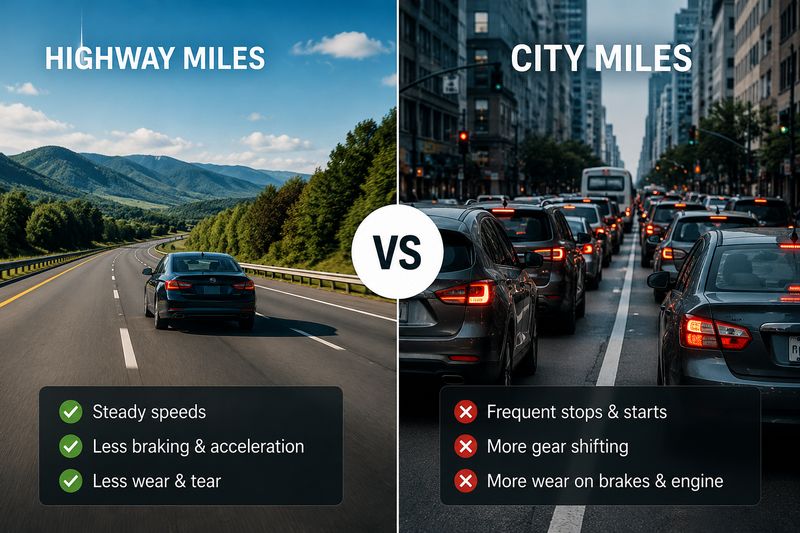
Highway miles are generally better because:
- The engine runs at steady speeds
- There is less braking and acceleration
- Less stress on transmission and suspension
City miles are harder on a car because:
- Frequent stops and starts
- More gear shifting
- More wear on brakes and engine components
Example:
A car with 130,000 highway miles may be in better condition than a car with 90,000 city miles.
For a budget buyer, this can be a hidden opportunity. Many auction or fleet vehicles (like company cars) have high mileage but were driven mostly on highways — making them better than they appear at first glance.
Engine Longevity and Mileage Limits
Every engine has a lifespan, but it’s not a fixed number.
Most modern engines are designed to last:
- Around 150,000–200,000 miles with proper care
- Sometimes more, depending on the brand and maintenance
However, as mileage increases, the risk of major repairs also goes up:
- Oil consumption may increase
- Internal engine wear becomes more noticeable
- Components like timing chains, seals, and sensors may fail
This doesn’t mean high-mileage cars are bad — it just means you need to be realistic.
If you’re buying a car with 160,000 miles, you should expect:
- Shorter remaining lifespan
- Possible major repairs in the future
The key is to factor this into the price.
When High Mileage Is Still a Good Deal
High mileage can actually work in your favor — if you approach it the right way.
A high-mileage car is often a good deal when:
- It has a clear maintenance history
- It was driven mostly on highways
- The price is significantly lower than similar low-mileage cars
- It passes inspection and drives smoothly
Real-life example:
You find two similar cars:
- One has 80,000 miles for $12,000
- Another has 140,000 miles for $7,500
If the second car is well maintained and doesn’t need major repairs, you could save thousands. Even if you spend $1,000–$1,500 on maintenance, you’re still ahead.
Why Maintenance Is More Important Than Mileage
Many buyers focus only on mileage and forget a much more important factor — how the car was maintained. For someone on a budget, this mistake can be expensive. A well-maintained high-mileage car is often safer and cheaper in the long run than a low-mileage car that was neglected. Maintenance tells you how the previous owner treated the vehicle — and that matters more than the number on the odometer.
Service Records and Regular Maintenance
Service records are one of the most valuable things you can check when buying a used car.
They show:
- When the oil was changed
- Whether major services were done on time
- If parts were replaced before they failed
A car with consistent service history is usually a much safer choice. It means the owner didn’t wait for problems — they prevented them.
Example:
Two cars both have 110,000 miles:
- One has full service records, regular oil changes, and documented repairs
- The other has no records at all
Even if the second car looks clean, the first one is almost always the better buy.
For budget buyers, service history reduces risk. It helps you avoid surprise repairs right after purchase.
Oil Changes and Engine Health
If there’s one thing that keeps an engine alive, it’s regular oil changes.
Engine oil:
- Reduces friction between moving parts
- Prevents overheating
- Keeps the engine clean inside
When oil isn’t changed on time, it breaks down and stops protecting the engine. This leads to faster wear, sludge buildup, and eventually serious damage.
A simple example:
A car with 130,000 miles and regular oil changes every 5,000–7,000 miles can run smoothly for years.
A car with 80,000 miles but poor oil maintenance can already have internal engine damage.
That’s why mileage alone doesn’t tell you how “healthy” an engine is — maintenance does.
Importance of Previous Ownership Care
The way a car was used matters just as much as how far it was driven.
A careful owner typically:
- Follows maintenance schedules
- Drives smoothly (less stress on the car)
- Fixes small problems early
A careless owner may:
- Ignore warning lights
- Delay repairs
- Drive aggressively
These habits directly affect the car’s condition.
For example, a car used for daily highway commuting by a careful owner can stay in great shape even with high mileage. Meanwhile, a low-mileage car driven aggressively or poorly maintained can develop problems much sooner.
As a buyer, you’re not just buying a car — you’re buying the result of someone else’s habits.
How Maintenance Can Outweigh High Mileage
This is where many smart buyers gain an advantage.
A high-mileage car with good maintenance can be:
- More reliable
- More predictable
- Better value for money
While a low-mileage car with poor maintenance can bring:
- Hidden mechanical issues
- Higher repair costs
- Unexpected breakdowns
Real-life scenario:
You’re choosing between:
- A car with 140,000 miles, full service history, and recent maintenance
- A car with 85,000 miles, no records, and unclear history
Most people pick the lower mileage car. But experienced buyers often choose the first option — because they know exactly what they’re getting.
What Happens If You Ignore Mileage When Buying
It’s tempting to focus only on price, looks, or features — especially when you’re trying to save money. But ignoring mileage is one of the fastest ways to turn a “good deal” into a costly mistake. Mileage gives you a clear signal about how much the car has been used and what problems may be coming next. When you ignore it, you’re basically buying blind.
Hidden Mechanical Problems
Mileage is closely tied to wear inside the car — even when everything looks fine from the outside.
If you ignore mileage, you might miss:
- Engine wear that isn’t visible yet
- Transmission issues developing over time
- Suspension parts nearing the end of their life
For example, a car may drive нормально during a short test drive, but with 160,000+ miles, internal parts could already be worn. Problems like oil consumption, slipping transmission, or engine noise often appear later — after you’ve already paid.
For a budget buyer, this is risky. You don’t just want a car that works today — you need one that won’t break down next month.
Higher Repair and Maintenance Costs
Higher mileage usually means more parts are close to failure. If you ignore that, you won’t plan for the real cost of ownership.
Common expenses in high-mileage cars include:
- Suspension repairs (shocks, control arms)
- Brake system replacements
- Cooling system issues (radiator, water pump)
- Engine or transmission work
Example:
You find a cheap car for $4,500 and skip checking mileage. A few weeks later:
- $600 for brakes
- $800 for suspension
- $500 for cooling system
Now your total cost is $6,400 — and you didn’t plan for it.
Mileage helps you predict these costs. Ignoring it means surprises.
Lower Resale Value
Mileage doesn’t just affect your purchase — it affects your exit.
When it’s time to sell:
- High-mileage cars are harder to sell
- Buyers negotiate more aggressively
- Market price drops faster
If you buy a car that already has very high mileage, your resale options are limited from day one.
Example:
You buy a car with 170,000 miles. After a year, it has 190,000 miles. At that point, many buyers simply won’t consider it — no matter how well it runs.
For someone trying to stay on budget, this means losing more money later.
Risk of Buying a Worn-Out Vehicle
The biggest risk of ignoring mileage is simple: you may end up with a car that’s already near the end of its life.
High mileage increases the chance of:
- Major engine failure
- Transmission breakdown
- Frequent small repairs that add up
Even if the car seems fine at first, it may not have much life left.
Real-life scenario:
A buyer chooses a car based only on price and appearance. It looks clean, drives well, and seems like a great deal. But it has 180,000 miles. Within a few months, the transmission fails — and the repair costs more than the car itself.
How to Check and Verify Mileage Before Buying
Mileage only helps you if it’s accurate. Unfortunately, not every listing tells the full truth. For budget buyers, verifying mileage is critical — because one wrong number can turn a good deal into a costly mistake. The good news is that you don’t need to be a mechanic to check it. A few simple steps can help you confirm whether the mileage is real and reliable.
Reading the Odometer Correctly
Start with the basics — the odometer.
Most modern cars have a digital odometer on the dashboard. Older vehicles may have a mechanical one with rolling numbers. Either way, this is the first place to check the mileage.
What to look for:
- Make sure the display is clear and easy to read
- Check that the numbers are consistent (no missing digits or strange formatting)
- On older mechanical odometers, look for misaligned numbers — this can be a warning sign
Also pay attention to how the car feels compared to the mileage.
For example, if the odometer shows 60,000 miles but the steering wheel is heavily worn and the seats look used, something may not add up.
Using Vehicle History Reports (Carfax, AutoCheck)
One of the most reliable ways to verify mileage is through vehicle history reports like Carfax and AutoCheck.
These reports collect data from:
- Registration records
- Service visits
- Insurance claims
- Inspections and auctions
They show mileage at different points in time, which helps you spot inconsistencies.
Example:
- 2018 → 40,000 miles
- 2020 → 75,000 miles
- 2022 → 50,000 miles
That drop in mileage is a red flag — it may indicate odometer rollback.
For auction buyers, this step is especially important. It helps confirm whether the mileage shown in the listing matches real historical data.
Spotting Odometer Fraud or Rollbacks
Odometer fraud still happens, especially in lower-priced cars where buyers are less likely to check.
Common warning signs include:
- Mileage that is unusually low for the car’s age
- Gaps or inconsistencies in history reports
- Wear and tear that doesn’t match the mileage
- Recently replaced instrument cluster (dashboard)
For example, a 10-year-old car with only 30,000 miles might sound like a dream — but it should also raise questions.
Always compare:
- Interior wear (seats, pedals, steering wheel)
- Exterior condition (scratches, paint wear)
- Mileage shown
If these don’t match, it’s worth investigating further — or walking away.
Checking Service Records and Inspection Reports
Service records are one of the best ways to confirm mileage over time.
Look for:
- Oil change intervals with mileage noted
- Maintenance receipts
- Inspection reports with recorded mileage
These documents help you see if the mileage increases logically over time.
Example:
- Oil change at 60,000 miles
- Next service at 68,000 miles
- Then at 75,000 miles
This steady progression is a good sign.
If records are missing or incomplete, it doesn’t automatically mean the car is bad — but it does increase risk. For budget buyers, more risk usually means more unexpected costs.
Using Diagnostic Tools and OBD Scanners
For an extra layer of verification, you can use an OBD2 scanner (On-Board Diagnostics tool).
These devices plug into the car and can:
- Read stored vehicle data
- Show error codes
- In some cases, access mileage stored in different modules
If the mileage stored in the system doesn’t match the odometer, it may indicate tampering.
Most Effective Tools to Evaluate Mileage Condition
Mileage alone doesn’t tell the full story — but the right tools can help you understand what that number really means. For budget buyers, using a few simple tools can reduce risk, confirm condition, and help avoid expensive mistakes. You don’t need professional equipment or deep technical knowledge — just the right approach.
Vehicle History Reports and Auction Data
One of the most powerful tools is a vehicle history report. Services like Carfax and AutoCheck collect data from multiple sources and show how the car was used over time.
These reports help you:
- Track mileage history across years
- Detect inconsistencies or rollbacks
- See how often the car was serviced
- Identify previous auction sales
For auction buyers, this becomes even more valuable. Auction data can show:
- Previous sale dates
- Past mileage readings
- Photos from earlier listings
Example:
You find a car listed with 90,000 miles. Auction history shows it had 120,000 miles two years ago. That’s a clear red flag.
For budget buyers, this tool alone can prevent buying the wrong car.
OBD2 Scanners and Diagnostic Devices
An OBD2 scanner is a small device that connects to the car’s onboard computer. It’s one of the easiest ways to check the car’s real condition beyond what you see.
With an OBD2 scanner, you can:
- Read error codes
- Check system health
- Sometimes compare stored mileage data
Even basic scanners are affordable and easy to use. Many connect to your phone via an app.
Example:
A car may drive fine during a test drive, but the scanner shows hidden engine or transmission issues. That gives you a chance to avoid the deal — or negotiate a lower price.
For budget buyers, this tool can save hundreds or even thousands of dollars.
Professional Inspections and Third-Party Checks
If you want more certainty, a professional inspection is one of the best investments you can make.
A mechanic or third-party inspector will:
- Check engine and transmission condition
- Inspect suspension and brakes
- Look for leaks, damage, or wear
- Confirm whether the condition matches the mileage
This is especially important when buying:
- From auctions
- From private sellers
- From out-of-state locations
Example:
You plan to buy a car with 110,000 miles. The seller says it’s “in great condition.” A $100–$200 inspection reveals worn suspension and oil leaks — saving you from a bad purchase.
For budget buyers, spending a little upfront can prevent major losses later.
Visual Inspection Tips for Wear and Tear
Even without tools, a simple visual check can tell you a lot about mileage condition.
Look closely at:
- Steering wheel → excessive wear may indicate high usage
- Pedals → worn rubber suggests heavy driving
- Driver’s seat → sagging or cracks can signal high mileage
- Door handles and buttons → fading or looseness from frequent use
Also check:
- Engine bay for leaks or dirt buildup
- Tires for uneven wear
- Brake discs for condition
Example:
If a car shows 70,000 miles but the interior looks heavily worn, that’s a warning sign. The mileage may not be accurate — or the car was used very intensively.
Calculate the Real Cost Before You Buy
A cheap car can become expensive fast if you ignore repairs, transport, and export fees. Auto4Export helps you estimate the full landed cost upfront — so your “good deal” stays a good deal.
- ✅ Full cost breakdown (auction, shipping, export)
- ✅ Transparent pricing with no hidden fees
- ✅ Help estimating repair and logistics costs
- ✅ Better control over your total budget
What Else to Consider Besides Mileage
Mileage is important, but it should never be the only factor in your decision. Two cars with the same mileage can be completely different in condition, reliability, and total cost. For budget buyers, focusing only on mileage can lead to missed opportunities — or costly mistakes. To make a smart choice, you need to look at the full picture.
Vehicle Condition (Interior, Engine, Suspension)
The actual condition of the car often matters more than the mileage number.
Start with what you can see and feel:
- Interior → check seats, steering wheel, buttons, and dashboard wear
- Engine → listen for unusual noises, check for leaks or smoke
- Suspension → notice how the car feels over bumps during a test drive
Example:
A car with 120,000 miles but a clean interior, smooth ride, and quiet engine may be a better choice than a 70,000-mile car with visible wear and poor driving feel.
For budget buyers, condition tells you how much money you’ll need to spend after purchase — and that’s what really matters.
Accident and Damage History
A car’s past accidents can affect its safety, reliability, and long-term value — sometimes more than mileage.
Things to check:
- Previous collisions
- Frame or structural damage
- Airbag deployment
- Flood or water damage
Even if a car has low mileage, serious past damage can create hidden problems that show up later.
Example:
You find a low-mileage car at a great price. Later, you discover it had major front-end damage. Repairs may look good on the surface, but structural issues can still affect safety and performance.
For budget buyers, accident history can turn a “cheap” car into a risky one.
Title Status (Clean, Salvage, Rebuilt)
The title tells you the legal and damage history of the vehicle.
Common types include:
- Clean title → no major damage reported
- Salvage title → declared a total loss by an insurance company
- Rebuilt title → repaired after being declared salvage
Salvage and rebuilt cars are usually cheaper — which attracts budget buyers. But they also come with higher risk.
Example:
A rebuilt car may cost 30–50% less than a clean-title car with similar mileage. That sounds like a great deal — but resale value will also be lower, and hidden issues are more likely.
If you consider these cars, inspection becomes even more important.
Brand Reputation and Reliability
Not all cars age the same way. Some brands are known for lasting longer and handling high mileage better.
Reliable brands tend to:
- Have fewer major failures
- Be easier to maintain
- Last longer with proper care
Less reliable models may:
- Develop issues earlier
- Require more frequent repairs
- Cost more over time
Example:
A car from a brand known for reliability with 140,000 miles may be safer than a less reliable model with 90,000 miles.
For budget buyers, choosing the right brand can reduce long-term costs significantly.
Cost of Ownership and Parts Availability
The purchase price is only part of the total cost. What really matters is how much the car will cost you over time.
Consider:
- Cost of spare parts
- Availability of parts in your area
- Labor costs for repairs
- Fuel consumption
- Insurance
Example:
You buy a cheap car with low mileage, but parts are expensive or hard to find. Every repair becomes a problem — and a financial burden.
On the other hand, a slightly higher-mileage car with cheap and widely available parts can be much easier to own.
Mileage and Price: How to Spot the Best Deal
For budget buyers, mileage and price always go hand in hand. A lower price often comes with higher mileage — and that’s not necessarily a bad thing. The goal is not to find the cheapest car or the lowest mileage, but to understand how these two factors work together. When you read mileage correctly, you can spot deals that others miss.
How Mileage Affects Car Pricing
Mileage is one of the biggest factors in how a car is priced.
In general:
- Lower mileage → higher price
- Higher mileage → lower price
This happens because buyers associate mileage with wear and future risk.
For example:
- A car with 60,000 miles may cost $14,000
- The same model with 120,000 miles may cost $9,000
That’s a $5,000 difference — even if both cars look similar.
For budget buyers, this price gap creates opportunity. You’re not just buying a car — you’re buying remaining lifespan. The key is deciding whether the lower price justifies the higher mileage.
Comparing Similar Cars with Different Mileage
One of the smartest ways to spot a good deal is to compare similar cars side by side.
Look for:
- Same model and year
- Similar condition
- Different mileage levels
Then ask yourself:
- How much cheaper is the higher-mileage option?
- What repairs might it need soon?
- Is the price difference worth the risk?
Example:
- Car A: 2018 model, 70,000 miles → $13,500
- Car B: 2018 model, 120,000 miles → $9,000
You save $4,500 with Car B. Now estimate:
- $1,000–$1,500 for upcoming maintenance
You’re still ahead financially.
This simple comparison helps you avoid overpaying for “low mileage” and instead focus on value.
When High Mileage Means Big Savings
High mileage is often the reason a car becomes affordable — and that’s exactly why it can be a smart buy.
You can benefit from high mileage when:
- The car has good maintenance history
- It drives well and passes inspection
- The price is significantly lower than average
Example:
A buyer with a limited budget finds a car with 140,000 miles priced well below market. Other buyers avoid it because of the mileage. But after checking condition and history, it turns out to be reliable — and costs thousands less.
This is where budget buyers win:
- You accept higher mileage
- Others avoid it
- You get better pricing
The key is not ignoring mileage — but using it to your advantage.
Total Cost Calculation (Purchase + Repairs)
The biggest mistake buyers make is focusing only on the purchase price.
What really matters is the total cost of ownership, which includes:
- Purchase price
- Immediate repairs
- Upcoming maintenance
Example:
Car A:
- Price: $12,000
- Repairs needed: $500
- Total: $12,500
Car B:
- Price: $8,500
- Repairs needed: $2,000
- Total: $10,500
Even with higher mileage and more repairs, Car B is still cheaper overall.
Mileage Considerations When Buying from Auto Auctions
Buying from auto auctions is one of the best ways to save money — but it also comes with higher risk. One of the first things you’ll notice is that many auction cars have higher mileage than similar cars at dealerships. That’s not a problem by itself. The key is knowing how to read mileage correctly in the auction environment and combine it with other data before you bid.
Why Auction Cars Often Have Higher Mileage
Auction inventory is very different from dealership inventory.
Most auction cars come from:
- Fleet companies (rental cars, company vehicles)
- Leasing returns
- Insurance claims
- Trade-ins that dealers don’t want to keep
These vehicles are often used heavily, which explains the higher mileage.
Example:
A rental car may reach 80,000–100,000 miles in just a few years. That sounds high, but these cars are usually serviced regularly and driven mostly on highways.
Dealers often avoid high-mileage vehicles because they are harder to sell on a lot. That’s why they end up at auctions — and that’s where budget buyers can find better prices.
How to Analyze Mileage with Auction Photos
At auctions, you don’t always get a test drive — so photos become your main tool.
Pay close attention to:
- Dashboard photo → confirm odometer reading
- Steering wheel and seats → check if wear matches mileage
- Pedals → excessive wear may indicate higher real usage
- Engine bay → look for leaks, dirt buildup, or poor maintenance
Example:
A car shows 70,000 miles in the listing, but the driver’s seat is heavily worn and the steering wheel looks polished and used. That could mean the mileage is inaccurate — or the car was used intensively (for example, rideshare driving).
Photos help you connect mileage with real condition.
Using Free Auction History Reports
One of the biggest advantages when buying from auctions is access to historical data.
Platforms and services often provide:
- Previous auction listings
- Old photos
- Past mileage records
- Sale prices over time
Tools like Carfax and AutoCheck can also help verify mileage across multiple records.
Example:
You find a car listed today with 95,000 miles. Auction history shows:
- Last year → 90,000 miles
- Two years ago → 85,000 miles
This is consistent and makes sense.
But if the numbers go backwards or jump unusually, that’s a warning sign.
For budget buyers, using this data reduces uncertainty and helps avoid risky purchases.
Calculating Risk vs Savings for Budget Buyers
Auction cars are cheaper — but the lower price comes with risk. Your job is to decide if the savings justify that risk.
To do this, compare:
- Price difference vs similar cars on the market
- Estimated repair costs
- Mileage level and expected lifespan
Example:
- Dealer price for similar car: $12,000 (80,000 miles)
- Auction car: $7,500 (130,000 miles)
You save $4,500 upfront. Now estimate:
- $1,500–$2,000 for repairs and maintenance
You’re still ahead financially — if the car is in decent condition.
Tips to Choose the Right Mileage for Your Budget
Choosing the “right” mileage is not about finding the lowest number — it’s about finding the best value for your money. For budget buyers, the goal is simple: get a reliable car without overpaying or facing expensive repairs right away. To do that, you need to match mileage with your budget, expectations, and how long you plan to keep the car.
Best Mileage Range for Affordable Cars
For most budget buyers, the sweet spot is moderate mileage — not too low and not too high.
A practical range is:
- 70,000–120,000 miles → often the best balance of price and remaining life
Why this range works:
- The car is already depreciated (lower price)
- It still has usable life left
- Major failures are less likely compared to very high mileage
Example:
Instead of paying a premium for a 50,000-mile car, you can often save thousands by choosing a similar model with 90,000 miles — without a big difference in real-world reliability.
Of course, this depends on maintenance and condition, but as a general rule, this range gives the best value for money.
When to Choose Low Mileage vs High Mileage
Different situations call for different choices.
Choose low mileage when:
- You plan to keep the car for many years
- You want fewer repairs in the near future
- Your budget allows paying more upfront
Choose high mileage when:
- Your budget is limited
- You need a car for short-term use (1–3 years)
- The car has strong maintenance history
Example:
If you need a car just to commute for the next two years, a higher-mileage car at a lower price may be the smarter option. But if you want long-term reliability, paying more for lower mileage could make sense.
How to Avoid Overpaying for “Low Mileage”
Many sellers use “low mileage” as a selling point — and increase the price accordingly.
But low mileage doesn’t always mean better value.
To avoid overpaying:
- Compare prices of similar cars with slightly higher mileage
- Check if the mileage is truly low for the car’s age
- Look at condition and service history, not just the number
Example:
- Car A: 60,000 miles → $13,500
- Car B: 90,000 miles → $10,000
You’re paying $3,500 more for 30,000 fewer miles. Ask yourself: is it worth it?
In many cases, that price difference is bigger than the actual benefit.
For budget buyers, this is a common trap — paying extra for mileage that doesn’t significantly change the car’s real condition.
Smart Buying Strategy for Auction Vehicles
When buying from auctions, your mileage strategy should be even more practical.
A smart approach includes:
- Accepting higher mileage as normal
- Focusing on condition and history
- Calculating total cost (price + repairs)
- Avoiding extreme cases (very low or very high mileage without explanation)
Example:
Instead of chasing a rare low-mileage auction car (which will be expensive and competitive), look for:
- Well-maintained cars with moderate or higher mileage
- Consistent history and usage
- Clear signs of proper care
This is where you find real deals.
Final Thoughts: Is Mileage the Most Important Factor?
Mileage is one of the first things buyers notice — and for good reason. It gives a quick idea of how much a car has been used and what to expect next. But for budget buyers, focusing only on mileage can lead to missed opportunities or bad decisions. The smartest approach is to treat mileage as an important signal — not the final answer.
Key Takeaways for Budget Buyers
If you remember only a few things, make it these:
- Mileage shows usage, but not condition
- Maintenance history is often more important than mileage
- High mileage is not always bad — and low mileage is not always good
- Price should always be evaluated together with mileage and expected repairs
Real-life thinking:
Instead of asking, “Is this mileage low?”
Ask, “Is this car worth the price for its mileage and condition?”
That simple shift can save you a lot of money.
When Mileage Should Be Your Priority
There are situations where mileage should be one of your main decision factors.
Focus on mileage when:
- The car has very high mileage (150,000+ miles)
- There is no clear maintenance history
- You plan to use the car long-term
- You want to minimize the risk of major repairs
Example:
If you’re choosing between two similar cars and one has twice the mileage, it’s usually safer to go with the lower-mileage option — especially if both are priced similarly.
In these cases, mileage directly affects reliability and future costs.
When Other Factors Matter More
In many cases, mileage is not the most important factor.
You should prioritize other things when:
- The car has strong service records
- The condition is clearly better than other options
- The price difference is significant
- The vehicle comes from a reliable brand
Example:
A well-maintained car with 130,000 miles can be a better choice than a poorly maintained car with 80,000 miles.
Also, factors like:
- Accident history
- Title status
- Overall condition
- Cost of repairs
can have a bigger impact on your experience than mileage alone.
How to Make a Smart, Cost-Effective Decision
For budget buyers, the goal is not perfection — it’s balance.
A smart decision comes from combining:
- Mileage
- Condition
- Maintenance history
- Price
- Expected repair costs
Here’s a simple approach:
- Check if the mileage is reasonable for the car’s age
- Verify history and condition
- Estimate upcoming maintenance
- Compare total cost — not just purchase price
Example:
A higher-mileage car that is well maintained and priced lower can still be the best deal — even if it’s not the “cleanest” option on paper.
Find the Right Car — Not Just the Lowest Mileage
The best deals aren’t always the lowest-mileage cars — they’re the ones with the right balance of price, condition, and future cost. Auto4Export helps you buy, ship, and export vehicles from the USA with confidence.
- ✅ Purchase from all major U.S. auto auctions
- ✅ Worldwide shipping (container and RoRo)
- ✅ Full export documentation and customs support
- ✅ Photo reports and tracking at every stage
Further Reading
Unlocking the Secrets: Understanding Vehicle History Reports
A Complete Guide to Used Car Vehicle Inspection
8 Essential Fixes to Check When Buying a Used Car
What Does “Not Actual Mileage” Mean on a Title?

Do You Have Any Questions?
 Ask Question