


 Log in
 Sign Up


Buying a car at an auction or from a private seller? If the title says “Not Actual Mileage” (NAM), it can be confusing. This guide explains what NAM means, how it affects a vehicle’s value, and what to check before bidding. Learn how to spot risks, understand pricing, and make smart choices, so budget-conscious buyers can save money without getting stuck with hidden problems.
Quick Look: Not Actual Mileage Explained
This section gives you a fast, no-nonsense overview of what “Not Actual Mileage” means and how it compares to other common mileage labels you’ll see at auto auctions and on vehicle titles. For budget buyers, understanding these terms helps explain why some cars are cheaper — and what risks come with that discount.
What “Not Actual Mileage” (NAM) Means in Simple Terms
“Not Actual Mileage” means the mileage shown on the odometer cannot be trusted as accurate. It does not automatically mean fraud, but it does mean the true mileage is unknown or questionable.
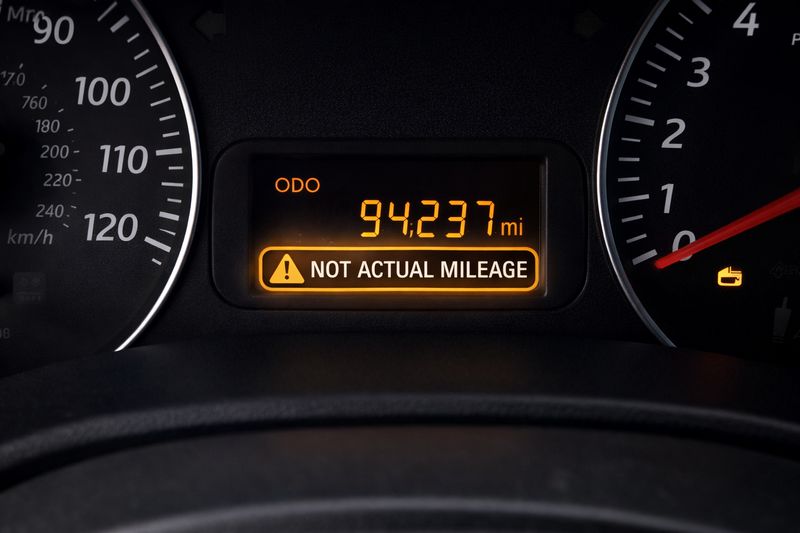
In simple terms, the DMV is saying:
“We cannot confirm that the number on the dashboard is real.”
For example, you may see a car at an online auction showing 82,000 miles. But if the odometer was replaced, rolled back, or stopped working at some point, the title may be marked as Not Actual Mileage. The car could actually have much higher mileage.
For budget buyers, NAM often explains why a decent-looking car is priced much lower than similar models with clean mileage.
Not Actual Mileage vs True Mileage Unknown (TMU)
NAM and TMU are often used to mean almost the same thing.
Both labels tell buyers that the real mileage cannot be verified. Some auctions or DMVs prefer one term over the other, but the message is similar: the true mileage is unknown.
Key point for buyers:
- NAM: Mileage is confirmed to be incorrect or unreliable.
- TMU: Mileage cannot be verified with confidence.
In real-world auction listings, both usually affect value in the same way. Buyers should treat both as a sign to focus more on vehicle condition than on the odometer number.
Not Actual Mileage vs Exempt Mileage Titles
Exempt mileage is different and often misunderstood.
An exempt mileage title usually means the vehicle is old enough that the state no longer requires mileage to be reported. This is common for older vehicles, often over 10 years old, depending on the state.
Important difference:
- Not Actual Mileage (NAM): Mileage is known to be wrong or unreliable.
- Exempt Mileage: Mileage is not required to be tracked due to vehicle age.
An exempt title does not automatically mean there is a mileage problem. It just means the state no longer tracks or guarantees mileage.
What Does It Mean for a Title to Say “Not Actual Mileage”?
When a title says “Not Actual Mileage,” it means the state cannot confirm that the odometer reading is correct. The number on the dashboard may look normal, but there is evidence or history showing it may not reflect the car’s true usage.
For buyers, this is a title warning, not just a small note. It tells you that mileage should not be used as a reliable way to judge the car’s age, wear, or value. This is why NAM vehicles are usually priced lower at auctions and private sales.
When and Why a Vehicle Gets a Not Actual Mileage Title
A vehicle gets a Not Actual Mileage label when the DMV or seller has reason to believe the odometer reading is wrong, incomplete, or unreliable. This can happen for several common reasons, many of which budget buyers see at auctions.
Odometer Rollback or Tampering
This is the most serious reason. If there is evidence that the odometer was rolled back or altered, the title may be marked as Not Actual Mileage.
For example, a car may show 65,000 miles, but older service records show 140,000 miles. That mismatch can trigger a NAM brand. Even if the rollback happened years ago, the title may stay marked.
Broken, Replaced, or Malfunctioning Odometer
Odometers can fail, especially on older vehicles. If the odometer stops working and is later repaired or replaced without proper documentation, the true mileage can no longer be confirmed.
In this case, the current odometer may show a low number, but the car could have much higher real mileage. The DMV may mark the title as Not Actual Mileage to reflect that uncertainty.
Data Entry Errors or Missing Mileage Records
Sometimes the problem is not mechanical or fraudulent. It can be a paperwork issue.
A typo at the DMV, a missing mileage entry during a title transfer, or incomplete records can break the mileage history. Once the chain is broken, the state may no longer trust the number and apply a Not Actual Mileage label.
This happens more often than buyers expect, especially with older cars or vehicles that changed hands many times.
Inconsistent Mileage Reports Between Owners
When different owners report mileage that does not line up, it raises red flags.
For example:
- One title shows 120,000 miles
- The next transfer shows 78,000 miles
Even if this was an honest mistake, the inconsistency can cause the DMV to mark the vehicle as Not Actual Mileage. From that point on, the mileage is considered unreliable.
“True Mileage Unknown” Means the Same as “Not Actual Mileage”
At auctions and on titles, you will often see both “True Mileage Unknown” (TMU) and “Not Actual Mileage” (NAM). For most buyers, these two labels mean the same practical thing: the real mileage of the vehicle cannot be confirmed.
While the wording is different, both are warning flags that tell you not to rely on the odometer reading when judging value, wear, or remaining life of the vehicle.
TMU vs NAM: Is There Any Real Difference?
In most cases, there is no meaningful difference for buyers.
Both TMU and NAM indicate that:
- The mileage history is broken or unreliable
- The odometer reading cannot be trusted
- The vehicle’s true usage is unknown
Some states and DMVs prefer one term over the other. Some auctions use TMU in listings even if the official title later shows NAM. From a buyer’s point of view, both should be treated the same way.
If you are comparing two similar cars and one has TMU or NAM while the other has verified mileage, the verified-mileage car will almost always be worth more.
How DMVs and Auctions Label Mileage Issues
DMVs and auctions use these labels to protect buyers and to comply with odometer disclosure laws.
At auctions, you may see mileage marked as:
- NAM
- TMU
- Mileage not guaranteed
- Mileage discrepancy
On the official title, the wording is set by the state DMV. Once a mileage issue is recorded, it usually stays on the title and follows the vehicle, even if the car changes owners.
Not Actual Mileage vs Not Actual Hours (RVs and Commercial Vehicles)
For RVs, heavy trucks, and some commercial equipment, usage is often tracked in hours instead of miles. Just like mileage on cars, hour meters can also become unreliable. That’s why you may see labels similar to Not Actual Mileage, but related to hours instead.
Understanding this difference helps buyers avoid confusion when shopping for RVs, buses, generators, or work vehicles at auctions.
What “Not Actual Hours” Means for RVs and Heavy Equipment
“Not Actual Hours” means the hour meter reading cannot be trusted as accurate. This can happen for many of the same reasons as NAM on cars:
- Hour meter was replaced
- Hour meter stopped working
- Records are missing or inconsistent
- Possible tampering
For example, a used RV may show low engine hours, making it look lightly used. But if the hour meter was changed and not properly documented, the true engine hours are unknown. In this case, the title or auction listing may indicate Not Actual Hours.
For budget buyers, this is a warning that engine wear and usage may be higher than what the display shows.
How Hour Meters Differ From Odometers
An odometer tracks distance driven. An hour meter tracks engine run time.
This matters because:
- A vehicle can have low miles but high engine hours (for example, delivery vans or RVs used as generators).
- A vehicle can have higher miles but lower hours if most driving was highway use.
Hour meters are common on:
- RVs
- Buses
- Heavy trucks
- Construction and farm equipment
- Some fleet and commercial vehicles
When hours are marked as not actual, buyers should judge condition based on:
- Engine noise and performance
- Maintenance records
- Signs of wear on major components
How a Not Actual Mileage Title Affects Vehicle Value
A Not Actual Mileage (NAM) title almost always lowers a vehicle’s value. Even if the car looks clean and runs well, the uncertainty around mileage makes buyers and dealers more cautious. For budget buyers, this lower value can be an opportunity — but only if you understand why the discount exists.
Typical Price Impact Compared Clean Title Vehicles
Compared to a similar car with verified mileage, a NAM vehicle often sells for 20% to 50% less, and sometimes even more depending on the model and condition.
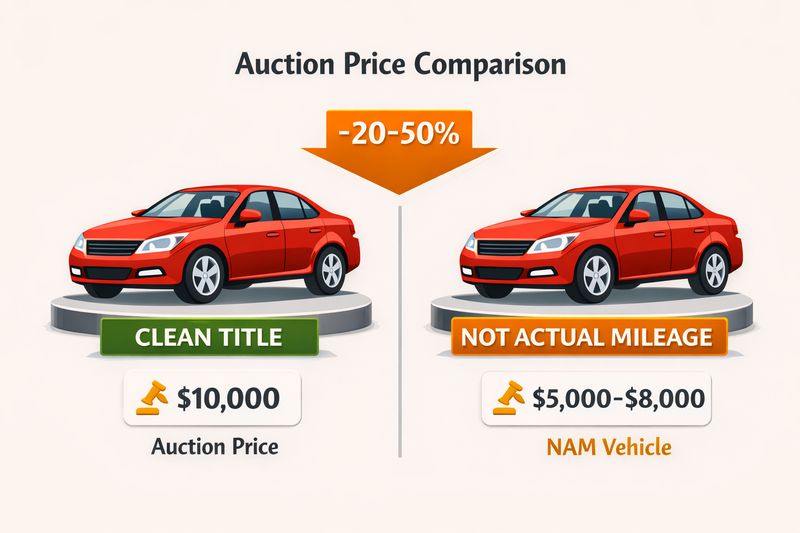
For example, two identical cars may look the same at auction. One has clean mileage. The other has a NAM title. The NAM car will usually attract fewer bidders and sell for much less, even if it drives fine.
This price gap reflects risk, not just condition. Buyers are paying less because they cannot rely on the odometer to estimate remaining life.
Why Auction Prices Are Lower for NAM Vehicles
At auctions, many buyers automatically skip vehicles with mileage brands. This reduces competition, which pushes prices down.
Other reasons prices drop:
- Dealers prefer clean titles for easy resale
- Lenders avoid financing mileage-branded vehicles
- Some buyers fear hidden problems
For budget buyers paying cash, this creates opportunities. Less competition means better chances to win bids at lower prices.
Resale Challenges and Buyer Perception
Reselling a NAM vehicle is usually harder than reselling a clean-title car.
Many private buyers:
- Worry about fraud
- Assume the car has very high mileage
- Are uncomfortable with mileage brands
Even if the car runs well, you may need to price it lower and explain the situation clearly. For buyers planning to keep the car long-term, resale may not matter as much. For flippers or short-term owners, NAM can limit profit.
Risks of Buying a Vehicle With a Not Actual Mileage Title
A Not Actual Mileage (NAM) title can unlock lower prices, but it also comes with real risks. For budget buyers, understanding these risks helps avoid buying a cheap car that turns into an expensive problem.
Unknown Wear and Tear
When mileage is not accurate, you lose one of the main tools for judging how much a car has been used.
A vehicle showing 70,000 miles might actually have 170,000 miles or more. That means more wear on:
- Engine components
- Transmission
- Suspension
- Steering and brakes
Without true mileage, it’s harder to estimate how much life is left in major parts.
Higher Risk of Mechanical Issues
Higher real mileage usually means a higher chance of breakdowns and repairs.
Even if the car drives fine during a test or inspection, hidden wear may show up later. Budget buyers often feel this most, because unexpected repairs can quickly erase any savings from the low purchase price.
This is especially risky with:
- Older vehicles
- High-performance cars
- Work trucks and fleet vehicles
- Cars with limited service records
Financing and Insurance Limitations
Many lenders will not finance vehicles with NAM or TMU titles. That means buyers often need to pay cash.
Insurance is usually available, but:
- Some insurers may limit coverage
- Full coverage may be harder to get
- Claim payouts may be lower based on reduced vehicle value
For buyers who rely on financing or full coverage, this can be a major limitation.
Difficulty Reselling the Vehicle
NAM vehicles are harder to resell.
Many buyers avoid mileage-branded cars completely. This reduces your buyer pool and usually forces you to lower your asking price.
Even if you are honest and explain the situation, buyer trust can be an issue. For short-term owners or flippers, this makes NAM vehicles a tougher choice.
Benefits of Buying a Vehicle With a Not Actual Mileage Title
While NAM titles come with risks, they can also offer real advantages for the right type of buyer. For budget-conscious shoppers, these benefits are often the reason to seriously consider a vehicle with mileage issues.
Lower Purchase Price at Auctions
The biggest benefit is price.
Vehicles with Not Actual Mileage titles usually sell for significantly less than similar cars with verified mileage. Many bidders skip these listings, which reduces competition and pushes prices down.
For example, a clean-title sedan might sell for $6,000 at auction. The same model with a NAM title could sell for $3,500 or less. For buyers paying cash, this discount can make the difference between buying or walking away.
Good Option for Work Vehicles or Exports
For work vehicles, mileage is often less important than function and reliability.
Contractors, delivery drivers, and small business owners may care more about whether the truck runs well than what the odometer says. If the vehicle passes inspection and does the job, the mileage label matters less.
For export buyers, mileage branding may also matter less depending on the destination country. In some markets, buyers focus more on overall condition and price than on U.S. mileage history.
This makes NAM vehicles attractive for:
- Work trucks and vans
- Fleet replacements
- Export markets
- Secondary or backup vehicles
Suitable for Buyers Focused on Condition, Not Mileage
Some experienced buyers judge a car by:
- Engine sound
- Transmission behavior
- Maintenance history
- Interior and exterior wear
- Overall driving feel
For these buyers, mileage is only one factor. A well-maintained car with a NAM title may still be a better choice than a neglected car with low verified miles.
Not Actual Mileage Titles at Auto Auctions
How Auctions Disclose NAM or TMU Status
At most major auto auctions, vehicles with mileage issues are clearly flagged in the listing. You will typically see labels such as NAM (Not Actual Mileage) or TMU (True Mileage Unknown) in the title information, vehicle details, or condition report. These disclosures are required so buyers understand that the odometer reading cannot be verified as accurate.
In online auctions, this information is usually shown near the title type, odometer section, or in special remarks. Some platforms may also use warning icons or notes to highlight mileage discrepancies. Always read the full listing carefully, because missing this detail can lead to incorrect pricing assumptions and unexpected risks after purchase.
What to Check Before Bidding
Buying a NAM or TMU vehicle doesn’t mean it’s automatically a bad deal, but it does require extra homework. Before placing a bid, take time to review all available documentation and condition details. Focus on factors that help you judge the real value and remaining life of the vehicle—beyond what the odometer shows.
Pay close attention to inspection reports, seller notes, and any photos of the interior, engine bay, and undercarriage. These can often tell you more about actual wear than the mileage number itself.
Vehicle History Reports
A vehicle history report (such as from Carfax or AutoCheck) can reveal mileage inconsistencies, title changes, accidents, and ownership history. Look for gaps, sudden mileage drops, or conflicting records. These red flags often explain why the vehicle received a NAM or TMU title in the first place.
While history reports are not perfect, they can help you estimate whether the car likely has significantly higher mileage than shown and whether it has been through events that affect long-term reliability.
Maintenance and Service Records
Service and maintenance records are especially valuable for NAM or TMU vehicles. Regular oil changes, major repairs, and scheduled maintenance entries can give you a clearer picture of how the car was cared for. Even if the exact mileage is unknown, consistent service history can suggest responsible ownership.
If records are missing, assume more risk and factor that into your maximum bid. Lack of documentation often means you should budget more for inspections and potential repairs.
Physical Condition vs Reported Mileage
Finally, compare the physical condition of the vehicle to the mileage shown on the listing. Excessive seat wear, shiny or worn pedals, loose steering, and heavily used switches can indicate much higher real mileage. On the other hand, a clean interior and tight driving feel may suggest lighter use—even if the odometer can’t be verified.
Can You Register and Insure a Vehicle With a Not Actual Mileage Title?
DMV Registration Rules by State
In most U.S. states, you can legally register a vehicle with a Not Actual Mileage (NAM) or True Mileage Unknown (TMU) title. However, the exact rules vary by state and may affect how smooth the registration process will be. Some DMVs may require additional paperwork, such as odometer disclosure forms, title explanations, or extra verification steps before issuing registration and plates.
Certain states are stricter when it comes to mileage branding. While they may still allow registration, the title will continue to show the mileage brand, which stays with the vehicle permanently. This means future buyers and dealers will always see that the mileage is not verified. For buyers, this is important to understand because it can affect long-term ownership and resale options.
If you plan to export the vehicle, rules may be different, and mileage branding is often less of an issue outside the U.S. Still, you should always check your local DMV or state website before bidding to avoid surprises, delays, or unexpected fees.
Insurance Availability and Coverage Limitations
Most major insurance companies will insure a vehicle with a NAM or TMU title, but coverage options may be limited. Typically, it is easier to get liability-only coverage, which meets legal requirements to drive the car on public roads. However, getting full coverage (comprehensive and collision) can be more difficult or more expensive.
Because the true mileage is unknown, insurers may view these vehicles as higher risk or harder to value accurately. As a result, some companies may lower the maximum payout, increase premiums, or require a professional inspection before approving full coverage. In some cases, insurers may refuse comprehensive or collision coverage altogether.
Not Actual Mileage Title and Vehicle Export
Exporting a vehicle with a Not Actual Mileage (NAM) or True Mileage Unknown (TMU) title is possible, but there are important considerations for international buyers. Understanding these rules can save time, money, and complications when shipping cars abroad.
Is a Not Actual Mileage Title Acceptable for Export?
Yes, vehicles with NAM or TMU titles can usually be exported from the U.S., but acceptance depends on the import regulations of the destination country. Some countries allow vehicles with mileage discrepancies as long as the title clearly indicates that the odometer reading is not accurate. Others may require additional documents, certifications, or inspections before allowing registration or import.
For example:
- Certain Middle Eastern and African countries accept NAM titles but require a notarized export declaration.
- Some European countries may require mechanical inspections or odometer affidavits before registering the car.
It’s crucial for buyers to confirm import rules with local authorities or shipping agents before purchasing a NAM vehicle at auction. Failing to do so can lead to delays, extra fees, or even rejection at the port.
What International Buyers Should Know
International buyers considering a NAM vehicle should pay attention to the following:
- Disclosure Is Key
When importing, you must disclose the NAM status to customs and local authorities. Trying to hide or misrepresent mileage can lead to fines or legal problems. - Price Advantage
NAM vehicles often cost less than similar cars with clear mileage, making them attractive for export, especially if you plan to sell or use the car in countries where mileage verification is not strictly enforced. - Condition Over Mileage
Since the odometer reading cannot be trusted, focus on the actual condition of the vehicle. A well-maintained NAM vehicle can perform just as well as a car with verified mileage. - Shipping and Documentation
Keep all documents organized: title, bill of sale, inspection reports, and export paperwork. These will help smooth the import process and reduce the risk of complications at the destination port.
Tips for Budget Buyers Considering a Not Actual Mileage Vehicle
Buying a vehicle with a Not Actual Mileage (NAM) title can be a smart way to save money, but it requires careful consideration. For budget-conscious buyers at auctions or private sales, understanding when a NAM vehicle is a good deal, spotting warning signs, and using reliable support can make all the difference.
When a NAM Title Makes Sense
A NAM title can make sense in several scenarios:
- Work or fleet vehicles: If the car will be used for deliveries, hauling, or short-term projects, mileage is less important than function and reliability.
- Export vehicles: For international buyers who focus more on condition than verified U.S. mileage, NAM vehicles are often a cost-effective choice.
- Well-maintained cars: Even with unknown mileage, a vehicle with consistent maintenance records, good inspection reports, and solid mechanical condition can offer excellent value.
For budget buyers, the key is to focus on condition and use, not just the odometer reading.
Red Flags to Avoid
While NAM vehicles can be bargains, some situations are risky and should be avoided:
- Missing or falsified service records: If the vehicle has no proof of maintenance, you may face hidden repairs.
- Severe wear and tear inconsistent with the odometer: Worn pedals, seats, or engine parts can indicate high actual mileage.
- History of accidents or salvage: A NAM title combined with a prior salvage or rebuilt history increases risk.
- Multiple previous owners with inconsistent mileage reports: This can point to recurring odometer issues or tampering.
Carefully reviewing auction reports, photos, and vehicle history can help you steer clear of these red flags.
A “Not Actual Mileage” notation on a vehicle title signals that the recorded odometer reading may not reflect the car’s true mileage. While this doesn’t automatically make a vehicle unusable, it can affect value, buyer confidence, and export eligibility if not properly understood.
For international buyers sourcing vehicles from U.S. auctions, understanding title branding and how it impacts registration in another country is essential. Auto4Export helps buyers focus on export-ready vehicles and ensures that title status and post-auction documentation are handled correctly after purchase, reducing unexpected issues after shipping.
If you want to explore vehicles suitable for export and avoid common title-related risks, you can start by creating a free account and review current inventory.
Further Reading
Types of Vehicle Titles: What You Can and Can’t Export
Unlocking the Secrets: Understanding Vehicle History Reports
Risks and Benefits of Buying Cars with Unknown History at US Auctions
The Difference Between Junk and Salvage Title

Do You Have Any Questions?
 Ask Question