


 Log in
 Sign Up





Hydrogen cars are one of the most talked-about alternatives to gasoline and battery electric vehicles. They use hydrogen fuel to generate electricity, offering long driving ranges and fast refueling times while producing only water vapor at the tailpipe. In this guide, you'll learn how hydrogen cars work, how they compare to EVs and gasoline vehicles, their real ownership costs, and what budget-conscious buyers should know before considering a hydrogen vehicle.
What Is a Hydrogen Car?
Hydrogen cars are vehicles that use hydrogen gas as a source of energy instead of relying solely on gasoline, diesel, or large rechargeable batteries. Most hydrogen-powered passenger vehicles available today generate electricity onboard through a fuel cell and use that electricity to power an electric motor.
Because hydrogen vehicles are powered by electricity, they share some similarities with battery electric vehicles. However, instead of plugging into a charging station for hours, hydrogen vehicles can be refueled in just a few minutes at a hydrogen fueling station.
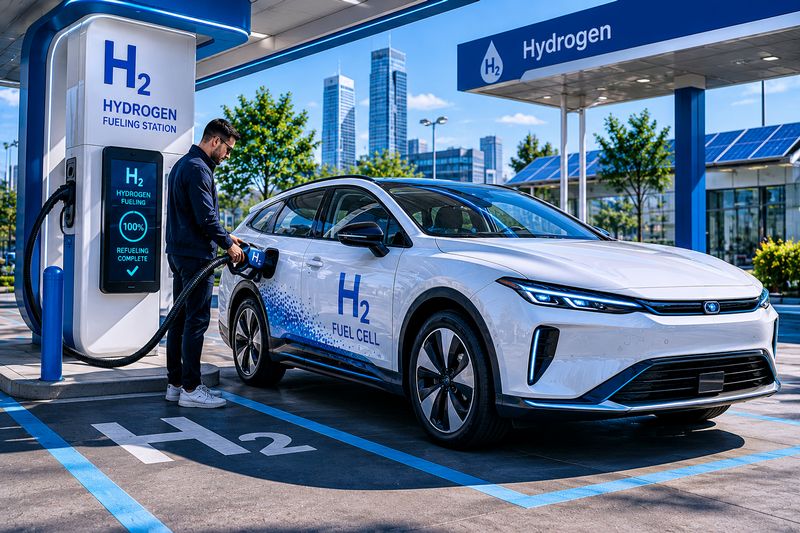
Interest in hydrogen technology continues to grow because it offers the potential for long driving ranges, fast refueling, and zero tailpipe emissions. While hydrogen vehicles remain less common than gasoline, hybrid, or battery electric vehicles, many automakers and governments view hydrogen as an important part of the future transportation landscape.
What Makes Hydrogen Vehicles Different From Gasoline Cars?
The biggest difference between a hydrogen vehicle and a traditional gasoline vehicle is how energy is produced.
Gasoline cars burn fuel inside an internal combustion engine. This process creates the power needed to move the vehicle, but it also produces carbon dioxide, nitrogen oxides, and other emissions that contribute to air pollution.
Hydrogen vehicles work differently. Instead of burning fuel, they use a fuel cell to convert hydrogen into electricity. This electricity powers an electric motor that drives the wheels.
For example, when driving a gasoline sedan, fuel is burned thousands of times per minute inside the engine. In a hydrogen vehicle, hydrogen gas and oxygen react inside a fuel cell to generate electricity without combustion.
Another major difference is the driving experience. Hydrogen vehicles operate much like electric vehicles. They provide smooth acceleration, quiet operation, and instant torque while producing only water vapor from the exhaust.
For budget-conscious buyers, this means fewer moving engine parts and potentially lower maintenance requirements compared to many traditional gasoline vehicles.
What Is a Hydrogen Fuel Cell Electric Vehicle (FCEV)?
Most modern hydrogen-powered passenger vehicles are known as Fuel Cell Electric Vehicles, or FCEVs.
An FCEV uses compressed hydrogen stored in onboard tanks. The hydrogen is sent to a fuel cell stack, where it reacts with oxygen from the air. This chemical process generates electricity, which powers the vehicle's electric motor.
Unlike battery electric vehicles, FCEVs generate electricity while driving rather than relying entirely on stored electrical energy. The vehicle may also include a small battery that stores energy recovered during braking and provides additional power when needed.
Popular examples of hydrogen fuel cell vehicles include the Toyota Mirai and the Hyundai NEXO.
From the driver's perspective, an FCEV feels very similar to a battery electric vehicle. The main difference is how the electricity is supplied. Instead of charging a large battery, drivers refill hydrogen tanks at specialized fueling stations.
How Hydrogen Cars Compare to Hybrid and Electric Vehicles
Hydrogen vehicles are often compared to hybrids and battery electric vehicles because all three technologies aim to reduce fuel consumption and emissions.
Hybrid vehicles combine a gasoline engine with an electric motor. They still require gasoline but use electricity to improve efficiency. Examples include vehicles such as the Toyota Prius.
Battery electric vehicles store electricity in large battery packs and must be recharged from an external power source. Popular EVs include models from Tesla and other automakers.
Hydrogen vehicles also use electric motors, but instead of relying on large batteries, they generate electricity onboard using hydrogen fuel cells.
Each technology has advantages and disadvantages.
Hybrid vehicles benefit from widespread fuel availability and excellent fuel economy. Battery electric vehicles offer low operating costs and growing charging networks. Hydrogen vehicles offer very fast refueling and long driving ranges that can rival or exceed many EVs.
For example, a budget buyer living in an area with limited charging infrastructure may appreciate the quick refueling capabilities of a hydrogen vehicle. However, the limited number of hydrogen stations currently available remains a significant challenge in many regions.
Why Automakers Are Investing in Hydrogen Technology
Automakers continue investing in hydrogen technology because they see potential applications where battery electric vehicles may not always be the ideal solution.
One reason is driving range. Hydrogen vehicles can often travel several hundred miles on a full tank while maintaining relatively short refueling times. This can be attractive for commercial fleets, long-distance drivers, and transportation companies.
Another reason is scalability. Large trucks, buses, and commercial vehicles require substantial energy storage. In some cases, hydrogen fuel cells may offer advantages over extremely large battery packs by reducing vehicle weight and shortening refueling times.
Governments around the world are also supporting hydrogen research and infrastructure projects as part of broader efforts to reduce emissions and diversify energy sources.
For manufacturers, investing in hydrogen technology provides flexibility. Rather than relying on a single solution for future transportation, automakers can develop multiple low-emission technologies to meet different consumer and commercial needs.
How Does a Hydrogen Car Work?
At first glance, a hydrogen car may seem complicated, but its basic operation is surprisingly easy to understand. Unlike a gasoline vehicle that burns fuel in an engine, a hydrogen vehicle generates electricity onboard and uses that electricity to power an electric motor.
Hydrogen cars are often called Fuel Cell Electric Vehicles (FCEVs) because they use a fuel cell to convert hydrogen into electrical energy. This process happens continuously while the vehicle is being driven. The result is a vehicle that drives much like an electric car but can be refueled in minutes rather than requiring a lengthy charging session.
Understanding how hydrogen vehicles work helps buyers evaluate whether this technology may become a practical transportation option in the future.
What Is a Hydrogen Fuel Cell?
A hydrogen fuel cell is the heart of a hydrogen-powered vehicle. It is a device that converts hydrogen gas into electricity through a chemical reaction rather than through combustion.
Unlike a gasoline engine, which burns fuel to create power, a fuel cell produces electricity directly. This process is highly efficient and generates very few emissions.
A fuel cell consists of multiple layers that allow hydrogen and oxygen to interact in a controlled way. As the reaction takes place, electricity is generated and sent to the vehicle's electric motor.
Most hydrogen vehicles contain a fuel cell stack, which is made up of many individual fuel cells working together. This stack produces enough electricity to power the vehicle under normal driving conditions.
You can think of a fuel cell as a small onboard power plant that continuously creates electricity as long as hydrogen is available.
How Hydrogen Produces Electricity Inside the Vehicle
The electricity generation process begins when hydrogen stored in the vehicle's tanks enters the fuel cell system.
Inside the fuel cell, hydrogen molecules are separated into protons and electrons. The protons pass through a special membrane, while the electrons are forced to travel through an external circuit.
As the electrons move through this circuit, they create an electrical current. This electricity is then used to power the vehicle's electric motor and other onboard systems.
The process happens continuously while the vehicle is operating. As long as hydrogen is supplied to the fuel cell and oxygen is available from the surrounding air, electricity continues to be generated.
For the driver, all of this occurs automatically. There are no visible chemical reactions or mechanical processes that require attention. The vehicle simply behaves like a quiet electric car.
The Role of Oxygen in the Fuel Cell Process
Hydrogen alone cannot produce electricity inside a fuel cell. Oxygen plays an equally important role in the process.
The fuel cell draws oxygen from the outside air through an intake system. Once inside the fuel cell, the oxygen combines with the hydrogen protons and electrons that have completed their journey through the electrical circuit.
This reaction produces water and releases energy in the form of electricity.
Because oxygen is freely available in the atmosphere, drivers never need to refill or store oxygen separately. The vehicle continuously pulls in the air it needs while operating.
The combination of hydrogen and oxygen is what allows fuel cells to generate electricity efficiently without producing many of the harmful pollutants associated with internal combustion engines.
How Electric Motors Power Hydrogen Vehicles
Although hydrogen is the fuel source, hydrogen vehicles are actually driven by electric motors.
The electricity generated by the fuel cell is sent to an electric motor that turns the wheels. This is similar to the way battery electric vehicles operate.
Electric motors offer several advantages over traditional gasoline engines. They provide instant torque, smooth acceleration, quiet operation, and fewer moving parts.
For example, when a driver presses the accelerator pedal in a hydrogen vehicle, the electric motor can deliver power immediately. There is no need to build engine speed before producing maximum torque.
Many hydrogen vehicles also include a small battery pack that stores energy recovered during braking. This stored energy can assist the fuel cell during acceleration and improve overall efficiency.
As a result, hydrogen vehicles often deliver a driving experience that feels very similar to a modern electric vehicle.
What Comes Out of the Exhaust Pipe?
One of the most frequently asked questions about hydrogen vehicles is what actually comes out of the exhaust system.
Unlike gasoline vehicles, hydrogen fuel cell vehicles do not produce carbon dioxide, nitrogen oxides, or many other pollutants commonly associated with combustion engines.
Instead, the primary byproduct is water.
As hydrogen and oxygen react inside the fuel cell, water is created naturally as part of the process. This water is released through the vehicle's exhaust system.
In some situations, drivers may even notice small amounts of water dripping from the exhaust pipe. This is completely normal and is simply a result of the fuel cell's operation.
Why Water Vapor Is the Main Byproduct
The fuel cell process does not involve burning fuel. Instead, it relies on a chemical reaction between hydrogen and oxygen.
When hydrogen combines with oxygen, the resulting byproduct is water. Depending on temperature and operating conditions, this water may leave the vehicle as water vapor or liquid water.
This is one of the reasons hydrogen vehicles are often promoted as a low-emission transportation technology. Since no carbon-based fuel is burned, there is no direct production of carbon dioxide at the tailpipe.
For drivers, this means cleaner operation compared to traditional gasoline and diesel vehicles.
How Hydrogen Cars Reduce Harmful Emissions
Hydrogen fuel cell vehicles produce zero tailpipe carbon emissions during normal operation. Because they do not burn gasoline or diesel fuel, they avoid many of the pollutants associated with internal combustion engines.
This can help reduce urban air pollution, especially in densely populated areas where vehicle emissions contribute to smog and poor air quality.
However, it is important to understand that the overall environmental impact of a hydrogen vehicle depends partly on how the hydrogen itself is produced. Hydrogen generated from renewable energy sources can significantly reduce total emissions throughout the fuel's lifecycle.
For consumers, the key advantage is that hydrogen vehicles produce no harmful tailpipe emissions while driving. Combined with their electric powertrains, this allows them to deliver quiet, efficient transportation with a much smaller direct environmental footprint than conventional gasoline vehicles.
What Are the Main Components of a Hydrogen Vehicle?
Hydrogen vehicles may look similar to conventional cars from the outside, but the technology underneath is very different. Instead of relying on a gasoline engine, hydrogen vehicles use a combination of specialized components that work together to generate electricity and power the vehicle.
Every hydrogen fuel cell vehicle contains several key systems, including hydrogen storage tanks, a fuel cell stack, an electric motor, a battery system, and advanced cooling and power management equipment. Each component plays a specific role in keeping the vehicle operating efficiently and safely.
Understanding these components can help buyers better understand how hydrogen vehicles function and what makes them different from traditional gasoline, hybrid, and battery electric vehicles.
Hydrogen Storage Tanks
Hydrogen storage tanks are one of the most important parts of a hydrogen vehicle. These tanks store compressed hydrogen gas that serves as the vehicle's fuel source.
Unlike gasoline, which is stored as a liquid, hydrogen is typically stored as a highly compressed gas. To maximize driving range, modern hydrogen vehicles use tanks capable of holding hydrogen at extremely high pressures.
Because hydrogen is the lightest element in the universe, storing enough fuel for hundreds of miles of driving requires advanced engineering. Manufacturers use strong composite materials such as carbon fiber to build tanks that are both lightweight and extremely durable.
For example, the hydrogen tanks used in vehicles such as the Toyota Mirai are designed to withstand impacts, punctures, and harsh operating conditions. These tanks undergo extensive testing before being approved for public use.
The amount of hydrogen stored directly affects the vehicle's driving range. Larger storage capacity allows drivers to travel farther between refueling stops.
Fuel Cell Stack
The fuel cell stack is often considered the heart of a hydrogen vehicle. Its job is to convert hydrogen into electricity that can power the vehicle.
A fuel cell stack consists of many individual fuel cells assembled together into a larger unit. Each fuel cell contributes a small amount of electricity, and when combined, the entire stack produces enough power to drive the vehicle.
Inside the fuel cell stack, hydrogen from the storage tanks reacts with oxygen from the air. This chemical process generates electricity without combustion.
Unlike a gasoline engine with hundreds of moving parts, a fuel cell stack operates through an electrochemical reaction. This helps reduce mechanical complexity and contributes to smooth, quiet operation.
The fuel cell stack continuously generates electricity while hydrogen is supplied, allowing the vehicle to operate much like an electric car without relying solely on a large battery pack.
Electric Motor
Although hydrogen is the fuel source, hydrogen vehicles are actually driven by electric motors.
The electricity generated by the fuel cell stack is delivered to an electric motor, which converts electrical energy into mechanical power that turns the wheels.
Electric motors provide several advantages compared to traditional internal combustion engines. They deliver instant torque, smooth acceleration, and quiet operation. Drivers often notice that hydrogen vehicles feel very similar to battery electric vehicles when accelerating.
For example, when a driver presses the accelerator pedal, the electric motor responds almost immediately. There is no need for multiple gear changes or engine revving before power becomes available.
Electric motors also contain fewer moving parts than gasoline engines, which can help reduce maintenance requirements over time.
Because of these characteristics, hydrogen vehicles offer a driving experience that feels modern, responsive, and refined.
Battery Pack and Energy Recovery System
Most hydrogen vehicles include a small battery pack that works alongside the fuel cell system.
Unlike the large batteries found in battery electric vehicles, the battery in a hydrogen vehicle primarily serves as an energy buffer. It stores electricity generated during certain driving situations and provides additional power when needed.
One important feature is regenerative braking. When the driver slows down or applies the brakes, the electric motor acts as a generator and captures energy that would otherwise be lost as heat.
This recovered energy is stored in the battery and can later be used to assist acceleration or reduce the workload on the fuel cell.
For example, when driving through city traffic with frequent stops, regenerative braking can repeatedly capture energy and improve overall efficiency.
The battery also helps provide extra power during rapid acceleration, allowing the fuel cell and battery to work together when higher performance is required.
Cooling and Power Management Systems
Hydrogen vehicles rely on sophisticated cooling and power management systems to keep all components operating efficiently.
The fuel cell stack generates heat while producing electricity. If this heat is not properly controlled, efficiency and performance can decrease. Cooling systems help maintain the optimal operating temperature for the fuel cell and other electronic components.
Similarly, power management systems control how electricity flows throughout the vehicle. These systems determine when energy should come directly from the fuel cell, when the battery should assist, and how regenerative braking energy should be stored.
For example, during highway cruising, the power management system may rely primarily on the fuel cell. During hard acceleration, both the fuel cell and battery may provide power simultaneously. During braking, energy is redirected back into the battery.
These systems operate automatically and continuously behind the scenes. Drivers rarely notice them, but they play a critical role in maintaining efficiency, performance, and reliability.
How Is Hydrogen Fuel Produced?
Hydrogen is the most abundant element in the universe, but it is rarely found in a pure form on Earth. Before hydrogen can be used to power vehicles, it must first be produced from other materials such as natural gas or water.
The way hydrogen is produced plays a major role in determining both its cost and environmental impact. Some production methods are already widely used because they are relatively inexpensive, while others are gaining attention because they can generate hydrogen with little or no carbon emissions.
Understanding how hydrogen fuel is produced helps consumers better evaluate the overall sustainability and future potential of hydrogen-powered transportation.
Producing Hydrogen From Natural Gas
Today, most hydrogen is produced from natural gas through a process called steam methane reforming.
In this process, natural gas is combined with high-temperature steam. The reaction separates hydrogen atoms from carbon atoms, producing hydrogen that can later be purified and used as fuel.
Steam methane reforming has become the dominant production method because it is relatively efficient and can produce large quantities of hydrogen at a lower cost than many alternative methods.
However, this process has an environmental drawback. It generates carbon dioxide as a byproduct, which contributes to greenhouse gas emissions unless carbon capture technologies are used.
This type of hydrogen is often referred to as "gray hydrogen." When carbon emissions from the production process are captured and stored, the fuel may be classified as "blue hydrogen."
Many hydrogen fueling stations currently rely on hydrogen produced from natural gas because it remains one of the most economical options available.
For consumers, this means that while hydrogen vehicles produce zero tailpipe emissions, the environmental impact of the fuel depends partly on how the hydrogen was created.
Green Hydrogen From Renewable Energy
Green hydrogen is considered one of the cleanest forms of hydrogen fuel currently available.
Unlike hydrogen produced from fossil fuels, green hydrogen is generated using renewable energy sources such as solar power, wind energy, or hydroelectric power. This process allows hydrogen to be produced with little or no direct carbon emissions.
Many governments and energy companies view green hydrogen as an important part of future clean energy strategies. Because renewable energy production continues to expand worldwide, interest in green hydrogen is growing rapidly.
For example, excess electricity generated by wind farms or solar facilities can be used to produce hydrogen when energy demand is low. The hydrogen can then be stored and used later as transportation fuel or for industrial applications.
Although green hydrogen is currently more expensive to produce than hydrogen from natural gas, many experts expect costs to decline as renewable energy technology becomes more affordable and production scales increase.
If green hydrogen becomes more widely available, it could significantly improve the environmental benefits of hydrogen-powered vehicles.
Electrolysis Explained
Electrolysis is the primary process used to produce green hydrogen.
This method uses electricity to split water molecules into hydrogen and oxygen. The hydrogen is collected and stored, while the oxygen is typically released into the atmosphere or used for industrial purposes.
The process itself is relatively simple. Water is placed inside an electrolyzer, and an electrical current is passed through it. The electricity breaks the chemical bonds holding the water molecules together.
As a result, pure hydrogen and oxygen are separated from one another.
When the electricity used for electrolysis comes from renewable energy sources, the hydrogen produced is considered green hydrogen. This makes electrolysis one of the most promising pathways for creating low-emission hydrogen fuel.
The technology continues to improve as researchers work to increase efficiency and reduce production costs. Many countries are investing heavily in large-scale electrolysis projects to support future hydrogen demand.
Challenges of Large-Scale Hydrogen Production
Despite its potential, producing hydrogen on a large scale remains challenging.
One issue is energy demand. Hydrogen production requires significant amounts of energy regardless of the production method used. Electrolysis, in particular, requires large quantities of electricity to generate meaningful volumes of hydrogen.
Infrastructure is another challenge. Hydrogen production facilities, storage systems, transportation networks, and fueling stations all require substantial investment. Building these systems takes time and significant financial resources.
Transportation can also be difficult because hydrogen is a very light gas. It often must be compressed or converted into other forms before it can be transported efficiently over long distances.
For example, gasoline can be moved through existing pipelines and tanker trucks using well-established systems. Hydrogen often requires specialized equipment and handling procedures, increasing costs and complexity.
Scaling production to meet future demand will require major investments from governments, energy companies, and private industry.
Why Hydrogen Production Costs Matter
Hydrogen production costs have a direct impact on the price consumers pay at hydrogen fueling stations.
If hydrogen remains expensive to produce, fuel prices may remain higher than those of gasoline or electricity in some markets. This can affect the overall affordability of hydrogen vehicle ownership.
For budget-conscious buyers, fuel costs are often one of the most important factors when evaluating a vehicle. A car may offer excellent technology and environmental benefits, but high fuel expenses can reduce its financial appeal.
Production costs also influence vehicle adoption. Lower-cost hydrogen can encourage investment in fueling infrastructure, increase consumer demand, and support broader deployment of hydrogen-powered transportation.
Many experts believe that future advances in renewable energy, electrolysis technology, and large-scale hydrogen production will help reduce costs over time. As production becomes more efficient, hydrogen may become increasingly competitive with traditional fuels and battery charging.
How Do Drivers Refuel Hydrogen Cars?
One of the biggest advantages of hydrogen vehicles is the speed and simplicity of refueling. While battery electric vehicles often require charging times that range from several minutes to several hours, hydrogen vehicles can typically be refueled in a matter of minutes.
For drivers who are familiar with gasoline vehicles, the refueling process feels very similar. Drivers visit a hydrogen fueling station, connect a fueling nozzle, and fill the vehicle's hydrogen tanks before continuing their journey.
However, hydrogen fueling involves specialized equipment and safety systems designed to handle compressed hydrogen gas. Understanding how the process works can help potential buyers evaluate whether hydrogen vehicles fit their transportation needs.
How Hydrogen Fueling Stations Work
Hydrogen fueling stations are designed to store and dispense compressed hydrogen safely and efficiently.
The hydrogen delivered to a station may be produced onsite or transported from production facilities. Once the hydrogen arrives, it is stored in high-pressure tanks before being dispensed into vehicles.
When a driver arrives at a hydrogen station, the fueling process begins by connecting a specialized nozzle to the vehicle's fuel port. Unlike gasoline pumps, hydrogen fueling systems create a secure sealed connection to prevent gas from escaping during refueling.
The station then transfers compressed hydrogen into the vehicle's storage tanks. Advanced monitoring systems continuously measure pressure, temperature, and fuel flow to ensure the process remains safe and accurate.
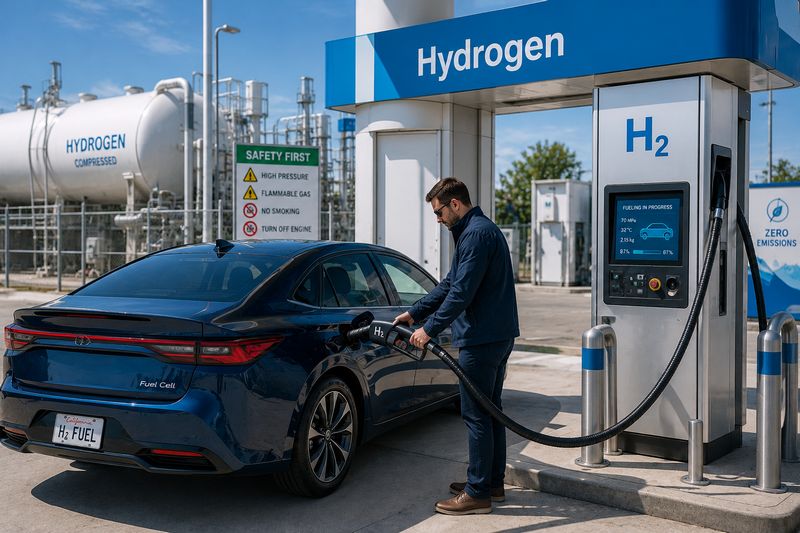
From the driver's perspective, the process is relatively straightforward and requires only a few additional steps compared to filling a gasoline vehicle.
How Long It Takes to Refuel a Hydrogen Car
One of the most attractive features of hydrogen vehicles is their short refueling time.
Most passenger hydrogen vehicles can be fully refueled in approximately three to five minutes, depending on the vehicle model, tank size, and fueling station equipment.
This is significantly faster than charging most battery electric vehicles. Even many fast-charging EVs may require 20 to 40 minutes or more to reach a high battery charge level, while home charging often takes several hours.
For drivers who regularly travel long distances, this can be a major advantage. A hydrogen vehicle can often be refueled during a brief stop and immediately return to the road.
For example, a commuter driving hundreds of miles each week may appreciate the ability to refuel quickly without adjusting their schedule around charging sessions.
This convenience is one reason many experts believe hydrogen technology may be particularly useful for commercial transportation and long-distance travel.
Driving Range of Hydrogen Vehicles
Hydrogen vehicles are known for offering competitive driving ranges compared to both gasoline vehicles and battery electric vehicles.
Many modern hydrogen cars can travel between 300 and 400 miles or more on a full tank of hydrogen. Some models can exceed these figures under favorable driving conditions.
For example, the Toyota Mirai is widely recognized for offering a driving range comparable to many gasoline-powered sedans. Similarly, the Hyundai NEXO provides a range suitable for daily commuting and long-distance travel.
This combination of long driving range and fast refueling is one of the primary selling points of hydrogen technology.
For budget-conscious buyers who frequently travel long distances, range can be an important consideration. Fewer refueling stops may improve convenience and reduce travel interruptions.
However, actual range depends on factors such as driving habits, weather conditions, vehicle load, and terrain.
Safety Measures During Refueling
Because hydrogen is stored under very high pressure, safety is a critical part of the refueling process.
Modern hydrogen fueling stations include multiple safety systems designed to detect leaks, monitor pressure levels, and automatically stop fueling if abnormal conditions are detected.
The fueling nozzle is specifically designed to create a secure connection before hydrogen begins flowing into the vehicle. Sensors continuously monitor the entire process from start to finish.
Hydrogen vehicles themselves also include sophisticated safety technologies. The onboard storage tanks undergo extensive testing to ensure they can withstand impacts, punctures, extreme temperatures, and other challenging conditions.
For example, hydrogen tanks are often subjected to crash testing, fire exposure testing, and pressure testing before receiving regulatory approval.
Although some people associate hydrogen with safety concerns due to its flammability, modern hydrogen fueling systems are engineered with multiple layers of protection that help minimize risk during everyday use.
Availability of Hydrogen Stations in Different Countries
The availability of hydrogen fueling infrastructure varies significantly around the world.
Some countries have invested heavily in hydrogen transportation and have developed relatively extensive fueling networks. Others remain in the early stages of infrastructure development.
In the United States, most hydrogen fueling stations are concentrated in California. Drivers outside of this region often have limited access to hydrogen fuel, making vehicle ownership more challenging.
Several countries in Europe continue expanding their hydrogen infrastructure as part of broader clean transportation initiatives. Nations such as Germany, France, and the Netherlands have invested in hydrogen fueling networks to support growing adoption.
Asia is also a major player in hydrogen development. Countries such as Japan and South Korea have made substantial investments in hydrogen technology and fueling infrastructure. These markets are often viewed as leaders in hydrogen vehicle deployment.
For potential buyers, fueling station availability is one of the most important factors to consider before purchasing a hydrogen vehicle. Even a vehicle with excellent range and fast refueling capabilities may not be practical if hydrogen stations are not available nearby.
This is especially important for budget-conscious consumers considering used hydrogen vehicles purchased through dealerships or auto auctions. Before buying, it is essential to research local hydrogen infrastructure and verify that convenient fueling options exist within regular driving routes.
What Are the Advantages of Hydrogen Cars?
Hydrogen vehicles have attracted attention because they offer some of the benefits of electric vehicles while addressing certain limitations associated with battery charging. Although hydrogen cars currently represent a small portion of the automotive market, supporters believe they could play an important role in the future of clean transportation.
For drivers, the appeal often comes down to convenience, range, environmental benefits, and driving experience. For businesses, hydrogen technology may offer solutions for commercial transportation, logistics, and long-distance operations where downtime can be costly.
While hydrogen vehicles are not the right solution for every buyer, they offer several advantages that continue to drive investment and development around the world.
Fast Refueling Compared to Battery EVs
One of the biggest advantages of hydrogen vehicles is how quickly they can be refueled.
Most hydrogen cars can be refilled in approximately three to five minutes, which is very similar to the time required to fill a gasoline vehicle. This is significantly faster than charging most battery electric vehicles.
Even with modern fast-charging technology, many EVs require anywhere from 20 minutes to over an hour to receive a substantial charge. Home charging often takes several hours or overnight.
For drivers with busy schedules, fast refueling can be a major convenience. Instead of planning trips around charging stops, hydrogen vehicle owners can quickly refuel and continue driving.
For example, a commuter who drives long distances every day may appreciate spending only a few minutes at a fueling station rather than waiting for a battery to recharge. The same advantage applies to businesses that rely on vehicles remaining in service as much as possible.
This quick refueling process is one reason hydrogen technology continues to receive attention despite the rapid growth of battery electric vehicles.
Long Driving Range for Daily and Commercial Use
Driving range is another area where hydrogen vehicles perform well.
Many hydrogen-powered passenger vehicles can travel between 300 and 400 miles or more on a full tank. This range is comparable to many gasoline vehicles and often similar to or greater than some battery electric vehicles.
For everyday drivers, a longer range means fewer refueling stops and greater flexibility when planning trips. Drivers may be able to commute for an entire week before needing to visit a fueling station, depending on their driving habits.
Long range is particularly valuable for commercial applications. Delivery companies, transportation services, and fleet operators often require vehicles that can remain on the road for extended periods without interruption.
For example, a business operating vehicles across large metropolitan areas may benefit from the combination of long range and fast refueling. This can help reduce downtime and improve operational efficiency.
Because of these advantages, hydrogen technology is often viewed as especially promising for commercial transportation and long-distance travel.
Zero Tailpipe Emissions
One of the primary environmental benefits of hydrogen fuel cell vehicles is their ability to operate without producing harmful tailpipe emissions.
Unlike gasoline and diesel vehicles, hydrogen cars do not burn fuel inside an engine. Instead, they generate electricity through a chemical reaction between hydrogen and oxygen.
As a result, hydrogen vehicles do not release carbon dioxide, nitrogen oxides, or many of the pollutants associated with conventional internal combustion engines during operation.
The primary byproduct is water vapor.
This makes hydrogen vehicles attractive in regions focused on improving air quality and reducing transportation-related emissions. In crowded urban areas where vehicle pollution can contribute to smog and health concerns, cleaner transportation technologies may offer significant benefits.
While the overall environmental impact depends on how the hydrogen fuel is produced, hydrogen vehicles themselves operate with zero tailpipe emissions.
Quiet and Smooth Driving Experience
Because hydrogen vehicles use electric motors, they offer many of the same driving characteristics that make battery electric vehicles popular.
Electric motors operate quietly and provide immediate torque when the accelerator is pressed. This results in smooth acceleration and a refined driving experience.
Drivers often notice the absence of engine vibration and noise that are common in traditional gasoline vehicles. The vehicle moves quietly through traffic while maintaining responsive performance.
For example, someone transitioning from an older gasoline vehicle may immediately notice how smooth and quiet a hydrogen vehicle feels during city driving and highway cruising.
The reduced noise can make long trips more comfortable and contribute to a more relaxing driving experience overall.
Many buyers who test-drive hydrogen vehicles are surprised by how similar they feel to premium electric vehicles.
Reduced Dependence on Fossil Fuels
Hydrogen technology also offers the potential to reduce dependence on traditional fossil fuels.
Although much of today's hydrogen is still produced from natural gas, the industry is increasingly focused on producing hydrogen using renewable energy sources. Green hydrogen generated through electrolysis powered by solar, wind, or hydroelectric energy can provide a cleaner alternative to gasoline and diesel fuel.
As renewable energy production expands, hydrogen could become part of a broader strategy to diversify energy sources and reduce reliance on petroleum-based transportation.
For governments and energy companies, this diversification can improve energy security and support long-term sustainability goals.
For consumers, the potential growth of renewable hydrogen may eventually provide additional fueling options that are less dependent on traditional fossil fuel markets.
Potential Benefits for Commercial Fleets and Long-Distance Transport
Many experts believe some of the greatest opportunities for hydrogen technology exist in commercial transportation.
Fleet operators often prioritize vehicle uptime, efficiency, and range. Hydrogen vehicles can support these goals by combining fast refueling with long driving distances.
For example, delivery companies, freight carriers, public transit agencies, and logistics providers may benefit from hydrogen-powered vehicles that spend less time refueling and more time operating.
Long-haul trucking is frequently mentioned as a potential application. Large commercial vehicles require substantial amounts of energy, and extremely large battery packs can add significant weight and charging requirements. Hydrogen fuel cells may provide an alternative solution for certain transportation needs.
Hydrogen-powered buses are also being deployed in some cities to reduce emissions while maintaining the operational flexibility required for public transportation systems.
Although hydrogen infrastructure remains limited, many businesses continue evaluating hydrogen vehicles as a potential tool for improving efficiency and reducing environmental impact.
What Are the Disadvantages of Hydrogen Cars?
While hydrogen vehicles offer several impressive advantages, they also face significant challenges that have limited their adoption. For many consumers, especially budget-conscious buyers, these disadvantages can play a major role when deciding whether a hydrogen vehicle is practical.
Hydrogen technology is still developing, and many of the supporting systems required for widespread adoption remain incomplete. Infrastructure limitations, vehicle costs, fuel prices, and availability concerns continue to affect the market.
Understanding these challenges is important because they help explain why hydrogen vehicles remain far less common than gasoline, hybrid, and battery electric vehicles despite years of development.
Limited Hydrogen Infrastructure
The biggest obstacle facing hydrogen vehicles today is the lack of fueling infrastructure.
Unlike gasoline stations, which can be found almost everywhere, hydrogen fueling stations remain relatively rare. In many regions, there are few or no public hydrogen stations available.
For example, most hydrogen fueling stations in the United States are concentrated in California. Outside of that state, hydrogen vehicle owners may have very limited refueling options.
This can create significant inconvenience for drivers. Owning a hydrogen vehicle becomes difficult if the nearest fueling station is many miles away or if only a small number of stations serve an entire region.
For budget buyers, infrastructure limitations can make purchasing a hydrogen vehicle risky. Even if a used hydrogen car is available at an attractive price through an auto auction, the vehicle may not be practical if local fueling stations are unavailable.
Until hydrogen fueling networks expand substantially, infrastructure will remain one of the industry's biggest challenges.
High Vehicle Production Costs
Hydrogen vehicles are generally expensive to manufacture.
Fuel cell systems require advanced materials, sophisticated engineering, and specialized components. The fuel cell stack itself contains complex technology that is costly to produce compared to traditional internal combustion engines.
Hydrogen storage tanks also contribute to vehicle costs. These tanks must safely store hydrogen under extremely high pressure and are often constructed from advanced materials such as carbon fiber composites.
Because production volumes remain relatively low, manufacturers cannot yet benefit from the same economies of scale that help reduce costs for gasoline vehicles and many battery electric vehicles.
As a result, new hydrogen vehicles often carry higher price tags than comparable conventional vehicles.
For consumers, higher production costs can translate into higher purchase prices, making hydrogen vehicles less accessible than other transportation options.
Expensive Hydrogen Fuel in Some Markets
The cost of hydrogen fuel varies significantly depending on location, production methods, and local infrastructure.
In some markets, hydrogen can be relatively expensive compared to gasoline or electricity. Production, storage, transportation, and dispensing costs all influence the final price drivers pay at the pump.
For example, a driver may find that refueling a hydrogen vehicle costs more than charging a battery electric vehicle over the same driving distance. This can affect the overall cost of ownership.
Fuel prices become particularly important for budget-conscious consumers who carefully evaluate operating expenses before purchasing a vehicle.
Although future advances in hydrogen production may help lower fuel costs, current pricing remains a concern in many regions where hydrogen infrastructure is still developing.
As production scales increase and technology improves, many industry experts expect hydrogen fuel costs to become more competitive. However, affordability remains a challenge today.
Challenges With Hydrogen Storage and Transportation
Hydrogen presents unique storage and transportation challenges that do not exist with many conventional fuels.
Hydrogen is the lightest element in the universe, which makes it difficult to store efficiently. To provide practical driving range, hydrogen must usually be compressed to extremely high pressures before being stored in vehicle tanks.
Transporting hydrogen from production facilities to fueling stations can also be complicated and expensive. Specialized equipment is often required to handle compressed or liquefied hydrogen safely.
For example, gasoline can be distributed through extensive infrastructure networks that have been developed over many decades. Hydrogen distribution systems are still relatively limited and often require significant investment.
These logistical challenges increase costs throughout the supply chain and contribute to the higher prices associated with hydrogen transportation.
Expanding hydrogen infrastructure will require continued investment in storage technology, transportation systems, and fueling station development.
Limited Model Availability
Consumers interested in hydrogen vehicles currently have far fewer choices than buyers shopping for gasoline, hybrid, or battery electric vehicles.
Only a small number of hydrogen passenger vehicles are available in most markets. Models such as the Toyota Mirai and the Hyundai NEXO represent some of the most well-known options, but overall selection remains limited.
This lack of variety can make it difficult for buyers to find a hydrogen vehicle that matches their preferred body style, budget, performance requirements, or lifestyle needs.
The limited number of vehicles also affects the used market. Buyers searching online auto auctions or used car inventories may find relatively few hydrogen-powered vehicles compared to the vast selection of gasoline, hybrid, and electric models.
Until more manufacturers introduce hydrogen-powered vehicles, limited model availability will continue to restrict consumer adoption.
Energy Efficiency Concerns Compared to Battery EVs
Another challenge often discussed by industry experts is overall energy efficiency.
Both hydrogen vehicles and battery electric vehicles use electric motors, but the path energy takes to reach those motors is different.
Battery electric vehicles store electricity directly in batteries and use it to power the motor. Hydrogen vehicles require additional steps. Electricity may first be used to produce hydrogen, which is then compressed, transported, stored, and later converted back into electricity inside the vehicle through a fuel cell.
Each step involves some energy loss.
As a result, battery electric vehicles are generally considered more energy-efficient than hydrogen fuel cell vehicles when comparing the total amount of energy required to move a vehicle a certain distance.
This does not necessarily mean hydrogen vehicles are a poor solution. Hydrogen offers advantages such as fast refueling and long range. However, from a pure energy-efficiency perspective, battery electric vehicles currently hold an advantage.
For policymakers, manufacturers, and consumers, this efficiency difference remains an important factor when evaluating the future role of hydrogen technology in transportation.
How Safe Are Hydrogen Cars?
Safety is one of the first concerns many people have when they hear that a vehicle stores highly compressed hydrogen gas. Because hydrogen is flammable, some consumers assume hydrogen vehicles are inherently dangerous. However, modern hydrogen vehicles are designed with extensive safety systems that address these risks.
Automakers understand that public acceptance depends heavily on safety. As a result, hydrogen vehicles undergo rigorous testing and are equipped with multiple layers of protection. From reinforced storage tanks to sophisticated leak detection systems, manufacturers have invested heavily in ensuring hydrogen vehicles meet strict safety standards.
For most drivers, hydrogen vehicles are designed to be just as safe as conventional gasoline, hybrid, and electric vehicles under everyday operating conditions.
How Hydrogen Tanks Are Built for Safety
The hydrogen storage tanks used in modern fuel cell vehicles are among the most heavily engineered components in the vehicle.
Unlike gasoline tanks, which store liquid fuel at relatively low pressure, hydrogen tanks store compressed gas at extremely high pressures. Because of this, manufacturers use advanced materials and construction methods to ensure safety and durability.
Most hydrogen tanks are built using multiple protective layers. These often include a plastic inner liner surrounded by extremely strong carbon-fiber composite materials and additional protective outer layers.
The tanks are designed to withstand conditions far beyond normal driving situations. They are tested against impacts, punctures, extreme temperatures, and high-pressure scenarios to verify their durability.
For example, hydrogen tanks in vehicles such as the Toyota Mirai and Hyundai NEXO are engineered to maintain structural integrity even under severe conditions.
These tanks are often significantly stronger than many people expect and are built specifically to handle the unique requirements of hydrogen storage.
Crash Testing and Safety Standards
Hydrogen vehicles must meet the same crash safety requirements as other passenger vehicles sold to consumers.
Before entering the market, hydrogen vehicles undergo extensive crash testing that evaluates how they perform in front, side, rear, and rollover collisions. These tests help ensure the vehicle protects occupants while maintaining the integrity of the hydrogen storage system.
Manufacturers also perform specialized testing that focuses specifically on hydrogen-related components. Engineers evaluate how tanks, fuel lines, valves, and fuel cell systems respond during severe impacts.
For example, crash simulations and real-world testing are used to determine whether hydrogen systems remain secure during collisions. If damage is detected, safety mechanisms are designed to automatically isolate hydrogen storage components and minimize risk.
Regulatory agencies in various countries require hydrogen vehicles to comply with strict safety standards before they can be sold to the public.
As a result, hydrogen vehicles are subjected to extensive scrutiny before reaching consumers.
Fire and Leak Prevention Systems
Modern hydrogen vehicles include multiple systems designed to detect and prevent leaks or fire-related hazards.
Hydrogen sensors are installed throughout the vehicle to continuously monitor for the presence of escaping gas. If a leak is detected, the system can automatically shut off hydrogen flow and alert the driver.
Hydrogen fuel systems also use specialized valves that can rapidly isolate sections of the fuel system if abnormal conditions occur. This helps prevent hydrogen from escaping in the event of damage.
One characteristic of hydrogen that can actually provide a safety advantage is its behavior when released. Hydrogen is extremely light and disperses upward very quickly. In open-air environments, it often dissipates faster than gasoline vapors, reducing the likelihood of prolonged accumulation near the vehicle.
In addition, hydrogen vehicles are equipped with ventilation systems and pressure-relief devices that help manage fuel safely under various operating conditions.
Together, these technologies create multiple layers of protection designed to minimize risks associated with hydrogen storage and use.
Common Myths About Hydrogen Vehicle Safety
Several misconceptions continue to influence public perception of hydrogen vehicles.
One common myth is that hydrogen vehicles are highly explosive and therefore inherently unsafe. While hydrogen is flammable, so are gasoline, diesel fuel, and many other energy sources used in transportation. The key factor is how the fuel is stored, managed, and protected.
Another misconception is that hydrogen tanks are fragile because they contain compressed gas. In reality, hydrogen tanks are typically subjected to rigorous testing standards that often exceed those applied to conventional fuel systems.
Some people also assume that any hydrogen leak would immediately result in a dangerous explosion. Modern vehicles are equipped with sensors, automatic shutoff systems, and ventilation mechanisms specifically designed to reduce such risks.
Many of these concerns stem from historical events involving hydrogen technologies that bear little resemblance to modern automotive fuel cell systems.
Today's hydrogen vehicles benefit from decades of engineering advancements, safety research, and regulatory oversight.
How Hydrogen Vehicles Perform in Real-World Conditions
Real-world experience provides valuable insight into hydrogen vehicle safety.
Hydrogen fuel cell vehicles have accumulated millions of miles of driving across various countries and operating environments. They are used by private owners, government agencies, commercial fleets, and transportation organizations.
These vehicles operate in hot climates, cold weather, urban traffic, and highway conditions while maintaining strong safety records. Manufacturers continue collecting operational data to identify potential issues and further improve system reliability.
For example, hydrogen vehicles currently operating in California, Japan, South Korea, and parts of Europe provide valuable information about long-term performance and safety under everyday driving conditions.
Like any vehicle, proper maintenance remains important. Routine inspections of fuel systems, sensors, and other critical components help ensure continued safe operation.
For buyers considering a used hydrogen vehicle, especially one purchased through an auto auction, it is important to verify that the vehicle has been properly repaired after any accident and that all hydrogen-related components have been inspected according to manufacturer recommendations.
How Do Hydrogen Cars Compare to Electric Cars?
Hydrogen fuel cell vehicles and battery electric vehicles are often grouped together because both use electric motors and produce little or no direct emissions while driving. However, the technologies behind them are very different.
Battery electric vehicles (EVs) store electricity in large battery packs that must be charged from an external power source. Hydrogen fuel cell vehicles (FCEVs) generate electricity onboard using hydrogen fuel and a fuel cell system.
Both technologies aim to reduce dependence on gasoline and lower transportation emissions, but each offers its own advantages and disadvantages. For buyers considering alternative-fuel vehicles, understanding these differences is essential when deciding which option best fits their needs, budget, and driving habits.
Differences Between Fuel Cell Vehicles and Battery EVs
The primary difference between hydrogen vehicles and battery electric vehicles is how they obtain and store energy.
A battery electric vehicle stores electricity directly in its battery pack. When the driver accelerates, electricity flows from the battery to the electric motor, which powers the wheels.
A hydrogen fuel cell vehicle stores hydrogen gas in high-pressure tanks. The hydrogen is converted into electricity inside a fuel cell stack, which then powers the electric motor.
From behind the wheel, both vehicles feel very similar. They offer quiet operation, instant torque, smooth acceleration, and regenerative braking systems.
However, the technology underneath is quite different. Battery EVs rely heavily on large batteries, while hydrogen vehicles depend on fuel cells, hydrogen tanks, and specialized fueling infrastructure.
Examples of battery electric vehicles include the Tesla Model 3 and the Ford Mustang Mach-E. Popular hydrogen vehicles include the Toyota Mirai and the Hyundai NEXO.
Charging vs Refueling
One of the most noticeable differences for drivers is how the vehicles receive energy.
Battery electric vehicles must be charged. Depending on the charger and battery size, charging can take anywhere from 20 minutes at a fast-charging station to several hours using home charging equipment.
Hydrogen vehicles are refueled much like gasoline cars. Drivers connect a fueling nozzle, fill the hydrogen tanks, and typically complete the process within three to five minutes.
For example, a driver taking a long road trip may spend considerably less time refueling a hydrogen vehicle than recharging a battery electric vehicle.
On the other hand, charging stations are becoming increasingly common in many countries. Home charging also allows EV owners to recharge overnight without visiting a fueling station.
For many consumers, the convenience of home charging offsets the longer charging times. For others, especially those who drive long distances frequently, hydrogen's rapid refueling capability may be more attractive.
Driving Range Comparison
Driving range is another important factor when comparing hydrogen vehicles and battery EVs.
Many modern hydrogen vehicles can travel between 300 and 400 miles or more on a full tank. This makes them competitive with many gasoline-powered vehicles and higher-range electric vehicles.
Battery electric vehicles now offer a wide range of capabilities. Some entry-level EVs may provide less than 250 miles of range, while premium models can exceed 350 miles or more under favorable conditions.
For example, a fully fueled hydrogen vehicle and a fully charged long-range EV may offer similar driving distances before needing additional energy.
The key difference often lies in how quickly that energy can be replenished. Hydrogen vehicles typically regain their full range within minutes, while EV charging generally requires more time.
For daily commuting, both technologies can easily provide enough range for most drivers. For frequent long-distance travel, refueling speed may become a more important consideration.
Maintenance and Ownership Costs
Both hydrogen vehicles and battery EVs generally have fewer moving parts than traditional gasoline vehicles, which can help reduce maintenance requirements.
Neither technology requires oil changes, spark plugs, or many of the engine-related services associated with internal combustion vehicles.
However, ownership costs can vary significantly depending on the vehicle and local infrastructure.
Battery electric vehicles often benefit from lower energy costs, particularly when charged at home. Electricity is generally less expensive than hydrogen fuel in many markets.
Hydrogen vehicles may have higher fueling costs and limited service networks due to their relatively low production volumes. Replacement parts and specialized repairs can also be more expensive because the technology is less common.
For budget-conscious buyers, used battery electric vehicles currently tend to offer more options and broader service support than used hydrogen vehicles.
As hydrogen adoption grows, ownership costs may become more competitive, but today battery EVs often hold an advantage in this area.
Environmental Impact Comparison
Both hydrogen vehicles and battery electric vehicles are designed to reduce transportation emissions, but their overall environmental impact depends on how their energy is produced.
Battery electric vehicles produce zero tailpipe emissions. However, the environmental impact of charging depends on the electricity source. Charging with renewable energy creates fewer emissions than charging with electricity generated from fossil fuels.
Hydrogen vehicles also produce zero tailpipe emissions, releasing primarily water vapor during operation. However, the environmental impact depends heavily on how the hydrogen fuel is produced.
Hydrogen created from renewable energy through electrolysis is often considered one of the cleanest options available. Hydrogen produced from natural gas may have a larger carbon footprint due to emissions generated during production.
Battery manufacturing also requires significant resources, including lithium, nickel, and other materials. Hydrogen vehicles require fuel cells, high-pressure tanks, and specialized components that have their own environmental impacts.
Overall, both technologies can contribute to lower transportation emissions compared to conventional gasoline vehicles, especially when powered by clean energy sources.
Which Technology Is More Practical for Everyday Drivers?
For most everyday drivers today, battery electric vehicles are generally the more practical option.
The main reason is infrastructure. Charging stations are far more common than hydrogen fueling stations in most regions. Home charging also gives EV owners a level of convenience that hydrogen vehicles currently cannot match.
For example, a driver can charge an EV overnight in their garage and start each day with a full battery. Hydrogen vehicle owners must rely on public fueling stations, which may be limited or unavailable in many areas.
Battery electric vehicles also offer a wider variety of models, price points, and used vehicle options. Buyers can choose from compact cars, SUVs, trucks, and luxury models produced by numerous manufacturers.
However, hydrogen vehicles still have advantages. Fast refueling and long driving ranges make them attractive for certain commercial applications, long-distance transportation, and fleet operations where minimizing downtime is critical.
For budget-conscious consumers, practicality often comes down to local infrastructure. If charging stations are readily available, a battery electric vehicle may be the easier and more affordable choice. If hydrogen infrastructure expands significantly in the future, hydrogen vehicles could become a stronger competitor for everyday transportation.
How Do Hydrogen Cars Compare to Gasoline Vehicles?
Hydrogen vehicles and gasoline vehicles use very different technologies to move people from one place to another. Gasoline cars rely on internal combustion engines that burn fuel, while hydrogen fuel cell vehicles generate electricity and use electric motors to power the wheels.
For more than a century, gasoline vehicles have dominated the automotive market because of their affordability, convenience, and widespread fueling infrastructure. Hydrogen vehicles, on the other hand, are a newer technology designed to reduce emissions and improve energy efficiency.
When comparing the two, buyers should consider fuel efficiency, environmental impact, maintenance requirements, performance, and long-term ownership costs. Each technology has strengths and weaknesses that may make it more suitable for different types of drivers.
Fuel Efficiency Differences
Hydrogen vehicles are generally more energy-efficient than traditional gasoline vehicles.
A gasoline engine loses a significant portion of its energy as heat during the combustion process. Only part of the fuel's energy is ultimately used to move the vehicle forward.
Hydrogen fuel cell vehicles operate differently. Hydrogen is converted into electricity, which powers an electric motor. Electric motors are highly efficient and can convert a larger percentage of available energy into movement.
As a result, hydrogen vehicles often require less energy to travel the same distance compared to many gasoline-powered vehicles.
For example, a driver commuting daily may find that a hydrogen vehicle uses energy more efficiently than a similarly sized gasoline vehicle. This improved efficiency is one reason hydrogen technology attracts interest from automakers and governments seeking cleaner transportation alternatives.
However, overall efficiency also depends on how hydrogen is produced and delivered, which can affect the total energy required throughout the fuel's lifecycle.
Emissions and Environmental Impact
One of the biggest differences between hydrogen and gasoline vehicles is their environmental impact.
Gasoline vehicles produce carbon dioxide, carbon monoxide, nitrogen oxides, and other emissions as fuel is burned inside the engine. These emissions contribute to air pollution and greenhouse gas accumulation.
Hydrogen fuel cell vehicles produce no tailpipe carbon emissions during normal operation. Instead, the primary byproduct is water vapor.
This makes hydrogen vehicles particularly attractive in areas focused on improving air quality and reducing transportation-related emissions.
For example, a family living in a large metropolitan area may appreciate driving a vehicle that does not directly contribute to local tailpipe pollution.
However, it is important to remember that hydrogen's overall environmental impact depends partly on how the fuel is produced. Hydrogen created from renewable energy sources can offer significant environmental benefits, while hydrogen produced from fossil fuels may still generate emissions during production.
Even with these considerations, hydrogen vehicles generally offer cleaner operation at the vehicle level than traditional gasoline-powered cars.
Maintenance Requirements
Maintenance is another area where hydrogen vehicles differ from gasoline vehicles.
Gasoline engines contain hundreds of moving components that require regular maintenance. Oil changes, spark plug replacements, timing system repairs, exhaust system maintenance, and various engine-related services are all common ownership expenses.
Hydrogen fuel cell vehicles use electric motors instead of internal combustion engines. Electric motors have far fewer moving parts and generally require less routine maintenance.
For example, hydrogen vehicle owners do not need regular oil changes because there is no gasoline engine. Many common engine-related maintenance items simply do not exist.
However, hydrogen vehicles contain specialized components such as fuel cell stacks, hydrogen tanks, and advanced electronic systems. Repairs involving these systems can be expensive and may require technicians with specialized training.
For budget-conscious buyers considering a used hydrogen vehicle, maintenance history and component condition should be carefully reviewed before purchase.
Driving Performance and Acceleration
Hydrogen vehicles and gasoline vehicles often deliver very different driving experiences.
Because hydrogen vehicles use electric motors, they provide instant torque. This means power is available immediately when the accelerator pedal is pressed.
As a result, many hydrogen vehicles feel responsive and smooth during acceleration. Drivers often notice quick launches from traffic lights and seamless power delivery without the shifting behavior associated with traditional transmissions.
Gasoline vehicles can also offer strong performance, particularly those equipped with larger engines or turbochargers. However, they generally need to build engine speed before reaching maximum power output.
For example, a driver transitioning from a conventional sedan to a hydrogen vehicle may immediately notice the quieter cabin and smoother acceleration.
Hydrogen vehicles also operate with very little engine noise or vibration, creating a driving experience that feels similar to a modern battery electric vehicle.
While performance varies by model, many drivers find hydrogen vehicles comfortable and enjoyable to drive.
Long-Term Operating Costs
Long-term ownership costs are often one of the most important considerations for budget-minded buyers.
Gasoline vehicles benefit from widespread fueling infrastructure and a large network of repair facilities. Parts are readily available, and most mechanics are familiar with gasoline-powered vehicles.
Hydrogen vehicles may offer lower routine maintenance costs due to their simpler electric drivetrains. However, fuel costs, limited infrastructure, and specialized repair requirements can affect overall ownership expenses.
For example, a budget buyer may find a used hydrogen vehicle at an attractive auction price. However, if hydrogen fuel is expensive locally or the nearest fueling station is far away, ownership costs could become less predictable.
Insurance costs, resale values, and repair expenses may also vary because hydrogen vehicles remain relatively uncommon compared to gasoline vehicles.
In the long term, hydrogen vehicle operating costs may improve as production increases, infrastructure expands, and technology becomes more widespread. For now, gasoline vehicles generally remain more practical and convenient for many drivers due to their established infrastructure and lower upfront costs.
Which Hydrogen Cars Are Available Today?
Although hydrogen vehicles receive significant attention in discussions about future transportation, the number of hydrogen-powered passenger vehicles currently available remains relatively small. Unlike the electric vehicle market, which offers dozens of models across various price ranges, hydrogen vehicle options are still limited.
Most hydrogen cars on the road today are Fuel Cell Electric Vehicles (FCEVs) produced by a handful of major automakers. These vehicles are primarily available in regions with established hydrogen fueling infrastructure, such as parts of California, Japan, South Korea, and certain European countries.
In addition to passenger vehicles, hydrogen technology is increasingly being used in commercial trucks, buses, and fleet applications. As the industry continues to develop, buyers may also encounter used and salvage hydrogen vehicles through dealerships and online auto auctions.
Popular Hydrogen Vehicle Models
Several automakers have invested heavily in hydrogen fuel cell technology and currently offer some of the best-known hydrogen-powered vehicles on the market.
While model availability varies by country and region, a few vehicles have emerged as leaders in the hydrogen passenger vehicle segment. These models demonstrate how hydrogen technology can provide long driving ranges, fast refueling, and zero tailpipe emissions.
Toyota Mirai
The Toyota Mirai is one of the most recognizable hydrogen vehicles available today.
Introduced as one of the first mass-produced fuel cell vehicles, the Mirai has played a major role in bringing hydrogen technology to consumers. The vehicle uses a hydrogen fuel cell system to generate electricity and power an electric motor.
One of the Mirai's biggest advantages is its driving range. Depending on the model year and driving conditions, it can travel hundreds of miles on a single tank of hydrogen while requiring only a few minutes to refuel.
The Mirai also offers many features expected in a modern sedan, including advanced safety technologies, a comfortable interior, and smooth electric-powered performance.
For buyers interested in hydrogen technology, the Mirai is often considered the benchmark against which other hydrogen passenger vehicles are compared.
Hyundai NEXO
The Hyundai NEXO is one of the few hydrogen-powered SUVs available to consumers.
Designed as a crossover utility vehicle, the NEXO combines hydrogen fuel cell technology with the practicality many families and commuters seek in an SUV.
Like the Mirai, the NEXO uses hydrogen stored in high-pressure tanks and generates electricity through a fuel cell system. The vehicle offers long driving range, fast refueling, and quiet operation.
The NEXO also includes advanced driver-assistance features, modern infotainment systems, and a spacious interior that appeals to drivers looking for a practical everyday vehicle.
For buyers who prefer SUVs over sedans, the NEXO represents one of the most developed hydrogen vehicle options currently available.
Honda CR-V e:FCEV
The Honda CR-V e:FCEV represents Honda's latest effort in hydrogen-powered transportation.
Unlike some earlier fuel cell vehicles, the CR-V e:FCEV combines hydrogen fuel cell technology with plug-in charging capability. This allows drivers to operate the vehicle using battery power for shorter trips while also benefiting from hydrogen refueling for extended driving range.
The familiar CR-V platform gives buyers a practical SUV layout while introducing advanced fuel cell technology.
For consumers already familiar with the Honda CR-V, the e:FCEV offers a way to experience hydrogen transportation in a vehicle format that feels familiar and versatile.
The model also reflects an industry trend toward combining multiple technologies to increase flexibility and improve consumer adoption.
Commercial Hydrogen Trucks and Buses
While passenger vehicles often receive the most media attention, many experts believe hydrogen may have an even greater impact in commercial transportation.
Several manufacturers are developing hydrogen-powered trucks designed for freight transportation and long-distance logistics. These vehicles can benefit from hydrogen's fast refueling times and long driving ranges.
Commercial trucking companies often prioritize minimizing downtime. Waiting several hours to charge a large battery-powered truck can create operational challenges, whereas hydrogen vehicles can be refueled relatively quickly.
Hydrogen-powered buses are also being deployed in various cities around the world. Public transportation agencies use these vehicles to reduce emissions while maintaining the flexibility required for daily operations.
For example, hydrogen buses can often operate full routes and be refueled quickly before returning to service. This makes them attractive in regions investing heavily in clean transportation initiatives.
As infrastructure expands, commercial applications may become one of the most important growth areas for hydrogen technology.
Availability of Used Hydrogen Cars at Auto Auctions
Although hydrogen vehicles remain relatively rare, used hydrogen cars occasionally appear on the secondary market, including online auto auctions.
As lease returns, trade-ins, and fleet vehicles enter the used vehicle market, buyers may find opportunities to purchase hydrogen vehicles at prices significantly below their original retail cost.
For budget-conscious shoppers, this can be appealing. A hydrogen vehicle that originally sold for a premium price may become much more affordable after several years of depreciation.
However, availability remains limited compared to gasoline, hybrid, and battery electric vehicles. Depending on market conditions, buyers may need patience when searching for a specific hydrogen model.
Before bidding on any hydrogen vehicle at auction, buyers should carefully evaluate the vehicle's condition, maintenance history, fuel cell system status, and local hydrogen fueling infrastructure.
A low purchase price does not necessarily translate into a practical ownership experience if hydrogen stations are unavailable nearby.
Why Some Buyers Consider Salvage Hydrogen Vehicles
Some buyers explore salvage hydrogen vehicles because they can often be purchased at substantial discounts compared to clean-title examples.
For budget-conscious consumers, the potential savings can be significant. A salvage hydrogen vehicle may sell for a fraction of its original value, creating opportunities for buyers willing to invest time and money into repairs.
However, hydrogen vehicles require additional caution compared to conventional gasoline vehicles.
The fuel cell stack, hydrogen storage tanks, sensors, high-voltage systems, and related components can be expensive to repair or replace. Damage that appears minor on the surface may affect critical hydrogen-related systems.
For example, a collision involving the rear section of a hydrogen vehicle could potentially impact storage tanks or fuel delivery components. Specialized inspections are often necessary to determine the full extent of the damage.
Before purchasing a salvage hydrogen vehicle at auction, buyers should carefully review photographs, vehicle history reports, repair estimates, and manufacturer guidelines. Professional inspections are strongly recommended whenever possible.
For experienced buyers who understand the risks, salvage hydrogen vehicles may offer substantial savings. However, they generally require more research and due diligence than traditional gasoline vehicles.
How Much Do Hydrogen Cars Cost?
Cost is one of the most important factors buyers consider when evaluating any vehicle, and hydrogen cars are no exception. While hydrogen technology offers several advantages, including fast refueling and zero tailpipe emissions, ownership costs can differ significantly from those of gasoline, hybrid, and battery electric vehicles.
The total cost of owning a hydrogen vehicle includes more than just the purchase price. Buyers should also consider fuel expenses, maintenance costs, insurance rates, and any available government incentives.
For budget-conscious consumers, understanding these expenses is essential before deciding whether a hydrogen vehicle is a practical option.
Average Purchase Prices
Hydrogen vehicles are generally more expensive than many conventional gasoline vehicles.
The primary reason is the cost of the technology. Fuel cell systems, hydrogen storage tanks, power management components, and specialized engineering all contribute to higher manufacturing expenses.
For example, new hydrogen vehicles such as the Toyota Mirai and Hyundai NEXO typically carry price tags that place them in competition with well-equipped hybrid vehicles, premium gasoline vehicles, and many battery electric vehicles.
However, used hydrogen vehicles can be significantly more affordable. Like many alternative-fuel vehicles, hydrogen models often experience substantial depreciation during their first several years of ownership.
This can create opportunities for budget-conscious buyers. A used hydrogen vehicle purchased through a dealership or online auto auction may cost considerably less than its original retail price.
For example, some used hydrogen vehicles can sell for a fraction of what the original owner paid, making advanced technology accessible to buyers who would not consider purchasing a new model.
Hydrogen Fuel Costs
Fuel costs are another important part of hydrogen vehicle ownership.
The price of hydrogen varies depending on region, local infrastructure, and production methods. In some areas, hydrogen can be relatively expensive compared to electricity used for charging battery EVs.
Because hydrogen fueling networks remain limited, competition among suppliers may also be lower than in more established fuel markets.
For example, a driver living near one of the few available hydrogen stations may have fewer pricing options than someone choosing between multiple gasoline stations or electricity providers.
At the same time, hydrogen vehicles are generally efficient and can travel long distances on a full tank. This helps offset some of the fuel expense.
For buyers evaluating ownership costs, it is important to compare local hydrogen prices with gasoline and electricity costs before making a purchasing decision.
The economics of hydrogen ownership can vary significantly depending on where the vehicle will be driven.
Maintenance and Repair Expenses
Hydrogen vehicles typically require less routine maintenance than traditional gasoline vehicles.
Because they use electric motors instead of internal combustion engines, owners avoid many common maintenance services such as oil changes, spark plug replacements, and exhaust system repairs.
The electric drivetrain contains fewer moving parts, which can help reduce wear and routine service requirements.
However, hydrogen vehicles also contain highly specialized components. Fuel cell stacks, hydrogen storage systems, sensors, compressors, and electronic control systems may require specialized service if repairs become necessary.
For example, replacing a damaged fuel cell component can be more expensive than repairing a conventional gasoline engine part due to limited production volumes and specialized expertise requirements.
This is especially important for buyers considering used or salvage hydrogen vehicles. A low purchase price can be appealing, but expensive component repairs can quickly reduce potential savings.
Before purchasing a used hydrogen vehicle, buyers should carefully review maintenance records and inspect the condition of major fuel cell system components whenever possible.
Government Incentives and Tax Credits
Many governments have introduced programs designed to encourage adoption of alternative-fuel vehicles, including hydrogen-powered models.
Depending on the country, state, or region, buyers may qualify for incentives such as tax credits, rebates, registration discounts, reduced vehicle taxes, or other financial benefits.
These programs can significantly reduce the effective purchase price of a new hydrogen vehicle.
For example, some government incentives have historically lowered the cost of alternative-fuel vehicles by several thousand dollars, helping offset higher initial purchase prices.
Infrastructure investments may also indirectly benefit owners by expanding hydrogen fueling networks and improving vehicle usability.
However, incentive programs change frequently and may vary significantly between locations. Some programs have expiration dates, funding limits, or eligibility requirements.
Buyers should always verify current incentive availability before making a purchasing decision.
Insurance and Ownership Considerations
Insurance costs for hydrogen vehicles can vary depending on several factors, including vehicle value, location, driver history, and repair costs.
Because hydrogen vehicles are relatively uncommon, some insurers may have limited historical claims data when determining premiums. In addition, specialized components can influence repair estimates after accidents.
For example, damage involving hydrogen storage tanks, fuel cell systems, or high-voltage electrical components may require specialized inspections and repairs.
On the other hand, many hydrogen vehicles are equipped with advanced safety technologies that can potentially help reduce accident risk.
Beyond insurance, buyers should also consider practical ownership factors such as fueling station availability, resale value, and access to qualified service centers.
For budget-conscious buyers, these considerations can be just as important as the vehicle's purchase price. A low-cost hydrogen vehicle may not be a bargain if convenient fueling options are unavailable or repair services are difficult to find.
Where Are Hydrogen Cars Most Popular?
Hydrogen vehicles are available in several parts of the world, but adoption levels vary significantly from one region to another. Unlike gasoline vehicles, which can be fueled almost anywhere, hydrogen cars depend on specialized fueling infrastructure. As a result, hydrogen vehicle ownership is most practical in countries and regions that have invested heavily in hydrogen production, fueling stations, and related technologies.
Government policies, environmental goals, energy strategies, and infrastructure investments all influence how quickly hydrogen transportation develops. Some countries view hydrogen as a key part of their long-term clean energy plans, while others focus more heavily on battery electric vehicles.
Understanding where hydrogen vehicles are most popular can help buyers better understand the current state of the market and where future growth is most likely to occur.
Hydrogen Vehicle Adoption in Europe
Europe has become one of the leading regions for hydrogen transportation development.
Many European countries have established ambitious climate goals that encourage investment in alternative fuels and low-emission transportation technologies. As part of these efforts, hydrogen has received significant attention from governments, energy companies, and vehicle manufacturers.
Countries such as Germany, France, and Netherlands have invested in hydrogen fueling infrastructure and pilot transportation programs.
Europe's hydrogen strategy often extends beyond passenger vehicles. Many projects focus on hydrogen-powered buses, commercial trucks, trains, and industrial transportation applications.
For example, several European cities operate hydrogen bus fleets as part of public transportation systems designed to reduce urban emissions.
Although hydrogen passenger vehicle adoption remains relatively limited compared to battery electric vehicles, Europe continues to be one of the most active regions for hydrogen infrastructure expansion and research.
Hydrogen Infrastructure in the United States
Hydrogen vehicle adoption in the United States remains concentrated in a relatively small number of locations.
The vast majority of public hydrogen fueling stations are located in California. California has supported hydrogen development through government incentives, infrastructure programs, and environmental initiatives aimed at reducing vehicle emissions.
As a result, hydrogen vehicle owners in California generally have access to the largest hydrogen fueling network in the country. This has made the state the primary market for passenger hydrogen vehicles such as the Toyota Mirai and the Hyundai NEXO.
Outside California, hydrogen infrastructure remains limited. Drivers in many states may find few or no public hydrogen stations available.
This lack of nationwide infrastructure is one of the main reasons hydrogen vehicle adoption has remained relatively low in the United States.
However, interest continues to grow in hydrogen-powered commercial transportation. Several states and private companies are exploring hydrogen applications for freight transportation, heavy-duty trucks, and industrial operations.
Future infrastructure investments could help expand hydrogen vehicle availability beyond its current regional concentration.
Growth of Hydrogen Transportation in Asia
Asia is widely regarded as one of the global leaders in hydrogen transportation development.
Several Asian countries have made hydrogen technology a central part of their long-term energy and transportation strategies. Governments, automakers, and energy providers are working together to build infrastructure and encourage adoption.
Japan has been one of the most visible supporters of hydrogen technology. The country has invested heavily in hydrogen fueling stations and has promoted fuel cell vehicles as part of its broader clean energy initiatives.
South Korea has also become a major player in the hydrogen sector. Companies such as Hyundai Motor Company continue investing in hydrogen vehicle development and related infrastructure.
China has increasingly focused on hydrogen applications for commercial transportation, including buses, trucks, and industrial vehicles. While battery electric vehicles currently dominate much of China's alternative-fuel market, hydrogen remains an important area of investment.
Asia's strong manufacturing base, government support, and long-term planning have helped make the region one of the most active markets for hydrogen transportation technologies.
Countries Investing Heavily in Hydrogen Technology
Several countries are investing billions of dollars in hydrogen-related projects as part of broader efforts to reduce emissions, improve energy security, and support future transportation needs.
Japan is often considered one of the pioneers of modern hydrogen transportation. The country has invested in fuel cell vehicles, hydrogen production, and fueling infrastructure for many years.
South Korea continues expanding its hydrogen economy through vehicle development, infrastructure projects, and government-backed initiatives designed to increase hydrogen adoption.
Germany remains one of Europe's strongest supporters of hydrogen technology. Significant investments are being directed toward hydrogen production, storage, transportation, and fueling networks.
China is investing heavily in hydrogen research and commercial transportation applications, particularly in sectors where battery technology may face limitations.
Other countries, including France, the Netherlands, the United Kingdom, Australia, and Canada, are also exploring hydrogen as part of their future energy strategies.
Many governments view hydrogen not only as a transportation fuel but also as a tool for supporting renewable energy storage, industrial decarbonization, and energy diversification.
For consumers, these investments are important because they may help expand fueling infrastructure, reduce hydrogen production costs, and increase the availability of hydrogen-powered vehicles over time.
What Challenges Are Slowing Hydrogen Vehicle Adoption?
Hydrogen vehicles offer several attractive benefits, including fast refueling, long driving range, and zero tailpipe emissions. However, despite years of development and investment, hydrogen cars still represent a very small portion of the global automotive market.
The technology itself has proven that it can work, but widespread adoption depends on much more than simply building capable vehicles. Infrastructure, costs, consumer awareness, and competition from other technologies all influence how quickly hydrogen transportation can grow.
Understanding these challenges helps explain why hydrogen vehicles remain relatively uncommon today and what obstacles must be overcome before they can become a mainstream transportation option.
Lack of Fueling Infrastructure
The biggest challenge facing hydrogen vehicles is the limited availability of fueling stations.
Most drivers are accustomed to having easy access to gasoline stations almost everywhere they travel. Battery electric vehicle owners increasingly benefit from expanding charging networks as well. Hydrogen vehicle owners, however, often have far fewer refueling options.
In many countries, hydrogen fueling stations are concentrated in only a few regions. For example, most hydrogen stations in the United States are located in California, leaving large portions of the country without practical hydrogen fueling access.
This creates a major barrier for consumers. Even if a hydrogen vehicle offers excellent range and performance, buyers may hesitate if they are unsure where they will refuel.
For budget-conscious buyers, infrastructure limitations can make ownership risky. Purchasing a hydrogen vehicle at a discounted auction price may seem attractive, but the savings become less meaningful if fueling stations are unavailable nearby.
Many experts believe infrastructure expansion is the single most important factor needed to support wider hydrogen vehicle adoption.
High Manufacturing Costs
Hydrogen vehicles remain expensive to manufacture compared to many conventional vehicles.
Fuel cell technology requires specialized materials, advanced engineering, and sophisticated production processes. Components such as fuel cell stacks, hydrogen storage tanks, sensors, and power management systems add significantly to manufacturing costs.
Unlike gasoline vehicles, which benefit from decades of mass production, hydrogen vehicles are still produced in relatively small numbers. Lower production volumes make it difficult for manufacturers to achieve the economies of scale that help reduce costs.
For example, the carbon-fiber tanks used to store hydrogen safely are considerably more expensive than conventional fuel tanks.
These higher manufacturing costs often result in higher vehicle prices for consumers. Although government incentives can sometimes offset part of the cost, affordability remains a challenge for many buyers.
As production volumes increase and technology improves, manufacturers hope costs will decline. Until then, vehicle pricing will continue to be a barrier to broader adoption.
Limited Consumer Awareness
Many consumers know very little about hydrogen vehicles.
Most drivers understand how gasoline vehicles work, and public awareness of battery electric vehicles has increased dramatically in recent years. Hydrogen technology, however, remains unfamiliar to many people.
Some consumers are unaware that hydrogen vehicles are already available. Others may have misconceptions about safety, reliability, or practicality.
For example, some people assume hydrogen vehicles are experimental prototypes rather than production vehicles available for public use. Others incorrectly believe hydrogen vehicles are unsafe because hydrogen is flammable.
Limited exposure also affects purchasing decisions. Consumers are more likely to buy technologies they understand and see regularly in their communities.
Automakers, governments, and industry organizations continue investing in education and public outreach efforts, but increasing consumer awareness remains an important challenge.
Without greater public understanding, adoption is likely to remain slower than many industry leaders would prefer.
Competition From Battery Electric Vehicles
Hydrogen vehicles are not developing in isolation. They face intense competition from battery electric vehicles, which currently dominate the alternative-fuel vehicle market.
Battery EVs have experienced rapid growth over the past decade. Manufacturers have introduced numerous models, charging networks continue expanding, and battery technology has improved significantly.
Consumers often view battery electric vehicles as the more established alternative to gasoline-powered transportation.
For example, buyers can choose from dozens of electric sedans, SUVs, trucks, and crossovers across a wide range of price points. In comparison, hydrogen vehicle options remain limited.
Battery EVs also benefit from widespread charging availability. Many owners can charge their vehicles at home, eliminating the need to visit fueling stations regularly.
Hydrogen vehicles still offer advantages such as faster refueling and long driving ranges, but competing against a rapidly growing EV market remains a major challenge.
As a result, many automakers are prioritizing battery electric vehicle development while maintaining smaller hydrogen programs focused on specific applications.
Hydrogen Transportation and Storage Challenges
Transporting and storing hydrogen presents unique technical and economic challenges.
Hydrogen is the lightest element on Earth, which makes efficient storage more difficult than storing gasoline or diesel fuel. To achieve practical driving ranges, hydrogen must typically be compressed to very high pressures or converted into liquid form.
Both approaches require specialized equipment and infrastructure.
Transporting hydrogen from production facilities to fueling stations can also be expensive. Dedicated pipelines, specialized tanker trucks, storage facilities, and fueling equipment are often needed to support hydrogen distribution.
For example, gasoline benefits from a mature global distribution network developed over many decades. Hydrogen infrastructure is still in the early stages of development and requires substantial investment.
These challenges increase costs throughout the supply chain, affecting both fuel prices and infrastructure development.
Until storage and transportation become more efficient and cost-effective, hydrogen will face additional barriers compared to more established energy sources.
Can Hydrogen Cars Become More Affordable in the Future?
One of the biggest questions surrounding hydrogen vehicles is whether they can eventually become affordable enough for mainstream buyers. Today, hydrogen cars remain more expensive than many gasoline vehicles and often cost more than comparable battery electric vehicles. Limited infrastructure and relatively low production volumes also contribute to higher ownership costs.
However, many experts believe hydrogen vehicles could become significantly more affordable over the next decade. Advances in technology, larger production volumes, government support, and expanding fueling networks may help reduce both vehicle prices and operating expenses.
For budget-conscious buyers, these developments could eventually create opportunities to purchase hydrogen-powered vehicles at prices much closer to those of conventional cars.
Advances in Fuel Cell Technology
Fuel cell technology has improved dramatically since the first hydrogen vehicle prototypes were introduced.
Early fuel cell systems were large, expensive, and less efficient than today's designs. Modern fuel cells are smaller, lighter, more reliable, and capable of producing more power while using fewer materials.
Manufacturers continue working to reduce the amount of costly components required in fuel cell stacks. Researchers are also developing new materials that can lower production costs while improving durability.
For example, automakers are focusing on extending fuel cell lifespan so vehicles can operate for many years without requiring major system replacements. Improved durability helps lower long-term ownership costs and increases consumer confidence.
As fuel cell technology matures, production becomes more efficient and manufacturing costs decline. Similar improvements helped reduce the cost of hybrid and battery electric vehicles over time, and many experts expect hydrogen technology to follow a similar path.
Expansion of Hydrogen Fuel Networks
Hydrogen infrastructure is currently one of the largest barriers to adoption, but this could change as more investments are made in fueling networks.
The number of hydrogen fueling stations remains limited in many countries, which makes ownership impractical for many drivers. Expanding infrastructure would not only improve convenience but could also help reduce fuel costs through increased competition and larger production volumes.
For example, gasoline became affordable and widely used partly because extensive fueling networks made distribution efficient. Hydrogen could benefit from similar economies of scale if station networks continue expanding.
Several governments and private companies are already investing in new hydrogen fueling locations. Many long-term infrastructure plans include hundreds of additional stations designed to support future vehicle growth.
As more stations become available, consumers may feel more comfortable purchasing hydrogen vehicles, which could further accelerate market expansion and cost reductions.
Government Support and Investment
Government policies often play an important role in the adoption of emerging transportation technologies.
Many countries view hydrogen as part of their long-term strategy for reducing emissions and improving energy security. As a result, governments continue providing financial support for hydrogen research, infrastructure projects, and vehicle development.
This support can take several forms, including:
- Consumer tax credits
- Purchase rebates
- Infrastructure grants
- Research funding
- Manufacturing incentives
- Clean transportation programs
For example, some governments offer financial incentives that help reduce the purchase price of hydrogen vehicles for consumers.
Infrastructure investments can also help lower operating costs by increasing access to fueling stations and encouraging competition among hydrogen suppliers.
As long as governments continue supporting hydrogen development, these programs may help accelerate adoption and improve affordability.
Mass Production and Lower Manufacturing Costs
One of the main reasons hydrogen vehicles remain expensive is that they are produced in relatively small numbers.
When manufacturers build only a limited number of vehicles, the cost of research, development, and production must be spread across fewer units. This increases the price of each vehicle.
Mass production can change this situation significantly.
The automotive industry has repeatedly demonstrated how increased production volumes reduce costs. Technologies that were once available only in luxury vehicles—such as navigation systems, backup cameras, adaptive cruise control, and advanced safety features—eventually became affordable because manufacturers produced them at scale.
Hydrogen vehicles could follow a similar pattern.
As more automakers enter the market and production volumes increase, suppliers may lower component costs, manufacturing processes may become more efficient, and vehicle prices may decline.
For budget-conscious buyers, this could mean that hydrogen vehicles eventually become accessible at price points similar to many conventional and electric vehicles.
The growth of the used vehicle market would further improve affordability as newer hydrogen models begin depreciating and entering secondary markets.
The Future of Hydrogen-Powered Transportation
The future affordability of hydrogen vehicles depends on how quickly technology, infrastructure, and market demand continue to evolve.
Many experts believe hydrogen will play an important role in specific transportation sectors, particularly commercial trucking, buses, fleet operations, and long-distance transportation. Success in these areas could help drive investment and reduce costs for passenger vehicles as well.
For example, large-scale adoption by commercial fleets could create demand for more fueling stations, larger hydrogen production facilities, and lower fuel prices. These benefits could eventually extend to everyday drivers.
The future used vehicle market may also create opportunities for budget buyers. As more hydrogen vehicles enter service today, greater numbers are likely to become available through dealerships and online auto auctions in the years ahead.
This could allow consumers to purchase advanced hydrogen-powered vehicles at a fraction of their original cost, much as buyers currently save money by purchasing used hybrid and electric vehicles.
Are Hydrogen Cars Worth Buying?
Whether a hydrogen car is worth buying depends largely on where you live, how you drive, and what you expect from vehicle ownership. Hydrogen vehicles offer impressive technology, fast refueling, long driving ranges, and zero tailpipe emissions. However, they also face challenges such as limited fueling infrastructure, higher vehicle costs, and fewer model choices.
For some drivers, hydrogen vehicles can be an excellent fit. For others, a gasoline, hybrid, or battery electric vehicle may be the more practical option today.
Before making a purchase, especially on the used market, buyers should carefully evaluate both the advantages and limitations of hydrogen technology. Understanding these factors can help determine whether a hydrogen vehicle aligns with your budget and transportation needs.
Who Benefits Most From Hydrogen Vehicles?
Hydrogen vehicles are not necessarily ideal for every driver, but they can be very appealing to certain groups of buyers.
Drivers who regularly travel long distances may appreciate hydrogen's combination of extended range and fast refueling. Unlike battery electric vehicles that may require lengthy charging stops, hydrogen vehicles can often be refueled in just a few minutes.
People who live near established hydrogen fueling networks may also benefit the most. Access to convenient refueling stations removes one of the biggest obstacles to hydrogen vehicle ownership.
Environmentally conscious consumers who want to reduce tailpipe emissions without giving up the convenience of quick refueling may find hydrogen technology particularly attractive.
Commercial fleet operators are another group that may benefit significantly. Businesses that need vehicles operating throughout the day often value minimizing downtime, making hydrogen's rapid refueling capability especially useful.
For many buyers, practicality ultimately depends on local infrastructure. A hydrogen vehicle can be a great option if fuel is readily available nearby.
Best Use Cases for Hydrogen Cars
Hydrogen vehicles perform best in situations where their strengths provide meaningful advantages.
Long-distance commuting is one example. Drivers who regularly cover hundreds of miles each week may appreciate the ability to refuel quickly while maintaining a range comparable to many gasoline vehicles.
Commercial transportation is another strong use case. Delivery services, ride-sharing fleets, public transportation systems, and logistics companies often prioritize vehicle uptime. Fast refueling can help keep vehicles on the road and reduce operational delays.
Hydrogen vehicles may also be attractive in regions where governments actively support hydrogen infrastructure and alternative-fuel transportation programs.
For example, a driver living near multiple hydrogen fueling stations in California may find ownership relatively straightforward and convenient.
On the other hand, buyers who primarily drive short distances and have easy access to home charging may find battery electric vehicles more practical.
Understanding how the vehicle will be used is one of the most important factors when evaluating hydrogen ownership.
What Budget Buyers Should Consider Before Purchasing
Budget-conscious buyers should approach hydrogen vehicle purchases carefully and evaluate more than just the purchase price.
A used hydrogen vehicle may appear attractive because of significant depreciation. Some hydrogen cars lose value quickly compared to conventional vehicles, creating opportunities for buyers to purchase advanced technology at reduced prices.
However, lower purchase prices do not always mean lower ownership costs.
Before buying, consumers should research local hydrogen fuel prices, station availability, maintenance options, and insurance costs. These factors can significantly influence the overall affordability of ownership.
For example, purchasing a hydrogen vehicle at a substantial discount through an online auction may seem like a great deal. But if the nearest hydrogen station is many miles away, daily ownership could become inconvenient.
Budget buyers should also verify the availability of qualified service centers. Because hydrogen vehicles remain relatively uncommon, specialized repairs may require trained technicians and specific replacement parts.
Careful planning can help buyers avoid unexpected expenses after purchase.
Pros and Cons of Buying a Used Hydrogen Vehicle
The used hydrogen vehicle market offers both opportunities and risks.
One of the biggest advantages is affordability. New hydrogen vehicles can be expensive, but used examples often become available at much lower prices due to depreciation.
This allows buyers to access advanced fuel cell technology, modern safety features, and long driving range without paying new-car prices.
Used hydrogen vehicles may also provide an opportunity to experience alternative-fuel transportation at a lower financial risk.
However, there are disadvantages as well.
Fueling infrastructure remains limited in many areas. In addition, replacement parts for fuel cell systems and hydrogen-related components can be expensive if repairs become necessary.
Buyers should also consider vehicle age, maintenance history, and warranty coverage. Some hydrogen-specific components may have limited coverage or replacement costs that differ from conventional vehicles.
For informed buyers, the savings available on the used market can be substantial. However, those savings should always be weighed against potential ownership challenges.
What to Check Before Buying a Hydrogen Car at Auction
Buying a hydrogen vehicle through an online auto auction can provide excellent value, but it requires careful inspection and research.
The first step is reviewing the vehicle history report. Buyers should look for previous accidents, title issues, flood damage, and maintenance records whenever available.
Particular attention should be paid to hydrogen-related components. Fuel cell systems, hydrogen storage tanks, sensors, cooling systems, and high-voltage electrical components should be inspected carefully if detailed information is available.
For salvage vehicles, it is especially important to determine whether any damage may have affected the hydrogen fuel system. Repairs involving fuel cell components can be expensive and may require specialized expertise.
Buyers should also verify local hydrogen infrastructure before bidding. Even a low-cost vehicle may not be practical if convenient fueling stations are unavailable.
Additional factors to evaluate include:
- Vehicle mileage
- Service history
- Condition of the fuel cell system
- Availability of replacement parts
- Local repair support
- Remaining warranty coverage
- Hydrogen station accessibility
For many budget-conscious buyers, online auto auctions can provide access to hydrogen vehicles at significant discounts. However, successful purchases require more research than a typical gasoline vehicle purchase.
Final Thoughts on How Hydrogen Cars Work
Hydrogen cars represent one of the most interesting alternatives to traditional gasoline-powered transportation. By using hydrogen fuel cells to generate electricity, these vehicles combine many of the advantages of electric cars with the convenience of fast refueling and long driving range.
Unlike conventional vehicles that burn gasoline, hydrogen cars produce electricity through a chemical reaction between hydrogen and oxygen. This process powers an electric motor and generates water vapor as the primary tailpipe byproduct. As a result, hydrogen vehicles can provide smooth performance, quiet operation, and zero direct carbon emissions while driving.
The technology offers several compelling benefits. Fast refueling times, long-range capability, and reduced tailpipe emissions make hydrogen vehicles attractive for both personal transportation and commercial applications. Many experts believe hydrogen could play an important role in sectors such as long-distance trucking, public transportation, delivery services, and fleet operations where minimizing downtime is essential.
At the same time, hydrogen vehicles still face significant challenges. Limited fueling infrastructure, high production costs, and competition from battery electric vehicles continue to slow widespread adoption. In many regions, access to hydrogen stations remains the biggest obstacle for potential buyers.
Despite these challenges, governments, automakers, and energy companies continue investing heavily in hydrogen technology. Improvements in fuel cell efficiency, expanding fueling networks, and lower manufacturing costs could make hydrogen vehicles more practical and affordable in the future.
For budget-conscious buyers, hydrogen vehicles may become increasingly interesting as more used models enter the market. Vehicles such as the Toyota Mirai, Hyundai NEXO, and Honda CR-V e:FCEV demonstrate how the technology is evolving and becoming more accessible. As depreciation creates lower entry prices, some buyers may find opportunities to own advanced hydrogen vehicles for significantly less than their original retail cost.
Before purchasing a hydrogen vehicle, it is important to evaluate local fueling infrastructure, ownership costs, maintenance support, and vehicle condition. Buyers considering auction purchases should pay particular attention to fuel cell components, hydrogen storage systems, and available service networks.
Ultimately, hydrogen cars are not yet the perfect solution for every driver. However, they showcase an innovative approach to cleaner transportation and may become a more important part of the automotive market as technology continues to mature. Whether hydrogen eventually becomes a mainstream fuel source or remains focused on specific transportation sectors, it is clear that hydrogen vehicles will continue playing a role in the future of mobility.
Further Reading
Hybrid vs Electric Cars
Your Essential Guide to Choosing the Right Electric Vehicle (EV)
4 Gas & Electric Cars That Deliver Top Fuel Efficiency
Most Fuel Efficient Cars 2026: Top Budget-Friendly Cars

Do You Have Any Questions?
 Ask Question