


 Log in
 Sign Up


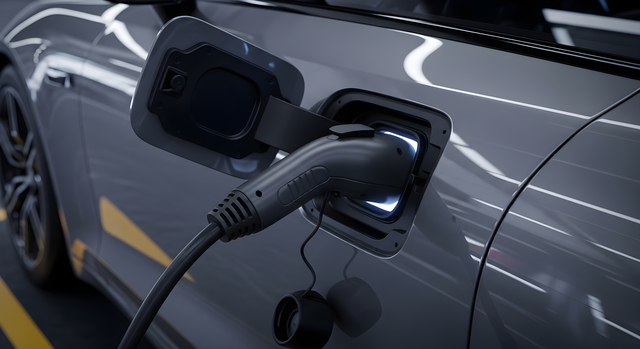


Hybrid and electric cars are becoming more affordable and popular every year, but choosing the right option can still feel confusing. This guide explains the key differences between hybrids, plug-in hybrids, and EVs, including ownership costs, charging, reliability, fuel savings, and long-term value. Learn which type makes the most sense for your budget, driving habits, and daily lifestyle before buying your next vehicle.
What Is the Difference Between Hybrid and Electric Cars?
Many car buyers today are trying to decide between hybrid cars, plug-in hybrids, and fully electric vehicles. Rising fuel prices, better battery technology, and growing interest in lower operating costs have made electrified vehicles much more popular than they were a few years ago.
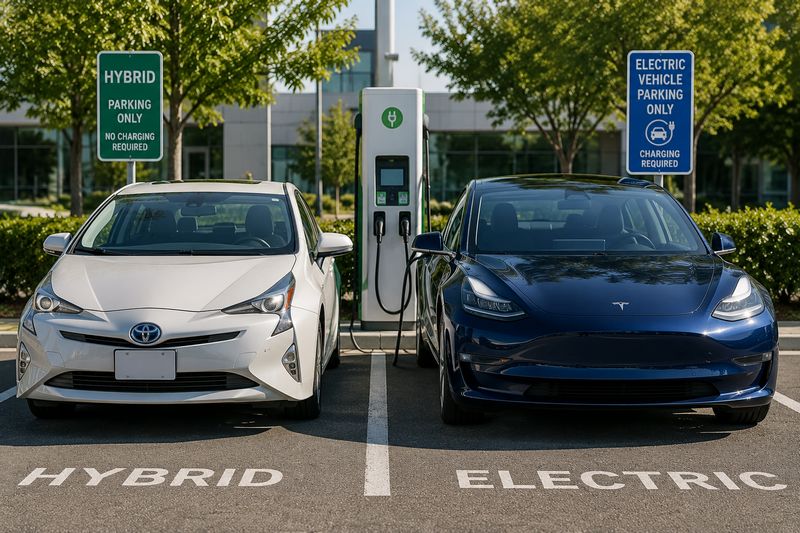
At first, these vehicle types can seem confusing because they all use electric power in different ways. However, understanding the differences is important for buyers who want to save money and choose the right vehicle for their lifestyle.
Some drivers may prefer the flexibility of a hybrid, while others may benefit more from a fully electric car with lower maintenance costs and zero gasoline usage.
How Hybrid Vehicles Work
Hybrid vehicles combine a traditional gasoline engine with an electric motor and battery pack. The car automatically switches between gasoline power, electric power, or both together depending on driving conditions.
In most hybrids, the battery charges itself while driving through regenerative braking and engine power. Drivers do not need to plug the vehicle into a charger.
At low speeds or during stop-and-go traffic, many hybrids can operate briefly using only electric power. During acceleration or highway driving, the gasoline engine usually takes over or works together with the electric motor.
This system helps reduce fuel consumption compared to traditional gasoline cars.
Popular hybrid models like the Toyota Prius and Toyota Corolla Hybrid are especially known for excellent fuel economy and low operating costs.
How Electric Vehicles Work
Electric vehicles, often called EVs, operate entirely on electricity and do not use gasoline engines at all.
Instead of fuel tanks and internal combustion engines, EVs use:
- Large battery packs
- Electric motors
- Charging systems
Drivers recharge EV batteries using home chargers or public charging stations.
Electric cars produce instant torque, smooth acceleration, and very quiet driving because electric motors operate differently than gasoline engines.
Since EVs have fewer moving mechanical parts, they often require less maintenance than traditional vehicles. There are no oil changes, spark plugs, or engine belts to replace.
Popular EV models include the Tesla Model 3, Chevrolet Bolt EV, and Nissan Leaf.
However, EV owners must still consider charging availability, battery range, and charging times when planning longer trips.
What Is a Plug-In Hybrid (PHEV)?
A plug-in hybrid vehicle, often called a PHEV, combines features from both hybrids and electric cars.
Like traditional hybrids, PHEVs have both a gasoline engine and an electric motor. However, they also include larger batteries that can be charged externally using charging stations or home chargers.
This allows plug-in hybrids to drive longer distances using only electricity before the gasoline engine activates.
Many PHEV owners use electric-only driving for short daily commutes while still keeping gasoline backup for long-distance trips.
For some budget-conscious buyers, plug-in hybrids offer a middle-ground solution between traditional hybrids and fully electric vehicles.
Traditional Hybrid Vehicles Explained
Traditional hybrids do not require charging stations because the battery charges automatically while driving.
These vehicles focus mainly on improving fuel economy and reducing gasoline consumption.
Traditional hybrids are often popular with buyers who:
- Drive long distances regularly
- Do not have home charging access
- Want better fuel economy without changing driving habits
- Prefer proven long-term reliability
Vehicles like the Honda Accord Hybrid and Hyundai Elantra Hybrid continue attracting buyers because they combine familiar driving experiences with lower fuel costs.
Plug-In Hybrid Vehicles Explained
Plug-in hybrids offer larger electric driving capability than standard hybrids.
Depending on the model, some PHEVs can travel moderate daily distances using only battery power before switching to gasoline operation.
This helps reduce fuel costs significantly for drivers with short commutes.
However, plug-in hybrids are mechanically more complex because they combine:
- Gasoline engines
- Electric motors
- Larger batteries
- Charging systems
PHEVs may work well for buyers who want EV-style driving without fully depending on charging infrastructure.
Fully Electric Vehicles Explained
Fully electric vehicles eliminate gasoline usage completely.
These cars rely entirely on rechargeable battery systems and electric motors for driving.
Many EV owners enjoy:
- Lower energy costs
- Smooth acceleration
- Quiet operation
- Reduced maintenance requirements
However, EV ownership also requires planning around:
- Charging availability
- Battery range
- Charging times
- Cold-weather range loss
For drivers with reliable home charging access, fully electric vehicles can become extremely affordable to operate long term.
Main Differences Between Hybrid, Plug-In Hybrid, and EV Models
The biggest differences between hybrids, plug-in hybrids, and EVs involve:
- Fuel usage
- Charging requirements
- Driving range
- Operating costs
- Maintenance needs
Traditional hybrids use gasoline and electric assistance but do not require charging.
Plug-in hybrids use both gasoline and electricity while allowing external charging for short electric-only driving.
Fully electric vehicles use no gasoline at all and depend completely on battery charging.
For example:
- A hybrid may be easier for drivers taking frequent long highway trips.
- A plug-in hybrid may work well for short daily commuting with occasional road trips.
- A full EV may provide the lowest operating costs for drivers with home charging access.
Choosing the right option depends heavily on driving habits, local charging availability, and budget.
Why More Buyers Are Comparing Hybrid vs Electric Cars
More buyers are comparing hybrids and EVs today because fuel prices, maintenance costs, and vehicle technology have changed significantly.
Many budget-conscious drivers are trying to lower:
- Monthly fuel expenses
- Maintenance costs
- Long-term ownership costs
At the same time, automakers continue releasing more affordable electrified vehicles with better battery technology and longer range.
Used hybrid and electric vehicles are also becoming easier to find through online auctions and resale markets.
Why Are Hybrid and Electric Vehicles Becoming So Popular?
Hybrid and electric vehicles have become much more common on American roads over the past several years. What was once considered expensive or experimental technology is now becoming part of everyday transportation for many drivers.
Several factors are driving this growth, including rising fuel prices, lower operating costs, improved battery technology, and better charging infrastructure. At the same time, used hybrid and EV inventory is becoming more affordable, allowing budget-conscious buyers to enter the market more easily.
Many drivers who once avoided electrified vehicles are now seriously comparing hybrids and EVs with traditional gasoline cars.
Rising Fuel Prices and Lower Operating Costs
Fuel prices have become one of the biggest reasons buyers are considering hybrids and electric vehicles.
Traditional gasoline vehicles can become expensive to operate, especially for drivers with long commutes or heavy daily driving. Hybrid vehicles help reduce fuel consumption significantly, while fully electric vehicles eliminate gasoline expenses entirely.
For example, drivers switching from a larger gasoline SUV to a Toyota Prius or Toyota Corolla Hybrid may notice major monthly fuel savings.
Electric vehicles can lower operating costs even further because electricity is often cheaper than gasoline on a cost-per-mile basis.
EVs also usually require:
- Fewer maintenance visits
- No oil changes
- Fewer engine-related repairs
- Less brake wear due to regenerative braking
For buyers trying to control transportation expenses, these savings can become very attractive over time.
Government Incentives and Tax Credits
Government incentives have also helped increase interest in hybrid and electric vehicles.
In some situations, buyers may qualify for:
- Federal EV tax credits
- State incentives
- Local rebates
- Reduced registration fees
- Utility company charging rebates
These programs can lower the total cost of ownership significantly.
Some incentives apply mainly to new vehicles, while others may also support charging equipment or home charger installation.
For example, buyers installing Level 2 home charging stations may sometimes receive utility rebates or local energy incentives.
Although incentive programs change over time, they continue encouraging more drivers to consider electrified vehicles instead of traditional gasoline cars.
Budget-conscious buyers often pay close attention to these programs because even moderate savings can make newer technology more affordable.
Growing Charging Infrastructure Across the U.S.
Charging infrastructure has improved dramatically in recent years.
One of the biggest concerns many buyers had about EVs was charging availability. Today, public charging stations are much more common across:
- Highways
- Shopping centers
- Apartment complexes
- Parking garages
- Hotels
- Retail locations
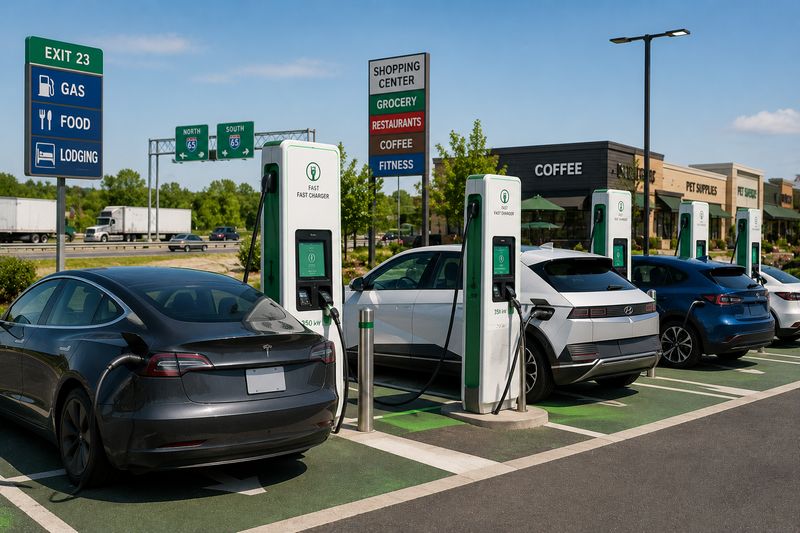
Large charging networks continue expanding rapidly throughout the United States.
The Tesla Supercharger network remains one of the largest and most reliable fast-charging systems, while many other public charging providers are expanding as well.
Improved charging infrastructure makes EV ownership more practical for drivers who:
- Travel longer distances
- Live in urban areas
- Do not have private garages
- Need public charging access regularly
Charging convenience is still not perfect everywhere, but the situation is improving much faster than it was only a few years ago.
Environmental Concerns and Emissions Regulations
Environmental concerns are another major reason electrified vehicles continue growing in popularity.
Many governments and automakers are trying to reduce:
- Carbon emissions
- Fuel consumption
- Urban air pollution
Hybrid and electric vehicles help lower tailpipe emissions compared to traditional gasoline vehicles.
EVs produce zero direct tailpipe emissions, while hybrids reduce gasoline usage significantly through improved efficiency.
At the same time, emissions regulations continue becoming stricter in many regions. This is pushing automakers to invest heavily in electric and hybrid technology.
Many buyers are also becoming more interested in reducing fuel consumption for personal environmental reasons while still saving money on operating costs.
Why Budget Buyers Are Considering EVs and Hybrids
Budget-conscious buyers once viewed hybrids and EVs as expensive luxury products, but that perception is changing quickly.
Used hybrid and electric vehicles are becoming much more affordable as:
- Lease returns enter the market
- EV production increases
- Older models depreciate
- Auction inventory grows
Vehicles like the Chevrolet Bolt EV, Nissan Leaf, and older Toyota Prius models can now offer relatively affordable entry points into electrified vehicle ownership.
Many buyers also realize that slightly higher purchase prices may be offset later through:
- Lower fuel costs
- Reduced maintenance
- Fewer engine repairs
For example, a commuter driving many miles each week may save significant money over several years by reducing fuel and maintenance expenses.
Online auction platforms also create more opportunities for buyers searching for lower-priced hybrid and EV inventory.
Using Auto4Export allows buyers to access used hybrids and EVs from U.S. auto auctions at prices often lower than traditional dealership inventory.
How Automakers Are Expanding Their Electrified Vehicle Lineups
Automakers are investing heavily in hybrid and electric technology because demand continues growing worldwide.
Today, buyers can find electrified vehicles in many categories, including:
- Compact cars
- SUVs
- Luxury vehicles
- Pickup trucks
- Family sedans
- Performance cars
Manufacturers such as Toyota, Hyundai, Tesla, Ford, and General Motors continue releasing new electrified models every year.
Buy Hybrid and Electric Cars for Less Through U.S. Auto Auctions
Looking for a fuel-efficient hybrid or affordable electric vehicle? Auto4Export gives buyers access to used EVs, hybrids, and plug-in hybrids from major U.S. auto auctions at prices often lower than traditional dealerships.
- ✅ Access to thousands of hybrid and EV auction vehicles
- ✅ Lower prices compared to dealership inventory
- ✅ Shipping and export support worldwide
- ✅ Transparent auction process with vehicle history access
What Are the Pros and Cons of Hybrid Cars?
Hybrid vehicles have become one of the most popular alternatives to traditional gasoline cars because they combine fuel savings with familiar driving convenience. Many buyers like hybrids because they reduce fuel costs without requiring major lifestyle changes such as installing home chargers or planning charging stops during long trips.
For budget-conscious drivers, hybrids can offer an attractive balance between affordability, fuel efficiency, and practicality. However, hybrids also have limitations that buyers should understand before making a purchase.
Comparing both the advantages and disadvantages helps drivers decide whether a hybrid vehicle fits their daily driving habits and long-term budget.
Advantages of Hybrid Vehicles
Hybrid vehicles offer several important benefits that make them attractive for many everyday drivers.
Better Fuel Economy Than Gas Cars
One of the biggest advantages of hybrids is improved fuel economy compared to traditional gasoline vehicles.
Hybrid systems use electric motors to reduce fuel consumption during:
- City driving
- Stop-and-go traffic
- Low-speed operation
- Acceleration
This helps many hybrids achieve excellent MPG ratings.
Vehicles like the Toyota Prius and Toyota Corolla Hybrid are especially known for strong fuel efficiency.
For drivers with long commutes or frequent city driving, fuel savings can become significant over time.
A buyer switching from a larger gasoline SUV to a hybrid sedan may notice major reductions in monthly fuel spending almost immediately.
No Need for Public Charging Stations
Traditional hybrid vehicles do not require external charging.
The battery charges automatically through:
- Regenerative braking
- Engine power
- Driving operation
This makes hybrids much easier for buyers who:
- Live in apartments
- Do not have garages
- Travel long distances often
- Lack reliable charging access
Drivers simply refuel hybrids at normal gas stations just like traditional gasoline vehicles.
For many people, this convenience removes one of the biggest concerns associated with fully electric cars.
Lower Purchase Prices Compared to EVs
Hybrid vehicles are often more affordable than fully electric vehicles, especially in the used market.
While EV prices have improved, many electric vehicles still cost more upfront because of larger battery packs and newer technology.
Budget-conscious buyers may find hybrids easier to afford initially while still benefiting from lower fuel costs.
Used hybrid models are also widely available through online auctions and resale markets.
Platforms like Auto4Export help buyers access used hybrid inventory from U.S. auto auctions at lower prices than many local dealerships.
For buyers trying to lower transportation costs without making a large financial commitment, hybrids can become a practical middle-ground solution.
Easier Long-Distance Driving
Long-distance travel is usually simpler in hybrid vehicles compared to fully electric cars.
Hybrid drivers do not need to:
- Search for charging stations
- Wait for battery charging
- Plan charging stops carefully
Refueling works the same way as normal gasoline vehicles, which makes road trips much more convenient.
This flexibility is especially valuable for:
- Rural drivers
- Frequent highway travelers
- Families taking long vacations
- Drivers covering unpredictable distances
Many buyers choose hybrids specifically because they want better fuel economy without changing their driving routines.
Proven Reliability on Many Models
Some hybrid vehicles have developed very strong reliability reputations over many years.
Models such as the Toyota Prius and Honda Accord Hybrid are widely known for long-term durability and lower ownership costs.
Hybrid technology has now existed for decades, giving manufacturers time to improve reliability significantly.
Many taxi fleets and rideshare drivers use hybrids because:
- Fuel costs are lower
- Engines experience less stress
- Reliability is generally strong
- Operating costs remain manageable
For budget-conscious buyers concerned about long-term ownership expenses, proven reliability is often one of the biggest reasons to choose a hybrid.
Disadvantages of Hybrid Vehicles
Although hybrids offer many benefits, they also have disadvantages buyers should consider carefully.
Limited Electric-Only Driving
Traditional hybrids cannot travel long distances using electricity alone.
Most standard hybrids only use electric power briefly during:
- Slow driving
- Parking maneuvers
- Light acceleration
The gasoline engine still handles most driving overall.
Buyers expecting full EV-style electric driving may feel disappointed by the limited electric-only operation of standard hybrids.
Plug-in hybrids improve electric driving range somewhat, but traditional hybrids remain heavily dependent on gasoline engines.
More Mechanical Complexity
Hybrid vehicles combine two different systems:
- Gasoline engines
- Electric drivetrains
This creates more mechanical complexity than either traditional gasoline vehicles or fully electric cars.
Hybrids contain:
- Internal combustion engines
- Electric motors
- Battery systems
- Power control electronics
- Regenerative braking systems
More components mean there are more systems that could potentially require repairs later.
While many hybrids are reliable overall, repair complexity may increase once vehicles age or exceed warranty coverage.
Higher Maintenance Costs Than EVs
Hybrid vehicles usually require less maintenance than traditional gasoline cars, but more maintenance than fully electric vehicles.
Because hybrids still use gasoline engines, owners may still need:
- Oil changes
- Engine repairs
- Transmission service
- Cooling system maintenance
- Exhaust system repairs
Fully electric vehicles avoid many of these maintenance requirements completely.
For buyers comparing long-term ownership costs, EVs may offer lower maintenance expenses over time despite higher initial purchase prices.
Smaller Fuel Savings Compared to Full EVs
Hybrid fuel savings are strong compared to gasoline vehicles, but they usually cannot match the extremely low operating costs of fully electric cars.
Electric vehicles eliminate gasoline expenses entirely and often cost less per mile to operate.
Drivers covering very high annual mileage may save much more money long term with a full EV instead of a hybrid.
For example, a commuter driving many miles daily may eventually spend far less charging a Tesla Model 3 than fueling a hybrid vehicle regularly.
The actual savings depend heavily on:
- Fuel prices
- Electricity costs
- Charging availability
- Driving habits
Battery Replacement Concerns
Some buyers worry about hybrid battery replacement costs as vehicles age.
Although many hybrid batteries last a very long time, battery replacement can still become expensive outside warranty coverage.
Battery performance may slowly decline over many years, especially in:
- High-mileage vehicles
- Extreme climates
- Poorly maintained cars
However, modern hybrid batteries are generally far more durable than many people expect.
What Are the Pros and Cons of Electric Cars?
Electric vehicles have become one of the fastest-growing parts of the automotive market. Many drivers are attracted to EVs because of lower fuel costs, smooth performance, reduced maintenance, and modern technology features.
At the same time, electric cars still have limitations that buyers should understand before making a purchase. Charging times, battery range, repair costs, and charging availability can affect daily ownership experiences depending on where and how the vehicle is used.
For budget-conscious buyers, understanding both the advantages and disadvantages of EV ownership is extremely important before deciding whether a fully electric car makes financial sense.
Advantages of Electric Vehicles
Electric vehicles offer several important benefits that make them attractive for modern drivers.
Zero Tailpipe Emissions
One of the biggest advantages of EVs is that they produce zero direct tailpipe emissions.
Unlike gasoline vehicles, electric cars do not burn fuel while driving. This helps reduce:
- Urban air pollution
- Carbon emissions
- Fuel consumption
Many buyers appreciate the environmental benefits of EV ownership, especially in crowded cities with heavy traffic.
Governments and automakers are also encouraging EV adoption as part of broader emissions reduction goals.
Although electricity production still affects overall environmental impact, EVs generally create fewer direct driving emissions than traditional gasoline vehicles.
Lower Maintenance Requirements
Electric vehicles usually require less maintenance than gasoline or hybrid vehicles because they contain fewer moving mechanical parts.
Most EVs do not need:
- Oil changes
- Spark plugs
- Timing belts
- Exhaust repairs
- Transmission servicing
This can reduce long-term maintenance costs significantly.
Regenerative braking systems also help reduce brake wear because the electric motor assists with slowing the vehicle.
For example, drivers switching from older gasoline vehicles to EVs often notice fewer routine service visits and lower maintenance expenses overall.
This is one reason many high-mileage commuters and rideshare drivers are becoming interested in electric vehicles.
Instant Torque and Smooth Acceleration
Electric motors deliver power differently than gasoline engines.
Most EVs provide instant torque immediately when the accelerator is pressed, creating:
- Fast acceleration
- Smooth power delivery
- Responsive driving feel
Even affordable EVs can feel surprisingly quick compared to traditional gasoline cars.
Vehicles like the Tesla Model 3 are especially known for strong acceleration and smooth performance.
EVs also shift power smoothly because they usually do not use traditional multi-gear transmissions.
Many drivers enjoy the quiet and effortless driving experience electric cars provide in daily traffic.
Lower Energy Costs Compared to Gasoline
Electricity is often cheaper than gasoline when comparing cost per mile.
Drivers who charge at home may save significant money compared to fueling traditional vehicles regularly.
The exact savings depend on:
- Local electricity prices
- Fuel prices
- Driving habits
- Charging methods
However, many EV owners report noticeably lower monthly energy costs compared to gasoline vehicles.
For example, commuters driving many miles each week may spend far less charging a vehicle overnight at home than paying for gasoline daily.
These savings can become especially important for budget-conscious drivers trying to reduce transportation expenses over several years.
Quiet and Comfortable Driving Experience
Electric vehicles are much quieter than traditional gasoline vehicles because electric motors produce very little noise.
Many EV owners enjoy:
- Reduced engine vibration
- Smooth acceleration
- Quiet cabins
- Relaxed city driving
The absence of engine noise can make daily commuting feel more comfortable, especially during stop-and-go traffic.
Many modern EVs also include advanced technology features such as:
- Large infotainment screens
- Driver assistance systems
- Smartphone integration
- Over-the-air software updates
These features help create a more modern driving experience compared to many older gasoline vehicles.
Disadvantages of Electric Vehicles
Although EVs offer many advantages, buyers should also understand the challenges of electric vehicle ownership.
Charging Time Compared to Refueling
Charging an EV usually takes much longer than refueling a gasoline vehicle.
Even fast chargers may require:
- 20 to 45 minutes for partial charging
- Longer times for full charging
Home charging is convenient overnight, but public charging stops can still require significant waiting during road trips.
This becomes especially important for drivers who:
- Travel long distances often
- Cannot charge at home
- Need quick turnaround times
Traditional gasoline vehicles still offer much faster refueling convenience for many situations.
Charging technology continues improving, but charging speed remains one of the biggest limitations of EV ownership today.
Range Anxiety on Long Trips
Range anxiety refers to the fear of running out of battery before reaching a charging station.
Although many modern EVs now offer strong driving range, some buyers still worry about:
- Long highway trips
- Rural travel
- Limited charging infrastructure
- Unexpected detours
Cold weather, towing, aggressive driving, and highway speeds can also reduce real-world range.
For example, an EV rated for hundreds of miles under ideal conditions may achieve less during winter highway driving.
Drivers living in areas with fewer public chargers may still prefer hybrids or gasoline vehicles for this reason.
Planning longer trips usually requires more preparation in EVs compared to traditional cars.
Higher Initial Purchase Prices
Many electric vehicles still cost more upfront than comparable gasoline or hybrid vehicles.
Large battery packs remain expensive, which increases purchase prices for many EV models.
Although used EV prices have become more affordable recently, newer EVs may still exceed the budgets of some buyers.
However, operating cost savings may offset part of the higher purchase price over time through:
- Lower fuel costs
- Reduced maintenance
- Fewer engine repairs
Budget-conscious buyers often compare total ownership costs instead of focusing only on the initial purchase price.
Used EVs available through Auto4Export may help buyers access lower-cost electric vehicles through U.S. auto auctions.
Battery Degradation Over Time
All EV batteries gradually lose some capacity over time.
Battery degradation depends on several factors including:
- Age
- Mileage
- Charging habits
- Climate conditions
- Fast charging frequency
As batteries age, driving range may slowly decrease.
Modern EV batteries are generally much more durable than early electric vehicle systems, but battery health still remains an important factor for used EV buyers.
Battery replacement can also become expensive outside warranty coverage.
This is why buyers shopping for used EVs should carefully inspect:
- Battery condition
- Remaining warranty
- Charging history
- Vehicle history reports
before purchasing.
Repair Costs and Parts Availability
Although EVs require less routine maintenance, repair costs can sometimes become expensive when major problems occur.
Electric vehicles use specialized:
- Battery systems
- Electronics
- Sensors
- Software systems
- High-voltage components
Not all repair shops are fully trained to service EVs yet.
Parts availability may also vary depending on the brand and model.
Which Is Cheaper to Own: Hybrid or Electric?
Many buyers compare hybrid and electric vehicles mainly because they want to reduce long-term ownership costs. While fuel savings are important, the true cost of ownership also includes purchase price, maintenance, insurance, battery life, depreciation, and repair expenses.
In some situations, hybrids may be cheaper overall. In others, EVs may offer better long-term savings. The better choice depends heavily on driving habits, charging access, mileage, and how long the vehicle will be kept.
For budget-conscious buyers, understanding the full financial picture is much more important than focusing only on fuel economy or monthly charging costs.
Comparing Purchase Prices
Purchase price is often the biggest difference between hybrid and electric vehicles.
Traditional hybrid models are usually more affordable upfront than fully electric vehicles.
For example, vehicles like the Toyota Corolla Hybrid or Hyundai Elantra Hybrid often cost less than many fully electric models with large battery packs.
Electric vehicles still tend to carry higher purchase prices because batteries remain expensive to manufacture.
However, used EV prices have dropped significantly in recent years as:
- More EVs enter the market
- Lease returns increase
- Older models depreciate
- Competition grows
Buyers searching through Auto4Export may find used EVs and hybrids available through U.S. auto auctions at prices much lower than retail dealerships.
For buyers with tighter budgets, used hybrids are often easier entry points into electrified vehicle ownership.
Fuel Costs vs Electricity Costs
Fuel savings are one of the biggest reasons drivers switch to hybrids or EVs.
Hybrid vehicles reduce gasoline usage significantly compared to traditional cars, especially during city driving and heavy traffic.
Fully electric vehicles go even further by eliminating gasoline expenses entirely.
In many areas, charging an EV at home costs much less per mile than buying gasoline.
For example:
- A hybrid may cut fuel costs noticeably compared to a regular SUV.
- A full EV may reduce daily commuting costs even further if home charging is available.
However, the actual savings depend on:
- Local electricity prices
- Gasoline prices
- Charging habits
- Driving distance
- Climate conditions
Drivers relying mostly on expensive public fast charging may save less than those charging overnight at home.
High-mileage commuters usually benefit the most from EV energy savings over time.
Maintenance Cost Differences
Maintenance costs are another major ownership factor.
Hybrid vehicles still contain gasoline engines, which means owners may still need:
- Oil changes
- Spark plugs
- Engine repairs
- Exhaust work
- Cooling system maintenance
Electric vehicles avoid many of these services because they have fewer moving mechanical parts.
Most EVs do not require:
- Oil changes
- Traditional transmissions
- Engine maintenance
- Exhaust repairs
This can lower long-term maintenance expenses significantly.
However, hybrids may still offer an advantage for buyers uncomfortable with newer EV technology or limited charging access.
For many budget buyers, hybrids provide lower maintenance than gasoline cars while avoiding some EV ownership concerns.
Insurance Costs for EVs and Hybrids
Insurance costs can vary significantly between hybrid and electric vehicles.
Many EVs cost more to insure because:
- Battery systems are expensive
- Repairs require specialized training
- Parts availability may be limited
- Repair times can be longer
Vehicles like the Tesla Model 3 may sometimes carry higher insurance premiums compared to smaller hybrid sedans.
Hybrid insurance costs are often closer to traditional gasoline vehicles, although this varies by model and location.
Insurance pricing depends on:
- Vehicle value
- Repair costs
- Driver history
- Local market conditions
- Theft rates
- Safety ratings
Budget-conscious buyers should always compare insurance quotes before purchasing either a hybrid or EV because insurance differences can affect total ownership costs more than expected.
Battery Replacement Expenses Explained
Battery replacement is one of the biggest concerns buyers have when comparing hybrids and EVs.
Both hybrids and electric vehicles use battery systems, but EV batteries are much larger and more expensive.
Modern batteries are generally very durable, and many last for many years without major problems. However, replacement costs can still become significant outside warranty coverage.
Hybrid battery replacements are usually less expensive because hybrid batteries are smaller.
Battery life depends on:
- Vehicle age
- Mileage
- Climate
- Charging habits
- Driving conditions
Buyers shopping for used hybrids or EVs should carefully inspect:
- Battery health
- Warranty status
- Service history
- Charging performance
before purchasing.
Battery condition is especially important when buying auction vehicles through platforms like Auto4Export because battery replacement can dramatically affect ownership costs later.
Long-Term Ownership Savings
Long-term ownership costs depend heavily on how the vehicle is used.
Electric vehicles often provide the biggest savings for drivers who:
- Drive many miles annually
- Have reliable home charging
- Mostly commute locally
- Keep vehicles for many years
Lower energy costs and reduced maintenance can create substantial savings over time.
Hybrid vehicles may provide better overall value for drivers who:
- Frequently take long road trips
- Lack home charging access
- Live in rural areas
- Want simpler ownership transitions
For many buyers, hybrids offer a safer middle-ground solution with fewer lifestyle adjustments.
The “cheaper” option often depends more on driving habits than on the vehicle itself.
Which Option Offers Better Resale Value?
Resale value is changing rapidly as the electrified vehicle market continues evolving.
Some hybrids, especially reliable models from Toyota, have historically maintained strong resale values because of:
- Proven reliability
- Fuel savings
- Lower ownership risk
- Strong market demand
Vehicles like the Toyota Prius often remain popular in the used market for many years.
EV resale values can vary more dramatically depending on:
- Battery technology
- Charging compatibility
- Software updates
- Market competition
- Battery degradation
Some EVs depreciate quickly as newer models with longer range enter the market.
However, strong-demand EVs such as the Tesla Model 3 may still retain solid resale value in certain markets.
Which Is Better for Daily Driving?
Choosing between a hybrid and an electric vehicle for daily driving depends heavily on how the car will actually be used. Some drivers spend most of their time in city traffic, while others drive long highway distances every day. Charging access, commute length, parking conditions, and fuel prices also play major roles.
For many budget-conscious buyers, the best daily driver is the vehicle that reduces fuel costs and maintenance expenses without creating unnecessary inconvenience.
Both hybrids and EVs can work extremely well for daily driving, but each type has advantages in different situations.
Best Choice for City Commuting
Electric vehicles are often excellent for city commuting.
Stop-and-go traffic works very well with electric drivetrains because EVs use regenerative braking to recover energy during slowing and braking. This improves efficiency in urban environments.
City commuters also benefit from:
- Quiet driving
- Smooth acceleration
- Lower energy costs
- Reduced maintenance
- No gasoline usage
Vehicles like the Tesla Model 3 and Chevrolet Bolt EV are popular city commuters because they combine compact size with low operating costs.
However, hybrids also perform very well in city traffic.
Models such as the Toyota Prius and Toyota Corolla Hybrid deliver excellent fuel economy without requiring charging access.
For apartment owners or drivers without reliable home charging, hybrids may still be the easier daily commuting solution.
Best Option for Highway Drivers
Highway driving changes the comparison between hybrids and EVs.
At steady highway speeds, traditional hybrid advantages often become more noticeable because gasoline engines operate efficiently during long-distance cruising.
Hybrid drivers also avoid concerns about:
- Charging stops
- Charging station availability
- Long charging times
- Range planning
This makes hybrids attractive for drivers who:
- Travel long distances regularly
- Commute between cities
- Drive unpredictable routes
- Live in rural areas
Electric vehicles can still work very well for highway commuting, especially newer models with longer range. However, long-distance highway driving generally consumes battery power faster than city driving.
For buyers regularly covering hundreds of highway miles weekly, hybrids may sometimes provide easier overall ownership experiences.
How Traffic Conditions Affect Efficiency
Traffic conditions affect hybrids and EVs differently than traditional gasoline vehicles.
Gasoline cars usually become less efficient in heavy traffic because engines continue burning fuel while idling.
Hybrids and EVs perform better in these situations because:
- Electric motors operate efficiently at low speeds
- Regenerative braking recovers energy
- Engines shut off during stops in many hybrids
- EVs do not idle at all
This is one reason rideshare drivers and commuters often choose electrified vehicles.
Heavy traffic can dramatically improve hybrid efficiency compared to traditional gasoline cars.
Electric vehicles benefit even more because slow traffic generally consumes less battery power than high-speed highway driving.
For drivers spending hours in urban congestion daily, fuel savings can become substantial over time.
Parking and Charging Convenience
Charging convenience is one of the biggest differences between hybrids and EVs during daily ownership.
Electric vehicles work best for drivers with:
- Garage parking
- Home charging access
- Workplace charging
- Reliable nearby charging stations
Charging overnight at home can make EV ownership extremely convenient because the car starts each day with a full battery.
However, drivers relying entirely on public charging may face:
- Charging wait times
- Charger availability issues
- Extra planning
- Higher public charging costs
Hybrid vehicles avoid these concerns completely because they refuel normally at gas stations.
For apartment residents or drivers with limited parking access, hybrids may offer much easier daily ownership.
The practicality of EV ownership depends heavily on local charging access and personal parking situations.
One-Pedal Driving in Electric Cars
One-pedal driving is a feature many EV owners quickly learn to enjoy.
In many electric vehicles, regenerative braking slows the car automatically when the driver releases the accelerator pedal.
This allows drivers to control speed using mainly one pedal during city driving.
Benefits include:
- Smoother traffic driving
- Reduced brake wear
- Improved efficiency
- More relaxed commuting
Many EV drivers report that one-pedal driving makes heavy traffic feel less tiring.
Vehicles from Tesla and several other manufacturers offer strong regenerative braking systems that support this driving style.
Hybrid vehicles also use regenerative braking, but the effect is usually less aggressive and less noticeable compared to full EVs.
For some buyers, one-pedal driving becomes one of the most enjoyable parts of EV ownership.
Which Vehicles Work Better for Rideshare Drivers?
Rideshare drivers often focus heavily on fuel economy, maintenance costs, reliability, and daily operating expenses.
Hybrid vehicles remain extremely popular in rideshare fleets because they offer:
- Excellent fuel economy
- Long driving range
- Quick refueling
- Proven reliability
- Lower operating costs
Vehicles like the Toyota Prius are commonly used by rideshare drivers because they combine strong efficiency with relatively low ownership risk.
Electric vehicles are also becoming increasingly popular among rideshare drivers, especially in cities with strong charging infrastructure.
EV advantages for rideshare use include:
- Very low energy costs
- Quiet passenger experience
- Lower maintenance
- Smooth acceleration
However, rideshare drivers using EVs must carefully manage:
- Charging downtime
- Daily driving range
- Public charging schedules
Drivers completing extremely high daily mileage may still prefer hybrids if charging interruptions would reduce working time.
What Do Buyers Need to Know About Charging?
Charging is one of the most important parts of electric vehicle ownership. Many buyers interested in EVs worry about charging speed, charging station availability, home charging costs, and road trip convenience.
The good news is that charging technology and public infrastructure have improved dramatically in recent years. However, charging still works very differently from traditional gasoline refueling, so buyers should understand the basics before purchasing an electric vehicle.
Knowing how charging works helps drivers choose the right EV, avoid range anxiety, and estimate real-world ownership costs more accurately.
Types of EV Chargers Explained
Electric vehicles use several different charging methods, each with different speeds and purposes.
The three main charging types are:
- Level 1 charging
- Level 2 charging
- DC fast charging
The right option depends on:
- Daily driving distance
- Home charging access
- Travel habits
- Budget
Level 1 Charging
Level 1 charging uses a standard household electrical outlet.
This is the slowest charging method but also the simplest because it usually requires no special installation.
Level 1 charging works best for:
- Short daily commutes
- Overnight charging
- Plug-in hybrids
- Drivers with low mileage needs
However, charging speeds are slow. Fully charging a large EV battery may take many hours or even more than a full day in some cases.
For buyers driving limited daily distances, Level 1 charging may still work well enough without extra equipment costs.
Level 2 Charging
Level 2 charging is much faster and is the most common home charging solution for EV owners.
These chargers require specialized electrical equipment and usually professional installation.
Level 2 charging is popular because it can:
- Charge vehicles overnight efficiently
- Add significant range quickly
- Support daily commuting easily
Many public charging stations also use Level 2 chargers.
For homeowners with garages, Level 2 charging often makes EV ownership much more convenient because the vehicle can recharge fully while parked overnight.
DC Fast Charging
DC fast charging is the fastest charging option currently available for most EVs.
These chargers are usually located at:
- Highway charging stations
- Major travel routes
- Commercial charging networks
DC fast charging can recharge batteries much faster than Level 1 or Level 2 systems.
This type of charging is especially important for:
- Long-distance travel
- Highway driving
- Road trips
However, charging speed varies depending on:
- Vehicle model
- Battery condition
- Temperature
- Charger power output
Fast charging is convenient but usually costs more than home charging.
How Long Does It Take to Charge an EV?
Charging time depends on several factors, including:
- Battery size
- Charger type
- Vehicle charging capability
- Battery temperature
- Current battery level
Level 1 charging is the slowest and may require many hours for a full charge.
Level 2 charging is much faster and is often sufficient for overnight home charging.
DC fast charging can recharge many EVs significantly faster during road trips.
However, EV charging is still generally slower than refueling a gasoline vehicle.
Many EV owners adjust by charging:
- Overnight at home
- During work hours
- While shopping or eating
- During planned travel breaks
For daily commuting, charging often becomes less inconvenient once drivers establish regular routines.
How Much Does Home Charger Installation Cost?
Home charger installation costs vary depending on:
- Electrical system condition
- Garage setup
- Charger type
- Local labor costs
- Distance from electrical panel
Some homes may require:
- Electrical panel upgrades
- New wiring
- Additional outlets
- Professional installation work
Level 1 charging usually requires little or no installation because it uses standard outlets.
Level 2 charging costs more initially but provides much faster and more practical charging for daily EV use.
Many EV owners consider home charging one of the biggest conveniences of electric vehicle ownership because they can avoid regular gas station visits entirely.
In some areas, utility companies or government programs may offer rebates or incentives for home charger installation.
Charging a Plug-In Hybrid vs a Full EV
Plug-in hybrids and fully electric vehicles charge differently because they use different battery sizes and driving systems.
Plug-in hybrids usually have:
- Smaller batteries
- Shorter electric driving range
- Faster charging times
Many PHEVs can recharge overnight using simple home charging setups.
Fully electric vehicles have much larger batteries because they rely entirely on electricity for driving.
This means EVs usually:
- Require more charging time
- Benefit more from Level 2 charging
- Depend more heavily on charging infrastructure
Some buyers choose plug-in hybrids because they want electric driving benefits without fully depending on charging stations for long-distance travel.
Best Charging Apps for EV Drivers
Charging apps have become extremely important for EV ownership because they help drivers:
- Locate charging stations
- Check charger availability
- Monitor charging sessions
- Plan road trips
- Compare charging speeds
- Process payments
Many EV owners use multiple apps depending on the charging networks available in their area.
These apps can help reduce range anxiety and make long-distance travel much easier.
Some vehicles also include built-in navigation systems that automatically guide drivers to compatible charging stations.
Good charging apps are especially important for drivers frequently traveling outside familiar local areas.
Can Non-Tesla Cars Use Tesla Superchargers?
The Tesla Supercharger network is one of the largest and fastest charging systems in the United States.
Historically, Tesla Superchargers mainly supported Tesla vehicles only. However, charging access for non-Tesla EVs has started expanding in some regions and with certain compatible models.
Charging compatibility depends on:
- Vehicle hardware
- Charging connectors
- Manufacturer agreements
- Adapter availability
Many automakers are now adopting charging standards compatible with Tesla’s network.
This is important because broader Supercharger access could make EV ownership more practical for many non-Tesla drivers.
Charging compatibility continues evolving quickly as manufacturers standardize charging systems.
What Happens if You Run Out of Battery?
Running out of battery in an EV is similar to running out of fuel in a gasoline vehicle, but charging logistics can be more complicated.
Most EVs provide:
- Low battery warnings
- Navigation assistance
- Range estimates
- Nearby charger suggestions
before the battery becomes fully depleted.
If the battery does reach zero, the vehicle usually must be:
- Recharged on-site
- Towed to a charger
- Assisted with mobile charging equipment
Unlike gasoline vehicles, drivers cannot simply carry spare electricity in portable containers.
This is why trip planning and charging awareness remain important parts of EV ownership.
Fortunately, complete battery depletion is relatively uncommon because modern EV systems provide multiple warnings before reaching critical levels.
How to Charge an EV During Long Road Trips
Long-distance EV travel requires more planning than traditional gasoline road trips.
Drivers should consider:
- Charger locations
- Charging speeds
- Traffic conditions
- Weather
- Battery range
- Hotel charging availability
Many EV navigation systems automatically help plan charging stops during long trips.
Road trip charging often works best when drivers combine charging with:
- Meal breaks
- Rest stops
- Shopping
- Overnight hotel stays
DC fast charging networks continue expanding along major highway routes, making long-distance EV travel easier than before.
However, rural areas may still have fewer charging options.
How Far Can Hybrid and Electric Cars Travel?
Driving range is one of the biggest factors buyers consider when comparing hybrids and electric vehicles. Many drivers want to know whether an EV can handle daily commuting, road trips, winter driving, or long highway travel without constant charging stops.
Modern hybrids and EVs now offer much better range than older electrified vehicles, but real-world performance still depends on driving habits, weather, traffic, and vehicle type.
Understanding how range works helps buyers choose a vehicle that fits their lifestyle and avoids unnecessary range anxiety.
Average Range of Modern Hybrid Vehicles
Hybrid vehicles generally offer very long total driving range because they combine gasoline engines with electric assistance.
Many modern hybrids can travel hundreds of miles on a full tank of fuel while still delivering excellent fuel economy.
Vehicles such as the Toyota Prius and Honda Accord Hybrid are especially known for impressive fuel efficiency and long-distance capability.
Traditional hybrids do not rely on charging stations, so drivers simply refuel at gas stations like normal gasoline vehicles.
Plug-in hybrids usually offer:
- Short electric-only driving range
- Additional gasoline backup range
This makes PHEVs attractive for buyers who want electric commuting without worrying about long-distance charging availability.
For many drivers, hybrids remain one of the easiest electrified vehicle options for long highway trips and unpredictable travel schedules.
Average Range of Modern Electric Vehicles
Electric vehicle range has improved dramatically in recent years.
Early EVs often had limited range, but many modern electric cars now provide enough driving distance for most daily use and even longer road trips.
Popular EVs such as the Tesla Model 3, Hyundai Kona Electric, and Chevrolet Bolt EV offer significantly more range than older electric models.
Range varies depending on:
- Battery size
- Vehicle weight
- Aerodynamics
- Driving speed
- Weather conditions
Many drivers find modern EV range more than sufficient for:
- Daily commuting
- City driving
- Local errands
- Moderate road trips
However, buyers who regularly drive extremely long distances may still prefer hybrids because gasoline refueling remains faster and easier than charging.
Real-World EV Range vs EPA Estimates
EPA range estimates help buyers compare EVs, but real-world driving conditions often produce different results.
Actual EV range can vary based on:
- Highway speeds
- Outside temperature
- Wind conditions
- Tire type
- Driving style
- Terrain
- Air conditioning or heating usage
For example, high-speed highway driving usually reduces EV range more than slower city driving because aerodynamic resistance increases significantly at higher speeds.
Aggressive acceleration can also drain batteries faster.
Some drivers are surprised when real-world range differs from official estimates, especially during winter or long-distance highway travel.
Understanding these differences helps buyers set more realistic expectations before purchasing an EV.
How Weather Affects Battery Range
Weather can have a major impact on electric vehicle range.
Cold temperatures are especially challenging because batteries operate less efficiently in winter conditions.
During cold weather, EVs may lose range due to:
- Battery temperature effects
- Cabin heating demands
- Reduced charging efficiency
- Increased rolling resistance from snow or slush
Very hot weather can also affect battery performance, although cold weather usually has a larger impact on visible range reduction.
Hybrid vehicles are generally less affected because the gasoline engine can compensate for reduced battery efficiency.
Drivers living in colder climates should pay close attention to winter range performance when comparing EV models.
Some newer EVs now include advanced battery thermal management systems that improve cold-weather performance significantly.
Range Loss While Towing or Carrying Cargo
Towing and carrying heavy cargo can reduce efficiency in both hybrids and EVs.
Electric vehicles are especially sensitive to:
- Heavy towing loads
- Roof racks
- Cargo carriers
- High payload weight
because additional weight and aerodynamic drag increase battery consumption quickly.
For example, towing a trailer with an EV may reduce driving range much more dramatically than many buyers expect.
This is important for:
- Campers
- Contractors
- Outdoor enthusiasts
- Truck owners
Hybrid vehicles are also affected by heavy loads, but gasoline refueling is usually easier during longer towing trips.
Drivers planning frequent towing should carefully research real-world towing range instead of relying only on official EPA numbers.
Which EVs Currently Offer the Longest Range?
Several modern EVs now offer very strong driving range compared to earlier electric vehicles.
Long-range EVs are especially attractive for buyers who:
- Drive long highway distances
- Travel frequently
- Want fewer charging stops
- Experience range anxiety
Models from Tesla continue leading much of the EV market in long-range capability, especially vehicles like the Tesla Model 3.
Other automakers are also improving rapidly, including:
- Hyundai
- Ford
- General Motors
- Mercedes-Benz
Battery technology improvements continue increasing EV range while reducing charging times.
For budget-conscious buyers, used EVs with solid real-world range can now offer excellent value through auction platforms like Auto4Export, where buyers may find electrified vehicles at significantly lower prices than traditional dealership inventory.
Are Hybrid and Electric Cars Reliable?
Reliability is one of the biggest concerns buyers have when considering hybrid or electric vehicles. Many people worry about battery life, expensive repairs, software problems, and long-term durability compared to traditional gasoline cars.
The reality is that many hybrids and EVs have proven far more reliable than early buyers expected. However, reliability can vary significantly depending on the manufacturer, battery technology, maintenance history, and driving conditions.
For budget-conscious buyers, reliability is especially important because unexpected repairs can quickly eliminate fuel savings and increase ownership costs.
Why Many Hybrid Vehicles Have Excellent Reliability Ratings
Many hybrid vehicles now have excellent reliability reputations because hybrid technology has been refined for decades.
Manufacturers such as Toyota and Honda spent many years improving hybrid drivetrains, battery management systems, and regenerative braking technology.
Vehicles like the Toyota Prius and Toyota Corolla Hybrid are widely known for:
- Long-term durability
- Strong fuel economy
- Lower maintenance needs
- Reliable battery systems
Hybrid systems also reduce stress on gasoline engines because electric motors assist during acceleration and stop-and-go traffic.
Many taxi fleets and rideshare drivers choose hybrids because they often accumulate high mileage with relatively low operating costs.
For buyers trying to reduce long-term ownership expenses, proven hybrid reliability is one of the biggest advantages.
Common EV Reliability Problems
Electric vehicles avoid many traditional engine-related problems, but they still have their own reliability challenges.
Common EV issues may include:
- Charging system failures
- Software glitches
- Battery cooling system problems
- Sensor malfunctions
- Electronic component failures
- Infotainment system bugs
Some EVs also experience build quality concerns depending on the manufacturer.
Unlike gasoline cars, many EV problems involve software and electronics rather than mechanical engine failures.
Because EV technology evolves quickly, newer models sometimes experience unexpected reliability issues during early production years.
However, many EV owners still report lower maintenance needs overall because electric drivetrains contain fewer moving parts than traditional engines.
Battery Lifespan Expectations
Battery lifespan is one of the most important reliability topics for hybrid and EV buyers.
Most modern electrified vehicle batteries are designed to last many years under normal driving conditions.
Battery longevity depends on factors such as:
- Charging habits
- Climate
- Mileage
- Fast charging frequency
- Battery cooling systems
- Driving conditions
Modern EV batteries are generally far more durable than many buyers assume.
Many manufacturers also provide battery warranties covering long periods or high mileage limits.
However, batteries slowly lose capacity over time, meaning driving range may gradually decrease as the vehicle ages.
For example, an older EV may not achieve the same range it had when new, although many vehicles still remain practical for daily driving even after years of use.
Hybrid Battery vs EV Battery Durability
Hybrid batteries and EV batteries operate differently because their roles inside the vehicle are different.
Hybrid batteries are usually:
- Smaller
- Charged more frequently
- Less heavily stressed
- Used mainly for efficiency support
Fully electric vehicle batteries are:
- Much larger
- Responsible for all vehicle propulsion
- Charged externally
- More sensitive to temperature extremes
Hybrid batteries often develop strong durability reputations because they operate within carefully controlled charge ranges.
EV batteries continue improving rapidly as automakers refine battery chemistry and thermal management systems.
For used vehicle buyers, battery condition remains one of the most important inspection areas regardless of whether the vehicle is hybrid or fully electric.
When shopping through Auto4Export, buyers should always review:
- Battery health information
- Warranty status
- Service records
- Charging history
- Accident history
before bidding on electrified vehicles.
Software and Electronics Issues in EVs
Modern EVs rely heavily on software and advanced electronics.
Many electric vehicles function almost like computers on wheels, using software to control:
- Battery management
- Charging systems
- Driving modes
- Navigation
- Driver assistance systems
- Infotainment features
This creates benefits such as:
- Over-the-air software updates
- Improved vehicle performance
- Advanced technology features
However, software dependency can also create reliability problems.
Some EV owners report issues involving:
- Frozen screens
- Charging communication errors
- Sensor malfunctions
- Software crashes
- Connectivity problems
Vehicles from Tesla are especially known for advanced software systems, although software updates can sometimes introduce unexpected bugs as well.
As EV technology matures, software reliability continues improving, but electronics remain an important factor buyers should consider.
Repair Availability and Mechanic Training
Repair access is another important reliability concern for electrified vehicles.
Many independent repair shops are still gaining experience with:
- High-voltage systems
- EV battery diagnostics
- Advanced electronics
- Hybrid drivetrains
This means some repairs may require specialized service centers or factory-trained technicians.
In certain areas, finding qualified EV repair facilities may still be more difficult compared to traditional gasoline vehicle service.
Parts availability can also vary depending on:
- Vehicle brand
- Battery technology
- Market demand
- Manufacturer support
Repair delays may become frustrating for owners if replacement parts are difficult to obtain.
However, repair infrastructure continues improving as more hybrids and EVs enter the market.
For buyers living in rural areas or smaller cities, local repair availability should still be considered before purchasing an EV.
Which Brands Have the Most Reliable Electrified Vehicles?
Several automakers have built strong reputations for reliable hybrid and electric vehicles.
Toyota remains one of the most respected names in hybrid reliability, especially with models like:
- Toyota Prius
- Toyota Corolla Hybrid
Honda also maintains strong hybrid reliability ratings in many markets.
Among EV manufacturers, brands such as:
- Tesla
- Hyundai
- Kia
- General Motors
have continued improving battery technology and EV performance significantly.
Reliability often depends more on the specific model and production year than on whether the vehicle is hybrid or electric overall.
What Is the Environmental Impact of Hybrid vs Electric Cars?
Environmental impact is one of the biggest reasons many buyers consider hybrid and electric vehicles. Automakers, governments, and consumers are all paying more attention to fuel consumption, carbon emissions, and long-term sustainability.
However, the environmental comparison between hybrids and EVs is more complicated than simply saying “electric cars are cleaner.” Battery production, electricity sources, manufacturing processes, and long-term vehicle use all affect the overall environmental impact.
For budget-conscious buyers, understanding these differences helps separate marketing claims from real-world environmental performance.
Comparing Carbon Emissions
Traditional gasoline vehicles produce carbon emissions directly from burning fuel inside the engine.
Hybrid vehicles reduce emissions by using electric motors to lower gasoline consumption. Because hybrids burn less fuel than standard gasoline cars, they generally produce fewer carbon emissions overall.
Fully electric vehicles produce zero tailpipe emissions while driving because they do not burn gasoline at all.
This gives EVs a major advantage in urban areas where air pollution and traffic congestion are common concerns.
However, total environmental impact depends on more than just tailpipe emissions. Manufacturing processes and electricity production also affect the overall carbon footprint of EV ownership.
In general:
- Gasoline vehicles produce the highest direct emissions
- Hybrids reduce emissions significantly
- EVs usually produce the lowest direct driving emissions
especially when charged using cleaner electricity sources.
Battery Production and Environmental Concerns
Battery manufacturing is one of the biggest environmental concerns related to hybrid and electric vehicles.
Producing large lithium-ion batteries requires mining materials such as:
- Lithium
- Nickel
- Cobalt
- Graphite
Mining and battery production consume energy and can create environmental challenges if not managed responsibly.
Because EV batteries are much larger than hybrid batteries, EV manufacturing usually creates a larger environmental impact during the production phase.
This means a new EV may initially produce more manufacturing-related emissions than a comparable hybrid or gasoline vehicle.
However, many experts believe EVs can offset this higher production impact over time through lower operational emissions during daily driving.
Battery technology is also improving quickly, with manufacturers working to:
- Reduce rare material usage
- Improve battery efficiency
- Increase recycling rates
- Develop cleaner production methods
As battery production evolves, the environmental footprint of EV manufacturing may continue improving.
Electricity Sources and Clean Energy
Electric vehicle environmental benefits depend heavily on how the electricity is generated.
An EV charged using renewable energy sources such as:
- Solar
- Wind
- Hydroelectric power
generally produces much lower overall emissions than an EV charged using electricity generated primarily from fossil fuels.
This means EV environmental impact can vary significantly depending on the region.
In areas with cleaner electrical grids, EVs usually offer much larger emissions reductions compared to gasoline vehicles.
Hybrid vehicles are less dependent on electrical grid conditions because they primarily use gasoline while improving fuel efficiency through electric assistance.
As more clean energy sources enter power grids across the United States and worldwide, EV environmental advantages may continue increasing over time.
Recycling EV and Hybrid Batteries
Battery recycling has become increasingly important as more hybrids and EVs enter the market.
Modern battery recycling programs help recover valuable materials that can potentially be reused in future battery production.
Battery recycling helps:
- Reduce mining demand
- Lower waste
- Recover expensive materials
- Improve sustainability
Hybrid batteries are generally smaller and simpler to recycle than large EV battery packs.
Automakers and recycling companies continue investing heavily in battery recycling technology because millions of electrified vehicles are expected to reach end-of-life stages in the coming years.
In many cases, EV batteries may also receive “second life” applications after vehicle use ends. Older batteries can sometimes still be useful for:
- Home energy storage
- Backup power systems
- Commercial energy storage
Battery recycling infrastructure is still growing, but it is becoming an increasingly important part of the EV industry.
Are Electric Cars Really Better for the Environment?
In most situations, fully electric vehicles are generally considered environmentally cleaner over their full lifespan compared to traditional gasoline vehicles.
However, the answer is not always completely simple.
Environmental impact depends on:
- Electricity sources
- Manufacturing methods
- Vehicle size
- Battery production
- Driving habits
- Vehicle lifespan
For example:
- A large EV charged mainly with coal-generated electricity may produce higher total emissions than some highly efficient hybrids in certain situations.
- A smaller EV charged using renewable energy may produce dramatically lower emissions over time.
Hybrid vehicles often represent a practical middle-ground solution because they reduce fuel consumption substantially while avoiding some battery production concerns associated with large EV batteries.
For buyers focused mainly on reducing gasoline usage and emissions without depending heavily on charging infrastructure, hybrids can still provide meaningful environmental improvements.
Which Option Produces Less Pollution Over Time?
Over long ownership periods, fully electric vehicles usually produce less pollution overall than gasoline vehicles and many hybrids, especially when driven frequently.
Because EVs avoid gasoline combustion entirely, their operational emissions remain very low after manufacturing impacts are offset.
High-mileage drivers often maximize EV environmental advantages because lower operating emissions accumulate over many years of driving.
Hybrid vehicles still produce emissions because they rely partly on gasoline engines, but they generally create less pollution than standard gasoline vehicles.
The cleaner option over time depends on several factors:
- Annual mileage
- Electricity source
- Vehicle efficiency
- Driving conditions
- Vehicle lifespan
For many buyers, both hybrids and EVs represent meaningful steps toward lower fuel consumption and reduced environmental impact compared to traditional gasoline vehicles.
Find Reliable Used Hybrids and EVs With Lower Ownership Costs
Used hybrids and electric vehicles can help drivers reduce fuel and maintenance expenses for years. Auto4Export helps buyers compare affordable electrified vehicles from U.S. auctions while giving access to inventory that may cost thousands less than retail prices.
- ✅ Large inventory of used hybrid and EV models
- ✅ Auction vehicles available from all U.S. states
- ✅ Affordable options for commuters and families
- ✅ Support with bidding, shipping, and export logistics
Are Hybrid or Electric Cars Better for Cold Weather?
Cold weather can affect both hybrid and electric vehicles, but not always in the same way. Many buyers living in snowy or freezing climates worry about battery performance, winter range loss, charging reliability, and cabin heating efficiency.
Modern hybrids and EVs are much better in winter conditions than many older electrified vehicles, but cold temperatures still impact performance and efficiency differently than they do in traditional gasoline cars.
For buyers in colder regions, understanding how winter weather affects hybrids and EVs is extremely important before choosing the right vehicle.
Winter Driving Performance Comparison
Hybrid and electric vehicles can both perform very well during winter driving, especially when equipped with proper winter tires.
Electric vehicles often feel stable in snow because heavy battery packs create a low center of gravity, improving traction and balance on slippery roads.
Many EVs also deliver smooth and precise power through electric motors, which helps reduce wheel spin during acceleration.
Hybrid vehicles perform similarly to traditional gasoline vehicles but usually benefit from:
- Better low-speed torque control
- Improved efficiency during stop-and-go winter traffic
- Smooth regenerative braking systems
However, EVs generally experience more noticeable winter efficiency loss than hybrids because battery performance changes significantly in cold temperatures.
Hybrids may provide more predictable long-distance winter travel because gasoline engines continue operating normally even when temperatures drop severely.
Battery Performance in Low Temperatures
Cold weather directly affects battery chemistry and efficiency.
In freezing temperatures, EV batteries become less efficient and may:
- Deliver reduced driving range
- Charge more slowly
- Require additional energy for heating
- Limit regenerative braking temporarily
This is one reason many EV owners notice lower winter range compared to warmer seasons.
For example, a vehicle like the Tesla Model 3 may achieve noticeably lower real-world range during extremely cold highway driving compared to mild weather conditions.
Hybrid vehicles are also affected by cold temperatures, but usually less dramatically because the gasoline engine supports the drivetrain when battery performance decreases.
Modern EVs now include advanced thermal battery management systems that help maintain battery temperature more efficiently during winter driving.
Cabin Heating and Energy Consumption
Cabin heating affects EVs differently than gasoline vehicles.
Traditional gasoline vehicles generate heat naturally from engine operation, so cabin heating has relatively little effect on fuel economy.
Electric vehicles must use battery power directly to heat the cabin, which increases energy consumption during cold weather.
Using:
- Cabin heat
- Heated seats
- Heated steering wheels
- Defrosters
can reduce driving range noticeably in some EVs during winter.
This becomes especially important for:
- Long highway trips
- Extremely cold climates
- Drivers without home charging access
Many EV manufacturers now use more efficient heat pump systems to reduce winter energy consumption.
Hybrid vehicles usually experience smaller winter efficiency losses because the gasoline engine continues generating heat while driving.
Snow and Traction Advantages
Both hybrids and EVs can offer excellent winter traction when properly equipped.
Electric motors provide instant and very precise torque control, which can improve traction on slippery surfaces.
Many EVs also have:
- Low centers of gravity
- Even weight distribution
- Advanced traction control systems
These features can help vehicles feel stable during snow driving.
All-wheel-drive EVs are becoming increasingly popular for colder climates.
Hybrid vehicles also perform well in snow, especially AWD hybrid models from manufacturers like Toyota and Subaru.
However, tires remain far more important than drivetrain type alone.
Even the most advanced EV or hybrid will struggle in winter conditions without proper winter tires.
Best EVs and Hybrids for Cold Climates
Some electrified vehicles handle winter conditions better than others.
Among hybrids, vehicles such as the Toyota Prius and AWD hybrid SUVs from Toyota often maintain strong reputations for winter reliability and fuel economy.
For EVs, models with:
- Heat pumps
- Battery preconditioning
- Advanced thermal management
- AWD systems
generally perform better in cold weather.
Vehicles from Tesla, Hyundai, and several newer EV manufacturers now include improved winter battery systems compared to older electric models.
Drivers living in colder climates should pay close attention to:
- Real-world winter range
- Charging speed in cold temperatures
- Cabin heating efficiency
- AWD availability
- Tire options
before purchasing.
Which Type of Vehicle Is Better for Long Trips?
Long-distance driving remains one of the biggest differences between hybrid and electric vehicles. While both can handle road trips successfully, the ownership experience is often very different depending on charging access, travel routes, weather, and driving habits.
Some drivers prioritize maximum convenience and quick refueling, while others are willing to plan charging stops in exchange for lower operating costs and smoother driving.
For budget-conscious buyers who frequently travel long distances, understanding these differences is extremely important before choosing between a hybrid and an EV.
Fuel Stops vs Charging Stops
One of the biggest advantages hybrids have during long trips is refueling speed.
Hybrid drivers can stop at nearly any gas station and refuel within minutes, just like traditional gasoline vehicles. This makes long-distance travel simple and familiar.
Electric vehicles require charging stops instead of fuel stops, and charging usually takes longer than refueling.
Even with DC fast charging, drivers may still need:
- 20 to 45 minutes for partial charging
- Longer stops during busy travel periods
- Extra planning for charger availability
For some drivers, this is not a major issue because charging breaks can overlap with:
- Meals
- Rest stops
- Coffee breaks
- Shopping
However, drivers covering extremely long distances in one day may still prefer the speed and simplicity of hybrid refueling.
Vehicles like the Toyota Prius remain popular for road trips partly because they combine excellent fuel economy with very fast refueling convenience.
Highway Efficiency Comparison
Highway driving affects hybrids and EVs differently.
Hybrid vehicles often perform very efficiently on highways because gasoline engines operate well during steady cruising speeds.
Fully electric vehicles can also handle highway driving very well, but high speeds usually reduce EV range faster than city driving.
At highway speeds:
- Aerodynamic drag increases
- Battery consumption rises
- Real-world range decreases
For example, a Tesla Model 3 may achieve lower range during sustained high-speed interstate travel than during mixed city driving.
Cold weather, hills, heavy cargo, and strong winds can reduce EV highway range even further.
Hybrids generally maintain more consistent long-distance performance because gasoline refueling remains widely available almost everywhere.
For buyers regularly driving across multiple states or rural highways, hybrids may still provide easier ownership experiences overall.
Charging Infrastructure Along Major Routes
Charging infrastructure has improved dramatically in recent years, especially along major interstate highways.
Large charging networks now cover many travel corridors throughout the United States.
The Tesla Supercharger network remains one of the most developed fast-charging systems, while many additional charging providers continue expanding rapidly.
Today, many EV drivers can complete long road trips successfully by using:
- Highway fast chargers
- Hotel charging stations
- Retail charging locations
- Navigation-based charging planning
However, charging coverage still varies depending on the region.
Urban areas and major highways usually offer much better charging access than:
- Remote rural regions
- Small towns
- Isolated highways
Drivers planning frequent long-distance EV travel should still review charging availability carefully before purchasing.
Travel Planning With an EV
Long-distance EV travel requires more planning than traditional gasoline travel.
EV drivers often need to consider:
- Charger locations
- Charging speeds
- Battery range
- Weather conditions
- Elevation changes
- Hotel charging access
Modern EV navigation systems help simplify this process by automatically suggesting charging stops and estimating battery usage.
Many drivers discover that EV road trips become easier after gaining experience with charging routines.
Still, flexibility can sometimes be limited compared to hybrids.
For example:
- Unexpected detours may require additional charging stops
- Broken chargers can delay travel
- Cold weather may require more frequent charging
Drivers who value maximum spontaneity during long trips may still feel more comfortable with hybrids.
However, many EV owners accept these trade-offs because of:
- Lower energy costs
- Smooth driving
- Reduced maintenance
- Quiet highway comfort
Which Vehicles Are Better for Rural Areas?
Rural driving conditions often favor hybrids more than fully electric vehicles.
Many rural areas still have:
- Fewer fast chargers
- Longer distances between towns
- Limited charging infrastructure
- Harsh winter conditions
For drivers living far from public charging stations, hybrids usually provide more flexibility and fewer travel concerns.
Hybrid owners can:
- Refuel almost anywhere
- Travel long distances easily
- Avoid charging dependency
- Handle unpredictable driving schedules
Electric vehicles can still work very well in rural areas if drivers have:
- Reliable home charging
- Moderate daily driving distances
- Nearby fast-charging access
However, rural EV ownership often requires more planning than urban EV ownership.
For many buyers in smaller towns or remote regions, hybrids remain the simpler and more practical long-distance option today.
Hybrid vs Plug-In Hybrid vs Electric: Which Should You Choose?
Choosing between a hybrid, plug-in hybrid, and fully electric vehicle depends heavily on lifestyle, driving habits, charging access, and budget. There is no single “best” option for every buyer because different vehicle types solve different problems.
Some drivers want maximum fuel savings without changing their daily routine. Others want the lowest long-term operating costs or access to modern EV technology. Charging availability, travel distance, climate, and purchase budget all play major roles in making the right decision.
For budget-conscious buyers, the smartest choice is usually the vehicle that fits daily life most naturally while keeping ownership costs manageable.
Best Choice for Apartment Owners
Apartment living can make EV ownership more complicated because home charging access is often limited.
Many apartment residents do not have:
- Private garages
- Dedicated parking spaces
- Reliable overnight charging
- Personal charging stations
In these situations, traditional hybrid vehicles are often the easiest and most practical solution.
Hybrids such as the Toyota Prius or Toyota Corolla Hybrid provide:
- Excellent fuel economy
- Long driving range
- No charging requirements
- Simple ownership experience
Plug-in hybrids may also work for apartment owners if workplace charging or nearby public charging is available regularly.
Fully electric vehicles can still be practical for apartment living in some cities with strong public charging infrastructure, but ownership usually becomes easier when reliable home charging exists.
For many apartment residents, hybrids remain the least stressful electrified vehicle option.
Best Option for Homeowners With Garage Charging
Homeowners with garages or dedicated parking spaces are usually in the best position to enjoy full EV ownership.
Home charging provides major convenience because drivers can:
- Charge overnight
- Start each day with a full battery
- Avoid most gas station visits
- Reduce public charging dependence
For these buyers, fully electric vehicles often make the most financial sense long term.
Models like the Tesla Model 3 and Hyundai Kona Electric can become extremely affordable to operate when charged primarily at home.
Plug-in hybrids also work very well for homeowners because they combine:
- Electric commuting
- Gasoline backup for long trips
- Reduced fuel consumption
- Flexible charging options
Garage charging dramatically improves the overall EV ownership experience and reduces many common charging concerns.
Best Choice for Buyers on a Tight Budget
For buyers with limited budgets, traditional hybrids are often the safest and most affordable entry point into electrified vehicle ownership.
Used hybrid vehicles are usually:
- Cheaper to purchase
- Easier to insure
- Less dependent on charging infrastructure
- Less expensive to repair than some EVs
Vehicles such as older Toyota Prius models remain extremely popular because they combine:
- Strong reliability
- Excellent fuel economy
- Lower operating costs
- Wide parts availability
Used EV prices have also fallen significantly in recent years, especially through online auctions.
Buyers using Auto4Export can often find used hybrids and EVs at lower prices through U.S. auto auctions compared to many dealership listings.
However, buyers shopping for used EVs should always pay close attention to:
- Battery condition
- Remaining warranty
- Charging compatibility
- Repair availability
before purchasing.
For many budget-conscious buyers, hybrids still offer the lowest ownership risk overall.
Best Vehicle Type for Families
Family buyers usually prioritize:
- Reliability
- Interior space
- Safety
- Operating costs
- Long-distance convenience
Hybrid SUVs and family sedans remain extremely popular because they provide:
- Lower fuel costs
- Long driving range
- Easy road trip capability
- No charging dependence
Plug-in hybrids can also work very well for families because parents may complete most local driving using electricity while still keeping gasoline flexibility for vacations and longer travel.
Fully electric family vehicles are becoming increasingly practical as charging infrastructure improves and battery range increases.
However, large families traveling long distances frequently may still prefer hybrids or plug-in hybrids if charging convenience remains limited in their area.
The best family vehicle depends heavily on:
- Daily commute distance
- Number of drivers
- Home charging access
- Vacation travel habits
Best Option for High-Mileage Drivers
Drivers covering very high annual mileage often benefit the most from electrified vehicles because fuel savings accumulate quickly.
For high-mileage commuters with home charging access, fully electric vehicles can produce major long-term savings through:
- Lower energy costs
- Reduced maintenance
- Fewer engine-related repairs
Rideshare drivers and delivery drivers in urban areas often benefit significantly from EV ownership.
However, high-mileage highway drivers traveling long distances daily may still prefer hybrids because:
- Refueling is faster
- Highway charging stops are avoided
- Range concerns are minimized
Plug-in hybrids can also work well for drivers combining:
- Short local commuting
- Occasional long highway travel
The ideal choice depends heavily on how and where the miles are accumulated.
Which Type Makes the Most Sense in 2026?
In 2026, all three vehicle types — hybrids, plug-in hybrids, and EVs — make sense for different buyers.
Traditional hybrids remain one of the safest choices for:
- Budget-conscious buyers
- Apartment residents
- Rural drivers
- Long-distance travelers
Plug-in hybrids work well for buyers who want:
- Electric commuting
- Gasoline backup flexibility
- Reduced fuel costs without full EV dependence
Fully electric vehicles make increasing sense for drivers with:
- Reliable home charging
- Mostly local driving
- Strong charging infrastructure nearby
- Interest in lower long-term operating costs
Battery technology, charging networks, and used EV availability continue improving rapidly, making electrified vehicles more practical every year.
Best Hybrid and Electric Cars for Budget Buyers
Many buyers interested in hybrids and EVs are not looking for luxury vehicles — they are searching for practical transportation with lower fuel costs and manageable ownership expenses. Fortunately, several electrified vehicles now offer excellent value for drivers trying to save money.
Some models stand out because of:
- Strong fuel economy
- Proven reliability
- Lower maintenance costs
- Affordable used pricing
- Good resale value
For budget-conscious buyers, choosing the right model can reduce transportation expenses significantly over time.
Best Affordable Hybrid Cars
Affordable hybrid cars remain extremely popular because they combine lower fuel costs with familiar gasoline refueling convenience.
Many used hybrids are now available at reasonable prices while still offering excellent efficiency and reliability.
Toyota Prius
The Toyota Prius remains one of the most recognizable and trusted hybrid vehicles ever produced.
Budget buyers often choose the Prius because it offers:
- Excellent fuel economy
- Strong long-term reliability
- Lower operating costs
- Proven hybrid technology
The Prius is especially popular among:
- Commuters
- Rideshare drivers
- High-mileage drivers
- Buyers focused on fuel savings
Used Prius models are widely available and often maintain strong resale value because demand remains high.
Many owners report relatively low maintenance costs even at higher mileage levels.
Toyota Corolla Hybrid
The Toyota Corolla Hybrid offers many Prius advantages while maintaining a more traditional sedan design.
This model is attractive for buyers who want:
- Hybrid fuel economy
- Familiar driving feel
- Affordable ownership costs
- Modern safety technology
The Corolla Hybrid is often less expensive to insure than some larger vehicles, making it appealing for budget-conscious drivers.
It also benefits from Toyota’s strong reputation for reliability and low maintenance costs.
Honda Accord Hybrid
The Honda Accord Hybrid combines strong fuel efficiency with more interior space and comfort than smaller hybrids.
Many buyers choose it because it offers:
- Comfortable highway driving
- Good fuel economy
- Spacious interior
- Strong reliability reputation
For families or commuters wanting a larger sedan without high fuel costs, the Accord Hybrid can be a practical middle-ground option.
It also tends to deliver smoother highway performance than some smaller economy-focused hybrids.
Hyundai Elantra Hybrid
The Hyundai Elantra Hybrid has become increasingly popular because it offers:
- Competitive pricing
- Modern technology
- Good fuel efficiency
- Strong warranty coverage
Budget buyers often appreciate the Elantra Hybrid because it can provide many modern features at a lower price than some competitors.
Newer Hyundai hybrid systems have also improved significantly in reliability and efficiency over recent years.
Best Affordable Electric Cars
Affordable EV options have improved dramatically as used electric vehicle prices continue falling.
Several EVs now offer practical driving range and lower operating costs at prices more accessible to average buyers.
Tesla Model 3
The Tesla Model 3 remains one of the most popular EVs because it combines:
- Strong driving range
- Fast charging access
- Modern technology
- Strong performance
Used Model 3 pricing has become much more affordable than when the vehicle first launched.
Tesla’s large Supercharger network also improves long-distance EV convenience significantly.
However, buyers should still carefully inspect used Teslas for:
- Battery condition
- Repair history
- Build quality issues
- Warranty status
before purchasing.
Chevrolet Bolt EV
The Chevrolet Bolt EV is one of the best low-cost EV choices for buyers focused mainly on affordability and efficiency.
The Bolt offers:
- Practical city range
- Compact size
- Low energy costs
- Reasonable used pricing
Many used Bolts became especially affordable after battery recall programs and increased EV market competition.
For commuters with home charging access, the Bolt can become an extremely economical daily driver.
Nissan Leaf
The Nissan Leaf was one of the first mass-market EVs and remains popular in the used market.
Older Leaf models are often available at very low prices, making them attractive for:
- City commuters
- Short-distance driving
- Budget-focused buyers
However, buyers should pay close attention to battery condition because older Leaf models may experience noticeable battery degradation.
The Leaf works best for drivers with moderate daily driving needs rather than frequent long highway trips.
Hyundai Kona Electric
The Hyundai Kona Electric offers a strong balance between:
- Driving range
- Efficiency
- Compact SUV practicality
- Modern technology
Many buyers like the Kona Electric because it feels practical for everyday use while still remaining relatively affordable compared to larger EVs.
It is especially attractive for buyers wanting crossover utility without extremely high operating costs.
Best Used Hybrid and EV Models From Auto Auctions
Auto auctions have become an increasingly popular way to purchase affordable hybrids and EVs.
Through Auto4Export, buyers can access used electrified vehicles from across the United States, including:
- Lease returns
- Insurance vehicles
- Dealer inventory
- Repossessions
- Fleet vehicles
Popular auction choices often include:
- Toyota Prius
- Tesla Model 3
- Chevrolet Bolt EV
- Toyota Corolla Hybrid
Auction vehicles may cost thousands less than dealership inventory, especially if buyers are comfortable with:
- Cosmetic repairs
- Higher mileage
- Minor accident history
However, buyers should always inspect:
- Battery health
- Charging performance
- Vehicle history
- Flood damage risks
- Service records
carefully before bidding.
Which Electrified Vehicles Depreciate the Fastest?
Depreciation varies widely between different hybrid and EV models.
Some EVs lose value quickly because:
- Battery technology improves rapidly
- Newer models offer longer range
- Market competition increases
- Incentives reduce new vehicle pricing
Older EVs with shorter driving range often depreciate especially fast.
Some luxury EVs also experience heavy depreciation because repair costs and warranty concerns increase as vehicles age.
Hybrids from Toyota generally maintain stronger resale values because of:
- Reliability reputation
- Fuel efficiency
- Lower ownership risk
Fast depreciation can create opportunities for used buyers because vehicles that were expensive when new may become affordable only a few years later.
How Buyers Can Save Money Buying Hybrid or EV Vehicles at Auction
Auction buying can help buyers save significant money on electrified vehicles if they research carefully and avoid risky purchases.
Smart buyers focus on:
- Battery condition
- Vehicle history reports
- Charging system functionality
- Warranty coverage
- Repair estimates
- Flood damage inspection
Many auction vehicles are available far below traditional dealership pricing, especially:
- Lease returns
- High-mileage commuter cars
- Insurance vehicles with cosmetic damage
- Fleet units
Platforms like Auto4Export help buyers access U.S. auto auctions without requiring a dealer license.
Should You Buy a Hybrid or Electric Car From an Auto Auction?
Auto auctions have become one of the most affordable ways to purchase hybrid and electric vehicles in the United States. As more EVs and hybrids enter the market, auction inventory continues growing rapidly, creating opportunities for budget-conscious buyers to save significant money.
However, buying electrified vehicles at auction also requires careful research. Battery condition, charging system health, flood damage, and repair history are extremely important when evaluating hybrids and EVs.
For smart buyers willing to inspect vehicles carefully, auctions can provide access to modern electrified vehicles at prices far below traditional dealership inventory.
Why Auction Vehicles Can Cost Thousands Less
Auction vehicles are often much cheaper than dealership inventory because dealers usually add:
- Reconditioning costs
- Transportation expenses
- Warranty costs
- Financing overhead
- Dealer profit margins
At auctions, buyers may find:
- Lease returns
- Fleet vehicles
- Insurance vehicles
- Repossessions
- Trade-ins
at much lower prices.
Some hybrid and EV auction vehicles may also have:
- Cosmetic damage
- Higher mileage
- Minor accident history
- Older battery technology
which reduces pricing further.
For example, a used Tesla Model 3 or Toyota Prius purchased through auction channels may cost thousands less than a similar retail dealership vehicle.
This is especially attractive for buyers trying to reduce monthly transportation costs while still accessing newer vehicle technology.
Common Hybrid and EV Auction Vehicle Conditions
Hybrid and EV auction inventory comes in many different conditions.
Some vehicles are:
- Clean-title lease returns
- Fleet vehicles with high mileage
- Insurance salvage vehicles
- Repossessed units
- Theft recoveries
- Lightly damaged vehicles
Many electrified vehicles at auction are still fully repairable and practical for daily driving.
However, buyers should understand that some auction EVs may involve:
- Battery damage
- Charging system issues
- Electrical faults
- Water exposure
- Accident-related high-voltage damage
Cosmetic damage alone is usually far less concerning than battery or electrical system problems.
Buyers should carefully review:
- Vehicle photos
- Auction condition reports
- Vehicle history reports
- Previous sale records
before placing bids.
What Buyers Should Inspect Before Bidding
Careful inspection is extremely important when buying hybrids and EVs at auction.
Buyers should evaluate:
- Battery condition
- Charging performance
- Warning lights
- Accident damage
- Water exposure signs
- Suspension damage
- Tire wear
- Undercarriage condition
- Cooling systems
- Electrical system operation
For hybrids, buyers should also inspect:
- Gasoline engine condition
- Transmission performance
- Hybrid battery operation
For EVs, attention should focus heavily on:
- Battery health
- Charging capability
- High-voltage components
- Thermal management systems
Vehicle history reports are especially important because they may reveal:
- Previous accidents
- Flood history
- Insurance claims
- Prior auction sales
- Odometer inconsistencies
Professional inspections can also help buyers avoid expensive surprises later.
Battery Health Checks Before Purchase
Battery health is one of the most important factors when buying any used hybrid or EV.
Battery replacement can become extremely expensive, especially for fully electric vehicles with large battery packs.
Buyers should check:
- Remaining battery capacity
- Charging speed performance
- Battery warranty status
- Diagnostic reports
- Vehicle range estimates
- Battery cooling system condition
Battery degradation is normal over time, but excessive battery wear can reduce vehicle practicality significantly.
Older EVs with heavy fast-charging usage or extreme climate exposure may experience faster battery degradation.
When possible, buyers should request:
- Diagnostic battery reports
- State-of-health measurements
- Service records
before purchasing.
For many budget-conscious buyers, battery condition matters more than cosmetic appearance alone.
Flood Damage Risks With Electrified Vehicles
Flood damage is especially dangerous for hybrids and EVs because water exposure can affect high-voltage electrical systems and battery components.
Even if a flood-damaged vehicle appears clean cosmetically, hidden electrical damage may create:
- Battery problems
- Charging failures
- Corrosion
- Safety risks
- Expensive repair costs
Buyers should carefully inspect for:
- Water lines
- Corrosion
- Mold smells
- Interior moisture
- Rust inside connectors
- Electrical warning lights
Flood-damaged electrified vehicles can sometimes become extremely risky purchases if damage reaches battery systems or high-voltage wiring.
This is why vehicle history reports and auction photos are so important when evaluating hybrids and EVs at auction.
For inexperienced buyers, avoiding severe flood vehicles is often the safest decision.
How Auto4Export Helps Customers Buy Hybrid and EV Cars
Auto4Export helps buyers access hybrid and electric vehicles from major U.S. auto auctions without requiring a dealer license.
Buyers can search inventory from:
- Insurance auctions
- Dealer auctions
- Salvage auctions
- Fleet sales
- Online auction platforms
Auto4Export also helps customers:
- Access auction listings
- Review vehicle information
- Understand auction processes
- Organize shipping
- Export vehicles internationally
For buyers unfamiliar with U.S. auto auctions, this support can simplify the purchasing process significantly.
Many customers use auction platforms to find:
- Affordable commuter hybrids
- Used EVs
- Repairable vehicles
- Lower-cost electrified transportation
that would cost much more through traditional retail dealerships.
Shipping Hybrid and Electric Cars Internationally
International demand for hybrids and EVs continues growing because many buyers outside the United States want:
- Lower fuel costs
- Modern vehicle technology
- Affordable used inventory
Auto4Export helps organize international vehicle shipping from major U.S. ports worldwide.
Shipping electrified vehicles may require special attention because:
- EV batteries are high-voltage systems
- Some shipping regulations differ for EVs
- Battery condition must remain stable during transport
Despite these requirements, hybrid and electric vehicles are now regularly exported internationally through auction channels.
Final Thoughts on Hybrid vs Electric Cars
Hybrid and electric vehicles are no longer niche products. They have become practical options for millions of drivers looking to reduce fuel costs, lower maintenance expenses, and move away from traditional gasoline vehicles.
However, there is no universal answer for every buyer. The right choice depends on budget, driving habits, charging access, climate, and long-term ownership goals.
For many people, both hybrids and EVs can provide major savings compared to older gasoline vehicles — especially when purchased wisely through online auto auctions.
Which Option Is Best for Budget-Conscious Buyers?
For buyers focused mainly on affordability and lower ownership risk, hybrid vehicles are often the safest choice.
Used hybrids usually offer:
- Lower purchase prices
- Excellent fuel economy
- Easier long-distance travel
- No charging dependency
- Proven reliability
Vehicles like the Toyota Prius and Toyota Corolla Hybrid remain especially popular because they combine:
- Low operating costs
- Strong reliability
- Widely available parts
- Familiar ownership experience
Electric vehicles can also become excellent budget options, especially in the used market, but buyers must pay closer attention to:
- Battery condition
- Charging access
- Repair availability
- Insurance costs
For many budget-conscious drivers, hybrids remain the easiest and least stressful electrified vehicle choice overall.
When a Hybrid Makes More Sense Than an EV
Hybrid vehicles often make more sense for drivers who:
- Live in apartments
- Travel long distances regularly
- Lack home charging access
- Drive in rural areas
- Want simple refueling convenience
Because hybrids still use gasoline engines, they avoid many charging-related concerns that some EV owners face.
Hybrids are especially practical for:
- Frequent highway travel
- Cold climates
- Unpredictable driving schedules
- Multi-state road trips
For buyers who want lower fuel costs without changing daily driving habits significantly, hybrids often provide the best balance between efficiency and convenience.
Plug-in hybrids can also work well for buyers wanting some electric driving capability while keeping gasoline backup flexibility.
When an Electric Vehicle Is the Better Choice
Electric vehicles make the most sense for drivers who:
- Have reliable home charging
- Mostly drive locally
- Want the lowest energy costs
- Prefer minimal maintenance
- Drive high annual mileage
EVs can dramatically reduce:
- Fuel expenses
- Routine maintenance
- Engine-related repairs
Vehicles such as the Tesla Model 3 and Hyundai Kona Electric now offer practical range for many daily driving situations.
Electric vehicles are especially attractive for:
- Urban commuters
- Rideshare drivers
- Daily commuters
- Homeowners with garages
As charging infrastructure improves and battery technology advances, EV ownership continues becoming easier and more practical every year.
For some buyers, the long-term savings of EV ownership can outweigh the higher upfront purchase price.
Why Used Hybrids and EVs Can Offer Great Value
Used hybrids and EVs have become increasingly attractive because depreciation has made many electrified vehicles far more affordable than when new.
Buyers can now find:
- Used hybrid sedans
- Affordable EV commuters
- Plug-in hybrids
- Electrified SUVs
at prices that fit much tighter budgets.
Some EVs depreciate quickly because:
- Battery technology improves rapidly
- Newer models offer longer range
- Market competition continues growing
This creates opportunities for used buyers to purchase vehicles with modern technology at significant discounts.
However, buyers should always inspect:
- Battery health
- Charging capability
- Vehicle history
- Flood damage risks
- Warranty status
before purchasing used electrified vehicles.
For informed buyers, used hybrids and EVs can provide excellent value and lower long-term operating costs.
How Auto4Export Helps Buyers Save on Electrified Vehicles
Auto4Export helps buyers access hybrid and electric vehicles from major U.S. online auto auctions without requiring a dealer license.
Customers can search inventory from:
- Insurance auctions
- Dealer auctions
- Lease returns
- Fleet sales
- Salvage vehicle auctions
This allows buyers to compare a large selection of:
- Hybrid sedans
- Electric cars
- Plug-in hybrids
- Electrified SUVs
often at prices far below traditional dealerships.
Auto4Export also helps customers with:
- Auction access
- Vehicle history support
- Shipping coordination
- Export services
- International delivery
For budget-conscious buyers trying to reduce vehicle ownership costs, auction purchasing can become one of the smartest ways to access modern electrified vehicles while staying within budget.
As hybrid and EV technology continues improving, buyers now have more affordable and practical choices than ever before.
Explore Hybrid and EV Auction Deals With Auto4Export
Whether you want a reliable Toyota Prius, a practical plug-in hybrid, or an affordable Tesla Model 3, Auto4Export helps buyers access electrified vehicles from major U.S. auto auctions with worldwide shipping and export support available.
- ✅ Affordable hybrid and EV inventory updated daily
- ✅ Access to insurance, dealer, and fleet auctions
- ✅ Worldwide vehicle shipping from U.S. ports
- ✅ Support from bidding to final delivery
Further Reading
Discover Affordable Electric Cars & Hybrids at US Auctions for International Buyers
Top 5 Affordable Used Hybrids for 2026 Under $15,000
Your Essential Guide to Choosing the Right Electric Vehicle (EV)
Tips for Buying a Used Electric Vehicle: Everything You Need to Know

Do You Have Any Questions?
 Ask Question