


 Log in
 Sign Up


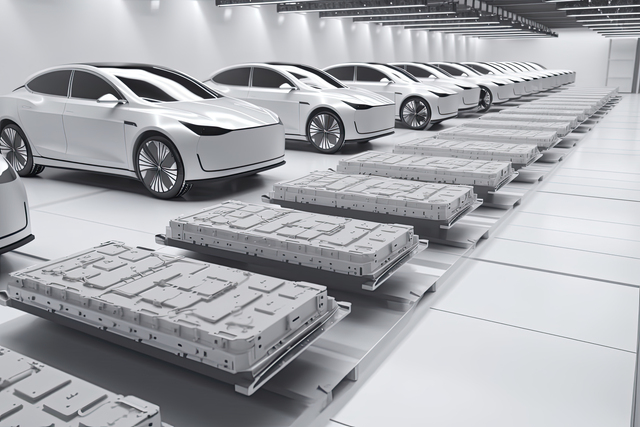


Electric vehicle batteries determine how far an EV can travel, how fast it charges, and how much it costs to own. This guide explains how EV batteries work, compares today's battery technologies, explores future innovations, and shows what used EV buyers should check before purchasing. Learn how to choose a reliable electric vehicle while avoiding costly battery-related surprises.
What Is Electric Car Battery Technology?
Electric car battery technology is the foundation of every electric vehicle (EV). Unlike a gasoline car that relies on fuel and an engine, an EV stores electricity in a large rechargeable battery pack that powers one or more electric motors.
Over the past two decades, EV batteries have become more efficient, safer, and less expensive to produce. Modern batteries can deliver hundreds of miles of driving range, charge much faster than earlier designs, and last for many years with proper care. These improvements have made electric vehicles a practical choice for millions of drivers.
For budget-conscious buyers, understanding battery technology is especially important. The battery is the most expensive part of an EV, and its condition affects driving range, resale value, maintenance costs, and the overall value of a used electric vehicle.
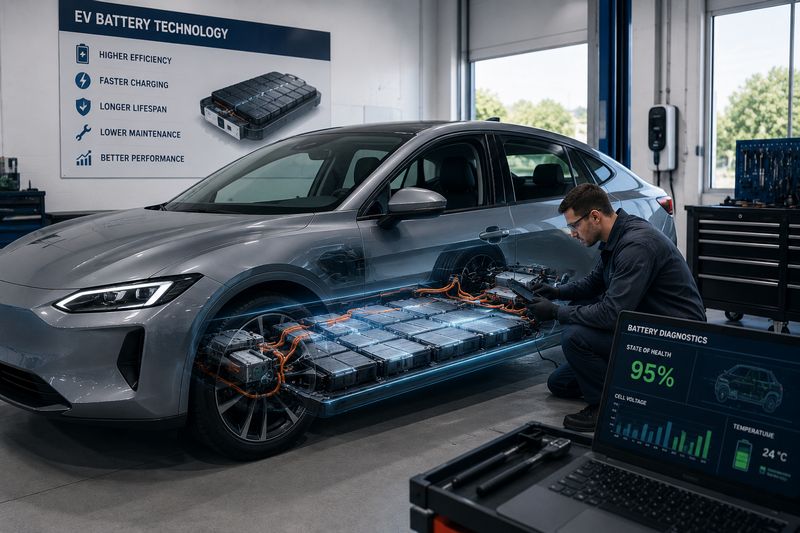
Why EV Batteries Are the Heart of an Electric Vehicle
The battery is often called the heart of an electric vehicle because it supplies all the energy needed to move the car. Without it, the electric motor cannot operate.
Instead of burning gasoline, an EV stores electricity inside thousands of rechargeable battery cells. When you press the accelerator, electricity flows from the battery to the electric motor, which turns the wheels.
The battery also powers other systems, including:
- Climate control
- Infotainment system
- Lighting
- Power steering
- Safety electronics
- Driver assistance features
Because the battery performs so many tasks, its health directly affects how the vehicle performs every day.
For example, imagine you are shopping for a used electric SUV with a limited budget. Two identical vehicles are available for sale at similar prices. One has a battery that still retains 95% of its original capacity, while the other has only 80%. Even though the cars look the same, the first one can travel farther on a single charge and may keep its value longer.
That is why experienced EV buyers pay close attention to battery condition before making a purchase.
How Battery Technology Has Evolved
Electric vehicle batteries have improved dramatically over the past several decades.
Early electric cars often used lead-acid batteries, which were heavy, bulky, and stored relatively little energy. These batteries limited driving range and required frequent charging.
Later, nickel-metal hydride (NiMH) batteries became common in hybrid vehicles. They were more durable and efficient than lead-acid batteries but still could not provide the range needed for most fully electric cars.
The biggest breakthrough came with lithium-ion batteries. They offered several major advantages:
- Higher energy density
- Lower weight
- Longer lifespan
- Faster charging
- Better performance
- Lower maintenance requirements
Today's EV batteries continue to improve. Manufacturers are developing new battery chemistries that increase driving range, reduce charging time, improve safety, and lower production costs.
For example, many modern electric vehicles now use Lithium Iron Phosphate (LFP) batteries, while others continue using Nickel Manganese Cobalt (NMC) batteries. Each technology has its own strengths depending on how the vehicle is used.
Researchers are also working on next-generation batteries such as solid-state, sodium-ion, lithium-sulfur, and silicon-anode batteries that could reshape the EV market over the next decade.
Why Battery Innovation Matters
Battery technology affects almost every aspect of owning an electric vehicle.
When batteries become better, drivers benefit in several ways:
- Longer driving range
- Faster charging
- Lower operating costs
- Better reliability
- Improved safety
- Lower purchase prices over time
- Longer battery lifespan
- Higher resale value
These improvements are especially important for buyers shopping on a budget.
For example, someone who drives 40 miles to work every day wants confidence that the battery will easily cover the daily commute without frequent charging. A newer battery design may provide that confidence while also reducing electricity costs.
Battery innovation also helps lower manufacturing costs. As production expands and new technologies become available, electric vehicles are gradually becoming more affordable for average buyers.
Another important benefit is durability. Modern EV batteries are designed to last much longer than many people expect. In many cases, they retain a large percentage of their original capacity after hundreds of thousands of miles when properly maintained.
This means buying a used electric vehicle is becoming less risky than it was several years ago, provided the battery has been well cared for.
Buy a Used Electric Vehicle Directly from U.S. Auto Auctions
Understanding battery technology is only the first step. Auto4Export gives you access to thousands of used electric vehicles from trusted U.S. auto auctions, making it easy to compare models, review auction listings, and purchase an EV that fits your budget.
- ✅ Access thousands of electric vehicles every day
- ✅ Clean Title and Salvage Title EVs available
- ✅ Vehicle history reports and auction photos
- ✅ Worldwide shipping and export support
Key Terms Every EV Buyer Should Know
Understanding a few basic battery terms can make shopping for a used electric vehicle much easier.
Battery Cell
A battery cell is the smallest unit that stores electrical energy. Thousands of individual cells work together inside an EV battery pack.
Battery Module
Several battery cells are grouped together to form a module. Modules make battery packs easier to assemble, monitor, and repair.
Battery Pack
The battery pack is the complete high-voltage battery installed in the vehicle. It contains battery cells, modules, cooling systems, sensors, protective housing, and electronic controls.
Battery Capacity
Battery capacity is measured in kilowatt-hours (kWh). A larger battery generally stores more energy and provides a longer driving range.
For example, a 75 kWh battery usually allows longer trips than a 40 kWh battery, although vehicle efficiency also affects total range.
Driving Range
Driving range refers to how far an EV can travel on a full charge. Actual range depends on:
- Battery size
- Driving speed
- Weather
- Terrain
- Vehicle weight
- Climate control use
State of Health (SOH)
State of Health measures how much battery capacity remains compared to when the battery was new.
For example:
- 100% SOH means the battery performs like new.
- 90% SOH means it retains about 90% of its original capacity.
- 80% SOH means the battery has experienced noticeable degradation but may still be suitable for many drivers.
SOH is one of the most important values to check when buying a used EV.
Battery Degradation
Battery degradation is the gradual loss of battery capacity over time. Every rechargeable battery slowly loses some capacity through regular charging, driving, aging, and exposure to heat or extreme cold.
Fortunately, degradation usually happens gradually rather than suddenly.
Battery Management System (BMS)
The Battery Management System, or BMS, is the electronic control system that monitors and protects the battery.
It helps:
- Prevent overcharging
- Prevent excessive discharge
- Balance battery cells
- Monitor temperature
- Improve battery lifespan
- Detect potential problems
Without a properly functioning BMS, battery performance and safety would be greatly reduced.
How Does an Electric Car Battery Work?
An electric car battery works like a large rechargeable energy storage system. It stores electricity when the vehicle is plugged in and releases that electricity when the driver needs power. Instead of sending fuel to an engine, an EV sends electrical energy to an electric motor.
For used EV buyers, this is important to understand because the battery affects range, charging time, performance, and long-term value. A used electric vehicle with a healthy battery can be a smart way to save money. A vehicle with poor battery health can become expensive very quickly.
How Energy Is Stored and Released
An EV battery stores energy through chemical reactions inside battery cells. When the vehicle is charging, electrical energy enters the battery and is stored inside the cells. When the vehicle is driving, the battery releases that stored energy as electricity.
That electricity flows to the electric motor. The motor then turns the wheels and moves the vehicle.
A simple way to think about it is this:
- The battery stores the energy.
- The inverter controls how that energy is delivered.
- The electric motor uses the energy to move the car.
- The software manages everything in the background.
For example, imagine you charge your used Nissan Leaf, Tesla Model 3, or Chevrolet Bolt overnight. In the morning, the battery is full. When you drive to work, the vehicle gradually uses that stored electricity instead of gasoline. If your daily commute is 30 miles, you may use only a small part of the battery and recharge again at home later.
This is why many budget-conscious EV buyers like electric cars. If their daily driving is predictable, they can reduce fuel costs and avoid frequent gas station visits.
Charging and Discharging Explained
Charging means adding electricity to the battery. Discharging means using that stored electricity while driving.
When you plug an EV into a charger, power flows from the charging source into the battery pack. The battery does not simply take unlimited electricity. The vehicle controls the charging speed to protect the battery and prevent overheating.
Charging speed depends on several factors:
- Battery size
- Charger type
- Battery temperature
- Battery condition
- State of charge
- Vehicle charging limits
Charging is usually fastest when the battery is not too full. As the battery gets closer to 80% or 100%, charging often slows down. This helps protect the battery from stress.
Discharging happens when you drive. The battery sends power to the motor, climate system, lights, screens, and other electronics. Hard acceleration, highway speeds, cold weather, and heavy use of heat or air conditioning can drain the battery faster.
For example, a used EV may show 220 miles of range on a mild day. But in winter, with the heater running and highway speeds, the real range may be lower. This does not always mean the battery is bad. It often means the battery is working harder because of weather and driving conditions.
The Role of Battery Cells, Modules, and Packs
An EV battery is not one single battery block. It is made from many smaller parts working together.
The smallest part is the battery cell. Each cell stores a small amount of energy. Many cells are grouped together into modules. Several modules are then combined into one large battery pack.
The structure usually looks like this:
- Battery cells
- Battery modules
- Battery pack
The full battery pack is installed under the floor or inside the vehicle’s structure. This location helps lower the center of gravity, which can make the EV feel stable while driving.
The battery pack also includes:
- Cooling system
- Wiring
- Sensors
- Protective casing
- Battery management electronics
- Safety disconnects
For used EV buyers, this structure matters because battery repairs can vary. In some vehicles, a damaged module may be replaceable. In others, a full battery pack replacement may be required. That difference can strongly affect repair costs.
For example, if an auction EV has accident damage near the battery area, buyers should be very careful. Even if the vehicle looks repairable, battery pack damage can make the total cost much higher than expected.
How Regenerative Braking Recharges the Battery
Regenerative braking is one of the most useful features of an electric vehicle. It allows the car to recover some energy while slowing down.
In a gasoline car, braking turns motion into heat through the brake pads and rotors. That energy is lost. In an EV, the electric motor can work in reverse during deceleration. Instead of only using friction brakes, the motor sends some energy back into the battery.
This helps improve efficiency and can also reduce brake wear.
Regenerative braking is helpful in:
- City driving
- Stop-and-go traffic
- Downhill roads
- Frequent slowing and stopping
- Daily commuting
For example, if you drive in heavy city traffic every day, regenerative braking can help recover energy each time you slow down. You still use battery power, but the vehicle becomes more efficient than it would be without regen braking.
Some EVs also offer one-pedal driving. This means the vehicle slows down strongly when you lift your foot off the accelerator. Many drivers like this feature because it makes city driving smoother and easier.
For budget buyers, regenerative braking can be a real benefit. It can help stretch driving range and may reduce the frequency of brake replacement over time.
Battery Management System (BMS) and Its Functions
The Battery Management System, or BMS, is the control system that monitors and protects the EV battery. It works quietly in the background every time the vehicle is charging, driving, or parked.
The BMS helps manage:
- Battery temperature
- Charging speed
- Cell balance
- State of charge
- State of health
- Voltage levels
- Current flow
- Safety warnings
- Protection from overcharging
- Protection from deep discharge
One of its most important jobs is cell balancing. Since an EV battery contains many cells, the BMS helps keep them working evenly. If some cells are weaker than others, battery performance can drop.
The BMS also helps protect the battery from extreme heat and cold. If the battery becomes too hot, the system may reduce charging speed or limit performance. If the battery is too cold, it may also reduce power until conditions improve.
For used EV buyers, the BMS is important because it can provide battery health data. Some vehicles or diagnostic tools can show State of Health, charging history, and battery error codes. This information can help buyers avoid vehicles with hidden battery problems.
For example, a used EV may look clean, drive normally, and have low mileage. But if diagnostics show weak battery modules or poor State of Health, it may not be the bargain it appears to be.
EV Battery Construction
An electric vehicle battery is much more than a large box of stored electricity. It is a carefully designed system made of cells, modules, cooling parts, wiring, sensors, software, and a strong protective enclosure. All these parts work together to store energy, deliver power, control temperature, and keep the vehicle safe.
For used EV buyers, battery construction matters because damage to one part of the battery system can affect range, safety, repair cost, and resale value.
Battery Cells
Battery cells are the smallest energy-storing parts of an EV battery. Each cell stores a small amount of electricity, but thousands of cells can work together to power the entire vehicle.
There are different cell shapes, including:
- Cylindrical cells
- Prismatic cells
- Pouch cells
Each design has its own advantages. Some are easier to cool. Some are easier to package tightly inside the battery pack. Others help reduce manufacturing cost.
The chemistry inside the cell also matters. Many EVs use lithium-ion cells, but the exact chemistry can vary. Some batteries use LFP chemistry, while others use NMC or NCA chemistry. These differences affect range, cost, lifespan, charging speed, and safety.
For example, a used EV with LFP batteries may offer strong durability and lower cost, while an EV with NMC batteries may offer better energy density and longer driving range in a smaller pack.
Modules and Battery Packs
Battery cells are grouped into modules. These modules are then placed together to create the full battery pack.
A simple structure looks like this:
- Cells store electricity.
- Modules organize groups of cells.
- The battery pack combines modules into one complete system.
The battery pack is usually mounted low in the vehicle, often under the floor. This helps improve stability because the heavy battery lowers the center of gravity.
A full battery pack may include:
- Battery cells
- Modules
- Electrical connectors
- Cooling channels
- Temperature sensors
- Voltage sensors
- Safety disconnects
- Protective casing
For used EV buyers, this structure is important. In some vehicles, a damaged module may be repairable or replaceable. In others, battery service may require replacing a much larger section or even the full pack.
This can make a huge difference in repair cost. A used EV with minor body damage may still be a good deal. But if the battery pack or modules are damaged, the repair may cost more than the vehicle is worth.
Battery Cooling and Thermal Management
EV batteries work best within a safe temperature range. If the battery gets too hot or too cold, performance can drop. Charging speed can slow down, range can decrease, and long-term battery health can suffer.
Thermal management is the system that controls battery temperature.
Common battery cooling methods include:
- Liquid cooling
- Air cooling
- Refrigerant-based cooling
- Passive cooling
Many modern EVs use liquid cooling because it can manage temperature more evenly. This is especially helpful during fast charging, highway driving, hot weather, and repeated acceleration.
Good thermal management helps:
- Protect battery life
- Improve charging speed
- Reduce overheating risk
- Improve driving performance
- Keep range more stable
- Support battery safety
For example, if you live in a hot climate and buy a used EV with poor thermal management, the battery may degrade faster. This can reduce driving range and resale value.
That is why buyers should check how a specific EV model manages battery temperature before purchasing, especially at auction.
High-Voltage Components
Electric vehicles use high-voltage systems to move power from the battery to the motor. These systems are much more powerful than the small 12-volt battery used for lights and accessories.
High-voltage components may include:
- Main battery pack
- Inverter
- Electric motor
- Onboard charger
- DC fast-charging hardware
- High-voltage cables
- Power control unit
- Safety disconnect system
The inverter is especially important. It converts battery power into the type of electricity the motor needs. Without it, the motor cannot properly drive the vehicle.
High-voltage components are designed with safety protections, but they must be handled carefully. Repairs should only be performed by trained technicians.
For used EV buyers, damage near orange high-voltage cables is a serious warning sign. Orange cables usually indicate high-voltage wiring. If these parts are damaged in an accident, inspection by an EV-qualified technician is very important.
Battery Enclosure and Safety Design
The battery enclosure is the strong outer case that protects the battery pack. It helps shield the cells and modules from road debris, water, vibration, and crash damage.
A good battery enclosure is designed to:
- Protect cells from impact
- Keep water and dirt out
- Support the vehicle structure
- Reduce fire risk
- Protect high-voltage parts
- Help manage heat
- Prevent battery movement in a crash
Because many EV batteries are mounted under the floor, the enclosure must be strong. It may use steel, aluminum, or other reinforced materials.
For auction buyers, underbody damage is very important to inspect. A vehicle may look clean from the outside, but damage underneath the battery area can be expensive and dangerous.
For example, a used EV with front bumper damage may be repairable at a reasonable cost. But a used EV with crushed underbody panels near the battery pack needs careful inspection before bidding.
Battery Software and Monitoring Systems
Modern EV batteries depend heavily on software. The battery is not just a mechanical part. It is controlled and monitored by electronic systems every second.
Battery software helps monitor:
- Battery temperature
- Charging speed
- State of charge
- State of health
- Cell voltage
- Energy flow
- Warning codes
- Battery balancing
- Cooling system operation
- Safety limits
This software works with the Battery Management System to keep the battery safe and efficient.
For drivers, this can appear as:
- Range estimates
- Charging speed limits
- Battery temperature warnings
- Reduced power messages
- State of charge display
- Diagnostic trouble codes
For used EV buyers, software data can reveal problems that are not visible in photos. A vehicle may look perfect, but diagnostics may show battery imbalance, weak cells, or thermal system faults.
Types of Electric Vehicle Batteries
Not all EV batteries are the same. Different battery types use different materials, offer different driving ranges, charge at different speeds, and age in different ways. For used EV buyers, this matters because battery type can affect price, ownership cost, battery life, and resale value.
Lithium-Ion Batteries
Lithium-ion batteries are the most common battery type in modern electric vehicles. They are popular because they store a lot of energy for their size and weight.
Most fully electric cars today use some form of lithium-ion battery. This technology helps EVs offer practical driving range, strong acceleration, and reliable everyday performance.
Main advantages include:
- Good driving range
- Fast charging capability
- Long service life
- Strong energy density
- Lower weight than older battery types
- Good performance in most driving conditions
For a budget-conscious buyer, lithium-ion batteries can be a good choice because they are widely used and well understood. Many mechanics, inspectors, and battery specialists are now familiar with them.
However, not all lithium-ion batteries are identical. LFP, NMC, and NCA are all lithium-ion chemistries, but each one has different strengths.
Lithium Iron Phosphate (LFP) Batteries
Lithium Iron Phosphate batteries, often called LFP batteries, are becoming more popular in electric vehicles. They use iron and phosphate instead of nickel and cobalt, which can help reduce cost.
LFP batteries are known for safety, durability, and long cycle life. They are less energy-dense than some other lithium-ion batteries, which means they may need more space to provide the same range. However, they are often more affordable and can handle frequent charging well.
Main advantages include:
- Long lifespan
- Strong safety profile
- Lower material cost
- No cobalt
- Good for daily commuting
- Better tolerance for frequent full charging
For example, a buyer who mostly drives to work, school, grocery stores, and local errands may not need the longest possible range. An EV with an LFP battery can be a smart choice because it is practical, durable, and often less expensive.
LFP batteries are especially attractive for used EV buyers who care more about long-term reliability than maximum driving range.
Nickel Manganese Cobalt (NMC) Batteries
Nickel Manganese Cobalt batteries, or NMC batteries, are another common lithium-ion battery chemistry. They are widely used because they offer a strong balance of range, power, and cost.
NMC batteries usually have higher energy density than LFP batteries. This means they can store more energy in a smaller and lighter pack. That helps EVs travel farther on a single charge.
Main advantages include:
- Strong driving range
- Good energy density
- Good power output
- Common in many EV models
- Balanced performance for daily and highway driving
NMC batteries are a good fit for drivers who need more range. For example, someone who drives long distances, uses highways often, or cannot charge at home every night may prefer an EV with an NMC battery.
The main downside is cost. NMC batteries use materials such as nickel and cobalt, which can make them more expensive. Battery care also matters. Frequent fast charging, extreme heat, and constantly charging to 100% can increase long-term wear.
Nickel Cobalt Aluminum (NCA) Batteries
Nickel Cobalt Aluminum batteries, or NCA batteries, are used in some electric vehicles that focus on long range and strong performance. They are known for high energy density, which helps reduce battery weight while supporting longer driving range.
Main advantages include:
- High energy density
- Strong acceleration
- Long driving range
- Good performance in larger battery packs
- Useful for high-mileage drivers
NCA batteries can be a good choice for buyers who want a used EV with strong range and performance. For example, a driver who travels between cities or needs one vehicle for daily commuting and weekend trips may benefit from this battery type.
However, NCA batteries can be more expensive and require careful thermal management. As with other lithium-ion batteries, battery health should be checked before buying a used EV.
For auction buyers, this is especially important. A used EV with an NCA battery may look like a great deal because of its range, but the battery condition must support that value.
Nickel Metal Hydride (NiMH) Batteries
Nickel Metal Hydride batteries were widely used in hybrid vehicles before lithium-ion batteries became dominant. They are still found in some older hybrids and certain used models.
NiMH batteries are known for durability and stable performance. They are not as energy-dense as modern lithium-ion batteries, so they are not ideal for long-range fully electric cars. But they can work well in hybrid vehicles where the battery is smaller and used differently.
Main advantages include:
- Proven reliability in hybrids
- Good durability
- Stable performance
- Lower risk compared with some older technologies
- Suitable for stop-and-go driving
For budget buyers, a used hybrid with a NiMH battery can be a practical choice if the goal is saving fuel without fully switching to an EV.
For example, someone who wants lower gas costs but does not have easy access to home charging may choose a used Toyota Prius or another hybrid instead of a fully electric car.
Lead-Acid Batteries in Hybrid Applications
Lead-acid batteries are older, heavier, and less efficient than modern EV batteries. They are not used as main traction batteries in modern electric vehicles, but they can still appear in hybrid or electric vehicles as small auxiliary batteries.
In many vehicles, a 12-volt lead-acid battery powers basic systems such as:
- Lights
- Door locks
- Control modules
- Dashboard electronics
- Startup electronics
- Safety systems
This battery is separate from the high-voltage traction battery.
Lead-acid batteries are inexpensive and easy to replace, but they do not provide the energy needed to move a modern EV over long distances.
For used EV buyers, it is important not to confuse the small 12-volt battery with the main EV battery pack. A weak 12-volt battery can cause warning lights or startup problems, but replacing it is usually much cheaper than replacing the high-voltage battery.
Which Battery Type Is Best for Different Drivers?
The best battery type depends on how the vehicle will be used. There is no single perfect battery for every buyer.
For city drivers and daily commuters, LFP batteries can be a great choice. They are durable, safer, and often more affordable. If your daily driving is predictable and you can charge at home, you may not need the longest possible range.
For long-distance drivers, NMC or NCA batteries may be better because they usually offer higher energy density and longer range. These batteries can be useful if you drive on highways often or cannot charge every day.
For budget buyers who want lower fuel costs but are not ready for a full EV, a hybrid with a NiMH battery may still make sense. It can reduce fuel use without requiring charging infrastructure.
For used EV buyers, the best choice is usually the vehicle with the healthiest battery, not just the most advanced chemistry. A well-maintained EV with a slightly smaller battery can be a better purchase than a long-range EV with poor battery health.
Before buying, compare:
- Battery type
- Battery health
- Real-world range
- Charging speed
- Warranty coverage
- Repair cost
- Vehicle history
- Climate where the car was used
The Two Main Lithium-Ion Battery Technologies
Although there are several types of lithium-ion batteries used in electric vehicles, two chemistries dominate today's market: Lithium Iron Phosphate (LFP) and Nickel Manganese Cobalt (NMC). Most new and used EVs you will find today use one of these two battery technologies.
Both are reliable, but they are designed with different priorities. LFP batteries focus on durability, safety, and lower cost, while NMC batteries prioritize longer driving range and higher energy density.
If you are shopping for a used electric vehicle, understanding the differences between LFP and NMC batteries can help you choose a car that better matches your budget, driving habits, and long-term ownership plans.
LFP vs NMC Batteries
LFP and NMC batteries are both lithium-ion batteries, but they use different materials inside their cells.
LFP batteries use lithium, iron, and phosphate. They do not require nickel or cobalt, making them less expensive to manufacture and more environmentally friendly in some respects.
NMC batteries use nickel, manganese, and cobalt. This chemistry allows the battery to store more energy in a smaller space, making it popular for vehicles that need longer driving range.
The main differences are:
LFP Batteries
- Long lifespan
- Excellent thermal stability
- Lower production cost
- Good safety
- Lower energy density
- Often suitable for daily commuting
NMC Batteries
- Higher energy density
- Longer driving range
- Better performance in compact battery packs
- Faster acceleration in many applications
- Higher material cost
- More sensitive to charging habits and heat
For example, if you drive 25 to 40 miles each day and charge at home every night, an LFP battery may meet all your needs. If you regularly travel 250 miles or more in one trip, an NMC battery may be a better choice because of its longer range.
Energy Density Comparison
Energy density describes how much energy a battery can store relative to its size and weight.
This is one of the biggest differences between LFP and NMC batteries.
NMC batteries generally have higher energy density. This allows manufacturers to build lighter battery packs that provide longer driving range.
LFP batteries store less energy in the same amount of space. To achieve similar range, they usually require a larger or heavier battery pack.
Higher energy density provides several advantages:
- Longer driving range
- Smaller battery size
- Lower vehicle weight
- More flexible vehicle design
However, higher energy density is not always the most important factor.
For example, a family that mainly drives around town may never use the extra range offered by an NMC battery. In that case, paying more for additional battery capacity may not provide much real-world benefit.
Many affordable EVs now use LFP batteries because they provide enough range for everyday driving while keeping costs lower.
Charging Speed Comparison
Both LFP and NMC batteries support fast charging, but charging performance depends on more than battery chemistry alone.
Charging speed is influenced by:
- Battery chemistry
- Battery temperature
- Battery size
- Battery Management System
- Vehicle software
- Charging station power
Modern NMC batteries often support very fast DC charging, making them attractive for drivers who travel long distances.
LFP batteries also support DC fast charging, although charging performance can vary depending on the vehicle.
One difference is charging habits.
Many manufacturers recommend keeping NMC batteries between roughly 20% and 80% during everyday use to reduce long-term degradation, although charging to 100% is still appropriate before longer trips when needed.
LFP batteries are generally more tolerant of frequent full charging. In fact, some manufacturers recommend charging LFP batteries to 100% regularly so the Battery Management System can accurately estimate the battery's remaining capacity.
For example, a commuter who charges every night may appreciate the flexibility of an LFP battery. A salesperson who spends all day driving between cities may benefit more from an NMC battery with strong DC fast-charging performance.
Safety Comparison
Battery safety is one of the most important considerations for every EV buyer.
Both LFP and NMC batteries include multiple safety systems, but their chemical stability differs.
LFP batteries are generally considered one of the safest lithium-ion battery chemistries available.
Their advantages include:
- Excellent thermal stability
- Lower risk of overheating
- Better resistance to thermal runaway
- Good performance during repeated charging
This makes LFP batteries especially attractive for drivers who prioritize long-term durability and peace of mind.
NMC batteries are also very safe when combined with modern cooling systems and Battery Management Systems. However, because they store more energy in a smaller space, they require more careful temperature management.
Modern electric vehicles use sophisticated monitoring systems, liquid cooling, sensors, and software to keep both battery types operating safely.
For used EV buyers, battery condition is usually far more important than chemistry alone. A well-maintained NMC battery is generally a better purchase than a neglected LFP battery.
Lifespan Comparison
Battery lifespan is one of the biggest concerns for buyers considering a used electric vehicle.
Fortunately, both LFP and NMC batteries can last many years.
LFP batteries are known for exceptional cycle life. Many can withstand significantly more charge and discharge cycles before losing a noticeable amount of capacity.
Benefits of LFP lifespan include:
- Excellent durability
- Slower long-term degradation
- Good performance after many years
- Lower likelihood of early capacity loss
NMC batteries also last a long time but may experience somewhat faster degradation, particularly if they are frequently fast charged, exposed to extreme heat, or kept at very high states of charge for long periods.
However, proper care makes a major difference.
To maximize battery life:
- Avoid leaving the battery fully charged for extended periods.
- Limit unnecessary DC fast charging.
- Park in shaded or covered areas during extreme heat when possible.
- Follow the manufacturer's charging recommendations.
- Keep battery software updated.
For example, two identical used EVs may have the same mileage, but one battery may be in much better condition simply because the previous owner followed better charging habits.
Cost Comparison
Battery chemistry also affects vehicle price.
LFP batteries generally cost less to manufacture because they do not require expensive materials such as cobalt and large amounts of nickel.
This helps reduce:
- Vehicle purchase price
- Manufacturing costs
- Material costs
As more manufacturers adopt LFP technology, affordable electric vehicles are becoming increasingly common.
NMC batteries remain more expensive because of their higher energy density and the materials required to produce them.
For buyers, this often means:
- Higher purchase price
- Longer driving range
- Better performance in premium models
If you are shopping at an online auto auction with a limited budget, an EV equipped with an LFP battery may offer excellent value, especially if your driving needs are modest.
On the other hand, buyers who regularly travel long distances may find that paying more for an NMC-equipped vehicle is worthwhile.
Which Battery Chemistry Is Better?
There is no single winner because the best battery depends on how you use your vehicle.
An LFP battery may be the better choice if you:
- Drive mostly in the city
- Have a predictable daily commute
- Want lower ownership costs
- Plan to keep the vehicle for many years
- Prefer excellent durability and safety
An NMC battery may be the better choice if you:
- Frequently drive long distances
- Want maximum driving range
- Need strong acceleration
- Often travel on highways
- Are comfortable paying more for additional performance
For most budget-conscious used EV buyers, battery health is usually more important than battery chemistry.
For example, a used EV with an LFP battery at 98% State of Health is often a better investment than a similar model with an NMC battery at 80% State of Health. A healthy battery provides better range, stronger resale value, and fewer unexpected expenses.
The Evolution of Electric Car Battery Technology
Electric car batteries have changed a lot over time. Early EVs had short range, slow charging, and heavy batteries. Modern electric vehicles can travel much farther, charge faster, and last longer than older models. These changes are one of the biggest reasons EVs have become more practical for everyday drivers.
For used EV buyers, this evolution is important. A newer battery design may offer better range, stronger durability, and lower long-term costs than an older EV with outdated battery technology.
Early EV Battery Technologies
Electric vehicles are not new. Early electric cars existed more than a century ago, but their batteries were very limited compared with modern technology. Many early EVs used lead-acid batteries. These batteries were heavy, stored little energy, and took a long time to recharge.
Later, hybrid vehicles helped improve battery technology. Many hybrids used nickel-metal hydride batteries, also known as NiMH batteries. These batteries were more durable than lead-acid batteries and worked well in vehicles that still had gasoline engines.
However, NiMH batteries were not ideal for long-range fully electric cars. They were too heavy and could not store enough energy for the driving range most people needed.
Lithium-ion batteries changed the EV market. They stored more energy in a smaller and lighter package. This made it possible for electric cars to offer better range, faster acceleration, and more practical daily use.
For example, an older electric car may have only been useful for short city trips. A modern used EV can often handle commuting, shopping, school drop-offs, and weekend driving without daily charging anxiety.
Improvements in Energy Density
Energy density means how much energy a battery can store compared with its size and weight. Higher energy density allows an EV to travel farther without needing a much larger battery pack.
This has been one of the biggest improvements in EV battery technology.
Better energy density helps automakers build vehicles with:
- Longer driving range
- Lighter battery packs
- Better performance
- More cabin space
- Lower energy use
- Better efficiency
For used EV buyers, energy density matters because it affects real-world range. A newer EV with a better battery may travel much farther than an older model with a similar battery size.
For example, a budget buyer comparing two used EVs may see that both have similar mileage and price. But one model may offer 150 miles of range while another offers 250 miles because its battery technology is more efficient. That difference can change how useful the car is every day.
More range also helps resale value. A used EV with practical range is usually easier to sell later than one that only works for very short trips.
Faster Charging Capabilities
Early electric vehicles charged slowly. Many needed several hours to recover enough range for daily driving. This made EV ownership difficult for people who could not charge at home or who needed longer trips.
Modern EV batteries and charging systems have improved a lot. Many newer electric vehicles support DC fast charging, which can add a large amount of range in a much shorter time.
Faster charging depends on:
- Battery chemistry
- Battery size
- Charging station power
- Battery temperature
- Vehicle charging hardware
- Battery Management System
Modern EVs also manage charging more intelligently. The vehicle can slow charging when the battery gets too hot or when it is nearly full. This helps protect battery life.
For example, someone buying a used EV for commuting may be fine with slower home charging. But a buyer who often drives between cities may need a vehicle with strong DC fast-charging capability.
This is why used EV buyers should check not only the battery range but also the maximum charging speed. A cheaper EV with slow charging may still be good for city use, but it may be frustrating on road trips.
Longer Battery Lifespan
One of the biggest fears about electric vehicles is battery replacement cost. Many buyers worry that an EV battery will fail quickly and cost too much to replace.
In reality, modern EV batteries are designed to last many years. Battery life has improved because of better chemistry, better cooling systems, better software, and smarter charging controls.
Battery lifespan has improved through:
- Stronger battery materials
- Better thermal management
- Improved Battery Management Systems
- More accurate cell balancing
- Safer charging limits
- Better software monitoring
Most EV batteries lose capacity gradually. They usually do not fail suddenly. A battery may still work well even after losing some of its original capacity.
For example, a used EV that originally had 250 miles of range may still offer around 220 miles after years of use, depending on condition, climate, and charging habits. For a driver with a 30-mile daily commute, that may still be more than enough.
For budget-conscious buyers, this is good news. A used EV with some battery degradation can still be a smart purchase if the remaining range fits your needs and the price reflects the condition.
Lower Manufacturing Costs
Battery costs have fallen over time as production has increased and manufacturing has improved. Automakers and battery companies now build batteries in larger volumes, which helps reduce cost per vehicle.
Lower battery costs are important because the battery is usually the most expensive part of an electric vehicle.
Cost reductions come from:
- Larger battery factories
- Better production methods
- Improved supply chains
- Less expensive chemistries like LFP
- More efficient pack design
- Increased competition among manufacturers
These changes help make EVs more affordable on the new and used markets.
For example, early EVs were often expensive and limited in range. Today, buyers can find used electric cars at online auto auctions for much lower prices, especially if they are flexible about model, mileage, title status, and range.
Lower battery costs also help with repair and replacement options, although full battery replacement can still be expensive. That is why checking battery health before buying remains very important.
Improvements in Safety and Reliability
Modern EV batteries are much safer and more reliable than early battery systems. Automakers now design battery packs with stronger enclosures, better cooling, advanced sensors, and software that constantly monitors battery health.
Safety improvements include:
- Better crash protection
- Stronger battery enclosures
- Liquid cooling systems
- Fire-resistant materials
- High-voltage disconnects
- Temperature monitoring
- Cell balancing
- Overcharge protection
- Software alerts
Battery Management Systems now track battery behavior in real time. If the system detects a problem, it can limit power, reduce charging speed, display a warning, or shut down certain functions to protect the vehicle.
For used EV buyers, these improvements matter because they reduce risk. A modern EV with a healthy battery, clean history, and no flood or battery damage can be a dependable daily vehicle.
Still, buyers should be careful with damaged EVs. Accident damage near the battery pack, underbody damage, flood history, or high-voltage warning lights should never be ignored.
Emerging Electric Car Battery Technologies
EV battery technology is still improving. Today’s lithium-ion batteries are already good enough for daily driving, but researchers and automakers are working on new designs that could offer longer range, faster charging, lower costs, and better safety.
For budget-conscious buyers, these future technologies matter because they may eventually make used EVs more affordable and more practical. However, many of these batteries are still in development, so buyers should understand what is available now and what may arrive later.
Solid-State Batteries
Solid-state batteries are one of the most talked-about future EV battery technologies. Many automakers see them as a possible next big step after today’s lithium-ion batteries.
How They Work
Most current EV batteries use a liquid electrolyte. This liquid helps move ions inside the battery during charging and discharging.
Solid-state batteries replace that liquid electrolyte with a solid material. This change may allow the battery to use different internal designs, including lithium-metal anodes in some versions.
In simple terms, a solid-state battery is designed to store and move energy in a more stable and compact way.
Advantages
Solid-state batteries could offer several major benefits:
- Longer driving range
- Faster charging
- Better safety
- Lower fire risk
- Longer battery life
- Smaller and lighter battery packs
- Better performance in future EVs
For example, a driver who wants an affordable used EV but worries about range may benefit from this technology in the future. If solid-state batteries become common, used electric cars may offer longer range without huge battery packs.
Challenges
Solid-state batteries are promising, but they are difficult to mass-produce.
Current challenges include:
- High production cost
- Manufacturing complexity
- Durability testing
- Scaling production
- Cold-weather performance concerns
- Long-term reliability validation
A battery may work well in a lab, but building millions of safe, affordable packs for real vehicles is much harder.
Current Development Status
Solid-state batteries are still mostly in the development and testing stage for mainstream EVs. Some companies have shown prototypes, and several automakers are investing heavily in this technology.
However, buyers should not expect most affordable used EVs to have solid-state batteries soon. For now, LFP, NMC, and NCA lithium-ion batteries remain the main technologies in the used EV market.
Lithium-Sulfur Batteries
Lithium-sulfur batteries are another promising technology that could change electric vehicles in the future. They use sulfur as a key material, which may help reduce cost and weight.
Benefits
Lithium-sulfur batteries could offer several advantages:
- Very high theoretical energy density
- Lower material cost
- Reduced use of expensive metals
- Lighter battery packs
- Potentially lower environmental impact
Sulfur is more abundant and less expensive than materials like cobalt and nickel. This could help make future batteries cheaper if the technology becomes commercially successful.
For budget buyers, this is important. Lower battery material costs could eventually reduce EV prices and make used electric vehicles more accessible.
Current Challenges
Lithium-sulfur batteries still face serious technical challenges.
Common issues include:
- Shorter cycle life
- Faster capacity loss
- Chemical instability during repeated charging
- Difficulty maintaining performance over time
- Manufacturing challenges
In simple terms, lithium-sulfur batteries can store a lot of energy, but they often struggle to keep that performance after many charge cycles.
For a daily driver, long battery life is just as important as range. A battery that starts strong but degrades quickly would not be ideal for used EV buyers.
Future Potential
If researchers solve the durability problem, lithium-sulfur batteries could become useful for electric vehicles, aircraft, commercial transport, and other applications where low weight matters.
For now, lithium-sulfur remains a future technology rather than a common option in used EVs. Buyers shopping today should focus on proven lithium-ion batteries and battery health data.
Silicon Anode Batteries
Silicon anode batteries are one of the more realistic near-term improvements for EV battery technology. Instead of completely replacing lithium-ion batteries, silicon improves part of the existing battery design.
How Silicon Improves Performance
In many current lithium-ion batteries, the anode is made mostly from graphite. Silicon can store much more lithium than graphite, which means it can help increase battery capacity.
In simple terms, adding silicon allows the battery to store more energy without making the pack much larger.
This can help improve:
- Driving range
- Charging performance
- Energy density
- Battery efficiency
Some battery makers use small amounts of silicon mixed with graphite. Others are working on higher-silicon anode designs.
Advantages
Silicon anode technology offers several possible benefits:
- Longer range from the same battery size
- Faster charging potential
- Better energy density
- Lower vehicle weight
- Improved performance
- Easier integration with existing lithium-ion systems
For example, a future compact EV may offer the range of a larger battery vehicle without becoming heavier or more expensive. That could help buyers who want an affordable EV but still need practical range.
Commercial Readiness
Silicon anode technology is closer to real-world use than some other future battery ideas. Some EV batteries already use silicon-enhanced anodes, though usually in limited amounts.
The main challenge is that silicon expands and contracts during charging and discharging. This can damage the battery over time if not managed properly.
Battery companies are improving materials and cell design to reduce this issue. As the technology matures, silicon anodes may become more common in EVs.
Graphene Batteries
Graphene batteries are often mentioned as a future breakthrough in electric vehicle technology. Graphene is an extremely thin layer of carbon atoms arranged in a honeycomb pattern. It is lightweight, highly conductive, and very strong.
In many cases, the term "graphene battery" refers to lithium-ion batteries that use graphene to improve certain components rather than batteries made entirely from graphene.
Researchers believe graphene could help improve battery performance in several ways, but the technology is still developing for large-scale EV use.
Benefits
Graphene has several properties that make it attractive for future batteries.
Potential advantages include:
- Faster charging
- Better electrical conductivity
- Higher energy density
- Improved heat management
- Longer battery lifespan
- Lower battery weight
- Better resistance to degradation
One of the biggest advantages is heat control. Better thermal performance may allow batteries to charge more quickly while reducing stress on battery cells.
For example, a future EV with graphene-enhanced batteries could potentially recharge much faster during a road trip while maintaining good battery health over many years.
Limitations
Despite the excitement, graphene batteries are not yet widely used in passenger electric vehicles.
Current challenges include:
- High manufacturing cost
- Complex production methods
- Limited large-scale manufacturing
- Ongoing durability research
- Commercial scalability
Many laboratory results are promising, but producing millions of affordable batteries remains difficult.
Buyers should be cautious when reading headlines about graphene batteries. Many reports describe future possibilities rather than technology that is already available in today's used EV market.
Current Applications
Graphene technology is already being tested in some batteries for electronics, energy storage systems, and specialized transportation applications.
Some battery manufacturers also use small amounts of graphene to improve conductivity or cooling in lithium-ion batteries.
However, fully graphene-based EV batteries are not yet common in production passenger vehicles.
For buyers shopping today, graphene technology should be viewed as an area to watch rather than a feature to expect in a used electric car.
Sodium-Ion Batteries
Sodium-ion batteries are one of the newest alternatives to lithium-ion technology. Instead of lithium, these batteries use sodium, which is far more abundant and less expensive.
This technology has attracted attention because it could help reduce battery costs while improving supply chain stability.
Advantages
Sodium-ion batteries offer several potential benefits.
These include:
- Lower material cost
- Abundant raw materials
- Reduced dependence on lithium
- Reduced dependence on cobalt
- Better supply chain diversity
- Good performance in colder temperatures
- Lower environmental impact from some raw materials
For manufacturers, sodium is easier to obtain than lithium, which could reduce production costs over time.
For buyers, lower production costs may eventually translate into more affordable electric vehicles.
Limitations
Although sodium-ion batteries are promising, they currently have lower energy density than most lithium-ion batteries.
Current limitations include:
- Shorter driving range
- Larger battery size for similar capacity
- Lower energy density
- Limited commercial production
- Developing manufacturing infrastructure
This means a sodium-ion battery may need to be larger and heavier to provide the same driving range as a lithium-ion battery.
For many drivers, this may not be a problem if they only use their vehicle for daily commuting. However, long-distance drivers may still prefer higher-energy battery technologies.
Future Outlook
Several manufacturers have already introduced sodium-ion batteries for limited commercial applications, and development is moving quickly.
In the coming years, sodium-ion batteries may become attractive for:
- Affordable city EVs
- Entry-level electric vehicles
- Commercial fleets
- Energy storage systems
For budget-conscious buyers, sodium-ion technology could eventually reduce EV prices and make used electric vehicles more affordable.
However, lithium-ion batteries will likely remain the dominant technology for many years while sodium-ion production continues to expand.
Cobalt-Free Battery Chemistries
Battery manufacturers are working to reduce or eliminate cobalt from EV batteries.
Cobalt has traditionally helped improve battery stability and performance, but it is expensive and comes with supply chain challenges.
Many newer battery chemistries already use significantly less cobalt than earlier designs.
Why Manufacturers Are Reducing Cobalt Use
There are several reasons why automakers want to reduce cobalt usage.
These include:
- Lower production costs
- Reduced supply chain risks
- More stable raw material prices
- Greater availability of alternative materials
- Reduced dependence on limited mining regions
Some battery chemistries, including LFP batteries, eliminate cobalt entirely while still providing excellent durability and safety.
This has made LFP batteries increasingly popular in affordable electric vehicles.
For buyers, reduced cobalt use may eventually lead to lower EV prices while maintaining strong battery performance.
Benefits for Cost and Sustainability
Reducing cobalt offers advantages for both manufacturers and consumers.
Benefits include:
- Lower battery costs
- More affordable electric vehicles
- Improved supply chain stability
- Reduced dependence on scarce materials
- Better long-term production scalability
- Support for wider EV adoption
For someone shopping with a limited budget, these improvements may eventually make used EVs even more affordable as battery production costs continue to decline.
Other Next-Generation Battery Technologies
In addition to the major technologies already discussed, researchers continue exploring several other battery designs that could improve electric vehicles in the future.
While many remain in development, they demonstrate how quickly battery technology continues to evolve.
Semi-Solid Batteries
Semi-solid batteries combine characteristics of today's lithium-ion batteries with some features found in solid-state designs.
Instead of using a completely liquid or completely solid electrolyte, they use materials that fall somewhere between the two.
Potential benefits include:
- Higher energy density
- Improved safety
- Better thermal stability
- Faster charging potential
- Easier manufacturing than fully solid-state batteries
Some companies are already testing semi-solid batteries in limited production vehicles, making this one of the more realistic near-term developments.
Lithium-Metal Batteries
Lithium-metal batteries replace the traditional graphite anode with lithium metal.
This approach could significantly increase energy density and allow much longer driving ranges.
Potential advantages include:
- Much higher energy density
- Longer driving range
- Lower battery weight
- Improved efficiency
However, important challenges remain.
Researchers continue working to improve:
- Battery stability
- Safety
- Cycle life
- Manufacturing reliability
- Commercial production
Lithium-metal technology is considered promising but is not yet ready for widespread use in most passenger EVs.
Future Research Directions
Battery research continues to move in many different directions at the same time.
Scientists and manufacturers are working to improve:
- Battery lifespan
- Charging speed
- Energy density
- Safety
- Manufacturing efficiency
- Recycling methods
- Sustainable materials
- Lower production costs
- Better cold-weather performance
- Reduced environmental impact
Rather than relying on a single breakthrough, the future of EV batteries will likely come from many smaller improvements working together.
Advantages and Limitations of Modern EV Batteries
Modern electric vehicle batteries have improved significantly over the past decade. They offer longer driving range, better durability, faster charging, and lower operating costs than earlier battery technologies. These improvements have made EVs a realistic option for millions of drivers.
However, no battery is perfect. Every battery gradually loses capacity over time, and factors such as temperature, charging habits, and manufacturing costs still affect ownership. Understanding both the strengths and limitations of modern EV batteries can help buyers make smarter decisions, especially when shopping for a used electric vehicle.
Advantages
Modern EV batteries provide many benefits that make electric vehicles practical for everyday driving.
Some of the biggest advantages include:
- Lower energy costs compared to gasoline
- Quiet and smooth driving
- Instant acceleration
- Reduced maintenance
- Longer battery lifespan
- Improved reliability
- Better energy efficiency
- Lower emissions during vehicle operation
- Regenerative braking that recovers energy
- Continuous improvements in battery technology
One of the biggest financial advantages is lower operating cost. Electricity is often less expensive than gasoline, and electric motors have fewer moving parts than internal combustion engines. This means there are no oil changes, fewer fluid replacements, and less routine engine maintenance.
For example, someone who drives 40 miles every day may spend significantly less on electricity than they would on gasoline over the course of a year. Combined with lower maintenance costs, this can make EV ownership more affordable over time.
Modern batteries are also designed to last much longer than many buyers expect. Many continue to perform well after years of regular use when properly maintained.
Common Limitations
Although EV batteries have improved greatly, they still have some limitations.
Common challenges include:
- Gradual battery degradation
- Reduced range in extreme temperatures
- Charging takes longer than refueling
- Battery replacement can be expensive
- Driving range varies with conditions
- Public charging availability differs by location
- Battery performance depends on charging habits
These limitations do not affect every driver equally.
For example, someone who drives 25 miles each day and charges at home every night may never notice charging limitations. However, a driver who regularly travels hundreds of miles in one day may need to plan charging stops more carefully than someone driving a gasoline vehicle.
Understanding how you actually use your vehicle is often more important than simply looking at the maximum advertised driving range.
Battery Degradation Over Time
Every rechargeable battery slowly loses capacity as it ages. This natural process is called battery degradation.
Battery degradation does not usually happen suddenly. Instead, the battery gradually stores less energy over many years and thousands of charging cycles.
Several factors influence degradation:
- Vehicle age
- Total charging cycles
- Frequent DC fast charging
- High temperatures
- Long periods at a full charge
- Deep discharge habits
- Overall battery design
For example, an EV that originally traveled 300 miles on a full charge may travel around 270 miles after several years of normal use. For many drivers, this difference has little impact on daily commuting.
Most manufacturers design EV batteries to retain a large percentage of their original capacity for many years. Proper charging habits and good thermal management can help slow degradation even further.
When buying a used EV, checking the battery's State of Health (SOH) is one of the best ways to estimate its remaining useful life.
Temperature Sensitivity
Temperature has a major impact on battery performance.
Like most rechargeable batteries, EV batteries perform best within a moderate temperature range.
Cold weather can temporarily reduce:
- Driving range
- Charging speed
- Battery efficiency
- Available power
Hot weather can increase battery stress if temperatures remain high for long periods, especially without effective cooling.
Fortunately, modern EVs include advanced thermal management systems that help regulate battery temperature.
These systems may:
- Heat the battery in cold weather
- Cool the battery during charging
- Maintain safe operating temperatures
- Improve battery lifespan
- Protect performance
For example, a driver living in a northern state may notice reduced winter driving range because the battery uses energy to warm itself and heat the cabin. Likewise, drivers in very hot climates may experience slower charging during summer if the battery becomes too warm.
These effects are normal and usually temporary. Once temperatures return to a moderate range, battery performance typically improves.
Charging Speed Limitations
Charging technology continues to improve, but charging an EV still takes longer than filling a gasoline vehicle with fuel.
Charging speed depends on several factors:
- Charger type
- Battery chemistry
- Battery temperature
- Battery size
- Current state of charge
- Vehicle charging capability
Level 1 home charging is the slowest option and is mainly suitable for overnight charging when daily driving is limited.
Level 2 charging is much faster and is commonly used at homes, workplaces, and public charging stations.
DC fast charging provides the quickest charging experience and is especially useful during long trips.
Even with fast charging, charging speed usually decreases once the battery reaches around 80% capacity. This protects the battery and helps reduce long-term wear.
For example, if you stop during a road trip, charging from 20% to 80% may take much less time than charging from 80% to 100%. Many experienced EV drivers take advantage of this by making shorter, more frequent charging stops rather than waiting for a full charge every time.
For daily commuting, however, overnight home charging is often all that is needed.
Cost Challenges
Battery prices have fallen significantly over the past decade, but the battery pack remains the most expensive component of an electric vehicle.
Cost challenges include:
- High battery replacement cost
- Expensive raw materials
- Advanced manufacturing requirements
- Specialized repair procedures
- Limited repair options for some battery designs
Although complete battery replacement is relatively uncommon, it can be expensive if it becomes necessary after warranty coverage ends.
This is why buyers should carefully evaluate battery condition before purchasing a used EV.
For example, two used electric vehicles may have nearly identical prices, mileage, and appearance. One may have a battery with 96% State of Health, while the other has 78% State of Health. Even if the second vehicle costs less upfront, the healthier battery may provide better long-term value by offering more range, stronger resale value, and a lower likelihood of costly repairs.
Charging Technology and Infrastructure
Charging is one of the most important parts of EV ownership. A good electric vehicle is not only about battery size or driving range. It also needs to charge in a way that fits your daily routine, your budget, and your local charging options.
For used EV buyers, charging technology matters because not every electric car charges at the same speed. Some older EVs are perfect for home charging and city driving, while newer models may support faster public charging for road trips.
AC vs DC Fast Charging
There are two main types of EV charging: AC charging and DC fast charging.
AC charging is the most common option for home, workplace, and many public chargers. The charger sends alternating current to the vehicle, and the car’s onboard charger converts it into direct current for the battery.
AC charging is usually slower, but it is convenient and gentle on the battery.
Common AC charging options include:
- Level 1 charging from a standard household outlet
- Level 2 charging from a 240-volt home or public charger
Level 1 charging is slow and may only add a small amount of range per hour. It can work if you drive very little each day, but most EV owners prefer Level 2 charging.
Level 2 charging is much more practical for daily use. Many drivers can plug in at night and wake up with enough range for the next day.
DC fast charging is different. It sends direct current straight to the battery, bypassing the vehicle’s onboard charger. This allows much faster charging, especially during road trips.
DC fast charging is useful when you need to add range quickly, but it is not always necessary for everyday driving.
For example, if you drive 35 miles per day and can charge at home, Level 2 charging may be all you need. If you often travel between cities, DC fast charging speed becomes much more important.
Ultra-Fast Charging Technology
Ultra-fast charging is designed to add a large amount of range in a short time. Some modern EVs can use high-power chargers that deliver much faster charging than older public stations.
Ultra-fast charging depends on several factors:
- Vehicle charging capability
- Battery chemistry
- Battery temperature
- Charger power output
- Battery state of charge
- Charging curve
A charging curve shows how fast the battery charges at different charge levels. Most EVs charge fastest when the battery is low and slow down as the battery gets closer to full.
This is why many drivers charge from about 10% or 20% to 80% during long trips instead of waiting for 100%.
For budget-conscious buyers, ultra-fast charging may or may not be necessary. A used EV with slower charging can still be a great deal if you mostly drive locally. But if you take frequent road trips, a vehicle with faster DC charging can save time and reduce stress.
Battery Preconditioning
Battery preconditioning prepares the battery for charging or driving by adjusting its temperature before it is needed.
EV batteries charge best when they are within an ideal temperature range. If the battery is too cold, charging may be slow. If it is too hot, the vehicle may reduce charging speed to protect the battery.
Battery preconditioning can help by warming or cooling the battery before fast charging.
Some EVs automatically precondition the battery when the driver enters a fast charger as the destination in the navigation system. This allows the battery to reach a better temperature before arriving at the charger.
Benefits of battery preconditioning include:
- Faster charging
- Better cold-weather performance
- Improved battery protection
- More predictable road-trip charging
- Less stress on the battery
For example, if you drive a used EV in winter and stop at a DC fast charger, charging may be slow if the battery is cold. A vehicle with preconditioning can prepare the battery ahead of time and improve charging speed.
When buying a used EV, check whether the model includes battery preconditioning, especially if you live in a cold climate.
Wireless EV Charging
Wireless EV charging is a technology that allows an electric vehicle to charge without plugging in a cable.
The system usually uses a charging pad installed on the ground and a receiver installed under the vehicle. When the car parks over the pad, energy transfers wirelessly to the battery.
Wireless charging could be useful because it makes charging easier and more automatic. A driver could simply park at home, at work, or in a public space and let the vehicle charge.
Potential benefits include:
- No charging cable handling
- Easier daily charging
- Better convenience for fleets
- Cleaner parking areas
- Useful for future autonomous vehicles
However, wireless charging is not yet common for most passenger EVs. It can be expensive to install, and charging efficiency may vary.
For used EV buyers today, wireless charging is not usually a major buying factor. It is more of a future convenience feature than something most budget buyers should expect.
Bidirectional Charging (Vehicle-to-Grid and Vehicle-to-Home)
Bidirectional charging allows an EV battery to send electricity out, not just receive it.
This means the vehicle can potentially power a home, support the electric grid, or run tools and equipment.
There are two common terms:
Vehicle-to-Home (V2H) means the EV can provide power to a house during an outage or during high electricity price periods.
Vehicle-to-Grid (V2G) means the EV can send power back to the electrical grid when needed, depending on local programs and equipment.
Bidirectional charging can be useful for:
- Backup home power
- Lower electricity costs
- Emergency situations
- Supporting the power grid
- Worksites or outdoor equipment
For example, a homeowner with solar panels may eventually use an EV battery to store energy during the day and power the home at night. A contractor may use an EV truck to power tools at a jobsite.
However, bidirectional charging requires compatible vehicles, chargers, wiring, and sometimes utility approval. Not every EV supports it.
For used EV buyers, this feature can add value, but it should not be assumed. Always check the exact model and equipment.
Smart Charging Systems
Smart charging systems help manage when and how an EV charges. Instead of charging immediately at full power every time the vehicle is plugged in, smart charging can schedule charging based on cost, grid demand, or driver needs.
Smart charging can help:
- Reduce electricity costs
- Avoid peak-rate charging
- Protect battery health
- Balance home energy use
- Support solar charging
- Manage fleet charging
For example, if electricity is cheaper at night, a smart charger can delay charging until off-peak hours. This helps the driver save money without needing to think about it every day.
Some vehicles also allow drivers to set charging limits. For daily driving, many owners charge to 80% or 90% instead of 100% to reduce battery stress, depending on battery chemistry and manufacturer recommendations.
For budget buyers, smart charging can make EV ownership more affordable. Saving a few dollars each week on electricity can add up over years of ownership.
Future Charging Infrastructure
Charging infrastructure continues to expand as more electric vehicles enter the market. More public chargers are being installed at shopping centers, highways, apartment buildings, workplaces, hotels, and parking lots.
Future charging infrastructure will likely include:
- More DC fast chargers
- More reliable charging stations
- Better payment systems
- Charging at apartment communities
- Workplace charging
- Highway charging networks
- Faster charging for long-distance travel
- More support for electric trucks and fleets
This matters for used EV buyers because charging access affects how practical the vehicle will be.
For example, a buyer who has a garage and can install a Level 2 charger may find EV ownership very easy. A buyer who lives in an apartment without reliable charging may need to check nearby public chargers before buying.
Battery Life and Performance
Battery life is one of the biggest questions for anyone thinking about buying an electric vehicle. Many buyers worry that a used EV battery will fail quickly or lose too much range. In reality, modern EV batteries are designed to last many years, but their condition depends on age, mileage, climate, charging habits, and maintenance history.
For budget-conscious buyers, battery performance is especially important. A used EV with a healthy battery can save money on fuel and maintenance. A cheap EV with a weak battery can become an expensive mistake.
How Long Do EV Batteries Last?
Most modern EV batteries are built to last a long time. In many cases, they can serve drivers for 8 to 15 years or more, depending on how the vehicle is used and maintained.
Battery life is usually measured in two ways:
- Time
- Charge cycles
A charge cycle means using and recharging energy equal to one full battery capacity. It does not always mean charging from 0% to 100% in one session. For example, using 50% of the battery today and 50% tomorrow equals one full cycle.
Most EV batteries do not suddenly stop working after a certain number of years. Instead, they slowly lose capacity. This means the vehicle may still drive normally but offer less range than when it was new.
For example, a used EV that originally had 250 miles of range may later offer 220 miles. For someone who drives 30 miles per day, that may still be more than enough.
That is why used EV buyers should focus on real remaining range, not just original factory range.
What Causes Battery Degradation?
Battery degradation is the gradual loss of battery capacity over time. Every rechargeable battery experiences some degradation, including EV batteries.
Several things can speed it up:
- High heat
- Frequent DC fast charging
- Keeping the battery at 100% for long periods
- Letting the battery sit near 0% for too long
- High mileage
- Aggressive driving
- Poor thermal management
- Battery age
Heat is one of the biggest causes of battery wear. Batteries do not like staying hot for long periods. This is why EVs with good cooling systems often protect battery health better, especially in warm climates.
Charging habits also matter. Fast charging is useful on trips, but using it all the time may put more stress on the battery than slower home charging.
For example, a used EV that was mostly charged at home may have better battery health than the same model used for rideshare work and fast charged multiple times per week.
Factors That Affect Battery Health
Battery health depends on more than mileage. Two EVs with the same mileage can have very different battery condition.
Important factors include:
- Age of the battery
- State of Health
- Charging history
- Climate history
- Software updates
- Driving style
- Storage conditions
- Battery chemistry
- Thermal management system
- Previous accident or flood damage
State of Health, often called SOH, is one of the most useful numbers for used EV buyers. It shows how much battery capacity remains compared with when the battery was new.
For example:
- 95% SOH means the battery is still very healthy.
- 85% SOH may still be usable, but range is reduced.
- 75% SOH may be a concern, depending on your daily driving needs.
A lower SOH is not always a deal breaker if the price is right and the remaining range fits your routine. But it should affect how much you are willing to pay.
For auction buyers, this is very important. A low bid price may look attractive, but battery health can change the real value of the vehicle.
How Climate Impacts Battery Performance
Climate can affect both short-term performance and long-term battery health.
Cold weather can temporarily reduce driving range because the battery works less efficiently and the vehicle uses energy to heat the cabin and battery. This does not always mean the battery is damaged. Range often improves again when temperatures rise.
Hot weather can be more harmful over the long term. High temperatures can increase battery stress and speed up degradation, especially if the vehicle is parked outside for long periods or charged to 100% frequently.
Climate can affect:
- Driving range
- Charging speed
- Battery aging
- Cabin energy use
- Fast charging performance
- Long-term resale value
For example, a used EV from a mild climate may have better battery health than the same model from a very hot region, even if both have similar mileage.
If you live in a cold area, look for an EV with battery preconditioning and efficient cabin heating. If you live in a hot area, strong thermal management is especially important.
Tips to Extend Battery Life
Good charging and driving habits can help protect EV battery life.
Useful tips include:
- Avoid leaving the battery at 100% for long periods.
- Avoid letting the battery sit near 0%.
- Use DC fast charging mainly when needed.
- Charge at home or Level 2 chargers when possible.
- Follow the manufacturer’s charging recommendations.
- Park in shade or a garage during extreme heat.
- Keep vehicle software updated.
- Use battery preconditioning when available.
- Avoid unnecessary hard acceleration.
- Check battery health regularly.
Many EV owners keep the battery between 20% and 80% for daily use. This can reduce stress on some battery chemistries. However, LFP batteries may have different recommendations, and some manufacturers suggest charging them to 100% regularly for accurate range calibration.
For example, if your commute uses only 20% of the battery each day, you may not need to charge to 100% every night. Charging to 80% may be enough and can help preserve battery health over time.
The best rule is simple: follow the vehicle manufacturer’s guidance for that specific model and battery type.
Battery Warranty Coverage
Battery warranty coverage is very important when buying a used EV. Many electric vehicles come with a separate high-voltage battery warranty that lasts longer than the basic vehicle warranty.
A typical EV battery warranty may cover around 8 years or 100,000 miles, but exact terms vary by manufacturer, model, country, and battery type.
Some warranties cover complete battery failure. Others also cover capacity loss if the battery drops below a certain percentage, such as 70% of original capacity during the warranty period.
Before buying a used EV, check:
- Original in-service date
- Current mileage
- Remaining battery warranty
- Warranty transfer rules
- Capacity loss coverage
- Exclusions for salvage titles
- Accident or flood damage history
- Manufacturer inspection requirements
This is especially important at online auto auctions. A salvage title, flood history, or prior battery damage may affect warranty coverage. Never assume the warranty is still valid just because the vehicle is not very old.
For example, a clean-title used EV with 60,000 miles may still have valuable battery warranty coverage. A salvage-title EV with the same mileage may not qualify for the same protection.
Check Battery Health Before You Place a Bid
The battery is the most valuable part of any electric vehicle. Before buying, review battery health, vehicle history, auction photos, and estimated shipping costs to avoid unexpected expenses and choose an EV with long-term value.
- ✅ Access vehicle history reports before bidding
- ✅ Estimate shipping and export costs in advance
- ✅ Compare thousands of EV auction listings
- ✅ Expert support throughout the buying process
Battery Safety and Thermal Management
Battery safety is one of the most important parts of electric vehicle design. Modern EV batteries are built with protective structures, cooling systems, sensors, and software that help reduce risk during driving, charging, parking, and accidents.
For used EV buyers, safety is especially important. A low auction price may look attractive, but battery damage, flood history, poor repairs, or high-voltage warning lights can turn a cheap EV into a risky and expensive purchase.
Preventing Thermal Runaway
Thermal runaway is a serious battery failure where one cell overheats and can trigger nearby cells to overheat as well. This can lead to smoke, fire, or major battery damage.
Modern EVs are designed to reduce this risk through several layers of protection.
These protections may include:
- Battery temperature sensors
- Cell voltage monitoring
- Battery cooling systems
- Fire-resistant materials
- Strong battery enclosures
- Software-controlled charging limits
- Automatic power reduction
- Emergency disconnect systems
The Battery Management System constantly watches battery temperature and electrical behavior. If it detects unsafe conditions, it can slow charging, reduce power, trigger a warning, or shut down part of the system.
For example, if a battery gets too hot during DC fast charging, the vehicle may automatically reduce charging speed. This may feel inconvenient, but it protects the battery and helps prevent dangerous overheating.
For used EV buyers, signs of previous battery overheating should never be ignored. Warning messages, strange smells, battery fault codes, or visible damage near the battery pack should be checked by an EV-qualified technician.
Fire Protection Technologies
EV battery fires are uncommon, but manufacturers design battery packs with many fire protection features because high-voltage batteries store a large amount of energy.
Fire protection may include:
- Fire-resistant separators between cells
- Heat barriers inside the battery pack
- Pressure relief vents
- Flame-resistant materials
- Battery isolation systems
- High-voltage shutoff systems
- Crash-triggered disconnects
Many battery packs are divided into sections to help slow heat transfer if one area has a problem. The goal is to prevent one damaged cell from quickly affecting the entire pack.
The vehicle’s software also plays a role. If the system detects unusual heat, electrical faults, or internal battery problems, it can alert the driver and limit operation.
For example, after a crash, the vehicle may automatically disconnect high-voltage power to reduce the risk of electrical shock or further battery damage.
If you are buying an EV at an online auction, always check for fire damage, melted parts, burn marks, deployed airbags, and underbody impact near the battery. Even small signs of heat damage can signal a serious problem.
Advanced Cooling Systems
EV batteries work best within a controlled temperature range. If the battery becomes too hot or too cold, performance, charging speed, and battery life can suffer.
Modern EVs use thermal management systems to keep the battery at safer and more efficient temperatures.
Common cooling systems include:
- Liquid cooling
- Air cooling
- Refrigerant cooling
- Heating elements for cold weather
- Battery preconditioning systems
Liquid cooling is common in many newer EVs because it can manage temperature more evenly across the battery pack. This is helpful during fast charging, hot weather, long highway driving, and repeated acceleration.
Advanced cooling helps:
- Improve battery lifespan
- Support faster charging
- Reduce overheating risk
- Improve winter performance
- Keep range more stable
- Protect battery cells
For example, a driver in Arizona or Texas may benefit from an EV with strong liquid cooling because high heat can speed up battery degradation. A driver in colder states may benefit from battery heating and preconditioning because cold batteries charge more slowly.
For used EV buyers, thermal management is not just a comfort feature. It directly affects long-term battery health.
Crash Protection Features
EV batteries are usually mounted low in the vehicle, often under the floor. This placement helps improve stability and interior space, but it also means the battery must be well protected in a crash.
Manufacturers design battery packs with strong enclosures and crash protection zones.
Crash protection may include:
- Reinforced battery casing
- Structural crossmembers
- Underbody shields
- Crush zones around the battery
- Automatic high-voltage disconnects
- Impact sensors
- Fire-resistant barriers
- Waterproof sealing
The battery enclosure helps protect cells from road debris, side impacts, bottom impacts, and accident damage.
For auction buyers, underbody inspection is very important. A vehicle may look good from the front and sides, but damage underneath the battery pack can be expensive and dangerous.
For example, a used EV with minor bumper damage may be repairable. But an EV with crushed battery casing, bent underbody structure, or exposed high-voltage components should be treated with caution. Repair costs can be much higher than expected.
Software-Based Safety Monitoring
Modern EV safety depends heavily on software. The battery is monitored every time the vehicle is charging, driving, or parked.
Software-based monitoring checks:
- Battery temperature
- Cell voltage
- Charging behavior
- Current flow
- State of charge
- State of Health
- Cooling system operation
- High-voltage isolation
- Diagnostic trouble codes
- Abnormal battery behavior
If the software detects a problem, it may show a warning on the dashboard, reduce performance, stop charging, or prevent the vehicle from driving until inspected.
This monitoring helps protect both the battery and the driver.
For used EV buyers, diagnostic data can reveal problems that are not visible in photos. A car may look clean, but battery software may show weak cells, charging faults, cooling system errors, or isolation problems.
Sustainability and Battery Recycling
EV batteries require valuable materials, so recycling and reuse are important parts of the electric vehicle industry. A battery does not become useless the moment it no longer works well in a car. Many packs can be reused, repaired, or recycled to recover materials for future batteries.
For used EV buyers, this matters because battery recycling can help lower long-term costs, reduce waste, and make electric vehicles more sustainable over time.
Why Battery Recycling Is Important
EV batteries contain materials such as lithium, nickel, cobalt, manganese, copper, aluminum, graphite, and iron. Some of these materials are expensive to mine and process.
Recycling helps reduce:
- Battery waste
- Demand for new raw materials
- Mining pressure
- Environmental impact
- Supply chain risk
- Future battery production costs
For example, if more battery materials can be recovered and reused, manufacturers may depend less on newly mined materials. Over time, this can help make EV batteries cheaper and more available.
For budget-conscious buyers, this is important because lower battery costs can eventually lead to lower EV prices on both the new and used markets.
How EV Batteries Are Recycled
EV battery recycling usually starts with inspection. The battery is checked to see whether it can be reused, repaired, repurposed, or fully recycled.
If recycling is needed, the battery is safely discharged and taken apart. Then valuable materials are separated and recovered.
The process may include:
- Removing the battery from the vehicle
- Discharging stored energy
- Separating modules and cells
- Shredding battery materials
- Recovering metals and minerals
- Refining materials for reuse
Recovered materials can be used to make new batteries, electronics, or industrial products.
This process is still improving, but recycling companies and automakers are investing heavily in better recovery methods.
Second-Life Applications for EV Batteries
A battery that no longer has enough capacity for an EV may still be useful in other applications.
For example, an EV battery may lose too much range for driving but still store energy for a home, business, or solar power system.
Second-life batteries can be used for:
- Home energy storage
- Solar energy backup
- Commercial energy storage
- Grid support
- Emergency power
- Charging station support
This extends the useful life of the battery before recycling.
For example, a used EV battery with reduced capacity may no longer be ideal for a long-range vehicle. But it may still help store solar energy during the day and provide power at night.
Circular Supply Chains
A circular supply chain means materials are reused instead of being discarded after one use.
In the EV battery industry, this means old batteries can become a source of materials for new batteries.
A circular battery system may include:
- Responsible mining
- Battery production
- Vehicle use
- Battery repair
- Second-life use
- Recycling
- Material recovery
- New battery production
This creates a cleaner and more efficient system. Instead of constantly depending only on new mining, manufacturers can recover valuable materials from used batteries.
For buyers, this can support lower long-term costs and a more stable EV market.
Reducing Environmental Impact
Electric vehicles produce no tailpipe emissions, but battery production still has an environmental impact. Mining, refining, manufacturing, and shipping all require energy and resources.
Battery recycling helps reduce that impact by recovering materials that have already been mined.
Other ways manufacturers reduce environmental impact include:
- Using renewable energy in factories
- Reducing cobalt use
- Improving battery efficiency
- Designing batteries for easier recycling
- Extending battery lifespan
- Reusing battery packs before recycling
For example, an EV battery that lasts 12 years in a vehicle and then another 8 years in energy storage creates more value from the same original materials.
For used EV buyers, longer battery life means better value and less waste.
Sustainable Battery Manufacturing
Sustainable battery manufacturing focuses on making batteries cleaner, cheaper, and more responsible.
Automakers and battery companies are working to improve:
- Material sourcing
- Factory energy use
- Recycling partnerships
- Battery design
- Supply chain transparency
- Waste reduction
- Lower-cost battery chemistries
LFP batteries are one example of this trend because they do not use cobalt or nickel. This can reduce cost and supply chain pressure.
For budget-conscious buyers, sustainable manufacturing is not just an environmental topic. It can also affect real prices. As batteries become easier to produce, reuse, and recycle, electric vehicles may become more affordable.
Industry Trends and Investments
The EV battery industry is growing quickly because batteries now decide much of an electric vehicle’s price, range, charging speed, and long-term value. Automakers, battery companies, and governments are investing heavily to make batteries cheaper, safer, and easier to produce at scale.
For used EV buyers, these trends matter because today’s investments can affect tomorrow’s used car prices, battery availability, repair options, and resale values.
Major Automakers Investing in Battery Technology
Major automakers are investing billions of dollars into EV battery technology. Companies such as Tesla, Ford, General Motors, Toyota, Hyundai, Kia, Volkswagen, BMW, Mercedes-Benz, and Stellantis are working on better battery packs, new chemistries, faster charging, and lower production costs.
Many automakers are also forming partnerships with battery manufacturers. Instead of only buying batteries from suppliers, they are building joint-venture factories and developing battery systems designed for their own vehicles.
This helps automakers control:
- Battery cost
- Vehicle range
- Charging performance
- Supply security
- Production timing
- Software integration
- Warranty support
For example, a used EV from a brand with strong battery investment may have better future support, more replacement parts, and stronger resale demand than a model from a company that invested less in EV technology.
Leading Battery Manufacturers
A small group of battery companies supplies a large share of the global EV market. Major battery manufacturers include CATL, BYD, LG Energy Solution, Panasonic, Samsung SDI, SK On, CALB, and EVE Energy.
CATL and BYD are especially important in the global market. They supply batteries for many electric vehicles and are leaders in LFP battery technology. LG Energy Solution, Panasonic, Samsung SDI, and SK On also play major roles, especially in vehicles sold in North America, Europe, Japan, and South Korea.
According to the IEA, China represented about 60% of global EV battery deployment in 2025, while the European Union was close to 15% and the United States about 10%.
For buyers, this means battery supply is global. The battery in a used EV may come from a different company than the automaker whose badge is on the vehicle.
Government Support and Incentives
Governments are supporting battery technology because EV batteries are important for transportation, energy security, manufacturing jobs, and supply chain independence.
Support may include:
- Tax credits
- Factory investment incentives
- Battery recycling programs
- Charging infrastructure funding
- Research grants
- Local manufacturing requirements
- Critical mineral development support
In the United States, battery manufacturing has expanded strongly in recent years. CSIS reported that total U.S. battery production increased by nearly 140% between 2020 and 2025.
For budget-conscious buyers, government support can eventually help lower EV costs. More battery production can mean more vehicle supply, more competition, and better used EV availability over time.
Gigafactories and Battery Production Expansion
Gigafactories are large battery factories designed to produce battery cells, modules, and packs at high volume. These factories are being built in the United States, China, Europe, South Korea, Japan, and other regions.
Large-scale battery production helps reduce cost because manufacturers can produce more batteries with better efficiency.
Gigafactories support:
- Lower battery prices
- Faster EV production
- More local jobs
- Shorter supply chains
- Better quality control
- More stable vehicle supply
The U.S. Department of Energy reported a pipeline of more than 1,100 GWh per year of planned battery cell manufacturing capacity in the United States.
For used EV buyers, more battery production today can mean more affordable used EVs tomorrow. As more electric vehicles are built and sold, more of them eventually enter the used market and online auto auctions.
Global Battery Supply Chain Developments
The battery supply chain includes mining, refining, chemical processing, cell production, pack assembly, vehicle manufacturing, recycling, and logistics. It is one of the most important parts of the EV industry.
Key supply chain trends include:
- More regional battery production
- More investment in recycling
- Less dependence on cobalt
- More use of LFP batteries
- More focus on lithium, nickel, and graphite supply
- More local manufacturing in North America and Europe
- Stronger competition between battery suppliers
The IEA expects battery demand to keep growing, with demand increasing four-and-a-half times by 2030 under current policy settings.
For buyers, supply chain development affects price and availability. If battery materials become expensive or hard to source, EV prices can rise. If production expands and recycling improves, EVs may become more affordable.
Challenges Facing Future Battery Technology
EV batteries are improving fast, but the road ahead is not simple. Better batteries need more raw materials, larger factories, stronger charging networks, safer designs, and clear regulations. These challenges affect automakers, battery suppliers, governments, and buyers.
For budget-conscious used EV shoppers, these issues matter because they can influence vehicle prices, battery replacement costs, charging access, and long-term resale value.
Raw Material Availability
Future EV battery production depends on reliable access to key materials. These may include lithium, nickel, cobalt, manganese, graphite, copper, iron, phosphate, and rare processing chemicals.
The challenge is not only mining enough material. It is also refining it, transporting it, and turning it into battery-grade components at a competitive price.
If material supply is limited, battery costs can rise. That can make new EVs more expensive and slow down price drops in the used EV market.
This is one reason manufacturers are moving toward chemistries that use fewer expensive materials. LFP batteries, for example, do not use cobalt or nickel, which can help reduce cost and supply risk.
For buyers, this means battery chemistry matters. A used EV with a common, widely produced battery type may be easier to support in the future than a rare model with limited parts availability.
Manufacturing Costs
The battery pack is usually the most expensive part of an electric vehicle. Even as battery prices decline over time, producing high-quality EV batteries still requires advanced factories, skilled workers, strict quality control, and expensive equipment.
Manufacturing costs include:
- Battery cells
- Battery modules
- Pack assembly
- Cooling systems
- Software controls
- Safety systems
- Quality testing
- Factory energy use
New technologies like solid-state batteries may offer major advantages, but they can be difficult and expensive to produce at scale.
For example, a battery that works well in a lab is not automatically ready for millions of affordable vehicles. It must be safe, durable, easy to manufacture, and profitable.
For used EV buyers, manufacturing cost affects future repair and replacement prices. If battery production becomes cheaper and more standardized, used EV ownership may become less risky.
Charging Infrastructure Expansion
Better batteries alone are not enough. EVs also need reliable charging infrastructure.
Many drivers can charge at home, but not everyone has a garage, driveway, or access to a Level 2 charger. Apartment residents, city drivers, and people who park on the street may depend more on public charging.
Charging infrastructure challenges include:
- Not enough chargers in some areas
- Broken or unreliable stations
- Long wait times at busy locations
- Different charging plug standards
- Payment system issues
- Limited fast charging in rural areas
- High installation costs
For example, a used EV may be a great deal for someone with home charging. The same EV may be inconvenient for a buyer who depends only on public chargers that are far away or often busy.
Before buying a used EV, buyers should check local charging options, not just vehicle range.
Supply Chain Risks
EV battery supply chains are global. Materials may be mined in one country, refined in another, assembled into cells elsewhere, and installed into vehicles at a different factory.
This creates risk.
Supply chain problems can come from:
- Political tensions
- Shipping delays
- Trade restrictions
- Natural disasters
- Factory shutdowns
- Material shortages
- Price changes
- Limited refining capacity
When supply chains are unstable, automakers may face higher costs or production delays. This can affect vehicle availability and pricing.
For used EV buyers, supply chain issues can also affect parts availability. A rare battery pack, inverter, charging module, or cooling component may be expensive if production is limited.
That is why common EV models with strong manufacturer support can be safer choices for budget buyers.
Technical Barriers
Future battery technologies sound exciting, but many still face technical problems.
Solid-state, lithium-sulfur, sodium-ion, silicon-anode, and lithium-metal batteries all have potential. However, each one must solve real-world issues before becoming common in affordable vehicles.
Technical barriers may include:
- Short cycle life
- Slow charging in cold weather
- Heat control problems
- Cell swelling
- Lower energy density
- Manufacturing defects
- Safety validation
- High cost
- Limited durability data
For example, lithium-sulfur batteries may offer high theoretical energy density, but they still struggle with long-term cycle life. Solid-state batteries may improve safety and range, but mass production remains difficult.
For buyers today, proven battery health is more important than future promises. A reliable used EV with a tested lithium-ion battery may be a better purchase than waiting for technology that is not yet widely available.
Regulatory Challenges
Battery technology must meet strict safety, environmental, transport, and recycling rules. These rules are important, but they can also increase cost and slow production.
Regulatory challenges may involve:
- Battery safety testing
- Crash protection standards
- Fire safety rules
- Recycling requirements
- Material sourcing rules
- Emissions reporting
- Shipping regulations
- Warranty requirements
- Import and export rules
For example, damaged EV batteries may require special handling during transportation. This can affect auction buyers, repair shops, exporters, and shipping companies.
For used EV buyers, regulations can affect whether a salvage-title EV can be repaired, registered, insured, shipped, or exported. This is especially important when buying through online auto auctions.
Consumer Adoption
Even if battery technology improves, consumers still need confidence before buying EVs.
Common buyer concerns include:
- Battery replacement cost
- Real-world driving range
- Charging time
- Public charger reliability
- Winter performance
- Used EV resale value
- Battery warranty coverage
- Repair shop availability
Many of these concerns are understandable, especially for people shopping with a limited budget.
For example, a buyer may like the idea of saving money on gas but worry about buying a used EV with unknown battery health. That buyer needs clear battery diagnostics, warranty information, vehicle history, and realistic range expectations before making a decision.
Consumer adoption will grow as batteries become cheaper, charging becomes easier, and used EV buyers get better tools to evaluate battery condition.
Electric Car Battery Technology for Used EV Buyers
For used EV buyers, the battery is the most important part of the vehicle. A low auction price can look attractive, but the real value depends on battery health, remaining range, warranty coverage, title status, and possible repair costs.
If you are shopping with a limited budget, do not choose a used EV only because it is cheap. Choose the vehicle that gives you the best balance of price, battery condition, and long-term usability.
How to Evaluate Battery Health Before Buying
Before buying a used electric vehicle, check how much battery capacity remains and whether the battery system shows any warning signs. A clean exterior does not always mean the battery is healthy.
Start with these basic checks:
- Current driving range on a full charge
- Battery State of Health
- Dashboard warning lights
- Charging speed
- Charging history if available
- Vehicle mileage
- Vehicle age
- Climate where the car was used
- Title status
- Accident or flood history
For example, a used EV with 90,000 miles but strong battery health may be a better buy than a lower-mileage EV that was fast charged often, stored in extreme heat, or damaged in an accident.
The goal is to understand how much useful life the battery still has before you place a bid or agree to buy.
Understanding State of Health (SOH)
State of Health, or SOH, shows how much usable battery capacity remains compared with when the battery was new.
For example:
- 100% SOH means the battery is close to original condition.
- 90% SOH means the battery has lost about 10% of its original capacity.
- 80% SOH means range is noticeably reduced.
- 70% SOH or lower may be a serious concern for many buyers.
SOH is important because it affects daily range and resale value.
For example, if a used EV originally had 250 miles of range and the battery is at 80% SOH, the realistic range may be closer to 200 miles before weather, speed, and driving style are considered.
A lower SOH is not always a deal breaker. If you only drive 25 miles per day and the price is very low, the vehicle may still work for you. But the price should reflect the battery condition.
Battery Diagnostics and Inspection
Battery diagnostics can show problems that are not visible in auction photos. A professional scan may reveal battery error codes, weak cells, charging faults, temperature issues, or high-voltage system problems.
A good inspection should check:
- Battery SOH
- Cell voltage balance
- Charging system operation
- Thermal management system
- High-voltage warning codes
- Cooling system faults
- Battery temperature data
- Fast-charging performance
- Signs of underbody battery damage
If possible, have the EV inspected by a technician who understands electric vehicles. Regular mechanics may be excellent with gasoline cars but not trained to diagnose high-voltage battery systems.
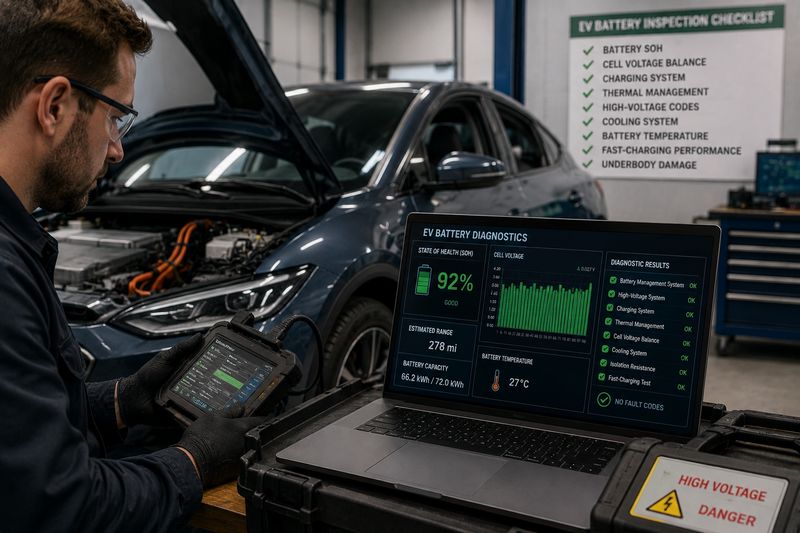
For auction buyers, this step is especially valuable. A vehicle may be listed as “runs and drives,” but that does not guarantee the battery is healthy.
What to Check in a Vehicle History Report
A vehicle history report can help you understand how the EV was used and whether it has serious risk factors.
Check for:
- Clean title or salvage title
- Accident records
- Flood damage
- Odometer issues
- Previous owners
- Service records
- Recall history
- Lemon law or buyback history
- Airbag deployment
- Auction history
- Registration location
Flood history is especially important for EVs. Water damage can affect battery packs, wiring, sensors, charging components, and control modules.
Accident location also matters. Front bumper damage may be less concerning than underbody damage near the battery pack. Side impact damage near the battery enclosure should be inspected very carefully.
For example, a clean-title EV with minor cosmetic damage may be a smart auction buy. A flood-damaged EV with warning lights may become expensive even if the bid price is very low.
Battery Replacement Costs
Battery replacement is one of the biggest concerns for used EV buyers. Costs vary widely depending on the brand, model, battery size, parts availability, labor, warranty coverage, and whether the full pack or only part of the battery can be repaired.
Replacement can be expensive because the battery pack is the most valuable component in an EV.
Costs may include:
- Battery pack
- Labor
- Diagnostics
- Cooling system parts
- Software calibration
- High-voltage safety procedures
- Shipping or core charges
In some cases, a module repair may cost much less than a full battery replacement. In other cases, the full pack may need to be replaced.
This is why battery inspection before purchase is so important. A used EV with a weak battery may not be a bargain if the repair cost is higher than the vehicle’s value.
Budget buyers should always compare the purchase price with possible battery repair costs before bidding.
Which Used EVs Have the Most Reliable Batteries
Battery reliability depends on the specific model, battery chemistry, thermal management, climate history, charging habits, and maintenance. Still, some used EVs have stronger reputations than others.
Models often considered strong choices include:
- Tesla Model 3
- Tesla Model Y
- Chevrolet Bolt EV
- Nissan Leaf with careful battery-health checks
- Hyundai Kona Electric
- Kia Niro EV
- Ford Mustang Mach-E
- Volkswagen ID.4
- Toyota Prius Prime for plug-in hybrid buyers
Tesla Model 3 and Model Y are popular because they offer strong range, active thermal management, and wide market support. Chevrolet Bolt EV can be a good value, but buyers should confirm recall status and battery history. Hyundai Kona Electric and Kia Niro EV can also offer good range for the money.
The Nissan Leaf can be affordable, but buyers should check battery health carefully because some models use less advanced thermal management than many newer EVs.
Buying an Electric Vehicle at a US Auto Auction
Online auto auctions have become one of the most affordable ways to buy used electric vehicles. Every day, thousands of EVs from insurance companies, dealerships, fleet operators, leasing companies, and financial institutions are offered for sale.
For buyers with a limited budget, auctions can provide access to newer EVs at prices that are often lower than traditional dealership prices. However, buying an electric vehicle at auction requires careful research, especially when evaluating battery condition, title status, and repair costs.
Why Used EVs Can Save You Thousands
Electric vehicles depreciate differently than gasoline cars. While this can reduce resale values for some owners, it creates opportunities for buyers looking for affordable transportation.
Used EVs sold through online auctions may cost significantly less than comparable vehicles at retail dealerships.
Potential savings come from:
- Lower purchase prices
- Lease returns
- Fleet vehicle sales
- Insurance auctions
- Dealer inventory reductions
- High depreciation during the first years of ownership
For example, a three-year-old electric SUV may offer modern safety features, advanced driver assistance systems, and a large battery while costing much less than when it was new.
If the battery remains in good condition, a used EV can provide years of reliable service while reducing fuel and maintenance expenses.
For many buyers, the money saved at purchase can help cover shipping, registration, charging equipment, or future maintenance.
How Battery Condition Affects Auction Prices
Unlike gasoline vehicles, the battery plays a major role in determining an EV's value.
Two electric vehicles with similar mileage and appearance may have very different auction prices because of battery condition.
Factors that influence value include:
- State of Health (SOH)
- Remaining driving range
- Battery warranty status
- Charging history
- Battery diagnostics
- Cooling system condition
- High-voltage warning codes
- Previous battery repairs
- Climate where the vehicle was operated
For example, imagine two identical electric SUVs.
The first has 95% State of Health, no warning lights, and a documented service history.
The second has 78% State of Health, several battery fault codes, and evidence of previous battery repairs.
Even if both vehicles look nearly identical in auction photos, the first vehicle will usually represent much better long-term value.
This is why buyers should never judge an EV only by its mileage or exterior condition.
Clean Title vs Salvage Title Electric Vehicles
Understanding the vehicle title is essential before placing a bid.
A Clean Title generally means the vehicle has not been declared a total loss by an insurance company. It may still have minor accident history, but it has not received a salvage designation.
A Salvage Title usually means the insurance company determined that repair costs exceeded a certain percentage of the vehicle's value after an accident, flood, theft recovery, hail damage, or another major event.
Each option has advantages and disadvantages.
Clean Title EVs
Advantages include:
- Easier financing
- Better resale value
- Simpler registration
- Higher buyer confidence
- Fewer insurance complications
They often cost more than salvage vehicles but may involve lower long-term risk.
Salvage Title EVs
Potential advantages include:
- Lower purchase prices
- Greater savings
- Good opportunities for experienced buyers
- Suitable for professional repair projects
However, buyers should carefully inspect:
- Battery damage
- Underbody impacts
- Flood history
- High-voltage wiring
- Airbag deployment
- Structural damage
- Battery enclosure condition
A salvage-title EV with only cosmetic damage may be an excellent value. On the other hand, a vehicle with significant battery damage may require repairs that exceed the savings from the lower purchase price.
Always review the auction listing, photographs, vehicle history report, and inspection information before bidding.
Additional Costs to Consider
The winning bid is only one part of the total purchase cost.
Before buying a used EV, budget for additional expenses such as:
- Auction fees
- Buyer service fees
- Transportation from the auction
- Shipping costs
- State registration
- Taxes where applicable
- Insurance
- Charging equipment
- Battery inspection
- Possible repairs
- Import or export costs if purchasing internationally
For example, a buyer may win an electric crossover at an excellent auction price, but transportation, documentation, registration, and charging equipment can increase the final ownership cost.
Planning these expenses in advance helps avoid surprises and allows you to compare different vehicles more accurately.
When evaluating auction listings, always estimate the total cost of ownership rather than focusing only on the winning bid.
How Auto4Export Helps You Buy Used EVs Safely
Buying an electric vehicle at an online auction can feel overwhelming, especially for first-time buyers. Understanding battery condition, title status, shipping logistics, auction fees, and documentation requires experience.
Auto4Export helps simplify the process by providing access to major U.S. online auto auctions and assisting buyers throughout the purchase process.
Auto4Export helps buyers by offering:
- Access to thousands of used electric vehicles
- Assistance with auction registration
- Vehicle history report access
- Help reviewing auction listings
- Transparent service fees
- Shipping and export assistance
- Support with documentation
- Guidance throughout the purchasing process
Whether you are looking for an affordable commuter EV, an electric SUV for your family, or a project vehicle to repair, careful research is the key to a successful purchase.
Conclusion
Electric car battery technology is changing the way people buy, drive, and maintain vehicles. Better batteries are making EVs more practical, more affordable, and more attractive for used car buyers who want to save money on fuel and long-term ownership costs.
For budget-conscious buyers, the key is simple: do not look only at the EV’s price. Look at the battery condition, real-world range, warranty coverage, title status, charging options, and total ownership cost.
The Future of Electric Car Battery Technology
The future of EV batteries will likely bring longer driving range, faster charging, lower production costs, and safer battery designs. Technologies such as solid-state batteries, sodium-ion batteries, silicon anodes, cobalt-free chemistries, and improved LFP batteries may all play a role.
However, most affordable used EVs available today still use proven lithium-ion battery technology. That is not a bad thing. These batteries are already strong enough for daily commuting, family use, city driving, and many long-distance trips.
The biggest improvements in the near future may come from practical changes rather than one single breakthrough. Better software, improved cooling, faster charging networks, recycling, and lower battery costs can all make EV ownership easier.
What Battery Innovations Mean for EV Buyers
Battery innovation can help EV buyers in several important ways.
It can mean:
- Lower EV prices over time
- Longer battery lifespan
- Better used EV values
- Faster charging
- More affordable replacement parts
- Better safety systems
- More battery repair options
- Improved range in cold and hot weather
For example, a buyer who cannot afford a brand-new EV today may find a better deal at auction as more used electric vehicles enter the market. A used EV with a healthy battery can offer low running costs, fewer maintenance needs, and strong daily practicality.
Still, new technology does not remove the need for careful inspection. Even the best battery chemistry can be a poor investment if the vehicle has flood damage, battery fault codes, weak State of Health, or expensive repair needs.
How to Buy a Reliable Used Electric Vehicle with Auto4Export
Buying a used EV through a U.S. online auto auction can be a smart way to save money, but it requires the right approach. The cheapest vehicle is not always the best deal. The best deal is the EV that fits your budget, has a healthy battery, and does not hide expensive problems.
Before bidding, check:
- Battery State of Health
- Vehicle history report
- Title status
- Accident or flood damage
- Auction photos
- Mileage
- Charging compatibility
- Remaining warranty
- Estimated repair costs
- Shipping and export costs
Auto4Export helps buyers access U.S. online auto auctions, compare available electric vehicles, understand auction details, estimate costs, and arrange shipping. This support can be especially helpful if you are buying from another country or purchasing an EV for the first time.
Check Battery Health Before You Place a Bid
The battery is the most valuable part of any electric vehicle. Before buying, review battery health, vehicle history, auction photos, and estimated shipping costs to avoid unexpected expenses and choose an EV with long-term value.
- ✅ Access vehicle history reports before bidding
- ✅ Estimate shipping and export costs in advance
- ✅ Compare thousands of EV auction listings
- ✅ Expert support throughout the buying process
Further Reading
Buying an EV: The Complete Guide to Choosing and Buying an Electric Car
Hybrid vs Electric Cars
Best Used Electric Cars in 2026: Top EVs for Value, Range, and Reliability
How Do Hydrogen Cars Work?

Do You Have Any Questions?
 Ask Question