


 Zaloguj się
 Zarejestruj się


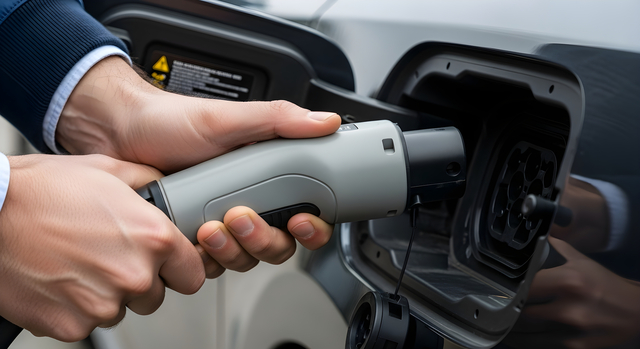


Elektryczne pickupy z roku na rok stają się coraz mocniejsze, bardziej praktyczne i tańsze. W tym poradniku znajdziesz najlepsze samochody elektryczne pod kątem zasięgu, holowania, jazdy terenowej, codziennego użytku i możliwości budżetowych. Dowiesz się również, jak porównywać wydajność akumulatora, koszty użytkowania i ceny aukcyjne, aby wybrać odpowiedni samochód elektryczny i jednocześnie zaoszczędzić pieniądze.
Dlaczego elektryczne pickupy stają się tak popularne?
Elektryczne pickupy szybko stają się jednym z najszybciej rozwijających się segmentów na amerykańskim rynku motoryzacyjnym. Coraz więcej nabywców zaczyna dostrzegać, że pickupy elektryczne nie są już tylko futurystycznymi eksperymentami czy drogimi pojazdami luksusowymi. Nowoczesne pickupy elektryczne oferują obecnie dużą siłę holowania, szybkie przyspieszenie, zaawansowane technologie i niższe koszty eksploatacji w porównaniu z wieloma tradycyjnymi pickupami z napędem spalinowym.
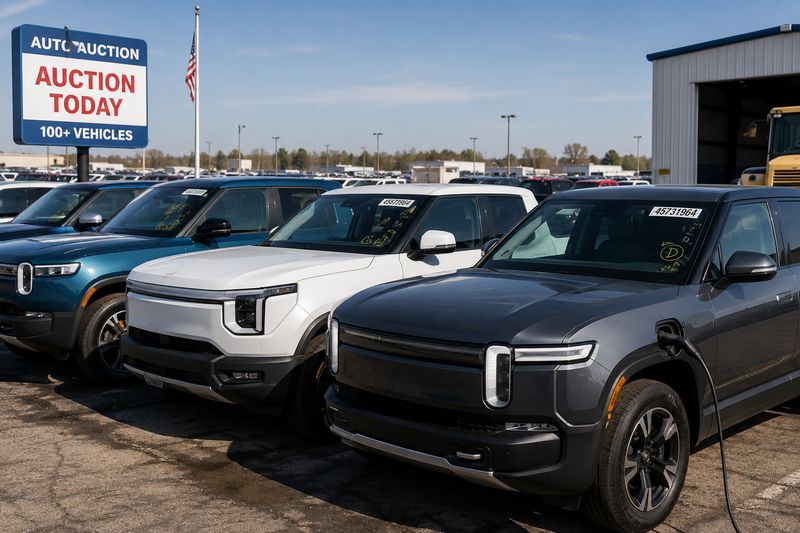
Dla kupujących dbających o budżet, ciężarówki elektryczne stają się szczególnie interesujące na rynku pojazdów używanych. Wraz z pojawianiem się coraz większej liczby modeli na internetowych aukcjach samochodowych , kupujący mają teraz możliwość zakupu uszkodzonych, naprawionych, odzyskanych lub lekko używanych ciężarówek elektrycznych po znacznie niższych cenach niż w salonach dealerskich. Wielu kupujących, których nigdy nie byłoby stać na nowy samochód elektryczny, rozważa teraz opcje używane lub z odzysku, aby zaoszczędzić pieniądze.
Jak ciężarówki elektryczne łączą moc, użyteczność i niższe koszty eksploatacji
Jednym z powodów, dla których elektryczne pickupy zyskują na popularności, jest ich zdolność do łączenia wysokiej wydajności z niższymi codziennymi wydatkami. W przeciwieństwie do starszych pojazdów elektrycznych, które koncentrowały się głównie na oszczędności paliwa, nowoczesne pickupy elektryczne są zbudowane z myślą o realnych zadaniach roboczych, jednocześnie obniżając koszty eksploatacji.
Silniki elektryczne zapewniają natychmiastowy moment obrotowy, co pozwala ciężarówkom elektrycznym przyspieszać i ciągnąć ciężkie ładunki z mniejszym wysiłkiem. Nawet duże pickupy elektryczne zapewniają płynną i mocną jazdę podczas holowania, jazdy autostradą lub transportu sprzętu. Niektóre ciężarówki elektryczne osiągają osiągi porównywalne z ciężkimi ciężarówkami z silnikiem benzynowym, zużywając przy tym znacznie mniej energii.
Wielu kupujących przyciągają również niższe koszty eksploatacji. Ciężarówki elektryczne nie wymagają wymiany oleju, świec zapłonowych ani wielu czynności konserwacyjnych typowych dla silników benzynowych. To może pomóc właścicielom zaoszczędzić tysiące dolarów w dłuższej perspektywie. Na przykład, przedsiębiorca, który co tydzień pokonuje duże odległości, może wydawać znacznie mniej na paliwo i konserwację ciężarówki elektrycznej w porównaniu z tradycyjnym pickupem z silnikiem V8.
Elektryczne ciężarówki są również atrakcyjne dla klientów poszukujących nowoczesnych technologii. Funkcje takie jak duże ekrany dotykowe, aktualizacje oprogramowania, zaawansowane systemy holowania i narzędzia wspomagające kierowcę stają się głównymi atutami. Wiele elektrycznych ciężarówek w środku przypomina luksusowe pojazdy, oferując jednocześnie funkcjonalność tradycyjnego pickupa.
Dlaczego osoby z ograniczonym budżetem szukają używanych ciężarówek elektrycznych
Nowe elektryczne pickupy wciąż mogą być drogie, zwłaszcza te z wyższej półki, z większymi akumulatorami i funkcjami premium. Jednak używane i powypadkowe pickupy elektryczne stwarzają nowe możliwości dla nabywców z ograniczonym budżetem, którzy oczekują nowoczesnych technologii w niższych cenach.
Wielu kupujących obserwuje teraz internetowe aukcje samochodów ciężarowych z elektrycznymi ciężarówkami z uszkodzeniami kosmetycznymi, drobnymi naprawami powypadkowymi lub historią kradzieży. W niektórych przypadkach kupujący mogą zaoszczędzić tysiące dolarów w porównaniu z cenami w salonach dealerskich. Jest to szczególnie atrakcyjne dla osób, które chętnie naprawiają pojazdy lub współpracują z niezależnymi warsztatami blacharsko-lakierniczymi.
Na przykład, nabywca może znaleźć na aukcji lekko uszkodzonego Forda F-150 Lightning za cenę znacznie niższą niż cena samochodu ciężarowego z czystym tytułem własności w salonie samochodowym. Po naprawie, całkowita wartość inwestycji może nadal być znacznie niższa niż normalna wartość rynkowa.
Kolejnym powodem, dla którego nabywcy z ograniczonym budżetem interesują się używanymi ciężarówkami elektrycznymi, jest utrata wartości. Niektóre pojazdy elektryczne tracą na wartości szybciej w ciągu pierwszych kilku lat użytkowania. Stwarza to okazję dla kolejnych właścicieli do zakupu zaawansowanych ciężarówek z niskim przebiegiem w bardziej przystępnej cenie.
Kupujący dowiadują się również, że wiele akumulatorów do pojazdów elektrycznych jest projektowanych tak, aby działały przez lata. Ciężarówka z przebiegiem 80 000 lub 110 000 km może nadal mieć dobrą wydajność akumulatora, jeśli była prawidłowo konserwowana. Daje to kupującym używane pojazdy elektryczne większą pewność niż w poprzednich latach, gdy trwałość akumulatora była mniej znana.
Czym różnią się samochody ciężarowe z napędem elektrycznym od tradycyjnych samochodów ciężarowych z silnikiem benzynowym?
Elektryczne pickupy działają zupełnie inaczej niż tradycyjne ciężarówki z silnikiem benzynowym lub Diesla. Największą różnicą jest układ napędowy. Zamiast silnika spalinowego, ciężarówki elektryczne wykorzystują silniki elektryczne zasilane dużymi akumulatorami.
To zmienia ogólne wrażenia z jazdy. Elektryczne ciężarówki są zazwyczaj cichsze, płynniejsze i szybsze podczas przyspieszania. Wielu kierowców jest zaskoczonych, jak szybko duże pickupy elektryczne reagują podczas włączania się do ruchu na autostradach lub ciągnięcia przyczep.
Kolejną istotną różnicą jest konserwacja. Ciężarówki z silnikiem benzynowym zawierają wiele ruchomych elementów silnika, które z czasem ulegają zużyciu. Ciężarówki elektryczne eliminują wiele z tych części, zmniejszając potrzebę regularnego serwisowania mechanicznego. Chociaż ciężarówki elektryczne nadal wymagają serwisowania hamulców, napraw zawieszenia, opon i układu chłodzenia, zazwyczaj wymagają mniej rutynowych prac związanych z silnikiem.
Elektryczne pickupy wprowadzają również nowe funkcje, które są rzadko spotykane w tradycyjnych ciężarówkach. Niektóre modele oferują przednie schowki zwane „frunks”, ponieważ nie wymagają już dużych silników pod maską. Inne oferują pokładowe systemy zasilania, które pozwalają właścicielom na zasilanie narzędzi, sprzętu kempingowego lub urządzeń bezpośrednio z akumulatora ciężarówki.
Ładowanie to kolejna istotna różnica. Zamiast odwiedzać stacje benzynowe, właściciele pojazdów elektrycznych ładują swoje ciężarówki w domu lub na publicznych stacjach ładowania. Dla niektórych kierowców staje się to wygodniejsze niż zatrzymywanie się po paliwo. Jednak infrastruktura ładowania może nadal stanowić wyzwanie na niektórych obszarach wiejskich lub podczas długich podróży.
Czy elektryczne samochody dostawcze są praktyczne w codziennym użytkowaniu i pracy?
Wielu kupujących początkowo wątpiło, czy elektryczne ciężarówki poradzą sobie z rzeczywistymi wymaganiami zawodowymi. Dziś producenci udowadniają, że elektryczne pickupy mogą być praktyczne zarówno do użytku osobistego, jak i komercyjnego.
W codziennej jeździe ciężarówki elektryczne często sprawdzają się bardzo dobrze. Oferują komfortowe wnętrza, płynną jazdę i ciche kabiny, które ułatwiają dojazdy. Kierowcy, którzy używają swoich ciężarówek głównie do podróży lokalnych, mogą potrzebować ładowania tylko raz lub dwa razy w tygodniu, w zależności od przebiegu.
Ciężarówki elektryczne mogą również sprawdzić się w przypadku podwykonawców, firm dostawczych i małych firm. Właściciele flot coraz częściej testują pick-upy elektryczne ze względu na niższe koszty paliwa i krótszy czas przestojów serwisowych. Firmy, które obsługują przewidywalne trasy, mogą odnieść największe korzyści z zastosowania ciężarówek elektrycznych.
Jednak praktyczność nadal zależy od sposobu użytkowania pojazdu. Holowanie ciężkich przyczep na duże odległości może znacznie zmniejszyć zasięg akumulatora. Niska temperatura może również wpływać na szybkość ładowania i zasięg. Klienci, którzy regularnie pokonują długie dystanse autostradą lub codziennie holują duży sprzęt, mogą w niektórych sytuacjach nadal preferować tradycyjne pojazdy z silnikiem benzynowym lub wysokoprężnym.
Jednak dla wielu przeciętnych kierowców elektryczne pickupy zapewniają już wystarczający zasięg i możliwości do normalnego użytkowania. Ktoś, kto używa pickupa do dojazdów do pracy, remontów, okazjonalnego holowania i weekendowych wyjazdów, może uznać samochód elektryczny za bardziej praktyczny.
Jak ciężarówki elektryczne zmieniają rynek pickupów w USA
Elektryczne pickupy zaczynają zmieniać amerykański rynek ciężarówek na kilka sposobów. Duzi producenci postrzegają teraz ciężarówki elektryczne jako ważną część swojej przyszłej oferty, a nie małą, eksperymentalną kategorię.
Firmy takie jak Ford Motor Company, General Motors, Tesla i Rivian intensywnie inwestują w rozwój ciężarówek elektrycznych. Konkurencja między markami wymusza poprawę zasięgu baterii, możliwości holowania, szybkości ładowania i funkcji technologicznych.
Rosnąca popularność samochodów ciężarowych elektrycznych zmienia również oczekiwania kupujących. Wielu klientów oczekuje teraz zaawansowanych systemów oprogramowania, dużych wyświetlaczy cyfrowych i technologii wspomagających kierowcę, nawet w pojazdach przeznaczonych do pracy. Tradycyjni producenci ciężarówek szybko dostosowują się do tych zmian.
Na internetowych aukcjach samochodowych można również zaobserwować wzrost liczby samochodów ciężarowych z napędem elektrycznym niż w latach ubiegłych. Wraz z pojawieniem się na rynku zwrotów pojazdów z leasingu, pojazdów odzyskanych, pojazdów flotowych i pojazdów z odzysku, kupujący zyskują bardziej przystępny cenowo dostęp do samochodów ciężarowych z napędem elektrycznym. Ten trend może się utrzymać, sprawiając, że elektryczne pickupy staną się bardziej realne dla oszczędnych nabywców na całym świecie.
Na co powinni zwrócić uwagę kupujący, wybierając elektryczny samochód dostawczy?
Zakup elektrycznego pickupa różni się od zakupu tradycyjnego samochodu ciężarowego z napędem spalinowym. Kupujący nadal muszą brać pod uwagę holowanie, ładowność, przestrzeń ładunkową i niezawodność, ale ciężarówki elektryczne wprowadzają również nowe czynniki, takie jak zasięg akumulatora, prędkość ładowania i funkcje oprogramowania.
Dla osób dbających o budżet, zwłaszcza tych, które rozważają pojazdy używane lub wystawione na aukcję, zrozumienie tych szczegółów jest niezwykle ważne. Ciężarówka, która na pierwszy rzut oka wydaje się przystępna cenowo, może stać się droższa z czasem, jeśli stan akumulatora jest słaby lub dostępność ładowania w okolicy jest ograniczona. Dokładne rozeznanie może pomóc kupującym uniknąć kosztownych błędów i wybrać ciężarówkę elektryczną, która odpowiada zarówno ich budżetowi, jak i codziennym potrzebom.
Zasięg jazdy i rzeczywista wydajność akumulatora
Zasięg to jedna z pierwszych rzeczy, na które zwracają uwagę kupujący elektryczny pickup. Producenci często reklamują duży zasięg, ale rzeczywiste osiągi mogą się różnić w zależności od warunków jazdy, pogody, prędkości, masy ładunku i holowania.
Ciężarówka o zasięgu 320 mil (480 km) może dostarczyć znacznie mniej energii podczas jazdy autostradą lub ciągnięcia przyczepy. Niska temperatura może również obniżyć wydajność akumulatora, ponieważ system zużywa dodatkową energię do ogrzewania akumulatora i kabiny.
Kupujący powinni skupić się na realistycznym codziennym użytkowaniu, zamiast kierować się wyłącznie oficjalnymi szacunkami EPA. Osoba, która porusza się głównie lokalnie, może nie potrzebować maksymalnego zasięgu. Z drugiej strony, kupujący, którzy regularnie pokonują duże odległości, powinni priorytetowo traktować większe akumulatory i możliwość szybkiego ładowania.
Stan akumulatora jest szczególnie ważny przy zakupie używanego samochodu ciężarowego z napędem elektrycznym. Z biegiem czasu wszystkie akumulatory stopniowo tracą pojemność. Lekko używany samochód ciężarowy z dobrymi nawykami ładowania może nadal działać bardzo dobrze po kilku latach, podczas gdy źle utrzymane pojazdy mogą wykazywać szybszą degradację.
Na przykład, kupujący używaną ciężarówkę elektryczną na aukcji powinien zwrócić szczególną uwagę na raporty dotyczące stanu akumulatora, przebieg, historię wypadków i wydajność ładowania. Tańsza ciężarówka może nie być dobrą inwestycją, jeśli akumulator ma poważne uszkodzenia lub zmniejszoną pojemność.
Udźwig holowniczy i ładowność
Nabywcy pickupów często bardziej niż na czymkolwiek innym cenią sobie możliwości holowania i transportu. Elektryczne pickupy oferują imponującą wydajność holowania, ponieważ silniki elektryczne generują natychmiastowy moment obrotowy. Niektóre elektryczne pickupy mogą holować ciężkie przyczepy równie dobrze, jak tradycyjne pickupy benzynowe.
Holowanie wpływa jednak inaczej na ciężarówki elektryczne niż na pojazdy spalinowe. Ciągnięcie ciężkiej przyczepy może drastycznie zmniejszyć zasięg. W niektórych przypadkach zasięg może spaść o 40% lub nawet więcej, w zależności od masy, terenu i warunków pogodowych.
Ładowność ma również istotne znaczenie. Ładowność odnosi się do tego, ile ciężaru ciężarówka może udźwignąć łącznie w kabinie i skrzyni ładunkowej. Kupujący, którzy używają ciężarówki do celów służbowych, powinni dokładnie porównać dane dotyczące ładowności, zwłaszcza jeśli codziennie przewożą narzędzia, materiały budowlane lub sprzęt.
Niektóre ciężarówki elektryczne są projektowane bardziej z myślą o komforcie i stylu życia niż o ciężkim użytkowaniu komercyjnym. Inne koncentrują się głównie na holowaniu i możliwościach roboczych. Kupujący powinni uczciwie ocenić, jak planują korzystać z ciężarówki, zamiast kierować się wyłącznie wyglądem lub mocą silnika.
Na przykład, weekendowy kamper ciągnący małą przyczepę ma zupełnie inne potrzeby niż wykonawca, który codziennie ciągnie ciężki sprzęt. Zrozumienie tych różnic pomaga kupującym uniknąć przepłacania za funkcje, z których mogą nigdy nie skorzystać.
Prędkość ładowania i dostępność sieci ładowania
Charging is one of the biggest lifestyle changes for new EV truck owners. Instead of stopping at gas stations, drivers charge their vehicles at home or public charging stations. Because of this, charging speed and charger availability are extremely important factors.
Some electric trucks support ultra-fast DC charging that can restore a large percentage of battery capacity within 30 to 45 minutes. Others charge more slowly, especially older models or lower trims.
Buyers should also research charging networks in their local area. Large cities may have many public chargers, while rural areas may offer limited infrastructure. Drivers planning frequent road trips should verify whether reliable charging stations exist along their regular routes.
Home charging setup is another important consideration. Many EV owners install Level 2 home chargers for faster overnight charging. While this adds convenience, buyers should still factor installation costs into their total ownership budget.
Auction buyers should be especially careful when purchasing older electric trucks because charging technology changes quickly. Some early EV models may not support the fastest modern charging systems, which could affect long-term convenience and resale value.
Battery Warranty and Long-Term Reliability
Battery replacement is one of the biggest financial concerns for electric vehicle buyers. Fortunately, most manufacturers provide long battery warranties that help reduce this risk.
Many EV truck batteries are covered for around 8 years or 100,000 miles, although warranty terms vary by manufacturer. Buyers should always review the remaining warranty coverage when purchasing used vehicles.
Long-term reliability also depends on battery cooling systems, charging habits, software management, and accident history. A truck involved in a major collision may require expensive battery inspections even if the damage appears cosmetic.
Reliability concerns are especially important for salvage auction buyers. Flood damage, underbody impacts, or improper repairs can create serious electrical problems in EV trucks. Buyers should carefully inspect service records and obtain professional evaluations when possible.
At the same time, electric trucks often avoid many traditional engine problems found in gasoline vehicles. There are no oil leaks, transmission rebuilds, or many of the common mechanical failures associated with internal combustion engines. For some buyers, this can help offset concerns about battery replacement costs.
Interior Technology and Driver Assistance Features
Modern electric pickup trucks usually offer advanced technology features that go far beyond traditional work trucks. Large touchscreens, digital instrument clusters, smartphone integration, voice controls, and advanced navigation systems are now common in many EV pickups.
Driver assistance systems are also becoming major selling points. Features like adaptive cruise control, lane-keeping assistance, blind-spot monitoring, parking cameras, and automated driving functions can make long trips easier and safer.
Many buyers appreciate that electric trucks often feel more modern inside than older gasoline pickups. Even work-oriented trims may include technology features that were previously found only in luxury vehicles.
However, buyers should remember that more technology can also mean higher repair costs. Damaged sensors, cameras, or electronic systems may become expensive after accidents. Auction buyers should inspect these systems carefully before purchasing salvage vehicles.
For budget-focused shoppers, it may make more sense to choose a mid-level trim with essential features rather than paying extra for every available technology package.
Off-Road Capability and Ground Clearance
Many truck buyers want vehicles that can handle rough terrain, camping trips, construction sites, or outdoor adventures. Some electric pickups are specifically designed with strong off-road capability in mind.
Features like adjustable air suspension, all-wheel drive systems, terrain management modes, skid plates, and high ground clearance help certain EV trucks perform well off pavement. Instant electric torque can also improve low-speed control on difficult terrain.
At the same time, electric trucks are usually very heavy because of large battery packs. This weight can affect handling in mud, sand, or deep snow. Tire choice also becomes extremely important for off-road driving.
Ground clearance matters for buyers who regularly drive on uneven roads or trails. A truck with insufficient clearance may risk battery damage from rocks or obstacles underneath the vehicle.
Buyers interested in off-road use should also consider repair costs. Damaging the battery area during off-road driving could become extremely expensive compared to traditional truck repairs.
Bed Size, Storage Solutions, and Cargo Utility
Utility remains one of the most important reasons people buy pickup trucks. Buyers should carefully compare bed length, storage options, tie-down systems, and cargo features before choosing an electric truck.
Some EV pickups offer creative storage solutions because they do not require large gasoline engines. Front trunks, hidden compartments, under-bed storage, and foldable cargo systems can improve practicality.
Bed size still matters for work use. Contractors, landscapers, and small business owners may need enough room for tools, equipment, or construction materials. Smaller lifestyle-focused trucks may not provide enough cargo utility for heavy commercial tasks.
Some electric trucks also include built-in power outlets that allow owners to operate tools or appliances directly from the truck’s battery system. This can be very useful for job sites, outdoor activities, or emergency backup power.
Buyers should compare cargo utility carefully because some EV trucks prioritize luxury and technology more than traditional truck practicality.
Software Updates and Smart Truck Features
Software is becoming one of the biggest differences between electric trucks and traditional vehicles. Many EV pickups now receive over-the-air software updates that improve performance, add features, or fix bugs without requiring dealership visits.
Some trucks can even improve charging efficiency, navigation systems, towing calculations, or battery management through software updates alone. This creates a more technology-focused ownership experience similar to smartphones or computers.
Smart features may include remote vehicle monitoring, phone-based controls, route planning with charger locations, and advanced energy management systems. Buyers who enjoy technology often find these features extremely appealing.
However, software problems can also create frustrations. Some EV owners report bugs, touchscreen freezes, charging glitches, or system errors. Buyers should research manufacturer reliability and software reputation before purchasing.
For used vehicle buyers, software support is especially important. Older models may stop receiving updates after several years, which could affect functionality and resale value later.
Price Differences Between New and Used EV Trucks
New electric pickup trucks can still carry high price tags, especially premium trims with long-range battery packs and luxury features. However, used EV trucks are becoming more affordable as the market grows.
Depreciation creates opportunities for budget buyers. Some electric trucks lose value quickly during the first few years, allowing second owners to purchase them at significant discounts.
Auction vehicles can provide even larger savings. Buyers may find repossessed, repaired, or lightly damaged EV trucks at much lower prices than dealership inventory. In some cases, the savings can be substantial enough to offset repair costs while still staying below retail market value.
At the same time, buyers should avoid focusing only on the lowest purchase price. Battery condition, repair history, software support, and charging capability may affect long-term ownership costs much more than the initial sale price.
A cheap electric truck with major battery issues could become far more expensive than a slightly higher-priced truck in better condition.
Insurance and Maintenance Costs
Insurance costs for electric pickup trucks are often higher than many buyers expect. EV trucks usually contain expensive battery systems, advanced sensors, cameras, and specialized parts that increase repair costs after accidents.
Some models also experience longer repair times because replacement parts may be harder to source. This can increase insurance premiums in certain areas.
Koszty utrzymania są jednak często niższe niż w przypadku tradycyjnych ciężarówek z silnikiem benzynowym. Pojazdy elektryczne eliminują wiele rutynowych czynności serwisowych silnika, takich jak wymiana oleju, świec zapłonowych, naprawy układu paliwowego i konserwacja skrzyni biegów.
Zużycie hamulców może się również zmniejszyć, ponieważ układy hamowania regeneracyjnego zmniejszają obciążenie tradycyjnych elementów hamulcowych. Z czasem te oszczędności mogą zrekompensować wyższe składki ubezpieczeniowe.
Czy warto kupować elektryczne pickupy na aukcjach samochodowych?
Dla wielu kupujących aukcje samochodowe stają się jedną z najtańszych metod zakupu elektrycznych pickupów. Nowe pickupy elektryczne wciąż mogą być drogie, zwłaszcza modele z dużymi akumulatorami, wersjami premium i zaawansowanymi pakietami technologicznymi. Aukcje dają kupującym dostęp do używanych, odzyskanych, flotowych i uszkodzonych pickupów elektrycznych w cenach, które często są znacznie niższe od cen detalicznych w salonach dealerskich.
Jest to szczególnie atrakcyjne dla klientów dbających o budżet, którzy są skłonni naprawić drobne uszkodzenia lub kupić pojazdy z wadami kosmetycznymi. Jednak zakup ciężarówki elektrycznej na aukcji wymaga również starannego rozeznania. Ciężarówki elektryczne zawierają drogie systemy akumulatorów i zaawansowaną elektronikę, które mogą okazać się kosztowne w przypadku nieprawidłowego uszkodzenia. Zrozumienie, co należy sprawdzić przed licytacją, jest niezwykle ważne.
Dlaczego samochody ciężarowe z odzysku i aukcji mogą zaoszczędzić kupującym tysiące dolarów
Jedną z największych zalet kupowania elektrycznych pickupów na aukcji jest możliwość znacznych oszczędności. Firmy ubezpieczeniowe często skreślają samochody elektryczne po wypadkach, ponieważ koszty naprawy akumulatorów, czujników i elektroniki w serwisach dealerskich mogą być bardzo wysokie.
W wielu przypadkach rzeczywiste uszkodzenia mogą być mniej poważne, niż oczekują kupujący. Ciężarówka z kosmetycznymi uszkodzeniami nadwozia, drobnymi naprawami zawieszenia lub historią kradzieży może nadal mieć w pełni sprawny akumulator i układ napędowy. Kupujący, którzy potrafią odpowiednio zarządzać naprawami, mogą zaoszczędzić tysiące dolarów w porównaniu z zakupem tej samej ciężarówki od dealera.

Na przykład lekko uszkodzony Ford F-150 Lightning lub Rivian R1T może zostać sprzedany na aukcji za znacznie niższą cenę niż rynkowa, tylko dlatego, że wycena naprawy wystawiona przez ubezpieczyciela była wysoka. Niezależne warsztaty naprawcze mogą wykonywać naprawy po znacznie niższych kosztach niż w salonach dealerskich.
Używane ciężarówki elektryczne z aukcji mogą również pomóc zagranicznym nabywcom zaoszczędzić na zakupach eksportowych. Niektóre kraje pobierają wysokie podatki od nowych pojazdów elektrycznych, co sprawia, że używane ciężarówki z aukcji są bardziej przystępną cenowo alternatywą.
Kolejnym powodem, dla którego aukcje samochodów elektrycznych mogą być atrakcyjne, jest ich amortyzacja. Pojazdy elektryczne czasami tracą na wartości szybciej w ciągu pierwszych kilku lat użytkowania. Stwarza to okazję dla kolejnych właścicieli do zakupu stosunkowo nowych ciężarówek z nowoczesnymi technologiami po niższych cenach.
Typowe rodzaje uszkodzeń ciężarówek elektrycznych na aukcjach
Elektryczne pickupy pojawiają się na aukcjach z wielu różnych powodów. Niektóre pojazdy biorą udział w wypadkach, inne są pojazdami odzyskanymi z licytacji, odzyskanymi po kradzieży , zwróconymi z leasingu lub uszkodzonymi przez powódź.
Front-end collisions are common because modern EV trucks contain many expensive sensors, cameras, headlights, cooling systems, and electronic components near the front of the vehicle. Even moderate damage can lead insurance companies to declare the truck a total loss.
Side damage is another common issue. Buyers should pay close attention to damage near the battery pack area underneath the truck. Impacts to the battery structure can become extremely expensive to repair.
Flood damage is also important to watch carefully. Water exposure may affect battery systems, high-voltage wiring, connectors, modules, and electronics throughout the vehicle. Some flood-damaged EV trucks can be repaired successfully, while others may develop long-term electrical problems.
Auction buyers may also find vandalized or theft recovery trucks. In some cases, thieves damage charging systems, wiring, dashboards, or electronic modules during theft attempts. These vehicles may offer good value if the damage is limited and repairable.
Hail damage, rear-end collisions, suspension damage, and underbody impacts are also commonly seen on electric trucks at salvage auctions.
What Buyers Should Inspect Before Purchasing an EV Pickup
Inspecting an electric pickup truck before bidding is extremely important because EV repairs can become expensive very quickly. Buyers should never focus only on visible body damage.
Battery condition is one of the most important factors. If possible, buyers should review battery health reports, charging behavior, warning messages, and diagnostic information. Trucks with battery damage may require extremely costly repairs or complete battery replacement.
The underbody area should also be inspected carefully. Many electric trucks store their battery packs underneath the cabin floor. Damage to protective battery structures may create serious safety risks.
Buyers should also inspect charging ports, cooling systems, suspension components, wheel alignment, airbags, cameras, sensors, and electronic displays. Even small accidents can affect advanced driver assistance systems that require recalibration after repairs.
Interior electronics are another important area. Large touchscreen systems, cameras, digital dashboards, and software-controlled features may become expensive if damaged.
Auction photos and vehicle history reports can provide useful information, but buyers should remember that online images may not show hidden damage. Whenever possible, professional inspections are highly recommended before purchasing high-value EV trucks.
Battery Safety Checks After an Accident
Battery safety is one of the biggest concerns when buying damaged electric trucks. High-voltage battery systems can become dangerous if damaged during collisions.
After an accident, buyers should check for warning lights, charging failures, coolant leaks, unusual odors, smoke history, or signs of battery swelling. Damaged battery packs may create fire risks if internal cells are compromised.
Many manufacturers recommend specialized inspections after significant collisions, especially if the underbody or battery area was impacted. Certified EV technicians can use diagnostic tools to evaluate battery integrity and high-voltage system safety.
Cooling systems are also critical because EV batteries rely on temperature management to operate safely. Damaged cooling lines or battery thermal systems can affect long-term reliability.
Some insurance companies automatically total electric vehicles simply because battery inspection costs are extremely high. This sometimes creates opportunities for experienced buyers who understand EV repair risks and have access to qualified repair specialists.
However, buyers without EV repair experience should be cautious with heavily damaged trucks. A cheap purchase price can quickly become expensive if hidden battery problems appear later.
Can Flood-Damaged Electric Trucks Be Repaired?
Flood-damaged electric trucks can sometimes be repaired, but they also carry some of the highest risks in the salvage market. Water exposure can damage high-voltage systems, battery packs, electronic modules, connectors, sensors, and wiring harnesses throughout the vehicle.
Clean water exposure may be less severe than saltwater flooding. Saltwater is especially dangerous because it accelerates corrosion and may continue causing electrical problems long after repairs are completed.
Some flood-damaged EV trucks are repairable if the battery pack remained sealed and water exposure was limited. However, buyers should understand that hidden corrosion problems may appear months later.
Flood vehicles should always undergo detailed inspections before purchase. Buyers should look for mud residue, corrosion around connectors, moisture inside lights, interior water stains, unusual electrical behavior, and signs of mold or water contamination.
For inexperienced buyers, flood-damaged EV trucks may be too risky unless purchased very cheaply. Even if the truck appears functional initially, long-term reliability problems may become difficult and expensive to solve later.
How to Estimate Repair Costs on EV Pickup Trucks
Estimating repair costs on electric pickup trucks requires more research than traditional gas vehicles. EV trucks contain specialized components that can dramatically increase repair expenses.
Battery-related repairs are often the most expensive. Even minor impacts near battery areas may require detailed inspections, protective housing repairs, or full battery replacement in severe cases.
Parts availability is another major factor. Some electric truck manufacturers still have limited replacement part inventories, which may increase both repair costs and waiting times.
Buyers should also calculate the cost of sensor recalibration, charging system repairs, suspension work, software programming, and cooling system service. Many repairs require specialized EV-certified technicians.
A good strategy is to compare the estimated total repair cost with the current market value of a clean-title truck. Buyers should also include transportation, auction fees, taxes, registration, and export costs when calculating their total investment.
For example, a buyer may purchase a damaged electric truck for a low auction price but later discover expensive battery diagnostics, long parts delays, and high labor costs that eliminate the expected savings.
Careful budgeting is extremely important when buying salvage EV trucks.
Which EV Pickup Trucks Hold Their Value Best?
Not all electric pickup trucks depreciate at the same rate. Some models maintain strong resale values because of brand reputation, battery performance, production volume, or strong customer demand.
The Ford F-150 Lightning has generally remained one of the strongest resale performers because it combines familiar F-Series truck practicality with electric technology. Many buyers trust the established Ford truck platform.
The Rivian R1T has also maintained strong interest thanks to its premium design, off-road capability, and unique market position. However, repair costs and parts availability can still affect resale values for damaged units.
The Tesla Cybertruck continues attracting attention because of its unusual design and Tesla charging network access. Market demand remains strong, although insurance and repair costs can be high.
Future resale value often depends on battery durability, charging compatibility, software support, and manufacturer stability. Buyers should consider these long-term factors before purchasing less established EV brands.
Used electric trucks with strong charging support and proven reliability will likely hold value better than models with limited infrastructure or uncertain long-term manufacturer support.
Best Auction Platforms to Find Electric Trucks
Electric pickup trucks are becoming more common across major U.S. auto auction platforms. Buyers now have access to thousands of used and salvage EV vehicles through both public and dealer-only auctions.
Different auction platforms offer different advantages depending on the buyer’s experience level, budget, and access requirements.
Copart Electric Truck Listings
Copart is one of the largest salvage auction platforms for electric vehicles. Buyers can find damaged, repossessed, theft recovery, and clean-title EV trucks from insurance companies, dealerships, and fleet operators.
Copart often provides large photo galleries, vehicle condition information, and detailed listing data that help buyers evaluate vehicles remotely. Public buyers can also access many listings through licensed brokers like Auto4Export.
The platform is especially popular for buyers looking for repairable salvage vehicles at lower prices.
IAAI EV Pickup Auctions
IAA is another major source for electric pickup trucks. Insurance companies frequently send damaged EV vehicles to IAA auctions after collisions, flood events, or theft recoveries.
IAA listings often include useful condition details, start codes, and auction grading information that help buyers understand vehicle condition before bidding.
Many buyers use IAA to search for newer EV trucks with relatively light damage because insurance total-loss decisions on electric vehicles can sometimes occur earlier than with traditional gas trucks.
Dealer-Only EV Auction Platforms
Dealer-only auction platforms such as Manheim and ACV Auctions also offer electric pickup trucks, including lease returns, trade-ins, fleet units, and cleaner inventory.
These platforms may provide access to vehicles with less severe damage and stronger service histories compared to salvage auctions. However, prices are often higher, and most public buyers need licensed dealer or broker access to participate.
Top 10 Best Electric Pickup Trucks
Electric pickup trucks are becoming more competitive every year. Buyers now have access to models that focus on work capability, luxury comfort, off-road performance, long driving range, and advanced technology. Some trucks are designed for contractors and towing, while others target outdoor enthusiasts or premium buyers looking for futuristic features.
For budget-conscious shoppers, understanding the strengths and weaknesses of each electric truck is extremely important. Some models hold value better, some are cheaper to repair, and others may become more attractive at salvage auctions because of faster depreciation. Choosing the right EV truck depends on how the vehicle will actually be used.
2026 Ford F-150 Lightning
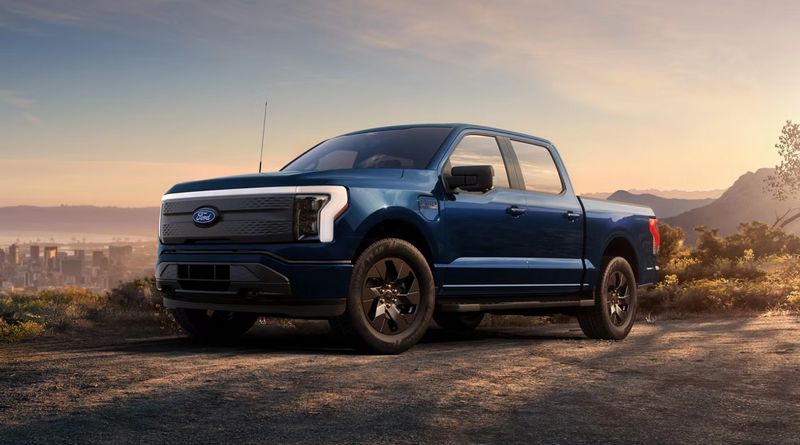
The Ford F-150 Lightning remains one of the most practical and recognizable electric pickup trucks on the market. Because it is based on the traditional F-150 platform, many buyers already feel comfortable with its size, layout, and work-truck capability. Ford successfully combined familiar truck functionality with modern EV technology, making the Lightning attractive to both longtime truck owners and first-time EV buyers.
Range, Charging, and Battery Options
The F-150 Lightning is available with multiple battery options depending on trim level. Buyers can choose between standard-range and extended-range battery packs, with higher trims offering significantly more driving distance.
Real-world range varies depending on towing, weather, payload weight, and driving habits. The extended-range models are more appealing for buyers who regularly travel longer distances or tow trailers.
Fast-charging capability allows the Lightning to recover a large amount of battery capacity relatively quickly at compatible charging stations. Home charging is also convenient for owners who install Level 2 charging systems.
For used buyers, battery condition becomes extremely important. Trucks with proper charging history and lower battery degradation usually provide better long-term value.
Towing and Work Truck Capability
One reason the Lightning became popular so quickly is its strong work-truck performance. Instant electric torque helps the truck accelerate smoothly even when carrying cargo or pulling trailers.
The Lightning offers impressive towing numbers for an electric pickup, although range decreases significantly during heavy towing. Buyers who regularly tow large campers or equipment should understand how quickly battery consumption increases under load.
Ford also designed the Lightning with worksite practicality in mind. Multiple onboard power outlets allow owners to run tools, appliances, and equipment directly from the truck’s battery system. This feature is especially useful for contractors and mobile work crews.
Payload capacity remains competitive with many traditional half-ton trucks, making the Lightning practical for everyday utility tasks.
Interior Comfort and Technology Features
Inside, the Lightning combines familiar F-150 comfort with modern EV technology. Higher trims include large touchscreen displays, digital gauges, premium audio systems, and advanced driver assistance features.
The spacious cabin makes the truck comfortable for both daily commuting and long highway trips. Rear passenger space is generous, which is helpful for families or work crews.
One of the most popular features is the large front trunk, often called the “frunk.” Because the truck does not require a traditional gasoline engine, the front storage compartment provides additional secure cargo space.
Technology features include smartphone integration, towing assistance systems, navigation with charging support, and over-the-air software updates.
Best Trim Levels for Budget Buyers
Budget-conscious buyers often focus on mid-level trims because they provide the best balance between price and features. Base work-oriented trims may offer strong value for contractors who prioritize utility over luxury options.
Higher trims add larger batteries, premium interiors, and advanced technology packages, but they also increase both purchase price and repair costs.
Auction buyers may find especially good value in lightly damaged XLT or Lariat models. These trims often include desirable features without reaching the very high pricing of fully loaded premium versions.
For buyers trying to maximize savings, used Lightning trucks with cosmetic damage may offer strong long-term value if the battery system remains healthy.
Common Problems and Ownership Costs
Podobnie jak wiele nowszych samochodów elektrycznych, Lightning doświadczył pewnych usterek oprogramowania, problemów z ładowaniem i wycofywania systemów elektronicznych. Niektórzy właściciele zgłaszają również obawy dotyczące infrastruktury ładowania podczas podróży na duże odległości.
Koszty napraw po wypadkach mogą być wysokie ze względu na zaawansowane czujniki, kamery i elementy związane z akumulatorem. Stawki ubezpieczeniowe mogą być również wyższe niż oczekiwano.
Zużycie opon może wzrosnąć, ponieważ ciężarówki elektryczne są bardzo ciężkie i generują duży moment obrotowy podczas przyspieszania. Kupujący powinni również uwzględnić w budżecie ewentualne zużycie zawieszenia z biegiem czasu.
Jednocześnie koszty rutynowej konserwacji są zazwyczaj niższe w porównaniu z ciężarówkami z silnikiem benzynowym, ponieważ nie ma potrzeby wymiany oleju, naprawy układu paliwowego ani tradycyjnego serwisowania skrzyni biegów.
Dlaczego F-150 Lightning jest jednym z najbardziej praktycznych samochodów ciężarowych z napędem elektrycznym
Lightning wyróżnia się tym, że jest znajomy dla właścicieli tradycyjnych pickupów, a jednocześnie oferuje nowoczesne korzyści płynące z jazdy na napędzie elektrycznym. Kupujący otrzymują prawdziwą funkcjonalność pickupa bez rezygnowania z komfortu i technologii.
Dla wielu osób Lightning jest łatwiejszy w adaptacji niż niektóre futurystyczne modele samochodów elektrycznych, ponieważ w codziennym użytkowaniu zachowuje się jak normalny F-150. Przedsiębiorcy, rodziny i klienci z ograniczonym budżetem docenią tę równowagę.
W miarę jak na internetowych aukcjach samochodowych rośnie liczba używanych samochodów, Lightning prawdopodobnie pozostanie jednym z najatrakcyjniejszych samochodów ciężarowych z napędem elektrycznym dla nabywców, którzy chcą zaoszczędzić pieniądze, a jednocześnie cieszyć się praktycznością i wysoką wydajnością.
2026 Rivian R1T
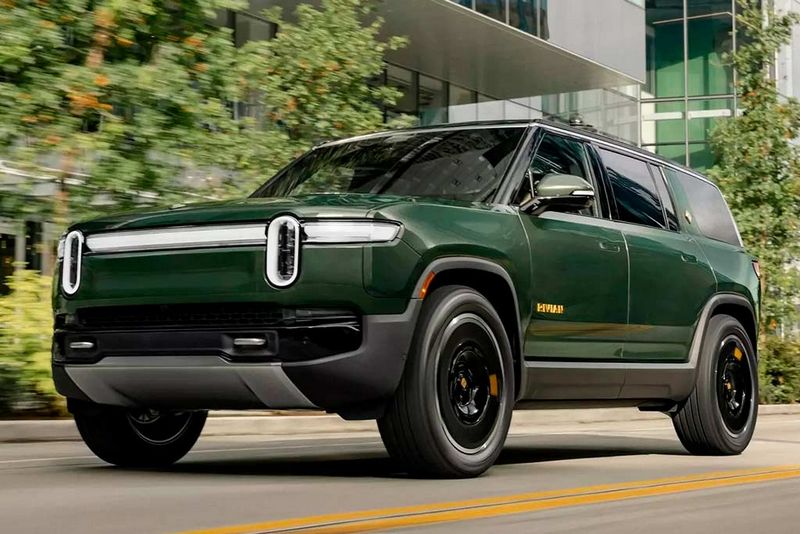
Rivian R1T stał się jednym z pierwszych elektrycznych pickupów, który z powodzeniem łączył luksus, możliwości przygodowe i zaawansowaną inżynierię. W przeciwieństwie do tradycyjnych pickupów przeznaczonych do pracy, R1T został zaprojektowany z myślą o stylu życia na świeżym powietrzu, podróżach terenowych, kempingu i zaawansowanych technologiach.
Dzięki wyjątkowemu stylowi i zaawansowanej inżynierii firma Rivian szybko zyskała mocną reputację wśród entuzjastów pojazdów elektrycznych i kupujących sprzęt do aktywności na świeżym powietrzu.
Funkcje przygodowe i terenowe
Model R1T został zaprojektowany z myślą o jeździe terenowej jako jednym z głównych priorytetów. Regulowane zawieszenie pneumatyczne pozwala zwiększyć prześwit w trudnym terenie, a zaawansowane tryby terenowe poprawiają przyczepność w trudnych warunkach.
Ciężarówka doskonale radzi sobie na drogach gruntowych, szlakach, śniegu i kamienistym terenie. Funkcje takie jak osłona podwozia, napęd na wszystkie koła i mocny skok zawieszenia sprawiają, że jest atrakcyjna dla miłośników przygód na świeżym powietrzu.
Rivian dodał również praktyczne rozwiązania do przechowywania, zaprojektowane specjalnie z myślą o kempingu i podróży. Schowek na sprzęt w tunelu między kabiną a skrzynią ładunkową stał się jedną z najbardziej rozpoznawalnych cech pojazdu.
Dla klientów lubiących aktywność na świeżym powietrzu R1T będzie modelem zorientowanym bardziej na styl życia niż wiele tradycyjnych pickupów.
Cztery silniki i możliwości wydajnościowe
Jednym z najbardziej imponujących aspektów R1T są jego osiągi. Niektóre konfiguracje wykorzystują układy czterech silników, które zapewniają wyjątkowe przyspieszenie i precyzyjne przekazywanie mocy na każde koło.
Ciężarówka wydaje się niezwykle szybka jak na swój rozmiar i wagę. Natychmiastowy moment obrotowy zapewnia R1T przyspieszenie typowe dla samochodów sportowych, zachowując jednocześnie zdolności terenowe.
Zaawansowany układ napędowy poprawia również kontrolę trakcji, ponieważ moc można regulować niezależnie dla każdego koła. Jest to przydatne zarówno na asfalcie, jak i w terenie.
Mimo że osiągi są imponujące, agresywna jazda może znacznie skrócić zasięg pojazdu, zwłaszcza w połączeniu z oponami terenowymi lub ciężkim ładunkiem.
Projektowanie wnętrz i technologia premium
Wnętrze R1T stawia przede wszystkim na wysokiej jakości materiały i nowoczesny design. Kabina bardziej przypomina luksusowego SUV-a niż tradycyjną ciężarówkę do pracy.
Duże wyświetlacze cyfrowe sterują większością funkcji pojazdu, a minimalistyczny styl tworzy czysty i futurystyczny wygląd. Wysokiej jakości materiały, panoramiczne szklane dachy i wysokiej klasy fotele dodają luksusowego charakteru.
W ciężarówce zainstalowano również zaawansowaną nawigację, inteligentne systemy zarządzania energią i aktualizacje oprogramowania drogą bezprzewodową.
Niektórzy nabywcy tradycyjnych ciężarówek mogą jednak preferować większą liczbę fizycznych przycisków i prostsze sterowanie w porównaniu z opartym na technologii rozwiązaniem Rivian.
Zasięg w świecie rzeczywistym
R1T oferuje konkurencyjny zasięg w zależności od konfiguracji akumulatora i wyboru kół. Większe akumulatory zapewniają większą elastyczność podczas podróży drogowych i na świeżym powietrzu.
Rzeczywisty zasięg w dużej mierze zależy od terenu, pogody, prędkości, wyboru opon i masy ładunku. Jazda terenowa i kemping mogą znacząco obniżyć wydajność.
Możliwość szybkiego ładowania poprawia użyteczność urządzenia na duże odległości, jednak infrastruktura ładowania pozostaje ważnym czynnikiem dla kupujących podróżujących do odległych rejonów.
Wielu właścicieli chętnie korzysta z ładowania w domu, ponieważ ich ciężarówki często służą do dojazdów do pracy i okazjonalnych wycieczek na świeżym powietrzu.
Rozważania dotyczące niezawodności i napraw
Ponieważ Rivian jest wciąż stosunkowo młodym producentem, dane dotyczące długoterminowej niezawodności są bardziej ograniczone w porównaniu ze starszymi markami ciężarówek. Niektórzy właściciele zgłaszają problemy z oprogramowaniem, usterki elektroniczne i sporadyczne opóźnienia serwisowe.
Koszty napraw mogą być również wysokie, ponieważ części zamienne Rivian i certyfikowane centra naprawcze są nadal mniej powszechne niż u tradycyjnych producentów.
Kupujący na aukcjach powinni zachować szczególną ostrożność przy ocenie uszkodzonych ciężarówek R1T, ponieważ naprawy paneli nadwozia, czujników, układów zawieszenia i akumulatorów mogą okazać się kosztowne.
Jednocześnie model R1T cieszy się nadal dużym popytem na rynku samochodów używanych ze względu na swoją unikalną konstrukcję i ograniczoną konkurencję.
Dlaczego Rivian R1T jest atrakcyjny dla kupujących sprzęt outdoorowy
Model R1T wyróżnia się tym, że w jednym pojeździe udało mu się połączyć luksus, możliwości przygody i zaawansowane osiągi pojazdu elektrycznego.
Miłośnicy outdooru doceniają systemy terenowe, kreatywne rozwiązania w zakresie schowków i konstrukcję dostosowaną do warunków kempingowych. Klienci poszukujący czegoś innego niż tradycyjne ciężarówki benzynowe często zwracają uwagę na nowoczesne podejście Rivian.
For people who want an electric truck focused more on exploration and lifestyle than purely work-related tasks, the R1T remains one of the strongest options currently available.
2026 Chevrolet Silverado EV
The Chevrolet Silverado EV represents Chevrolet’s attempt to bring full-size truck capability into the electric era. Built on General Motors’ Ultium platform, the Silverado EV focuses heavily on long driving range, work utility, and modern technology.
Unlike some lifestyle-oriented EV trucks, the Silverado EV is designed to appeal strongly to traditional truck buyers who need real towing and hauling capability.
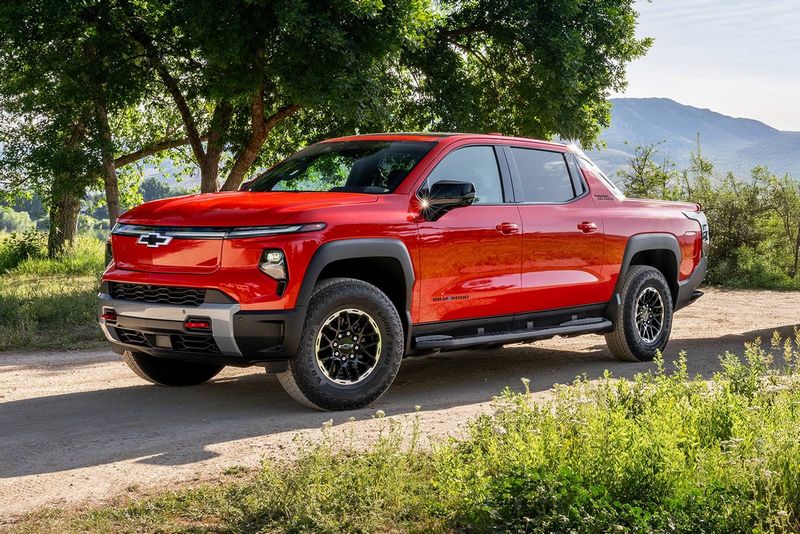
Silverado EV Range and Ultium Battery Platform
The Silverado EV benefits from GM’s Ultium battery architecture, which was designed to support large battery capacity and long-distance driving.
Some configurations offer extremely competitive range numbers compared to other electric trucks. This makes the Silverado EV attractive for buyers who regularly drive long highway distances or use their truck for work-related travel.
Battery placement also helps improve weight distribution and interior space. Fast charging support allows drivers to recover substantial range during charging stops.
For used buyers, battery condition and charging history remain important factors, especially because large battery replacement costs can be extremely high.
Work Truck vs Luxury Trim Differences
Chevrolet offers both work-oriented trims and premium luxury versions of the Silverado EV. Work Truck models focus more on durability, fleet use, and utility, while higher trims include premium materials and advanced technology features.
Budget-conscious buyers may prefer simpler trims because they usually cost less to repair and maintain. Luxury trims often include larger wheels, more electronics, premium interiors, and additional driver assistance systems that increase ownership costs.
Fleet-oriented versions may become especially attractive in the used market later because businesses often maintain vehicles on strict service schedules.
Cargo Space and Multi-Flex Tailgate Features
Cargo utility remains a major strength of the Silverado EV. Chevrolet designed the truck with flexible bed configurations and advanced storage solutions.
The Multi-Flex tailgate system improves loading flexibility and helps owners manage oversized cargo more easily. Foldable configurations create additional functionality for both work and recreational use.
The truck also includes front storage space because of its electric drivetrain layout. This gives owners additional secure cargo capacity beyond the traditional truck bed.
For contractors and commercial users, cargo flexibility is one of the Silverado EV’s strongest selling points.
Fast Charging and Towing Performance
Fast charging is critical for large electric trucks, and Chevrolet designed the Silverado EV to support high-speed charging capability at compatible stations.
The truck also delivers strong towing performance, although range reduction during heavy towing remains a normal challenge for all electric pickups.
Drivers planning frequent towing should carefully consider route planning and charging station availability before long trips.
For moderate towing and daily work use, the Silverado EV provides strong capability while reducing fuel expenses compared to traditional gasoline trucks.
Expected Maintenance and Repair Costs
Routine maintenance costs are generally lower than gasoline-powered Silverado models because there are fewer mechanical components requiring regular service.
However, repair costs after accidents can still become expensive because of battery systems, electronics, cameras, sensors, and structural repair complexity.
Insurance costs may also remain relatively high for newer EV trucks because replacement parts and specialized labor can increase claim expenses.
Auction buyers should carefully inspect battery areas, suspension systems, and electronic components before purchasing damaged units.
Why the Silverado EV Is Built for Long-Distance Truck Owners
The Silverado EV focuses heavily on practicality for drivers who spend significant time on highways or use their trucks for regular work tasks.
Long driving range, large interior space, strong towing capability, and flexible cargo utility make it appealing for buyers who want traditional truck usefulness combined with lower operating costs.
For many truck owners transitioning into EVs, the Silverado EV offers one of the more familiar full-size truck experiences in the electric market.
2026 GMC Sierra EV
The GMC Sierra EV targets buyers looking for a more premium and luxury-focused electric truck experience. While it shares some underlying technology with the Silverado EV, the Sierra EV places greater emphasis on upscale materials, advanced technology, and high-end styling.
The truck is designed more for premium buyers who want luxury comfort combined with full-size truck capability.
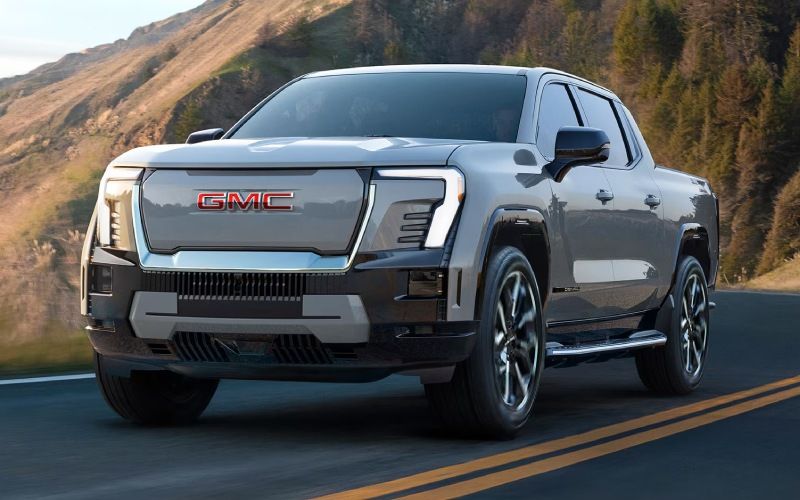
Luxury Features and Premium Interior Options
The Sierra EV offers one of the most luxurious interiors currently available in the electric truck market. Premium leather seating, large digital displays, panoramic roof options, and upscale trim materials create a high-end atmosphere inside the cabin.
Noise insulation and ride comfort are also strong priorities. The Sierra EV feels smoother and quieter than many traditional trucks during highway driving.
Luxury-focused buyers may appreciate the combination of truck practicality with SUV-like interior comfort.
Performance and Towing Specifications
Despite its luxury positioning, the Sierra EV still delivers strong towing and hauling capability. Instant electric torque provides confident acceleration and smooth trailer handling.
Higher trims focus heavily on performance while still maintaining comfort-oriented suspension tuning.
Like other electric trucks, towing large loads reduces range considerably. Buyers who tow frequently should plan charging stops carefully during long trips.
Denali Features and Technology Systems
The Denali trim represents the premium version of the Sierra EV lineup. Advanced driver assistance systems, premium audio, large infotainment displays, and sophisticated suspension technology are major highlights.
Technology systems include advanced trailering assistance, adaptive cruise control, and modern navigation with charging integration.
However, additional luxury electronics can also increase repair complexity and insurance costs over time.
Battery Range and Charging Speed
The Sierra EV offers competitive range numbers and strong fast-charging capability. Large battery capacity helps improve highway usability and towing flexibility compared to some smaller EV trucks.
Charging speed becomes especially important for premium buyers who expect convenience during long trips.
Home charging remains the most practical solution for many owners, especially those using the truck primarily for commuting and local driving.
Ownership Costs Compared to Other EV Trucks
Because the Sierra EV targets luxury buyers, ownership costs are generally higher than more basic electric truck models.
Insurance premiums, tire replacements, luxury interior repairs, and electronic component costs may all increase long-term expenses.
However, buyers still benefit from lower routine maintenance compared to gasoline luxury trucks because there are fewer traditional engine-related service requirements.
Used Sierra EV trucks may eventually become attractive for budget buyers as depreciation lowers pricing in the auction market.
Why the Sierra EV Targets Premium Truck Buyers
The Sierra EV focuses on buyers who want luxury-level comfort without giving up truck capability. It combines advanced technology, upscale styling, and strong electric performance into a premium full-size package.
For drivers who prioritize comfort, technology, and high-end design, the Sierra EV offers one of the most refined experiences currently available in the electric pickup segment.
2026 Tesla Cybertruck
The Tesla Cybertruck is easily one of the most recognizable and controversial electric vehicles ever released. Its futuristic styling, stainless steel body, and extreme performance numbers helped it become one of the most discussed trucks in the automotive industry.
Some buyers love its unconventional design and advanced technology, while others prefer more traditional pickup styling. Regardless of opinions, the Cybertruck continues attracting huge attention from EV enthusiasts, technology-focused buyers, and people looking for something very different from standard full-size trucks.
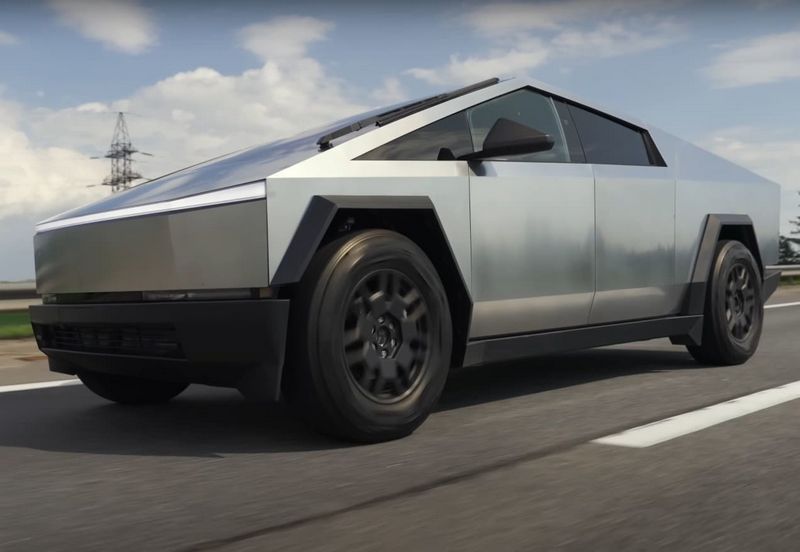
Stainless Steel Body and Unique Design
The Cybertruck stands out immediately because of its angular stainless steel body panels and futuristic appearance. Unlike traditional trucks that use painted steel or aluminum bodywork, Tesla designed the Cybertruck with exposed stainless steel exterior panels.
This construction gives the truck a very unusual look while also helping improve dent resistance and durability in some situations. However, stainless steel panels can also create repair challenges because they require specialized repair methods and may show scratches or fingerprints differently than painted surfaces.
The truck’s wedge-shaped design improves aerodynamics compared to many traditional pickups, helping overall efficiency and driving range. At the same time, some buyers find the styling too aggressive or unconventional for everyday use.
The Cybertruck also includes unique features such as a powered tonneau cover, large front trunk storage, and adjustable air suspension.
Acceleration and Performance Numbers
One of the Cybertruck’s biggest strengths is performance. Even though it is a large and heavy pickup truck, the vehicle delivers extremely fast acceleration thanks to Tesla’s electric drivetrain technology.
Higher-performance versions offer sports-car-level acceleration that surprises many drivers. Instant electric torque allows the truck to launch quickly and maintain strong pulling power under load.
All-wheel drive configurations improve traction during rain, snow, or off-road conditions. Adjustable suspension systems also help the truck adapt to different driving situations.
However, aggressive acceleration and high-speed driving can reduce battery efficiency significantly. Buyers interested in maximum range may need to drive more conservatively.
The Cybertruck also offers competitive towing capability, although towing heavy trailers affects range just like other electric trucks.
Tesla Software and Autopilot Features
Tesla is known for its software-focused approach, and the Cybertruck continues this strategy. Large touchscreen controls, advanced navigation systems, over-the-air updates, and smartphone integration are central parts of the ownership experience.
Tesla’s Autopilot and driver assistance technologies are also major selling points. Features like adaptive cruise control, lane-centering, traffic-aware driving, and automated parking functions help make highway travel easier.
Software updates can improve vehicle performance, charging efficiency, and infotainment systems without requiring dealership visits. Many buyers appreciate that Tesla vehicles continue receiving updates years after purchase.
At the same time, some drivers may prefer more physical buttons instead of touchscreen-based controls for nearly all functions. Software bugs and occasional system glitches are also common complaints among some Tesla owners.
Charging Access Through the Tesla Supercharger Network
One major advantage of the Cybertruck is access to Tesla’s Supercharger network. Tesla currently operates one of the largest and most reliable fast-charging infrastructures in North America.
This gives Cybertruck owners an important convenience advantage during long road trips. Charging stations are widely available along major highways and are generally considered easy to use.
Fast charging capability allows drivers to recover substantial battery range relatively quickly compared to slower public charging systems.
For buyers who travel frequently, charging access may become one of the strongest reasons to choose a Tesla over some competing EV trucks.
Home charging still remains the most convenient option for many owners during everyday use.
Repair Challenges and Insurance Costs
The Cybertruck’s unique construction creates some repair challenges that buyers should understand before purchasing. Stainless steel body panels require specialized repair techniques, and replacement parts may be expensive.
Tesla repair networks can also become overloaded in some areas, leading to longer repair waiting times after accidents.
Insurance costs for the Cybertruck are often higher than many traditional pickups because of repair complexity, advanced electronics, expensive sensors, and high-performance components.
Auction buyers should be especially cautious with heavily damaged Cybertrucks. Hidden structural damage, suspension issues, or battery problems may become very expensive to repair.
At the same time, strong market demand may help Cybertrucks maintain good resale value compared to some other EV trucks.
Why the Cybertruck Is One of the Most Talked-About EVs
The Cybertruck generates attention because it challenges nearly every traditional idea about pickup truck design. Its futuristic styling, high performance, advanced software, and strong charging support make it one of the most unique vehicles currently on the road.
Some buyers are attracted purely by the technology and performance, while others enjoy the attention and exclusivity the truck brings.
Whether people love it or hate it, the Cybertruck continues shaping conversations about the future of electric vehicles and modern truck design.
2026 GMC Hummer EV Pickup
The GMC Hummer EV Pickup represents one of the most extreme approaches to electric truck design. Instead of focusing mainly on efficiency or affordability, GMC built the Hummer EV as a high-performance luxury off-road vehicle packed with advanced technology and enormous power.
The truck is designed more as a premium lifestyle product than a traditional work-focused pickup.
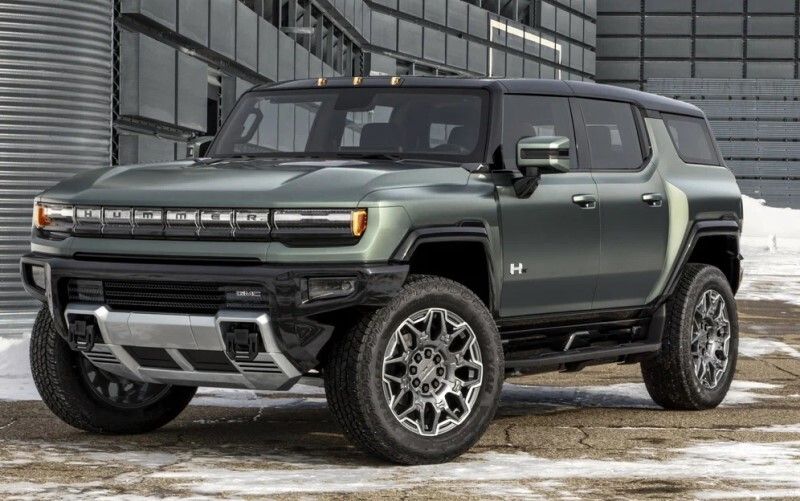
CrabWalk and Off-Road Technology
One of the Hummer EV’s most famous features is CrabWalk mode. This system allows all four wheels to turn in the same direction, helping the truck move diagonally during certain off-road situations.
The truck also includes advanced air suspension, underbody cameras, locking differentials, terrain management systems, and extreme off-road capability.
Large tires, high ground clearance, and advanced traction systems allow the Hummer EV to perform impressively on rough terrain, rocks, mud, and trails.
Off-road enthusiasts appreciate the truck’s advanced engineering, although its massive size and weight can still create challenges in tighter environments.
Extreme Performance and Power Output
The Hummer EV delivers extremely high horsepower and torque numbers. Instant electric torque allows the truck to accelerate surprisingly quickly despite its enormous weight.
Fast acceleration, advanced all-wheel drive systems, and adaptive suspension help the truck feel more agile than many buyers expect.
However, extreme performance also increases energy consumption. Aggressive driving can reduce driving range quickly, especially with large off-road tires installed.
The truck’s weight also affects braking distances and tire wear more than smaller EVs.
Battery Size and Real-World Efficiency
The Hummer EV uses a very large battery pack to support both its heavy weight and powerful drivetrain. While this helps provide competitive range numbers, efficiency is not one of the truck’s strongest areas.
Real-world driving range can vary significantly depending on driving style, terrain, weather, and tire setup.
Because the truck is extremely heavy, energy consumption is higher than many other electric pickups. Buyers focused mainly on efficiency or low operating costs may prefer lighter EV trucks.
Fast charging capability helps offset some concerns, but charging large battery packs still takes time compared to smaller electric vehicles.
Interior Technology and Luxury Features
Inside, the Hummer EV combines luxury materials with advanced digital technology. Large screens, premium audio systems, removable roof panels, and advanced off-road camera systems help create a premium experience.
The interior feels modern and upscale, targeting buyers who want luxury-level comfort combined with rugged capability.
Many technology systems focus specifically on off-road use, including terrain visualization, trail mapping, and suspension controls.
The truck’s large dimensions also create a spacious cabin with generous passenger room.
High Ownership Costs and Weight Concerns
Hummer EV jest drogi w zakupie, ubezpieczeniu i naprawie. Duże opony, wysokiej jakości podzespoły, zaawansowane systemy zawieszenia i ciężkie akumulatory zwiększają koszty użytkowania.
Jego ekstremalna waga może również budzić obawy o zużycie opon, skuteczność hamowania i długotrwałe obciążenie podzespołów.
Naprawa uszkodzonych paneli nadwozia, układów zawieszenia lub elementów akumulatora po wypadku może okazać się bardzo kosztowna.
Dla klientów zwracających uwagę na budżet Hummer EV prawdopodobnie pozostanie pojazdem niszowym, chyba że zostanie mocno zdewaluowany lub zakupiony na aukcji pojazdów uszkodzonych.
Dlaczego Hummer EV to raczej samochód ciężarowy na co dzień
Hummer EV koncentruje się bardziej na emocjach, luksusie i ekstremalnych możliwościach niż na praktycznej wydajności samochodu roboczego. Nabywców często przyciąga jego odważny design, technologia terenowa i imponujące osiągi, a nie oszczędność paliwa czy przystępna cena.
Miłośnicy aktywnego wypoczynku i nabywcy dóbr luksusowych, którzy poszukują czegoś spektakularnego i wyjątkowego, mogą cieszyć się wyjątkowym doświadczeniem posiadania Hummera EV.
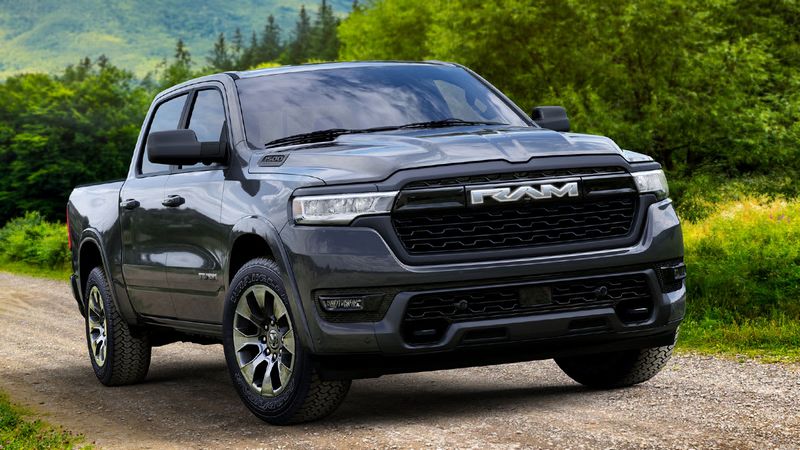
2026 RAM 1500 REV
RAM 1500 REV to debiut RAM-u na rozwijającym się rynku elektrycznych ciężarówek. RAM stara się bezpośrednio konkurować z takimi modelami jak Ford Lightning i Chevrolet Silverado EV, łącząc komfort typowy dla samochodów ciężarowych z osiągami elektrycznymi i dużym zasięgiem.
Wielu nabywców samochodów ciężarowych uważnie przygląda się modelowi RAM REV, ponieważ RAM ma już ugruntowaną reputację pod względem komfortowych wnętrz i płynnej jazdy.
Oczekiwany zasięg i opcje baterii
RAM planuje oferować różne konfiguracje baterii dla modelu REV, kierując je do klientów o różnych potrzebach i budżetach.
Oczekuje się, że wersje o większym zasięgu będą bezpośrednio konkurować z innymi elektrycznymi samochodami ciężarowymi klasy premium, zwłaszcza pod względem jazdy po autostradach i elastyczności holowania.
Pojemność akumulatora i wydajność ładowania będą miały decydujący wpływ na to, jak konkurencyjny będzie samochód ciężarowy w rzeczywistych warunkach użytkowania.
Kupujący zainteresowani podróżami drogowymi, holowaniem lub wykorzystaniem w celach służbowych prawdopodobnie będą woleli większe opcje akumulatorów, aby zapewnić sobie większą elastyczność.
Holowanie i funkcje zorientowane na pracę
RAM rozumie, że nabywcy ciężarówek nadal oczekują dużej sprawności holowania i funkcjonalności, nawet w pojazdach elektrycznych. Oczekuje się, że REV zaoferuje konkurencyjne wyniki w zakresie holowania oraz zaawansowane systemy wspomagania holowania przyczep.
Ciężarówka prawdopodobnie będzie wyposażona w gniazdka elektryczne na pokładzie, systemy zarządzania ładunkiem i praktyczne funkcje ułatwiające pracę, podobne do tych dostępnych w konkurencyjnych elektrycznych pickupach.
RAM przywiązuje dużą wagę do komfortu jazdy, co może sprawić, że model REV będzie atrakcyjny dla nabywców, którzy wykorzystują ciężarówki zarówno do celów służbowych, jak i do przewozu rodziny.
Podobnie jak w przypadku wszystkich samochodów ciężarowych z napędem elektrycznym, holowanie ciężkich ładunków znacznie skraca zasięg pojazdu.
Komfort wnętrza i technologia informacyjno-rozrywkowa
Samochody ciężarowe RAM słyną już z ekskluzywnych wnętrz i oczekuje się, że REV utrzyma tę reputację.
Duże wyświetlacze dotykowe, najwyższej jakości materiały siedzeń, cyfrowe wyświetlacze dla kierowców i zaawansowane systemy informacyjno-rozrywkowe będą prawdopodobnie głównymi argumentami przemawiającymi za zakupem.
Buyers transitioning from luxury SUVs may appreciate the truck’s emphasis on comfort and technology.
At the same time, work-oriented trims are expected to remain available for buyers who prioritize utility over luxury.
How RAM Plans to Compete With Ford and Chevrolet
RAM faces strong competition from Ford and General Motors, both of which already have electric trucks on the road.
To compete successfully, RAM is focusing heavily on interior comfort, driving range, towing capability, and familiar truck usability.
The company also benefits from a loyal customer base that already trusts RAM products for towing and daily driving.
Pricing, charging performance, and reliability will ultimately determine how successful the REV becomes in the long term.
Expected Pricing and Availability
Pricing is expected to vary significantly depending on trim level and battery configuration. Higher trims with larger batteries and premium features will likely compete directly with luxury EV trucks.
Base work-oriented trims may become more attractive for budget-conscious buyers if RAM positions them competitively against gasoline trucks.
As production increases, used and salvage REV trucks may eventually become available through online auto auctions, creating lower-cost opportunities for buyers.
Why Buyers Are Waiting for the RAM REV
Many truck owners are interested in the RAM REV because they already trust the RAM brand but want to transition into electric vehicles.
Buyers who prioritize interior comfort, smooth ride quality, and traditional truck practicality are especially interested in seeing how RAM balances these qualities with modern EV technology.
The REV has strong potential to become a serious competitor if RAM delivers strong range, towing capability, and competitive pricing.
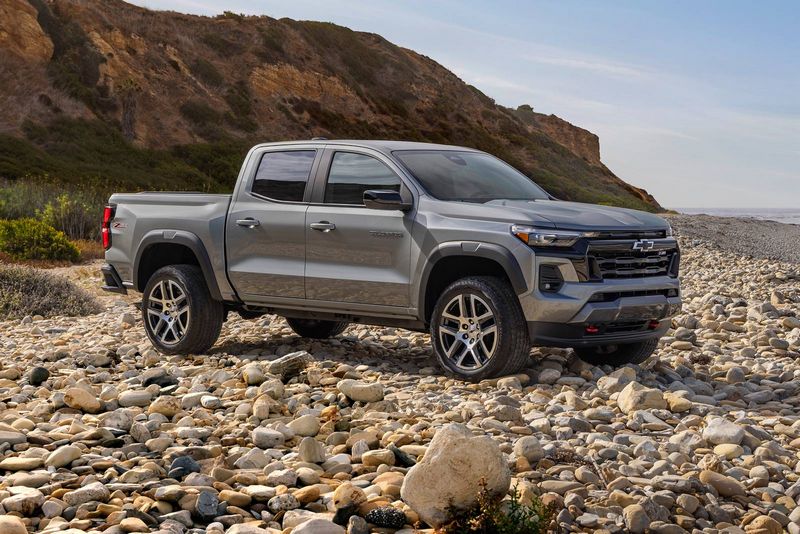
2026 Chevrolet Colorado EV
The Chevrolet Colorado EV is expected to target buyers who want a smaller and more affordable electric truck option. While full-size EV pickups dominate headlines, many drivers do not actually need massive trucks for daily use.
A compact electric pickup could become attractive for commuters, small business owners, and urban drivers looking for practicality without full-size truck dimensions.
Compact Electric Truck Advantages
Smaller electric trucks offer several advantages compared to full-size pickups. They are easier to park, easier to maneuver in cities, and often more efficient because of lower weight.
Compact trucks may also appeal to buyers who occasionally need cargo utility but do not tow heavy trailers regularly.
For many drivers, a midsize electric truck provides enough practicality for daily tasks without the higher ownership costs associated with larger vehicles.
Expected Pricing and Affordability
One of the biggest advantages of a smaller electric truck could be lower pricing. Full-size EV pickups often become expensive very quickly, especially with larger batteries and premium trims.
A compact truck like the Colorado EV may help bring electric pickups to a wider group of budget-conscious buyers.
Lower purchase prices could also reduce insurance costs, tire expenses, and maintenance costs compared to heavy luxury EV trucks.
Auction buyers may eventually find compact electric trucks especially attractive because repair costs may remain lower than on larger premium models.
Urban Driving and Everyday Practicality
Smaller dimensions make compact trucks more practical for urban driving. Parking garages, narrow streets, and daily commuting are much easier with midsize vehicles than oversized full-size trucks.
Electric drivetrains also work especially well in city driving because regenerative braking improves efficiency during stop-and-go traffic.
For drivers who mainly use their truck for commuting, small cargo loads, and occasional weekend projects, a compact EV truck may be more practical than larger models.
Potential Off-Road Features
Although smaller than full-size trucks, the Colorado EV may still include off-road-oriented trims and adventure features.
Chevrolet has a strong history with off-road midsize trucks, and buyers will likely expect all-wheel drive systems, terrain modes, and upgraded suspension options.
Compact off-road EV trucks could become popular among younger buyers interested in camping, biking, and outdoor travel.
Battery Efficiency Compared to Full-Size Trucks
Smaller trucks are generally more energy-efficient than larger electric pickups because they weigh less and require smaller battery packs.
Better efficiency may improve real-world driving range while reducing charging costs over time.
This could become especially attractive for budget-focused buyers who want lower operating expenses without sacrificing all truck utility.
Why Smaller EV Trucks May Grow in Popularity
Many buyers are beginning to realize they do not need oversized trucks for everyday life. Compact electric pickups may offer a better balance between affordability, efficiency, practicality, and utility.
As battery technology improves and more affordable EV options enter the market, smaller electric trucks could become one of the fastest-growing vehicle segments in the coming years.
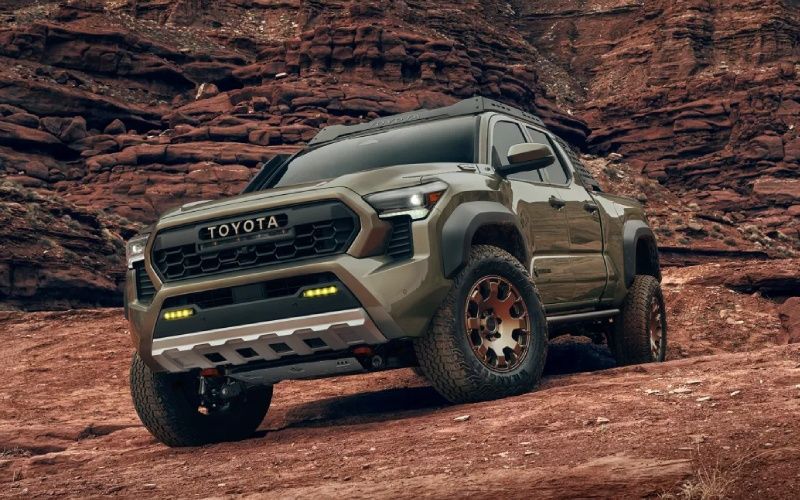
2026 Toyota Tacoma EV
The Toyota Tacoma EV is one of the most anticipated future electric trucks because of the Tacoma’s long-standing reputation for reliability, durability, and off-road capability. Many buyers who normally avoid early EV technology are still interested in the Tacoma EV simply because they trust Toyota’s engineering history.
Toyota has traditionally taken a more cautious approach toward fully electric vehicles compared to some competitors. Because of this, many truck buyers expect the Tacoma EV to focus heavily on long-term reliability and practical usability instead of chasing extreme horsepower numbers or futuristic styling.
Toyota’s Approach to Electric Trucks
Toyota has spent years building a reputation around durability and dependable ownership costs. Instead of rushing aggressively into the EV market, the company focused heavily on hybrids and long-term battery development.
With the Tacoma EV, Toyota is expected to apply this conservative engineering philosophy to electric trucks. Buyers anticipate a truck that prioritizes reliability, practical range, strong build quality, and manageable ownership costs.
Rather than creating an overly futuristic vehicle, Toyota will likely focus on making the transition from gasoline to electric feel natural for existing Tacoma owners.
This strategy could appeal strongly to traditional truck buyers who want EV benefits without sacrificing dependability.
Expected Reliability and Durability
Reliability is one of the biggest reasons buyers are interested in the Tacoma EV. Tacoma owners are known for keeping their trucks for many years and driving them in harsh conditions.
Many buyers expect Toyota to focus heavily on battery durability, weather resistance, and long-term ownership stability. Strong battery cooling systems, conservative charging management, and proven drivetrain engineering will likely become major priorities.
Durability is especially important for buyers who use trucks for outdoor travel, construction work, or remote driving where breakdowns can become serious problems.
If Toyota successfully combines EV technology with its traditional reliability reputation, the Tacoma EV could become extremely popular in both the new and used vehicle markets.
Off-Road and Adventure Features
Off-road capability is a major part of the Tacoma brand identity, so buyers expect the electric version to continue this tradition.
Potential features may include advanced all-wheel drive systems, terrain management modes, locking differentials, skid plates, and upgraded suspension packages for off-road trims.
Electric torque delivery may actually improve low-speed off-road control in certain conditions. Instant power can help drivers maintain smoother traction on rocks, mud, and steep terrain.
Toyota will likely continue offering adventure-oriented trims that appeal to campers, overlanders, and outdoor enthusiasts.
Battery protection will also become extremely important during off-road driving. Buyers will expect strong underbody shielding to help prevent damage during trail use.
Expected Range and Charging Capabilities
Although official details remain limited, buyers expect the Tacoma EV to offer practical range numbers suitable for both commuting and outdoor travel.
Toyota will likely focus more on balanced efficiency and long-term battery health than chasing the highest range figures in the segment.
Fast-charging capability will still be important, especially for buyers using the truck for road trips or outdoor adventures. Charging infrastructure access may also influence how competitive the Tacoma EV becomes against rivals like the Ford Lightning and Rivian R1T.
For many buyers, consistent real-world range and dependable charging performance matter more than extreme EPA estimates.
Potential Pricing and Market Competition
Pricing will play a major role in determining how successful the Tacoma EV becomes. The midsize truck segment attracts many practical and budget-conscious buyers who may not want luxury-level EV pricing.
Toyota may try positioning the Tacoma EV between compact electric trucks and expensive full-size EV pickups.
Competition will likely include future electric midsize trucks from Chevrolet, Ford, and startup manufacturers. Buyers will compare pricing, battery range, off-road features, and long-term ownership costs carefully.
If Toyota manages to offer competitive pricing with strong reliability, the Tacoma EV could become one of the most desirable electric trucks for everyday buyers.
Why Tacoma Fans Are Interested in the EV Version
Tacoma buyers are often loyal because of the truck’s reputation for reliability, resale value, and adventure capability. Many existing Tacoma owners are curious about electric trucks but remain cautious about newer EV brands.
The Tacoma EV gives these buyers a familiar and trusted platform combined with modern electric technology.
For outdoor enthusiasts, commuters, and budget-focused shoppers looking for a dependable midsize truck, the Tacoma EV could become one of the safest entries into the electric pickup market.
2026 Canoo Electric Pickup
The Canoo Electric Pickup takes a very different approach compared to traditional pickup trucks. Instead of focusing on large dimensions or aggressive styling, Canoo designed a compact and futuristic truck built around efficiency, modular utility, and urban practicality.
The truck targets buyers looking for something lightweight, flexible, and highly functional rather than oversized and heavy-duty.
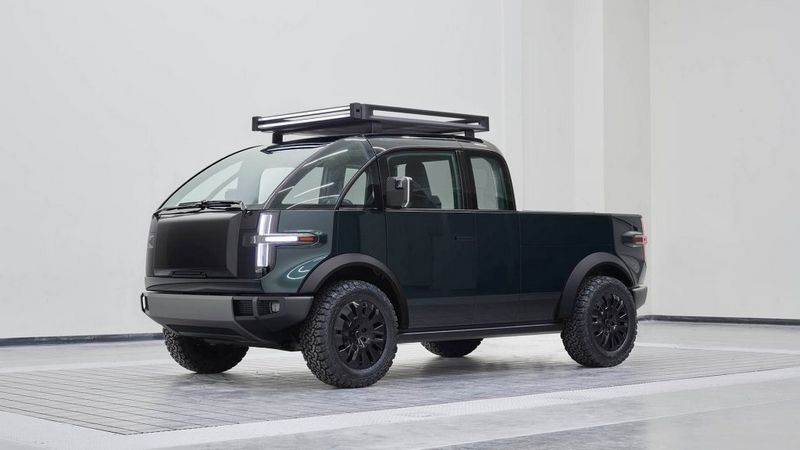
Unique Compact Truck Design
The Canoo pickup stands out immediately because of its unusual shape and compact proportions. The truck uses a cab-forward design that maximizes interior and cargo space while keeping overall vehicle length relatively short.
This makes the truck easier to maneuver in cities, parking lots, and tight urban environments compared to full-size pickups.
The futuristic styling may not appeal to traditional truck buyers, but many people appreciate the vehicle’s practical and minimalist design philosophy.
Its smaller size may also improve energy efficiency and reduce operating costs compared to larger EV trucks.
Modular Utility and Storage Features
One of Canoo’s biggest strengths is modular functionality. The truck includes multiple fold-out work surfaces, hidden storage compartments, expandable bed systems, and flexible cargo solutions.
This makes the vehicle appealing for contractors, small businesses, delivery services, and urban tradespeople who need practical storage without driving oversized trucks.
The compact footprint also helps maximize usable cargo space relative to overall vehicle size.
Many buyers may find the Canoo more useful for daily work tasks than some larger lifestyle-oriented electric trucks.
Expected Range and Performance
The Canoo pickup is expected to prioritize balanced efficiency over extreme performance numbers. Buyers should not expect sports-car acceleration or heavy-duty towing capability similar to larger electric pickups.
Instead, the focus will likely remain on practical daily driving range, city usability, and low operating costs.
Its lighter size could help improve battery efficiency and reduce charging expenses compared to heavy full-size EV trucks.
For buyers mainly using trucks for commuting, small cargo loads, or local business operations, moderate range may be completely sufficient.
Commercial and Fleet Use Potential
The Canoo pickup may become especially attractive for commercial fleets and small businesses. Delivery companies, contractors, service technicians, and urban fleets often value practicality, efficiency, and maneuverability more than extreme towing numbers.
Its modular work-oriented design could help businesses reduce fuel costs while still maintaining cargo flexibility.
Fleet operators may also appreciate simpler daily charging schedules because many commercial vehicles return to central locations every night.
If priced competitively, Canoo could find a strong market among urban commercial users.
Affordability and Startup Risks
One concern buyers may have is Canoo’s long-term stability as a newer startup company. Unlike major manufacturers such as Ford or Toyota, smaller EV startups still face financial and production challenges.
Buyers should consider possible risks related to service networks, replacement parts availability, warranty support, and long-term company stability.
At the same time, startup manufacturers sometimes offer innovative ideas and lower pricing compared to traditional automakers.
For budget-conscious buyers, future used or salvage Canoo pickups could eventually become affordable alternatives if repair support remains available.
Why the Canoo Pickup Stands Out From Traditional Trucks
The Canoo pickup stands out because it challenges the idea that every truck needs to be large, heavy, and extremely powerful.
Instead, it focuses on efficient urban utility, modular functionality, and practical storage solutions. Buyers who mainly use trucks for city driving, small business tasks, or everyday practicality may find the Canoo far more useful than oversized full-size pickups.
Its unconventional design will not appeal to everyone, but it represents a very different vision for the future of electric trucks.
2026 Alpha Wolf Electric Truck
The Alpha Wolf Electric Truck has attracted attention because of its retro-inspired styling and compact pickup concept. Designed by startup company Alpha Motor Corporation, the Wolf combines classic small truck proportions with modern electric vehicle ideas.
The truck appeals heavily to enthusiasts who miss older compact pickups and want something simpler than today’s oversized full-size trucks.
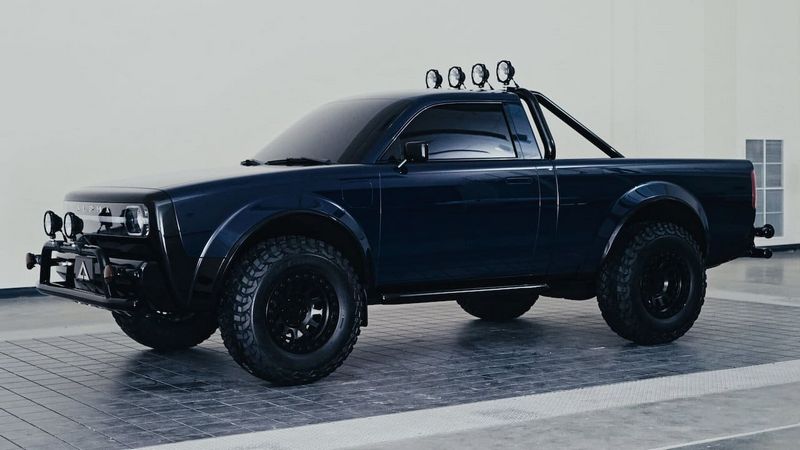
Retro Styling and Compact Pickup Design
The Alpha Wolf uses retro-inspired styling that reminds many buyers of compact trucks from the 1980s and 1990s. Clean body lines, simple proportions, and rugged design cues create a very different appearance compared to futuristic EV trucks like the Cybertruck.
Its smaller dimensions may make it easier to use for daily commuting, city driving, and light outdoor activities.
Many enthusiasts appreciate the idea of a lightweight electric pickup that focuses more on simplicity and practicality than excessive luxury or technology.
The nostalgic styling also helps the truck stand out in a crowded EV market.
Expected Performance and Battery Specifications
Although official production details remain limited, the Wolf is expected to offer moderate battery sizes and practical driving range suitable for everyday use.
The truck is not expected to compete directly with heavy-duty full-size electric pickups in towing or payload capability. Instead, it focuses more on efficiency, affordability, and lightweight driving dynamics.
All-wheel drive versions may become available for buyers interested in off-road use or winter driving.
Performance will likely target balanced usability rather than extreme acceleration.
Off-Road and Adventure Potential
The Wolf’s compact size could make it attractive for camping, trail driving, and outdoor adventures. Smaller trucks are often easier to maneuver on narrow trails and rough roads compared to massive full-size pickups.
Potential off-road trims may include upgraded tires, suspension systems, skid plates, and all-wheel drive capability.
Outdoor enthusiasts who prefer lightweight overlanding setups may find the Wolf more practical than oversized luxury EV trucks.
Its simpler approach may also appeal to buyers who want fewer complicated systems during outdoor travel.
Interior Simplicity and Utility
Unlike many luxury-focused EV trucks filled with giant screens and advanced electronics, the Alpha Wolf is expected to maintain a more minimalist interior approach.
Simple controls, functional layouts, and practical utility may become major selling points for buyers who prefer straightforward vehicles.
This could also help reduce ownership costs if fewer electronic systems require expensive repairs later.
Many traditional truck enthusiasts still appreciate physical buttons and durable interiors over fully digital controls.
Availability and Production Challenges
One of the biggest concerns surrounding the Alpha Wolf is production uncertainty. Startup EV manufacturers often face delays, funding challenges, supply chain issues, and production difficulties.
Buyers interested in the Wolf should understand that availability timelines may change significantly.
Long-term parts support, service access, and warranty stability also remain important concerns when purchasing vehicles from smaller startup companies.
At the same time, unique startup vehicles sometimes develop strong enthusiast communities and maintain high interest because of their limited production numbers.
Why Enthusiasts Are Watching the Alpha Wolf
The Alpha Wolf attracts attention because it offers something very different from most modern trucks. Instead of building an oversized luxury vehicle, Alpha focused on creating a compact, retro-inspired electric pickup with simple utility and outdoor appeal.
Many buyers miss the era of affordable compact pickups, and the Wolf represents a possible return to that concept in electric form.
Which Electric Pickup Truck Has the Best Range?
Driving range is one of the most important topics for electric pickup truck buyers. Many people considering an EV truck want to know how far the vehicle can travel on a full charge, especially during highway driving, towing, or cold weather conditions.
Modern electric trucks continue improving rapidly, with some models now offering range numbers that make long-distance driving far more practical than earlier EVs. However, buyers should understand that advertised range and real-world performance are often very different. Factors like speed, weather, payload weight, tire choice, and towing can dramatically change how far an electric truck can actually travel.
For budget-conscious buyers, range also affects long-term value. Trucks with larger battery packs and faster charging systems may remain more desirable in the used market over time.
Longest-Range EV Pickup Trucks Compared
Several electric pickup trucks now compete for the title of longest-range EV truck. Manufacturers continue increasing battery capacity and improving efficiency to attract buyers who travel long distances regularly.
The Chevrolet Silverado EV is expected to become one of the range leaders because of its large Ultium battery platform and efficiency-focused engineering. Some configurations target extremely high range estimates designed for highway travel and work-oriented use.
The GMC Sierra EV also offers strong projected range numbers thanks to similar battery technology and large battery capacity.
The Ford F-150 Lightning remains competitive, especially in extended-range configurations. Many buyers appreciate that the Lightning combines practical truck utility with solid real-world range performance.
The Rivian R1T offers strong range while also focusing heavily on off-road capability and performance. Buyers who want adventure-oriented features often consider the R1T one of the best all-around EV trucks.
The Tesla Cybertruck also competes aggressively in the range category, especially because of Tesla’s focus on aerodynamic efficiency and battery technology.
However, buyers should remember that official range estimates are measured under controlled testing conditions. Real driving situations rarely match perfect laboratory conditions.
Real-World Highway Range vs EPA Estimates
EPA range estimates help buyers compare electric vehicles, but actual highway range can vary significantly in real-world driving.
Highway speeds usually reduce EV efficiency faster than city driving. Unlike gasoline vehicles, electric trucks consume much more energy at high speeds because aerodynamic resistance increases rapidly.
For example, a truck rated for 320 miles of EPA range may deliver much lower results during long highway trips at 75 or 80 mph. Strong headwinds, heavy cargo, large tires, and cold temperatures can reduce range even further.
Aggressive acceleration also affects battery consumption. Electric trucks produce instant torque, which makes fast driving fun but increases energy usage quickly.
City driving often produces better efficiency because regenerative braking helps recover energy during stop-and-go traffic. Buyers who mainly commute locally may experience range numbers closer to official estimates.
Used EV buyers should also understand that battery age affects real-world performance. Older trucks with higher mileage may show some battery degradation, slightly reducing total available driving range over time.
How Towing Affects Electric Truck Range
Towing is one of the biggest challenges for electric pickup trucks. While EV trucks often provide excellent towing power because of instant torque, pulling heavy trailers can reduce battery range dramatically.
Large campers, enclosed trailers, construction equipment, and boats create additional wind resistance and weight that force the truck to consume much more energy.
In some cases, towing can reduce range by 40% to 50% or even more depending on conditions. Mountain driving, strong winds, cold weather, and high speeds increase energy usage further.
For example, a truck capable of driving 320 miles unloaded may only achieve around 150 to 180 miles while towing a heavy trailer on the highway.
This creates additional planning challenges because charging stations may not always accommodate large trailers easily. Drivers may need to disconnect trailers before charging at certain locations.
Buyers who tow regularly should carefully evaluate battery size, charging infrastructure, and real-world towing tests before choosing an electric truck.
For occasional towing, many modern EV trucks perform very well. However, buyers who tow heavy loads daily over long distances may still prefer traditional diesel trucks in some situations.
Which EV Trucks Charge the Fastest?
Charging speed is just as important as driving range for many EV truck owners. A truck with fast charging capability becomes much more practical for long-distance travel and work use.
The Tesla Cybertruck benefits heavily from Tesla’s Supercharger network, which offers widespread fast-charging access and generally reliable charging performance across North America.
The Chevrolet Silverado EV and GMC Sierra EV also support high-speed DC fast charging thanks to General Motors’ Ultium platform.
The Ford F-150 Lightning supports fast charging as well, although charging speed can vary depending on battery configuration and charger availability.
Charging performance depends on more than maximum advertised numbers. Battery temperature, charging station output, state of charge, and weather conditions all affect real-world charging speed.
Most EV trucks charge fastest when the battery is partially depleted. Charging usually slows down significantly as the battery approaches full capacity.
For daily use, many owners rely mainly on home charging overnight. Fast public charging becomes most important during road trips, towing situations, or long work-related travel.
Cold Weather Range Loss Explained
Cold weather affects all electric vehicles, including pickup trucks. Low temperatures reduce battery efficiency and force the truck to use additional energy for cabin heating and battery temperature management.
This can noticeably reduce driving range during winter conditions. In some situations, range may decrease by 15% to 30% or more depending on temperature and driving conditions.
Highway driving in freezing temperatures usually creates the biggest efficiency losses because the truck uses continuous energy to maintain battery temperature and cabin comfort.
Snow tires, icy roads, and strong winter winds can reduce efficiency even further.
Preconditioning helps improve cold-weather performance. Many EV trucks allow owners to warm the battery while still plugged into a charger before driving. This helps improve both range and charging speed during winter.
Buyers living in colder regions should consider larger battery packs if they plan to drive long distances regularly during winter months.
At the same time, electric trucks often perform very well in snow because their low-mounted battery packs improve weight distribution and traction. Instant torque and advanced all-wheel drive systems also help maintain stability on slippery roads.
Which Electric Pickup Truck Is Best for Towing and Work?
Wielu kupujących nadal ocenia pickupy głównie pod kątem ich zdolności do holowania przyczep, przewożenia ciężkich ładunków i przetrwania trudnych warunków codziennej pracy. Elektryczne pickupy szybko się rozwijają w tych obszarach, ale nie każdy pojazd elektryczny jest zaprojektowany do intensywnej pracy.
Niektóre elektryczne pickupy koncentrują się bardziej na luksusie i stylu życia, podczas gdy inne są budowane specjalnie dla firm usługowych, holowników i zastosowań komercyjnych. Kupujący powinni dokładnie porównać możliwości holowania, ładowność, wygodę ładowania i długoterminowe koszty eksploatacji przed wyborem samochodu elektrycznego do pracy.
Dla kupujących zwracających uwagę na budżet, używane i aukcyjne samochody ciężarowe z napędem elektrycznym mogą być okazją do skorzystania z nowoczesnej technologii pojazdów roboczych po znacznie niższych cenach niż w przypadku zakupu nowego samochodu.
Najlepsze ciężarówki elektryczne do zastosowań w budownictwie i firmach wykonawczych
Przedsiębiorstwa budowlane i wykonawcy potrzebują samochodów ciężarowych, które mogą przewozić narzędzia, materiały, holować przyczepy i radzić sobie z długimi dniami pracy bez ciągłych przerw w ładowaniu.
Ford F-150 Lightning pozostaje jednym z najmocniejszych wyborów dla wykonawców, ponieważ łączy w sobie funkcjonalność ciężarówki z praktycznymi funkcjami elektrycznymi. Wbudowane gniazdka elektryczne są szczególnie przydatne na placach budowy, ponieważ właściciele mogą obsługiwać narzędzia, oświetlenie, sprężarki i inny sprzęt bezpośrednio z akumulatora ciężarówki.
Chevrolet Silverado EV jest również skierowany do klientów nastawionych na pracę, oferując im dużą zdolność holowania, przestronne wnętrze i elastyczne rozwiązania w zakresie przewozu ładunków. Opcje akumulatorów o dużym zasięgu sprawiają, że jest atrakcyjny dla wykonawców, którzy regularnie pokonują duże odległości.
Oczekuje się, że RAM 1500 REV będzie miał silną pozycję konkurencyjną na rynku pojazdów usługowych, ponieważ kładzie nacisk na komfort, wydajność holowania i tradycyjną użyteczność ciężarówki.
W przypadku mniejszych firm działających głównie na obszarach miejskich przyszłościowe kompaktowe samochody ciężarowe z napędem elektrycznym, takie jak Chevrolet Colorado EV czy Canoo Electric Pickup, mogą okazać się bardziej przystępne pod względem kosztów eksploatacji i łatwiejszego manewrowania w mieście.
Wykonawcy powinni również dokładnie rozważyć kwestię dostępu do ładowania. Firmy z centralnymi parkingami mogą odnieść duże korzyści z ładowania nocnego, podczas gdy firmy obsługujące trasy dalekobieżne mogą napotkać więcej ograniczeń.
Porównanie maksymalnej ładowności holowniczej
Udźwig holowniczy pozostaje jedną z najważniejszych cech dla kupujących ciężarówki. Ciężarówki elektryczne doskonale sprawdzają się podczas holowania, ponieważ silniki elektryczne zapewniają maksymalny moment obrotowy natychmiast.
Oczekuje się, że Chevrolet Silverado EV stanie się jednym z najmocniejszych samochodów ciężarowych z napędem elektrycznym przeznaczonych do holowania ze względu na dużą platformę akumulatorową i konstrukcję ułatwiającą pracę.
Ford F-150 Lightning oferuje również konkurencyjne możliwości holowania i pozostaje jednym z najbardziej sprawdzonych elektrycznych samochodów ciężarowych dostępnych obecnie na rynku.
GMC Sierra EV łączy w sobie znakomite właściwości holownicze z funkcjami nastawionymi na luksus, trafiając w gusta nabywców, którym zależy na obu tych cechach: funkcjonalności i wygodzie.
Tesla Cybertruck ma również dużą siłę holowania, chociaż jej nietypowy styl i konstrukcja wywołują mieszane uczucia wśród właścicieli tradycyjnych ciężarówek.
Kupujący muszą jednak zdawać sobie sprawę, że holowanie drastycznie wpływa na zasięg pojazdu elektrycznego. Ciężarówka, która może przejechać ponad 300 mil bez ładunku, może stracić prawie połowę swojego zasięgu, ciągnąc dużą przyczepę.
To sprawia, że infrastruktura ładowania jest niezwykle ważna w przypadku częstego holowania. Holowanie na duże odległości ciężarówkami elektrycznymi nadal wymaga więcej planowania niż w przypadku tradycyjnych ciężarówek z silnikiem benzynowym lub Diesla.
W przypadku okazjonalnego holowania wiele nowoczesnych samochodów elektrycznych już teraz sprawdza się znakomicie. Codzienne holowanie ciężkich pojazdów użytkowych pozostaje większym wyzwaniem, ale z roku na rok staje się coraz bardziej efektywne.
Wyjaśnienie oceny ładowności
Ładowność określa całkowitą masę, jaką ciężarówka może bezpiecznie przewozić w kabinie i na pace. Obejmuje to pasażerów, narzędzia, ładunek, sprzęt i masę zaczepu przyczepy.
Wielu kupujących zwraca uwagę wyłącznie na liczbę holowanych pojazdów, ignorując limity ładowności, ale w przypadku prac budowlanych i komercyjnych ładowność ma często większe znaczenie.
Ciężarówki elektryczne mogą czasami mieć mniejszą ładowność niż oczekiwano, ponieważ duże akumulatory znacznie zwiększają masę pojazdu jeszcze przed załadowaniem ładunku.
Na przykład, dodając ciężkie skrzynki narzędziowe, materiały budowlane, drabiny, generatory i kilku pracowników, można szybko pchnąć ciężarówkę do granic jej ładowności.
Ford F-150 Lightning oferuje konkurencyjne możliwości pod względem ładowności w wielu sytuacjach roboczych, co czyni go atrakcyjnym pojazdem dla wykonawców i firm usługowych.
Kupujący pojazdy flotowe powinni dokładnie porównać ładowność poszczególnych wersji, ponieważ pakiety luksusowe, panoramiczne dachy, większe koła i dodatkowe funkcje technologiczne mogą zmniejszyć dostępną ładowność.
Zrozumienie ładowności jest szczególnie ważne dla firm codziennie transportujących ciężki sprzęt. Przeciążenie ciężarówki – elektrycznej lub benzynowej – może mieć wpływ na bezpieczeństwo, zużycie zawieszenia, żywotność opon i skuteczność hamowania.
Czy ciężarówki elektryczne poradzą sobie z codziennym użytkowaniem przy dużych obciążeniach?
To jedno z najważniejszych pytań, jakie wciąż zadają sobie kupujący elektryczne pickupy. Odpowiedź w dużej mierze zależy od sposobu użytkowania pojazdu.
Nowoczesne ciężarówki elektryczne sprawdzają się już bardzo dobrze w przypadku umiarkowanego transportu komercyjnego, lokalnych tras serwisowych, dostaw miejskich oraz codziennych dojazdów do pracy w połączeniu z lekkimi przewozami. Wiele firm docenia niższe koszty paliwa, mniejsze koszty konserwacji i cichszą pracę.
Samochody ciężarowe elektryczne świetnie radzą sobie także z jazdą z częstym zatrzymywaniem się i ruszaniem, ponieważ hamowanie rekuperacyjne pozwala odzyskiwać energię w ruchu miejskim.
Jednak intensywne użytkowanie stwarza dodatkowe wyzwania. Ciągłe holowanie, ekstremalnie długie trasy autostradowe, jazda w niskich temperaturach i jazda w odległych obszarach wiejskich mogą ujawnić obecne ograniczenia ładowania.
Zasięg akumulatora znacznie spada pod dużym obciążeniem, zwłaszcza podczas holowania dużych przyczep lub przewożenia ciężkich ładunków. Przerwy w ładowaniu stają się również istotnym czynnikiem dla firm działających w napiętych harmonogramach.
Some industries may adapt to electric trucks faster than others. Urban contractors, electricians, plumbers, landscapers, and local service companies may find EV trucks very practical today.
Long-haul towing companies and remote heavy-equipment operators may still rely more heavily on diesel trucks until charging infrastructure improves further.
At the same time, EV technology continues advancing quickly. Battery efficiency, charging speed, and towing performance improve with nearly every new generation of electric trucks.
Best Electric Trucks for Fleet Operators
Fleet operators are becoming increasingly interested in electric pickup trucks because operating costs can be significantly lower compared to gasoline vehicles.
The Ford F-150 Lightning has become especially popular for fleet testing because it combines familiar truck functionality with reduced fuel and maintenance expenses.
The Chevrolet Silverado EV also targets commercial fleets heavily, especially businesses requiring long driving range and large cargo capacity.
Smaller commercial-focused EV trucks like the Canoo Electric Pickup may eventually become attractive for urban delivery fleets and service companies because of their compact size and efficient design.
Fleet operators often benefit the most from EV trucks because they can install centralized charging stations at company facilities. Trucks return to the same location daily, making overnight charging much easier to manage.
Lower routine maintenance is another major advantage. Electric trucks eliminate oil changes, many transmission issues, fuel system repairs, and other common service expenses that add up quickly across large fleets.
However, fleet managers still need to carefully evaluate charging infrastructure, winter performance, towing requirements, and long-term battery durability before fully transitioning to electric trucks.
Which Electric Pickup Truck Is Best for Off-Road Driving?
Off-road capability has always been an important part of pickup truck culture in the United States. Many buyers use trucks not only for work, but also for camping, overlanding, hunting, fishing, trail driving, and outdoor adventures. Electric pickup trucks are now entering this market with advanced traction systems, adjustable suspension setups, and powerful all-wheel drive technology.
Electric motors actually provide some advantages off road. Instant torque delivery helps maintain smooth traction on difficult terrain, while low-mounted battery packs improve weight distribution and stability. However, EV trucks also face challenges such as heavy vehicle weight, charging limitations in remote areas, and expensive repair costs after underbody damage.
For buyers interested in outdoor travel, understanding how different EV trucks perform away from pavement is extremely important.
Best EV Trucks for Camping and Overlanding
Some electric trucks are much better suited for camping and overlanding than others. Buyers planning outdoor trips often look for strong ground clearance, long driving range, onboard power systems, cargo storage, and reliable all-wheel drive capability.
The Rivian R1T is widely considered one of the best electric trucks for camping and adventure travel. Rivian designed the truck specifically for outdoor lifestyles, adding features like adjustable air suspension, multiple terrain modes, underbody protection, and unique storage compartments such as the gear tunnel.
The GMC Hummer EV Pickup also performs extremely well off road because of its advanced suspension systems, CrabWalk steering feature, large tires, and aggressive terrain capabilities.
The Ford F-150 Lightning may not be as extreme off road as Rivian or Hummer EV models, but it remains practical for camping because of its onboard power outlets and spacious cargo capacity. Owners can power lights, refrigerators, cooking equipment, and tools directly from the truck’s battery.
Future trucks like the Toyota Tacoma EV are also expected to attract overlanding enthusiasts because Toyota already has a strong reputation in the off-road and adventure community.
Buyers planning remote outdoor travel should always consider charging availability carefully before choosing an EV truck for overlanding use.
Suspension Systems and Terrain Modes
Modern electric trucks use advanced suspension systems to improve both ride comfort and off-road performance. Adjustable air suspension has become especially popular because it allows trucks to raise ground clearance during trail driving and lower the vehicle during highway travel for better efficiency.
The Rivian R1T uses adaptive air suspension and advanced terrain management software to help drivers handle mud, sand, snow, rocks, and rough trails.
The GMC Hummer EV Pickup includes sophisticated off-road technology such as Extract Mode, which raises the suspension significantly for improved obstacle clearance.
Terrain modes are another major advantage for EV trucks. Different drive settings adjust power delivery, traction control, regenerative braking, steering response, and suspension behavior depending on driving conditions.
Electric motors provide very precise low-speed torque control, which helps improve traction during rock crawling and technical off-road situations.
However, buyers should remember that advanced suspension systems can become expensive to repair if damaged during off-road driving. Air suspension components, electronic sensors, and adaptive systems increase repair complexity compared to simpler traditional trucks.
Water Fording and Ground Clearance Features
Ground clearance is extremely important during off-road driving because electric trucks carry large battery packs underneath the vehicle floor. Protecting the battery area from impacts is one of the biggest priorities for EV truck manufacturers.
Many electric pickups include reinforced battery shielding and skid plates to help protect high-voltage systems from rocks and trail damage.
The GMC Hummer EV Pickup offers impressive ground clearance and water-fording capability designed for aggressive off-road use.
The Rivian R1T also performs well in water crossings thanks to sealed battery systems and adjustable ride height.
Water fording capability refers to how deeply a truck can safely drive through water without damaging electrical systems or mechanical components. EV trucks are often surprisingly capable in this area because battery packs and high-voltage systems are heavily sealed against moisture.
However, buyers should still avoid deep or fast-moving water whenever possible. Flood damage remains extremely dangerous for all electric vehicles and may lead to expensive electrical failures later.
Ground clearance also affects trail flexibility. Trucks with higher clearance can navigate rocks, deep ruts, and uneven terrain more safely without risking underbody impacts.
Tire Options and Off-Road Accessories
Tires play a massive role in off-road performance. Even the most advanced electric truck will struggle on difficult terrain without proper tires.
All-terrain tires provide a balance between highway comfort and off-road traction, while mud-terrain tires offer stronger grip in deep mud, rocks, and loose surfaces. However, aggressive off-road tires may reduce driving range because of increased rolling resistance and heavier weight.
Many buyers upgrade EV trucks with aftermarket accessories such as roof racks, skid plates, light bars, recovery gear, bed storage systems, camping equipment, and upgraded wheels.
The Ford F-150 Lightning and Rivian R1T already have growing aftermarket support for outdoor accessories and overlanding modifications.
At the same time, buyers should understand that adding heavy accessories reduces efficiency and driving range. Roof tents, oversized tires, steel bumpers, and cargo racks all increase energy consumption.
Off-road accessories can also increase total vehicle weight, affecting suspension wear and payload capacity.
Which EV Truck Performs Best Off Pavement?
Choosing the best off-road EV truck depends heavily on how the vehicle will actually be used.
The Rivian R1T is often considered the best overall balance between off-road capability, range, comfort, and technology. It performs extremely well on trails while still remaining practical for everyday driving.
The GMC Hummer EV Pickup offers some of the most extreme off-road technology currently available, but its enormous size, weight, and high ownership costs make it less practical for some buyers.
The Tesla Cybertruck also shows strong off-road potential because of adjustable suspension and powerful all-wheel drive systems, although opinions remain mixed because of its unusual design.
The Ford F-150 Lightning may not target hardcore rock crawling, but it remains one of the most practical electric trucks for mixed daily driving, camping, and light off-road use.
Future trucks like the Toyota Tacoma EV may become extremely popular if Toyota successfully combines EV technology with the Tacoma’s established off-road reputation.
For many buyers, the best off-road electric truck is not necessarily the most extreme one. Practicality, charging access, repair costs, and daily usability remain just as important as trail performance.
How Much Does It Cost to Own an Electric Pickup Truck?
Many buyers are interested in electric pickup trucks because of potential long-term savings. While EV trucks can still have high purchase prices, ownership costs are often very different from traditional gasoline or diesel trucks.
Electric trucks usually reduce fuel and routine maintenance expenses, but they may also bring higher insurance costs, expensive repairs after accidents, and concerns about battery replacement later in the vehicle’s life. The real cost of ownership depends heavily on driving habits, charging access, climate, repair history, and whether the truck is purchased new or through an auction.
For budget-conscious buyers, understanding total ownership costs is just as important as comparing purchase prices.
Electricity Costs vs Gasoline Expenses
One of the biggest financial advantages of electric trucks is lower energy cost compared to gasoline or diesel fuel.
Charging an electric pickup truck at home is usually cheaper than filling a traditional truck with fuel, especially for drivers who travel long distances regularly. Electricity prices vary depending on location, but many EV owners spend significantly less per mile compared to gasoline truck owners.
For example, a driver using a full-size gasoline pickup for daily commuting and work travel may spend hundreds of dollars each month on fuel. An electric truck charged mostly at home may reduce those monthly costs considerably.
Electric trucks are especially efficient in stop-and-go city driving because regenerative braking helps recover energy during braking and deceleration.
However, charging costs can increase if owners rely heavily on public fast chargers. Fast charging stations often cost more than home electricity rates, especially during peak travel periods.
Towing heavy trailers, aggressive driving, cold weather, and oversized off-road tires also increase electricity consumption significantly.
Buyers should calculate expected driving distance, local electricity prices, and charging habits carefully before estimating long-term savings.
Maintenance Savings Compared to Gas Trucks
Electric pickup trucks usually require less routine maintenance than gasoline-powered trucks because they contain fewer moving mechanical components.
There are no oil changes, spark plugs, fuel injectors, transmission fluid services, or many of the common engine repairs associated with internal combustion vehicles. This can save owners a significant amount of money over time.
Regenerative braking systems also reduce wear on traditional brake components because the electric drivetrain helps slow the truck during deceleration.
For many owners, these lower maintenance requirements become one of the biggest advantages of EV ownership.
However, electric trucks are not maintenance-free. Tires often wear faster because EV trucks are very heavy and produce strong acceleration torque. Suspension systems, cooling systems, air conditioning components, and electronics still require maintenance and repairs.
Luxury EV trucks with advanced suspension systems and large digital displays may also become expensive when components fail outside warranty coverage.
Auction buyers should pay especially close attention to repair history because poorly repaired electric trucks can develop costly electrical or battery-related problems later.
Battery Replacement Costs Explained
Battery replacement remains one of the biggest concerns for many EV buyers. Electric truck batteries are extremely expensive components, and full replacement costs can be very high.
Fortunately, complete battery replacement is still relatively uncommon in newer EV trucks. Most manufacturers provide battery warranties that typically last around 8 years or 100,000 miles, although coverage terms vary.
Modern EV batteries are designed to maintain strong performance for many years if properly maintained. Many trucks still retain good battery health well beyond 100,000 miles.
Battery degradation usually happens gradually over time rather than failing suddenly. A truck may slowly lose some driving range after years of use, but still remain practical for everyday driving.
Battery replacement costs depend on battery size, manufacturer, labor costs, and parts availability. Large full-size electric trucks use massive battery packs, which makes replacement especially expensive.
This is one reason why buyers should carefully inspect used and salvage EV trucks before purchase. Hidden battery damage from accidents or flooding can create serious long-term risks.
At the same time, battery technology continues improving quickly. Over time, repair costs and battery replacement options may become more affordable than they are today.
Insurance Costs for EV Pickup Trucks
Insurance costs for electric pickup trucks are often higher than many buyers expect. Several factors contribute to these increased premiums.
EV trucks contain expensive battery systems, advanced electronics, cameras, sensors, and driver assistance technology that increase repair costs after accidents.
Body repairs can also become more complicated because many EVs use specialized materials, integrated electronics, and unique structural designs.
For example, the Tesla Cybertruck may require specialized body repairs because of its stainless steel exterior panels, while luxury EV trucks like the GMC Hummer EV Pickup contain extremely expensive technology systems and suspension components.
Longer repair times can also increase insurance costs because replacement parts and certified repair centers may not always be widely available.
Younger drivers and buyers living in high-traffic urban areas may see especially high insurance premiums for electric trucks.
However, insurance pricing varies significantly depending on driving history, location, vehicle trim, and repair availability. Some buyers may still find total ownership costs lower overall because of fuel and maintenance savings.
Tax Credits and Incentives for Electric Trucks
Government incentives can help reduce the cost of owning an electric pickup truck. Depending on location and vehicle eligibility, buyers may qualify for tax credits, rebates, reduced registration fees, or utility company incentives.
Federal tax credits in the United States have changed several times in recent years, and eligibility depends on factors such as vehicle assembly location, battery sourcing, buyer income limits, and purchase price.
Some states also offer additional EV incentives on top of federal programs. Utility companies may provide rebates for home charger installation or discounted overnight electricity rates for EV charging.
Business owners and fleet operators may qualify for commercial incentives when purchasing electric trucks for work use.
Used EV tax credits may also become available for qualifying lower-cost vehicles, helping budget buyers reduce purchase expenses further.
Buyers should always verify current incentive rules carefully because government programs frequently change over time.
Auction buyers should understand that salvage-title vehicles may not qualify for some incentives depending on local regulations.
Depreciation and Resale Value Trends
Depreciation is one of the most important financial factors when buying any vehicle, and electric trucks are no exception.
Some EV trucks depreciate faster than traditional gasoline trucks during the first few years of ownership. Rapid technology changes, evolving battery systems, and strong competition can affect resale values significantly.
For budget-conscious buyers, depreciation can actually create opportunities. Used electric trucks may become available at much lower prices after only a few years on the road.
The Ford F-150 Lightning and Rivian R1T currently maintain relatively strong demand because of their popularity and strong overall reputation.
Vehicles with proven reliability, strong charging support, and long battery warranties usually hold value better than less established models.
Luxury EV trucks often depreciate more quickly because of high original pricing and expensive repair costs. Startup brands may also face resale uncertainty if long-term company stability becomes a concern.
Auction vehicles create additional opportunities for savings because buyers can purchase lightly damaged or repossessed electric trucks below normal market value. In some cases, even after repairs, the total investment may remain far below dealership pricing.
What Are the Biggest Problems With Electric Pickup Trucks?
Electric pickup trucks continue improving every year, but they still have several challenges that buyers should understand before making a purchase. While EV trucks offer strong performance, lower maintenance, and modern technology, they also introduce new ownership concerns that traditional gasoline trucks do not have.
Some issues are related to charging infrastructure and battery limitations, while others involve repair costs, software reliability, and real-world towing performance. For many buyers, especially those purchasing used or salvage vehicles from online auctions, understanding these potential problems is extremely important.
Electric trucks can work very well for the right owner, but they are not perfect solutions for every situation.
Charging Infrastructure Limitations
One of the biggest concerns for EV truck owners is charging infrastructure. While charging networks continue expanding across the United States, some areas still have limited fast-charging access, especially in rural regions and remote travel routes.
This becomes more important for truck owners because pickups are often used for towing, outdoor travel, work sites, and long-distance driving where charging stations may not always be available nearby.
Even when chargers exist, they may not always function properly. Some public charging stations experience technical problems, slow charging speeds, damaged connectors, or long waiting lines during busy travel periods.
Large pickup trucks also create additional charging challenges. Drivers towing trailers may struggle to fit into certain charging station layouts and may need to disconnect trailers before charging.
The Tesla Cybertruck currently benefits from access to Tesla’s large Supercharger network, which many drivers consider more reliable than some public alternatives.
For buyers who mainly drive locally and charge at home, infrastructure limitations may not be a major issue. However, people who frequently travel long distances or work in remote locations should carefully evaluate charging availability before switching to an electric truck.
Heavy Weight and Tire Wear Issues
Electric pickup trucks are extremely heavy because of their large battery packs. Many EV trucks weigh significantly more than comparable gasoline models.
This extra weight affects several areas of ownership, especially tire wear. Instant electric torque combined with heavy vehicle mass can cause tires to wear out faster than many buyers expect.
Aggressive acceleration, towing, and oversized off-road tires increase wear even further. Replacement tires for large EV trucks can also become expensive because many models use specialized load-rated tires.
Heavy vehicle weight may also affect suspension components, braking systems, and overall driving dynamics. Some drivers notice that EV trucks feel less agile on rough roads or during emergency maneuvers compared to lighter vehicles.
The GMC Hummer EV Pickup is one of the most extreme examples because its enormous battery pack and off-road hardware create very high vehicle weight.
At the same time, the low-mounted battery position improves stability and traction in many driving situations. Buyers should simply understand that heavy electric trucks create different maintenance patterns than traditional pickups.
Long Charging Times During Road Trips
Even though charging technology continues improving, charging an electric truck still takes much longer than refueling a gasoline vehicle.
Fast charging can restore substantial battery range within 30 to 45 minutes under ideal conditions, but this is still much slower than a five-minute fuel stop.
Charging times become even longer during bad weather, busy travel periods, or when charging stations operate below maximum speed.
Road trips with electric trucks require more planning than gasoline trucks. Drivers must consider charger locations, charging speed, weather conditions, towing weight, and possible station availability issues.
Heavy towing creates even bigger challenges because battery consumption increases dramatically. A truck towing a large trailer may require much more frequent charging stops during long trips.
For many owners, this is not a major issue during everyday commuting because they charge at home overnight. However, drivers who regularly travel long highway distances may still prefer traditional gasoline or diesel trucks for convenience.
As battery and charging technology improve, long-distance EV travel will likely become easier, but charging time remains one of the biggest limitations today.
Repair Delays and Parts Availability
Repair delays are another growing concern for electric truck owners. Many EV trucks contain specialized components that may not be widely available through normal repair networks.
After accidents, owners sometimes wait weeks or even months for replacement parts, especially for newer or lower-volume models.
Battery-related repairs often require specially trained technicians and certified repair facilities. Some repair shops still lack experience working on high-voltage EV systems.
The Rivian R1T and other startup-brand trucks may face additional parts availability challenges because their service networks are still expanding.
Even mainstream manufacturers sometimes experience delays involving sensors, battery components, cameras, charging systems, or advanced driver assistance technology.
Auction buyers should be especially careful because salvage EV trucks may require expensive diagnostics before repairs even begin. Hidden battery damage or electronic problems can dramatically increase repair costs.
Insurance companies also consider repair delays when calculating premiums, which is one reason why EV truck insurance can become expensive.
Software Bugs and Electronic System Problems
Modern electric trucks rely heavily on software and electronic systems. Large touchscreen interfaces, digital controls, over-the-air updates, advanced driver assistance systems, and battery management software all play central roles in daily operation.
While many buyers enjoy these advanced features, software problems can also create frustration.
Owners sometimes report frozen screens, charging errors, camera malfunctions, navigation glitches, connection failures, or unexpected warning messages.
The Tesla Cybertruck and Ford F-150 Lightning both depend heavily on software integration, which means updates can improve functionality but may also occasionally introduce new bugs.
Unlike traditional mechanical problems, software issues can sometimes disable important vehicle functions even when the truck itself is mechanically fine.
Electronic repair complexity also increases long-term ownership concerns. Replacing sensors, cameras, displays, or control modules may become expensive outside warranty coverage.
Some buyers prefer EV trucks with simpler interfaces and fewer complicated electronic systems because they may be easier to maintain long term.
Cold Weather Performance Concerns
Cold weather remains one of the most common concerns among EV truck buyers. Low temperatures affect battery chemistry and reduce overall energy efficiency.
During winter driving, electric trucks use additional power to heat the battery and cabin. This reduces available driving range, especially during highway travel.
In very cold conditions, range loss may become significant. Drivers towing trailers or carrying heavy loads in winter conditions may experience even faster battery depletion.
Charging speed also slows down in cold weather if the battery is not properly preconditioned. Some trucks automatically warm the battery before charging, but this still requires additional energy.
The Ford F-150 Lightning, Rivian R1T, and other modern EV trucks include advanced thermal management systems to improve winter performance, but no electric vehicle completely avoids cold-weather efficiency loss.
At the same time, electric trucks often perform very well in snow because of low center-of-gravity battery placement and advanced all-wheel drive systems.
Are Used Electric Pickup Trucks a Good Buy?
Used electric pickup trucks are becoming more attractive as the EV market continues growing. Many buyers who cannot afford expensive new electric trucks are now looking at used inventory, lease returns, repossessed vehicles, and salvage auction trucks as more affordable alternatives.
For budget-conscious shoppers, used EV trucks can offer major savings while still providing modern technology, strong performance, and lower fuel costs. However, buying a used electric truck requires more research than buying a traditional gasoline vehicle. Battery condition, charging capability, repair history, and software support all play important roles in long-term ownership value.
When buyers understand what to inspect and how to evaluate battery health, used EV trucks can become very smart purchases.
What to Check Before Buying a Used EV Truck
Buying a used electric truck starts with a careful inspection. Buyers should look beyond cosmetic condition and focus heavily on battery health, charging performance, and accident history.
One of the first things to check is whether the truck still has remaining factory battery warranty coverage. Many EV manufacturers offer battery warranties lasting around 8 years or 100,000 miles, which can provide important financial protection.
Vehicle history reports are also extremely important. Buyers should check for collision damage, flood exposure, salvage history, airbag deployments, and previous insurance claims.
The underbody area deserves special attention because battery packs are usually mounted underneath the truck floor. Damage to battery protection structures may become extremely expensive to repair.
Charging performance should also be tested whenever possible. Slow charging, warning messages, or charging interruptions may indicate underlying electrical problems.
Buyers should also inspect tires, suspension components, cameras, sensors, touchscreen systems, and driver assistance features. Modern EV trucks rely heavily on electronics, and damaged systems can become costly outside warranty coverage.
For auction vehicles, professional inspections are highly recommended because online photos may not show hidden battery or electrical damage.
How to Evaluate Battery Health
Battery health is one of the most important factors when buying any used electric truck. Unlike gasoline engines that may show obvious mechanical problems, battery degradation happens gradually over time.
Most modern EV batteries lose capacity slowly as the truck ages. A used electric truck may still perform very well after several years if the battery was properly maintained and charged correctly.
Buyers should look for battery health reports whenever available. These reports may show remaining battery capacity, charging history, and system diagnostics.
Charging habits matter significantly. Trucks frequently charged with high-speed DC chargers may experience faster battery wear compared to vehicles charged mostly at home using slower Level 2 charging systems.
Mileage alone does not always tell the full story. A higher-mileage truck with careful charging history may perform better than a lower-mileage truck that experienced poor battery treatment or extreme weather conditions.
Range estimates shown on the dashboard can also provide clues about battery condition, although they are not perfect indicators.
Buyers should watch for warning lights, charging errors, unusual battery temperature behavior, or reduced charging speed. These may indicate battery management system problems or possible battery damage.
The Ford F-150 Lightning and Rivian R1T both use advanced thermal battery management systems that help protect long-term battery health.
Best Used Electric Trucks Under Different Budgets
Used EV truck pricing varies widely depending on brand, battery size, trim level, condition, and repair history.
Buyers with higher budgets often look for lightly used premium trucks such as the Rivian R1T or higher-trim Ford F-150 Lightning models. These trucks offer strong range, advanced technology, and excellent performance while still costing less than brand-new versions.
Mid-range buyers may focus on work-oriented trims with smaller battery packs or higher mileage. These trucks often provide the best balance between affordability and practical daily usability.
Budget-focused shoppers frequently search salvage auctions for repairable EV trucks with cosmetic damage or minor collision history. In some cases, lightly damaged trucks can save buyers thousands compared to dealership pricing.
Future compact EV trucks like the Chevrolet Colorado EV or Toyota Tacoma EV may eventually become especially attractive in the used market because of their smaller size and potentially lower ownership costs.
For many buyers, choosing slightly older or lower-trim electric trucks can provide excellent value without sacrificing the main benefits of EV ownership.
Which EV Trucks Have the Lowest Depreciation?
Depreciation plays a huge role in used EV truck pricing. Some models maintain strong resale value, while others lose value more quickly during the first few years of ownership.
The Ford F-150 Lightning currently holds value relatively well because of strong consumer demand, familiar truck design, and Ford’s established reputation in the pickup market.
The Rivian R1T also maintains strong interest because of its premium positioning, off-road capability, and limited production numbers.
The Tesla Cybertruck may continue holding strong resale value because of extremely high public interest and Tesla’s charging infrastructure advantages.
Vehicles from newer startup brands may experience faster depreciation because buyers remain uncertain about long-term company stability, repair support, and parts availability.
Battery range also affects depreciation heavily. Trucks with larger battery packs, faster charging capability, and longer real-world range usually remain more desirable in the used market.
Software support matters as well. EV trucks receiving regular updates and maintaining modern charging compatibility will likely age better than older systems with limited support.
Why Auction-Bought EV Trucks Can Offer Better Value
Online auto auctions are becoming one of the best places to find affordable used electric pickup trucks. Many buyers use auctions to purchase repossessed, lease-return, repaired, or salvage EV trucks at prices far below dealership retail values.
Insurance companies often total electric vehicles after accidents because battery inspections and electronic repairs can become extremely expensive at dealership labor rates. However, some trucks may only have cosmetic or repairable damage.
For example, a lightly damaged Ford F-150 Lightning purchased at auction may still cost significantly less than a clean-title dealership truck even after repairs are completed.
Auction vehicles also allow international buyers to access U.S. EV inventory that may be unavailable or extremely expensive in their local markets.
Platforms like Copart and IAA regularly offer electric pickup trucks with various conditions and price levels.
Using services like Auto4Export helps buyers access these auctions without needing a dealer license while also receiving support with bidding, vehicle history checks, and export logistics.
At the same time, buyers should remain careful when purchasing salvage EV trucks. Battery damage, flood exposure, or hidden electrical problems can quickly eliminate expected savings.
How Can Auto4Export Help Buyers Purchase Electric Pickup Trucks?
Buying an electric pickup truck from the United States can feel complicated, especially for international buyers or first-time auction customers. Many electric trucks are sold through dealer-only platforms, salvage auctions, insurance auctions, and wholesale marketplaces that are not directly available to the public.
This is where Auto4Export helps simplify the process. The company gives buyers access to major U.S. auto auctions, helps evaluate vehicles before bidding, and manages shipping and export logistics worldwide.
For budget-conscious buyers looking to save money on electric trucks, auctions can provide access to vehicles that would normally cost far more at traditional dealerships.
How Auto4Export Helps Customers Access U.S. Auto Auctions
Many electric pickup trucks enter the market through auctions after lease returns, trade-ins, repossessions, insurance claims, or fleet replacement programs. Some vehicles are lightly damaged, while others are clean-title units sold below dealership pricing.
Auto4Export helps customers access major U.S. auction platforms such as Copart, IAA, and other dealer-focused marketplaces.
Buyers can browse thousands of electric trucks online, including models like the Ford F-150 Lightning, Rivian R1T, Tesla Cybertruck, and Chevrolet Silverado EV.
Instead of limiting customers to local dealership inventory, Auto4Export allows buyers to search vehicles from all across the United States. This increases the chances of finding better pricing, better condition, or more desirable trim levels.
Auction access is especially valuable for buyers trying to maximize value while staying within a limited budget.
Buying Electric Trucks Without a Dealer License
One of the biggest challenges for many buyers is that some U.S. auto auctions require a dealer license. Private buyers often cannot bid directly on these platforms by themselves.
Auto4Export helps solve this problem by allowing customers to purchase vehicles through its licensed dealer and broker access.
This makes the process much easier for international customers and first-time auction buyers who do not have automotive business licenses.
Instead of dealing with registration restrictions, licensing requirements, and auction paperwork alone, buyers can use Auto4Export to participate legally in dealer-only auctions and insurance auctions.
This opens access to a much larger inventory of electric pickup trucks than most retail buyers could normally reach on their own.
For budget-focused shoppers, this often means better opportunities to find lower-priced EV trucks before they appear on traditional dealership lots.
Vehicle History Reports and Auction Inspection Support
Buying any used vehicle requires careful research, but electric pickup trucks need even more attention because battery systems and electronics can become expensive if damaged.
Auto4Export helps buyers review vehicle history reports, auction condition information, and available inspection details before bidding.
This is especially important for electric trucks because buyers should check for:
- Previous collision damage
- Flood exposure
- Battery-related warnings
- Airbag deployment history
- Structural damage
- Charging system problems
- Underbody impacts near battery packs
Auction photos may not always reveal hidden damage clearly, so additional inspection support can help buyers avoid risky purchases.
For example, a truck with minor cosmetic damage may still have an excellent battery and become a very good value purchase. On the other hand, a cheap truck with hidden battery damage could become extremely expensive later.
Vehicle history reports and auction support help buyers make more informed decisions before spending money.
Shipping Electric Pickup Trucks Worldwide
After purchasing an electric truck, international buyers still need to transport the vehicle from the United States to their home country.
Auto4Export helps organize vehicle transportation from auction locations to U.S. ports and then arranges international shipping worldwide.
Electric pickup trucks are often large and heavy, which makes shipping logistics especially important. Different countries may also have different import rules, taxes, and transportation requirements for EV vehicles.
Auto4Export helps buyers coordinate shipping methods, loading arrangements, export paperwork, and transportation scheduling.
The company also provides photo documentation before loading vehicles into containers, helping customers verify vehicle condition before overseas shipment.
Dla wielu międzynarodowych nabywców samodzielne zajmowanie się całą logistyką byłoby trudne i czasochłonne. Zlecenie tego zadania jednej firmie znacznie upraszcza cały proces.
Eksport ciężarówek elektrycznych z portów USA
Eksport elektrycznych ciężarówek to coś więcej niż tylko wysyłka pojazdu za granicę. Kupujący muszą również zadbać o dokumentację, obsługę portową, wymogi celne i międzynarodowe przepisy transportowe.
Auto4Export współpracuje z największymi portami USA i pomaga w dokładnym przygotowaniu dokumentacji eksportowej, aby ograniczyć opóźnienia i problemy z wysyłką.
Jest to szczególnie ważne w przypadku pojazdów elektrycznych, ponieważ w porównaniu z tradycyjnymi ciężarówkami benzynowymi, transport pojazdów zasilanych akumulatorami może wymagać dodatkowych procedur obsługi.
Firma wysyła pojazdy z portów w całych Stanach Zjednoczonych, co zapewnia kupującym elastyczność w zależności od miejsca aukcji i kraju docelowego.
Klienci międzynarodowi korzystają z profesjonalnej obsługi koordynacji eksportu zamiast samodzielnie zmagać się z procedurami celnymi.
Dla nabywców importujących ciężarówki elektryczne do Europy, na Bliski Wschód, do Afryki lub innych regionów, odpowiednia dokumentacja i zarządzanie eksportem stają się kluczowymi elementami procesu zakupu.
Jak kupujący mogą zaoszczędzić pieniądze na ciężarówkach elektrycznych dzięki aukcjom
Jednym z głównych powodów, dla których kupujący korzystają z aukcji samochodowych, jest możliwość zaoszczędzenia pieniędzy. Nowe elektryczne pickupy wciąż mogą być bardzo drogie, zwłaszcza wersje premium z dużymi akumulatorami i zaawansowanymi pakietami technologicznymi.
Aukcje często zapewniają dostęp do:
- Zwroty leasingu
- Pojazdy ubezpieczeniowe
- Odzyskane ciężarówki
- Pojazdy flotowe
- Jednostki odzyskiwania po kradzieży
- Lekko uszkodzone ciężarówki
- Pojazdy z tytułem odzysku
W wielu przypadkach kupujący mogą nabyć ciężarówki elektryczne za tysiące dolarów mniej niż wynoszą ceny detaliczne u dealerów.
Na przykład lekko uszkodzony Ford F-150 Lightning lub Rivian R1T może mieć sprawny akumulator i dobre osiągi, a jednocześnie kosztować znacznie mniej niż pojazd z czystym tytułem własności, który można kupić w sklepie.
Deprecjacja również stwarza możliwości. Niektóre samochody elektryczne szybko tracą na wartości w ciągu pierwszych kilku lat, co pozwala kolejnym właścicielom na zakup zaawansowanych technologii po znacznie niższych cenach.
Korzystając z Auto4Export, kupujący mają dostęp do tych możliwości, a jednocześnie redukują wiele ryzyk związanych z zakupami na aukcjach międzynarodowych.
Ostatnie przemyślenia na temat najlepszych elektrycznych pickupów
Elektryczne pickupy nie są już pojazdami eksperymentalnymi, przeznaczonymi wyłącznie dla początkujących użytkowników lub nabywców luksusowych aut. Rynek dynamicznie się rozwinął i dziś nabywcy mogą wybierać między pickupami do pracy, luksusowymi pickupami elektrycznymi, modelami terenowymi i bardziej przystępnymi cenowo kompaktowymi pickupami elektrycznymi.
Każdy kupujący ma inne priorytety. Niektórzy najbardziej cenią sobie holowanie i możliwości robocze, podczas gdy inni skupiają się na zasięgu, technologii, komforcie lub osiągach w terenie. Budżet również odgrywa istotną rolę, ponieważ nowe ciężarówki elektryczne mogą być nadal drogie.
Dobra wiadomość jest taka, że samochody używane i internetowe aukcje samochodowe sprawiają, że ciężarówki elektryczne są bardziej dostępne niż kiedykolwiek wcześniej. Kupujący, którzy dokładnie rozeznają się w rynku, mogą teraz znaleźć elektryczne pickupy, które odpowiadają zarówno ich potrzebom, jak i budżetowi.
Który samochód ciężarowy elektryczny jest najlepszy dla klientów z ograniczonym budżetem?
Dla kupujących zwracających uwagę na budżet, najlepszym wyborem samochodu ciężarowego elektrycznego jest zazwyczaj taki, który łączy w sobie praktyczność, niezawodność i długoterminowe koszty eksploatacji.
Ford F-150 Lightning pozostaje jednym z najmocniejszych wyborów, ponieważ łączy w sobie funkcjonalność znanej ciężarówki z niższymi kosztami eksploatacji i dobrą dostępnością części. Wraz ze wzrostem liczby samochodów używanych i aukcyjnych na rynku, Lightning prawdopodobnie stanie się jeszcze bardziej atrakcyjny dla kupujących, którzy chcą zaoszczędzić pieniądze.
Przyszłe kompaktowe samochody ciężarowe z napędem elektrycznym, takie jak Chevrolet Colorado EV czy Toyota Tacoma EV, mogą również okazać się doskonałą opcją dla nabywców, którzy nie potrzebują dużych, pełnowymiarowych samochodów ciężarowych.
Kupujący z ograniczonym budżetem powinni zwrócić szczególną uwagę na:
- Stan baterii
- Możliwość ładowania
- Koszty ubezpieczenia
- Pozostały okres gwarancji
- Historia napraw
- Dostępność części
Czasami tańsza ciężarówka pochodząca ze złomowania lub aukcji może być o wiele korzystniejsza cenowo niż drogi pojazd z czystym tytułem od dealera.
Najlepszy budżetowy samochód elektryczny nie zawsze jest najtańszy na początku. Równie ważna jest długoterminowa niezawodność i koszty napraw.
Najlepszy elektryczny pick-up do codziennego użytku
Niezależnie od tego, czy chodzi o jazdę na co dzień, dojazdy do pracy, transport rodzinny czy mieszane zastosowania, Ford F-150 Lightning oferuje obecnie jeden z najlepszych wyborów na rynku.
Samochód ciężarowy wydaje się znajomy właścicielom tradycyjnych pickupów, a jednocześnie oferuje nowoczesne zalety pojazdu elektrycznego, takie jak niższe koszty paliwa, lepsze przyspieszenie, cichą jazdę i możliwość zasilania energią elektryczną.
Przestronne wnętrze, praktyczna skrzynia ładunkowa i szeroka sieć serwisowa sprawiają, że użytkowanie tego samochodu jest łatwiejsze niż w przypadku niektórych bardziej eksperymentalnych samochodów ciężarowych z napędem elektrycznym.
Rivian R1T to także doskonała opcja do codziennego użytku dla klientów, którzy cenią sobie wysokiej klasy wzornictwo, możliwości działania w terenie i zaawansowaną technologię.
Dla wielu kierowców idealny samochód elektryczny do codziennego użytku to taki, który łączy w sobie rozsądny zasięg, wygodną jazdę, proste procedury ładowania i praktyczną przestrzeń ładunkową, a jednocześnie nie wiąże się ze zbyt wysokimi kosztami utrzymania.
Najlepszy luksusowy elektryczny pick-up
Kupujący szukający najbardziej luksusowego samochodu ciężarowego z napędem elektrycznym prawdopodobnie zwrócą uwagę na takie modele jak GMC Sierra EV, GMC Hummer EV Pickup i Tesla Cybertruck.
Sierra EV to propozycja dla klientów, którym zależy na doskonałym komforcie wnętrza, zaawansowanej technologii, płynnej jeździe i tradycyjnym stylu luksusowego samochodu ciężarowego.
Hummer EV stawia przede wszystkim na ekstremalne osiągi i technologię terenową, oferując jednocześnie wysokiej klasy wnętrze i przyciągający uwagę design.
Cybertruck przypadnie do gustu klientom, którym zależy na futurystycznym wzornictwie, zaawansowanej integracji oprogramowania, dostępie do ładowania Tesli i bardzo szybkim przyspieszeniu.
Luksusowe samochody ciężarowe z napędem elektrycznym zazwyczaj oferują imponującą technologię i wydajność, ale kupujący powinni pamiętać, że koszty posiadania, stawki ubezpieczenia i wydatki na naprawy są zazwyczaj znacznie wyższe niż w przypadku prostszych modeli zorientowanych na pracę.
Najlepszy elektryczny pick-up do pracy i holowania
Jeśli chodzi o holowanie, transport i zastosowania komercyjne, Chevrolet Silverado EV i Ford F-150 Lightning obecnie wyróżniają się jako jedne z najlepszych wyborów.
Silverado EV koncentruje się przede wszystkim na dużym zasięgu, dużej pojemności akumulatora i praktycznych możliwościach samochodu ciężarowego. Jest szczególnie atrakcyjny dla nabywców, którzy regularnie pokonują duże odległości lub wykorzystują ciężarówki w celach komercyjnych.
F-150 Lightning pozostaje jednym z najbardziej praktycznych samochodów ciężarowych dla przedsiębiorców ze względu na pokładowe systemy zasilania, znajomy układ i szerokie możliwości serwisowania.
Nadchodzący model RAM 1500 REV może stać się poważnym konkurentem w segmencie samochodów ciężarowych, jeśli RAM zaoferuje wysoką wydajność holowania i konkurencyjną cenę.
Jednak klienci, którzy codziennie holują ciężkie przyczepy na bardzo duże odległości, powinni dokładnie ocenić infrastrukturę ładowania i rzeczywisty zasięg holowania, zanim zdecydują się na całkowite przejście na ciężarówki elektryczne.
W wielu zastosowaniach wymagających średniej wydajności nowoczesne pickupy elektryczne sprawdzają się już bardzo dobrze.
Dlaczego kupowanie na aukcjach samochodowych może być mądrą opcją
Jednym z najrozsądniejszych sposobów zaoszczędzenia pieniędzy na elektrycznych samochodach ciężarowych są internetowe aukcje samochodowe.
Nowe ciężarówki elektryczne wciąż mogą być bardzo drogie, zwłaszcza te z wyższej półki, z większymi akumulatorami i zaawansowaną technologią. Aukcje dają kupującym dostęp do:
- Używane ciężarówki
- Zwroty leasingu
- Pojazdy flotowe
- Jednostki odzyskane
- Pojazdy lekko uszkodzone
- Ciężarówki z tytułem ratunkowym
W wielu przypadkach kupujący mogą zaoszczędzić tysiące dolarów w porównaniu do cen oferowanych przez dealerów.
Platformy takie jak Copart i IAA regularnie oferują ciężarówki elektryczne w szerokim zakresie warunków i przedziałów cenowych.
Korzystając z usług takich jak Auto4Export, kupujący mogą uzyskać dostęp do tych aukcji bez konieczności posiadania licencji dealera, a także uzyskać pomoc w licytowaniu, sporządzaniu raportów z historii pojazdu, przeglądach, wysyłce i logistyce eksportowej.
Kupujący zwracający uwagę na budżet i gotowi na dokładne rozeznanie mogą skorzystać z aukcji pojazdów, które zapewniają dostęp do nowoczesnych elektrycznych pickupów w cenach, które normalnie byłyby nieosiągalne u tradycyjnych dealerów.
W miarę jak technologia pojazdów elektrycznych się rozwija, a na rynku pojawia się coraz więcej używanych pojazdów, elektryczne pickupy prawdopodobnie staną się jeszcze bardziej przystępne cenowo i praktyczne dla codziennych nabywców na całym świecie.
Dalsza lektura
Najlepsze ciężarówki 2026 roku: najlepsze wybory na każdą potrzebę
Najlepsze terenowe pickupy na rok 2026
Internetowe aukcje pickupów: jak kupić pickupa taniej
Odkryj niedrogie samochody elektryczne i hybrydy na aukcjach w USA dla międzynarodowych nabywców

Masz jakiekolwiek pytania?
 Zadaj pytanie