


 Log in
 Sign Up


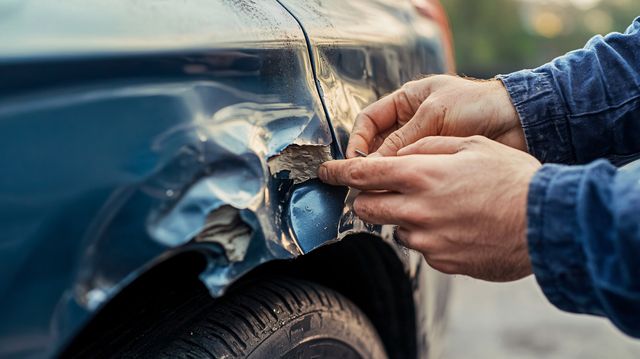


If you own a salvage or rebuilt car, getting into an accident can feel overwhelming. Insurance, repairs, and resale value work differently than with regular cars. This guide breaks down what to expect if someone hits your salvage car, helping you understand insurance payouts, repair options, legal implications, and tips to protect your investment—so you can handle the situation confidently and save money.
What Is a Salvage Car?
If you’re shopping for a cheaper vehicle at online auctions, you’ll often see the term “salvage title.” These cars can look like a great deal—but they come with important details you need to understand before buying or dealing with an accident later.
Definition of a salvage car
A salvage car is a vehicle that has been declared a total loss by an insurance company. This usually happens when the cost to repair the car is higher than a certain percentage of its value (often 70–80%, depending on the state).
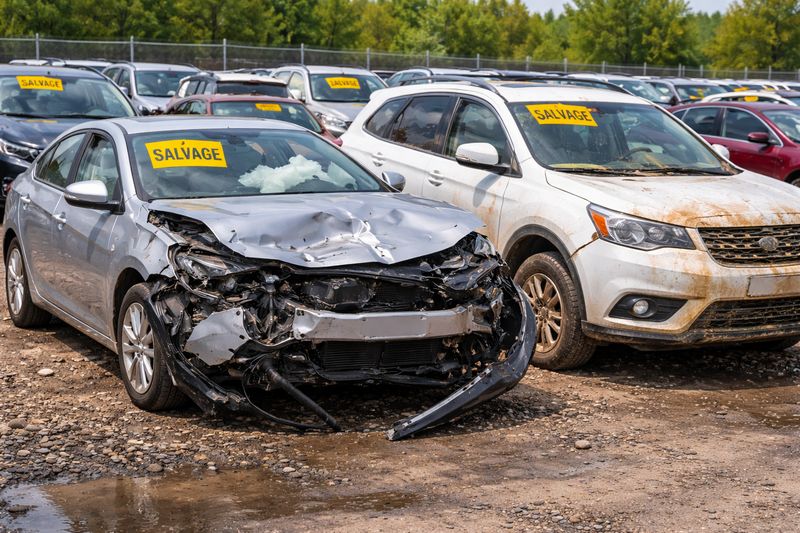 cument everything
In simple terms, the insurer looks at the damage and says: “It’s not worth fixing.”
For example, imagine you buy a used sedan for $6,000. After an accident, repairs are estimated at $5,000. Instead of paying for repairs, the insurance company may label it as salvage and pay out its value instead.
Once this happens, the car gets a salvage title, which stays in its history.
Common reasons cars receive salvage titles
A salvage title doesn’t always mean the car is completely destroyed. Many budget buyers are surprised to learn that some salvage cars have relatively minor damage.
Here are the most common reasons:
- Collision damage
This is the most typical case. Even moderate accidents can lead to a total loss if repair costs are high. - Flood damage
Cars affected by water (especially saltwater) often get salvage titles due to long-term electrical issues. - Theft recovery
Sometimes a stolen car is found after the insurance company already paid the claim. Even if it looks fine, it may still be marked salvage. - Fire or vandalism
Damage from fire or intentional acts can quickly push repair costs too high. - Hail or natural disasters
Multiple dents or storm damage can be expensive to fix, even if the car still runs.
For budget buyers, this is where opportunity comes in. You might find a car with cosmetic damage that’s much cheaper than a clean-title version—but the title status will always affect its value and insurance.
How a salvage title differs from a rebuilt title
This is where many first-time buyers get confused.
A salvage title means the car is officially considered a total loss and is usually not legal to drive until it’s repaired and inspected.
A rebuilt title (sometimes called “reconstructed”) means:
- The car was previously salvage
- It has been repaired
- It passed a state inspection
- It is now legal to drive again
Here’s a simple way to think about it:
- Salvage = damaged and not road-ready
- Rebuilt = repaired and back on the road
For example, many Auto4Export customers buy salvage cars at auction, fix them locally, and then register them as rebuilt vehicles to save thousands compared to buying a clean-title car.
See Salvage and Rebuilt Cars Side by Side Before You Buy
Understanding the difference between salvage and rebuilt titles is only the first step. Compare real auction vehicles, review damage details, check auction history, and estimate total costs before you place a bid.
- ✅ Compare salvage and rebuilt listings in one place
- ✅ Review damage type, photos, and title status before bidding
- ✅ Use free auction history reports to spot risk earlier
- ✅ Estimate vehicle, shipping, and export costs before purchase
Understanding Salvage vs Rebuilt Titles
If you’re buying from auto auctions to save money, you’ll constantly see two terms: salvage title and rebuilt title. They sound similar, but they can lead to very different outcomes—especially if someone hits your car and you have to deal with insurance.
Salvage title explained
A salvage title means the car has been declared a total loss by an insurance company and has not been repaired or approved for road use yet.
At this stage:
- The car may have visible or hidden damage
- It usually cannot be legally driven on public roads
- It is sold “as-is,” often at a much lower price
For example, you might find a car at auction with front-end damage. It runs, but the repair cost was too high compared to its value—so it was labeled salvage.
This is why salvage cars are so cheap. But it also means you take on the risk of repairs and future issues.
Rebuilt title explained
A rebuilt title is what a salvage car gets after it has been repaired and inspected.
To move from salvage to rebuilt, the car must:
- Be fully repaired
- Pass a state inspection
- Meet safety requirements
Once approved, it becomes legal to drive again.
Let’s say you bought a damaged SUV, fixed the bumper, lights, and airbags, and passed inspection. Now the car has a rebuilt title and can be registered and insured.
This is the stage most budget buyers aim for—you save money upfront, fix the car, and get back on the road.
The car’s title status at the time of the accident
This is a critical detail that many people overlook.
When someone hits your car, the title status at that exact moment determines how insurance companies handle your claim.
- If your car still has a salvage title, your options are very limited. You may not even have full insurance coverage.
- If your car has a rebuilt title, it can be insured—but payouts are usually lower.
For example, imagine two similar cars:
- One still has a salvage title and is not fully insured
- The other has a rebuilt title and active coverage
If both get rear-ended, the second owner is far more likely to receive compensation.
This is why many Auto4Export buyers choose to complete repairs and inspections as soon as possible—so the car is fully insurable before anything happens.
Why rebuilt cars are treated differently by insurers
Even after repairs, insurance companies still see rebuilt cars as higher risk.
Here’s why:
- Uncertainty about past damage
Insurers don’t always know how well the car was repaired. - Hidden issues
Problems with the frame, airbags, or electronics may not be obvious right away. - Lower market value
Rebuilt cars are worth less than clean-title cars, so payouts are smaller. - Higher chance of future claims
Statistically, previously damaged cars may have more issues later.
Because of this, insurers often:
- Offer limited coverage options
- Reduce payout amounts
- Require inspections or documentation
For a budget buyer, this doesn’t mean you should avoid rebuilt cars. It just means you need to plan ahead.
What Does a Salvage Title Mean for You as an Owner
Owning a salvage car can save you a lot of money upfront—but it also changes how you can use, insure, and sell the vehicle. If you’re buying from an auction, it’s important to understand what you’re really getting into, not just the price.
How salvage status affects ownership rights
You can legally own a salvage car, just like any other vehicle. You can buy it, sell it, and repair it. But your rights as an owner come with limitations.
For example:
- You may not be allowed to drive the car on public roads yet
- You may not be able to fully insure it
- Some buyers may refuse to purchase it later
In simple terms, you own the car—but it’s not fully “usable” until you take additional steps.
A common situation: someone buys a cheap salvage car thinking they can drive it right away. Then they realize they need repairs, inspection, and paperwork before it’s even legal to use. That can delay plans and add unexpected costs.
Driving, registration, and inspection basics
A salvage car is usually not road-legal until it has been repaired and approved by the state.
Here’s how it typically works:
- You buy the salvage car (often from an auction)
- You repair the damage
- You pass a state inspection
- The title changes to rebuilt
- You can register and legally drive the car
Until you complete these steps, you generally:
- Cannot register the car
- Cannot get full insurance coverage
- Cannot legally drive it (except in limited cases like transport or inspection)
For example, if you bought a car with front-end damage and fixed it in your garage, you still need official approval before putting it on the road.
This process varies by state, but the idea is always the same: prove the car is safe again.
Key risks budget buyers should understand
Salvage cars are popular because they’re affordable—but they come with risks that can affect your wallet later, especially after an accident.
Here are the main ones:
- Hidden damage
Not all problems are visible. Frame issues or electrical faults can show up later and cost more to fix. - Limited insurance options
Some insurers won’t offer full coverage, which means less protection if something goes wrong. - Lower payout after an accident
Even if someone else hits you, your compensation will likely be based on a lower vehicle value. - Resale challenges
Many buyers avoid salvage cars, so it may take longer to sell—and for less money. - Repair costs can add up
What looks like a cheap fix can turn into a bigger expense once you start working on the car.
A realistic example: you buy a salvage car for $3,500, fix it for $1,500, and save money compared to a clean-title car. But if you later get into an accident, the insurance company may value your car much lower—so your payout won’t cover what you expected.
How Insurance Works for Salvage Cars
Insurance is where many budget buyers face the biggest surprises. You might save thousands buying a salvage or rebuilt car—but when it comes to coverage and payouts, the rules are different.
Understanding how insurance works upfront can save you from serious financial stress later, especially if someone hits your car.
Types of insurance coverage available (liability, collision, comprehensive)
There are three main types of car insurance, and each plays a different role:
- Liability insurance
This is the most basic and usually required by law. It covers damage you cause to other people’s vehicles or property.
Important: It does not cover your own car. - Collision coverage
This pays for damage to your car after an accident—no matter who is at fault. - Comprehensive coverage
This covers non-accident events like theft, fire, vandalism, or natural disasters.
For salvage cars, most owners can easily get liability insurance, but collision and comprehensive are often limited or unavailable.
Example: You buy a cheap salvage car just to commute. You get liability insurance to stay legal—but if someone hits you and you don’t have collision coverage, you may need to rely entirely on the other driver’s insurance.
Insurance options for salvage and rebuilt vehicles
Insurance companies treat salvage and rebuilt cars very differently.
- Salvage title cars
These are the hardest to insure. Many insurers will only offer liability coverage—or refuse coverage completely—because the car is not considered road-ready. - Rebuilt title cars
These have more options. You may be able to get:- Liability coverage
- Collision coverage (in some cases)
- Comprehensive coverage (depending on the insurer)
However, even with a rebuilt title, insurers may:
- Require a detailed inspection
- Ask for repair records or photos
- Limit the value they insure
A common scenario: You fix a salvage car and get a rebuilt title. You apply for full coverage, but the insurer only agrees after checking the car—and still limits the payout value.
Limitations and exclusions for salvage cars
Even when you get insurance, there are often restrictions you need to know about:
- Lower coverage limits
The insurer may cap how much they will pay, regardless of repair costs. - Partial coverage only
Some policies exclude certain types of damage or only cover specific situations. - No coverage for prior damage
Anything related to the original salvage damage is usually excluded. - Strict claim reviews
Insurance companies may investigate claims more carefully, especially if damage overlaps with past issues.
For example, if your car had previous front-end damage and you get into another front-end collision, the insurer may argue that some of the damage was already there—and reduce your payout.
Why payouts are usually lower
This is one of the most important points for budget buyers.
Insurance payouts are based on the car’s actual cash value (ACV)—what the car is worth on the market at the time of the accident.
Since salvage and rebuilt cars are worth less than clean-title cars:
- Your payout will be lower
- Even if the damage is similar to a clean car
- Even if the accident wasn’t your fault
Example:
- Clean-title car value: $10,000
- Rebuilt-title version of the same car: $6,500
If both cars are totaled, the rebuilt car owner will receive much less—even though the vehicles are similar.
This is the trade-off: you save money upfront, but you also accept lower compensation later.
Can you get full coverage on a salvage car?
In most cases, no—you cannot get full coverage on a salvage-title car.
Because the car is considered a total loss and not fully repaired, insurers see it as too risky.
However, once the car is repaired and receives a rebuilt title, full coverage may become possible—but with conditions:
- Not all insurers will offer it
- The car may need inspection
- The insured value will still be lower
- Premiums may be higher
A realistic example: You buy a salvage car for $4,000, invest $2,000 in repairs, and get a rebuilt title. An insurer agrees to full coverage—but only values the car at $5,500, not the $6,000 you spent.
Calculate the Full Cost of a Salvage Car Before It Becomes Your Problem
A cheap auction price does not tell the whole story. Before you buy, review the full financial picture — from auction fees and transportation to possible repairs, title conversion, and export expenses.
- ✅ Transparent pricing before you commit to a vehicle
- ✅ Help estimating repair, shipping, and export-related costs
- ✅ Better decisions with free auction history reports
- ✅ Guidance from Auto4Export if you need help before bidding
What Happens Immediately After Someone Hits Your Salvage Car
The moments right after an accident are stressful—especially if you’re driving a salvage or rebuilt car. But what you do next can directly affect your insurance claim, your payout, and even whether you can prove the other driver was at fault.
Staying calm and following a clear process will protect you financially.
Ensuring safety and calling authorities
First, make sure everyone is safe.
- Check yourself and passengers for injuries
- Move to a safe location if possible
- Turn on hazard lights
If there are injuries or serious damage, call emergency services right away.
Even if the accident seems minor, it’s often a good idea to call the police and get an official report. This can be very helpful later—especially if there’s a dispute about who caused the crash.
Example: You get rear-ended at a traffic light. The other driver says, “Let’s handle it without police.” Later, they change their story. Without a report, proving fault becomes harder.
Gathering evidence and documenting the accident
This step is critical—especially for salvage or rebuilt cars, where insurers may already be cautious.
Take as many photos and videos as possible:
- Damage to your car
- Damage to the other vehicle
- License plates
- Road conditions and traffic signs
- The overall scene of the accident
If possible, also:
- Record a short video explaining what happened
- Get contact details of any witnesses
Why this matters: If your car already had prior damage, you need clear proof of what damage came from this specific accident.
Example: Your car had an old dent on the rear bumper. After being hit again, the insurance company may question what’s new damage. Your photos can make the difference.
Exchanging information with the other driver
You should always exchange key details with the other driver:
- Full name and contact information
- Driver’s license number
- Insurance company and policy number
- Vehicle make, model, and registration
Keep communication simple and avoid arguing or admitting fault at the scene.
A common mistake: saying something like “I didn’t see you” or “maybe it was my fault.” Even casual comments can be used later during the claim process.
Contacting your insurance company
As soon as possible, report the accident to your insurance company—even if the other driver is clearly at fault.
Provide:
- Basic details of the accident
- Photos and documentation
- Police report (if available)
If you have a salvage or rebuilt car, be ready for extra questions about:
- The car’s condition before the accident
- Previous damage
- Repair history
Example: An insurer may ask, “Was this part already damaged before the accident?” Having records and photos will help you answer confidently.
When to call a tow truck
You should call a tow truck if:
- The car is not safe to drive
- There is significant structural damage
- Fluids are leaking
- Airbags deployed
With salvage or rebuilt cars, it’s better to be cautious. Driving a damaged vehicle can make things worse—and may even affect your insurance claim.
Example: After a collision, your car still starts, but the front frame is slightly bent. Driving it home could increase the damage and reduce what the insurer is willing to pay.
Filing an Insurance Claim
After the accident, the next step is dealing with insurance. This is where many salvage car owners run into confusion. The process is similar to regular cars—but the details matter much more, especially when it comes to proving damage and getting a fair payout.
Filing a claim with your insurer vs the at-fault driver’s insurer
You usually have two options when filing a claim:
- Through your own insurance company
- Through the at-fault driver’s insurance company
If you have collision coverage, you can file with your own insurer. They may pay for repairs first and then recover the money from the other driver’s insurance later.
If you don’t have collision coverage (which is common for salvage cars), you’ll likely need to file directly with the at-fault driver’s insurer.
Example:
You’re driving a rebuilt car with only liability insurance, and someone hits you. Since your policy doesn’t cover your own damage, your only option is to claim through the other driver’s insurance.
Filing through your own insurer is usually faster and simpler. Filing through the other party’s insurer may take longer, especially if they question liability or the value of your car.
What documents you’ll need
With a salvage or rebuilt car, documentation is everything. The more proof you have, the smoother your claim will go.
You’ll typically need:
- Police report (if available)
- Photos and videos from the accident scene
- Insurance policy details
- Driver information from the other party
- Vehicle title (salvage or rebuilt)
But for salvage cars, you should also be ready to provide:
- Repair records and receipts
- Before-and-after photos of the car
- Inspection certificates (for rebuilt vehicles)
Example: If your car had prior damage, the insurer may ask you to prove what was already there and what resulted from the new accident. Without records, they may reduce your payout.
Think of it this way: your paperwork protects your money.
Common mistakes to avoid during claims
Small mistakes during the claims process can cost you time—or even reduce your compensation.
Here are the most common ones:
- Delaying the claim
Waiting too long to report the accident can raise red flags and complicate the process. - Not documenting enough evidence
A few photos are not enough. The more detail you have, the stronger your case. - Admitting fault too early
Even if you think you might be partially responsible, let the insurers investigate first. - Not disclosing prior damage
With salvage cars, honesty is important. If you hide previous issues, it can backfire. - Accepting the first offer too quickly
Initial payouts are often lower than what you may be entitled to.
Example: You receive a quick settlement offer for $2,000 and accept it. Later, you realize repairs cost $3,500—but it’s too late to renegotiate.
- Not reviewing your policy details
Many owners don’t fully understand what their insurance actually covers until it’s too late.
How Insurance Companies Value a Salvage Car
One of the biggest surprises for budget buyers comes during the payout stage. You might expect compensation based on what you paid or invested—but insurance companies use their own methods to calculate value, and salvage cars are treated differently from the start.
Understanding this process helps you avoid unrealistic expectations and make smarter decisions.
Actual cash value (ACV) explained
Insurance companies use something called Actual Cash Value (ACV) to determine how much your car is worth at the time of the accident.
ACV is based on:
- The car’s age
- Mileage
- Condition
- Market prices for similar vehicles
It’s not what you paid—and not what you spent on repairs.
Example:
- You bought a salvage car for $3,000
- Spent $2,000 fixing it
- Total investment: $5,000
But the insurer may calculate the ACV at only $4,000—or even less—based on market data.
This is the number they use for payouts.
How prior damage affects valuation
With salvage and rebuilt cars, previous damage plays a big role in how insurers calculate value.
Even if the car was fully repaired:
- The history of damage lowers its value
- Insurers assume higher risk
- They may question the quality of repairs
If the new accident affects the same area as before, things get even more complicated.
Example:
Your car had previous rear-end damage that was repaired. After a new accident, the insurer may say:
- Part of the damage was already there
- Not all repair costs are related to the new crash
This can lead to a reduced payout.
That’s why keeping repair records and photos is so important—it helps prove what changed after the accident.
Depreciation and market comparisons
Insurance companies don’t guess your car’s value—they compare it to similar vehicles on the market.
For salvage and rebuilt cars, this means:
- Comparing prices of other salvage/rebuilt vehicles
- Applying additional depreciation due to title status
Even if your car looks great, it will still be grouped with other cars that have similar history.
Example:
A clean-title car might sell for $9,000
A similar rebuilt car might sell for $5,500–$6,500
Your payout will be based on that lower range—not the clean-title price.
Also, depreciation continues over time, just like with any car. So the longer you own it, the lower the ACV becomes.
Why salvage cars are harder to price
Salvage cars are simply less predictable, and that makes them harder for insurers to value accurately.
Here’s why:
- Every car is different
No two salvage vehicles have the same damage history or repair quality. - Limited market data
There are fewer comparable sales compared to clean-title cars. - Uncertainty about repairs
Even with documentation, insurers may not fully trust how well the car was fixed. - Condition varies widely
Two rebuilt cars of the same model can have very different real-world value.
Because of this, insurers tend to be conservative. They often:
- Choose lower estimates
- Question repair costs
- Adjust values more strictly
For budget buyers, this means one thing:
Your car may be worth less on paper than it is to you.
Example: Your rebuilt car runs perfectly and meets your needs. But in the insurance world, it’s still seen as a higher-risk, lower-value vehicle.
Possible Outcomes After the Accident
After someone hits your salvage or rebuilt car, there are several possible outcomes. Knowing what to expect can help you make smart decisions about repairs, insurance claims, and your budget. Not every accident will total your car—but even minor damage can be tricky with a salvage vehicle.
Minor damage – repair and keep driving
If the accident caused only minor damage, you may be able to repair the car and keep driving without major issues. Minor damage could include:
- Small dents or scratches
- Broken mirrors or lights
- Minor bumper damage
Even with a salvage or rebuilt car, these repairs are usually straightforward. Many Auto4Export customers fix cosmetic damage themselves or at a local shop for a fraction of what a clean-title car would cost.
Example:
You get lightly rear-ended at a stop sign. The bumper has a small dent, but everything else is fine. A repair shop can fix it for $300–$500, and you can continue driving safely.
Total loss again – what it means
Sometimes, the accident may be severe enough for the insurer to declare the car a total loss again. This means:
- Repair costs exceed the insurer’s threshold (usually a percentage of the car’s ACV)
- The insurer may pay you the car’s actual cash value rather than paying for repairs
For salvage or rebuilt cars, this can be frustrating because the payout is usually lower than what you originally paid.
Example:
Your rebuilt car, valued at $6,000, gets hit hard in a collision. Repairs would cost $5,500, so the insurance company declares it a total loss. You receive $6,000 (or slightly less), even though you invested $2,000 in repairs.
When the insurance company refuses full payout
There are situations where the insurer may refuse full payout, even if the accident wasn’t your fault. Common reasons include:
- Prior damage: The car already had damage in the same area
- Incomplete documentation: No photos or repair records to prove pre-accident condition
- Policy limits: The policy doesn’t cover certain damages for salvage/rebuilt cars
This is why keeping records of every repair, inspection, and pre-accident photo is crucial. It strengthens your claim and reduces disputes.
Example:
Your car had an old dent on the rear quarter panel. A new accident hits the same area. Without photos showing the original dent, the insurer may deduct its cost from your payout.
Payout vs repair decision
Once you know the insurer’s assessment, you face a key decision: accept the payout or repair the car.
Consider these factors:
- Repair cost vs ACV: If repairs are cheaper than the payout, fixing may be worth it
- Future resale value: Repairing may increase the car’s appeal to potential buyers
- Safety and reliability: Some damage may affect driving safety if not repaired properly
Example:
You’re offered $4,500 for a minor total loss, but repairs cost $3,500. Fixing the car may still be cheaper than buying another salvage vehicle—and you keep a car you already know.
Repairing a Salvage Car After an Accident
Fixing a salvage or rebuilt car after an accident requires careful planning. Unlike a clean-title vehicle, these cars already have a history of damage, which can make repairs more complicated and costly. Knowing how to assess and approach repairs will save you time, money, and frustration.
Assessing the damage properly
Before spending a dime, it’s crucial to assess the damage thoroughly. Don’t just focus on visible dents or scratches—salvage cars may have hidden structural or mechanical issues.
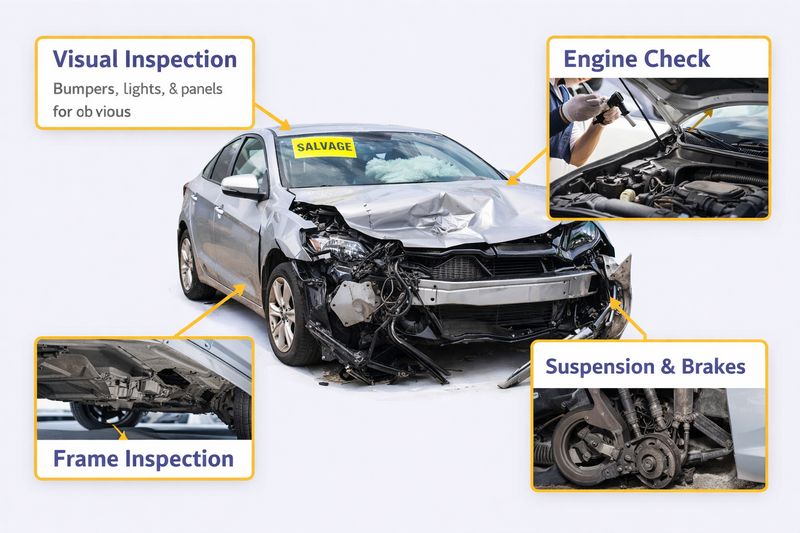
Steps to assess damage:
- Visual inspection: Check bumpers, doors, lights, and panels for obvious damage
- Mechanical check: Inspect the engine, suspension, brakes, and steering components
- Frame assessment: Look for bent frames or alignment issues that could affect safety
- Document everything: Take photos and notes for insurance and future reference
Example: You were rear-ended, and the bumper looks fine after a quick glance. But a mechanic discovers the rear frame is bent—something a DIY repair wouldn’t fix. Early detection prevents bigger costs later.
Repair options and cost considerations
Once damage is assessed, you have several repair options:
- DIY repairs: Ideal for minor cosmetic damage, like small dents or scratches. Cheapest option but requires time and some skill.
- Local repair shops: Usually more affordable than dealerships and flexible with payment options.
- Specialized salvage/rebuilt shops: These shops understand the challenges of previously damaged cars and can handle structural or frame repairs safely.
Cost considerations:
- Minor cosmetic fixes may cost a few hundred dollars
- Frame, engine, or airbag repairs can run thousands
- Factor in inspection and paperwork fees if the car has a rebuilt title
Example: A budget buyer chooses a local shop for a $400 bumper repair but takes the car to a specialized shop for frame alignment, costing $1,200. Doing both ensures the car is safe and maintains its rebuilt status.
Choosing the right repair shop
Selecting the right repair shop is especially important for salvage cars:
- Experience with salvage/rebuilt vehicles: Shops familiar with previous damage know what to check
- Warranty and guarantees: Ensure they offer a warranty on parts and labor
- Reputation and reviews: Look for positive reviews from other salvage car owners
- Documentation support: Some insurers may require detailed repair records
Example: Choosing a shop without experience could result in improper repairs. This can lower the car’s safety, reduce resale value, or even affect insurance claims in the future.
When repairs are not worth it
Sometimes, repairing a salvage car after an accident may not be financially practical. Consider stopping repairs if:
- Repair costs exceed ACV: Spending more than the car is worth rarely makes sense
- Structural damage compromises safety: Even if cosmetic fixes are cheap, unsafe vehicles are not worth it
- Insurance won’t cover the repair: If the payout is too low, investing more may not make sense
Example: Your rebuilt car is offered $3,000 after a total-loss accident, but the repair costs would be $3,500. Accepting the payout and finding another budget car may be smarter.
Can Your Salvage Car Be Declared Totaled Again?
If someone hits your salvage or rebuilt car, one of the biggest questions for budget buyers is: Can it be totaled again? The short answer is yes—but understanding how insurers handle a second total loss helps you plan your next steps and manage expectations.
How insurers decide total loss
Insurance companies declare a car a total loss when the cost to repair the vehicle exceeds a certain percentage of its actual cash value (ACV). This threshold varies by state but is typically between 70% and 80%.
Factors insurers consider:
- Repair costs: Parts, labor, and specialty repairs
- Car’s market value (ACV) at the time of the accident
- Structural or frame damage that affects safety
Example: Your rebuilt car is worth $6,000. If an accident causes $5,000 in repair costs, the insurer may declare it a total loss because fixing it isn’t financially reasonable.
Even though the car was previously salvaged, insurers still treat it like any other vehicle in this calculation. They do not assume prior total loss automatically cancels current coverage—it’s based on current damage vs current value.
What happens if it’s totaled twice
Being totaled a second time can be frustrating for owners of rebuilt cars, but it’s fairly common with budget vehicles. Here’s what happens:
- The insurance company will calculate a payout based on the car’s current ACV, not your original purchase price.
- If you previously invested in repairs, that money is generally not added to the payout.
- You may have the option to keep the car as-is or let the insurer take it.
Example: You spent $2,500 repairing a salvage car and got it rebuilt. A new accident totals it again. The insurer offers $5,000 based on ACV. You can accept it or, in some cases, keep the car and get a reduced payout.
It’s important to understand that each total loss resets the financial picture—the car’s history doesn’t increase its payout.
Title changes after a second total loss
After a second total loss, the title may be updated again. How it changes depends on your state:
- First total loss: Car gets a salvage title
- After repairs and inspection: Title becomes rebuilt
- Second total loss: Some states mark it as “salvage—previously rebuilt” or “rebuilt total loss”
This can affect:
- Future insurance coverage
- Resale value
- Buyer confidence
Example: A car with a “rebuilt total loss” title is harder to sell than a simple rebuilt car. Buyers may expect lower safety or higher repair costs, so you may need to price it carefully.
Legal and Financial Implications
Owning a salvage or rebuilt car comes with unique legal and financial considerations—especially after an accident. Knowing your rights, responsibilities, and how to handle disputes can protect your wallet and prevent headaches with insurers or the other driver.
Liability if the other driver is at fault
If someone else causes the accident, they are generally legally responsible for damages. This means their insurance should cover:
- Repairs to your car
- Medical bills for injuries
- Any related costs like towing or rental cars
However, with salvage cars, payouts may be lower due to the car’s title history. Insurers often calculate compensation based on actual cash value (ACV) rather than what you spent repairing the car.
Example: Your rebuilt car is rear-ended, causing $3,000 in damage. The at-fault driver’s insurer may only offer $2,500 because the car’s ACV is lower than your repair costs—even though you didn’t cause the accident.
What if you are partially at fault
If you share responsibility for the accident, most states apply comparative or contributory fault rules. This means:
- Your payout may be reduced proportionally to your degree of fault
- Liability may be shared between you and the other driver
Example: You merge slightly into another lane, and the other driver hits your side. The insurer may determine you were 20% at fault. If the total damage is $5,000, your payout might be reduced by $1,000.
Budget buyers should be especially careful: even a small mistake can reduce already-limited insurance payouts on salvage or rebuilt cars.
State laws and regulations to consider
State rules can affect salvage car ownership and claims:
- Total loss thresholds: The percentage of ACV used to declare a total loss
- Title branding laws: How salvage or rebuilt cars are labeled
- Registration requirements: Inspections and paperwork needed to drive legally
Example: In some states, rebuilt cars must pass a detailed safety inspection before insurance will cover them. Missing this step could delay coverage or result in claim denial.
Before buying a salvage car, it’s smart to check your state’s regulations. Understanding legal requirements helps avoid surprises after an accident.
Handling disputes with insurance companies
Disputes with insurers are common, especially with salvage cars. Common issues include:
- Reduced payouts based on prior damage
- Disagreements over repair costs or ACV
- Claim denials due to incomplete documentation
Tips to handle disputes:
- Keep detailed records: Photos, repair receipts, inspection reports
- Know your policy: Understand what’s covered and the limits
- Provide evidence: Document the car’s pre-accident condition
- Negotiate if needed: Request a re-evaluation with supporting documents
- Consider a third-party appraisal: Sometimes hiring an independent adjuster helps
Example: Your rebuilt car is partially totaled, and the insurer offers $3,500. You have receipts and photos showing repairs worth $4,000. Presenting this evidence can help increase the payout.
Impact on Resale Value
Resale value is one of the biggest concerns for salvage car owners, especially after an accident. Every collision—minor or major—can affect how much your car is worth and how easy it will be to sell. Understanding the factors that influence resale value helps you plan repairs, insurance, and future sales strategically.
How a new accident affects value
Even a minor accident can lower a salvage or rebuilt car’s value. Insurers, buyers, and dealerships all consider the car’s accident history when determining price. Key factors include:
- Severity of the damage
- Whether the damage overlaps with previous repairs
- Quality of the repair work
- Vehicle inspection and title status after the accident
Example: You have a rebuilt car worth $6,000. After a small rear-end collision, even fully repaired, its resale value may drop to $5,200 because the car now has a second accident on record. Buyers are wary of vehicles with repeated incidents, assuming higher repair costs and potential hidden issues.
Selling a salvage car after another accident
Selling a salvage or rebuilt car after a new accident is more challenging than selling a clean or single-rebuilt vehicle. Here’s what to consider:
- Full disclosure is required: You must inform potential buyers about both the original salvage status and the new accident.
- Title branding matters: Some states mark the title as “rebuilt—total loss” or similar, which can scare off buyers.
- Lower market demand: Fewer buyers are willing to take on a car with multiple accidents, meaning you may need to price it aggressively.
Example: A buyer looking at your rebuilt car with two accident records may negotiate the price down by $1,000–$1,500, even if repairs were properly completed. Transparency avoids legal issues but can impact the selling price.
Tips to minimize value loss
While you can’t completely prevent a drop in value, you can take steps to protect it:
- Document all repairs and inspections: Keep receipts, photos, and inspection certificates. This proves the car was properly repaired.
- Use reputable repair shops: High-quality repairs can maintain functionality and aesthetics, reassuring buyers.
- Keep the car clean and well-maintained: Appearance matters; a clean, well-kept car attracts more buyers.
- Avoid repeated accidents: Defensive driving reduces the risk of new damage.
- Consider professional appraisal before selling: Knowing a fair market value helps you price competitively without underselling.
Example: After a second accident, you provide the buyer with a complete repair history, before-and-after photos, and inspection certificates. Even with a lower value, the buyer feels confident in the car’s condition and is willing to pay a fair price.
Pros and Cons of Owning a Salvage Car
Owning a salvage or rebuilt car is a trade-off. You get the chance to save money upfront, but you also take on some extra risks and responsibilities. Understanding the pros and cons helps you make an informed decision and avoid surprises down the road.
Pros
Salvage cars offer several advantages, especially for budget-conscious buyers:
- Lower purchase price
Salvage vehicles are often 50% or more cheaper than similar clean-title cars. This makes them an attractive option if you’re looking to save money. - Opportunity to customize or repair
Many buyers enjoy repairing or upgrading salvage cars themselves, turning them into a functional, personalized vehicle at a fraction of the cost. - Access to higher-end cars
Buying a salvage car can allow you to afford models that would otherwise be out of budget—luxury cars, sports cars, or trucks that are normally too expensive. - Potential for resale profit
If you buy wisely, repair thoroughly, and document everything, you may be able to sell the car for more than you invested, especially if it’s mechanically sound.
Example: A buyer purchases a rebuilt Honda Civic for $3,500, invests $1,500 in repairs, and drives it for a year. Even with a few minor accidents, the car still holds enough value to sell for $5,000, saving money compared to buying a clean-title car.
Cons
There are also notable downsides to consider:
- Lower resale value
Salvage cars are less attractive to buyers, so you may have to accept a lower price when selling. - Insurance limitations
Coverage is limited, payouts are often lower, and some insurers may refuse full coverage altogether. - Potential hidden damage
Previous accidents can leave structural, electrical, or mechanical problems that aren’t obvious, creating unexpected repair costs. - Legal and regulatory hurdles
Depending on your state, salvage cars may require inspections, special registration, or additional documentation to be street-legal. - Higher long-term risk
Because of previous damage, salvage cars are more likely to need repairs again in the future, which can offset initial savings.
Example: A rebuilt truck seems like a bargain at $7,000. But after a minor fender-bender, insurance only offers $5,000, and repairs cost $3,000. The savings from the original purchase start to shrink when unexpected costs pile up.
Smart Tips for Salvage Car Owners
Owning a salvage or rebuilt car can save money, but it also requires extra care and planning. Following some simple tips can help you protect your investment, reduce risk, and make the most of your budget-friendly vehicle.
Keep all repair and accident records
Documentation is your best friend when owning a salvage car. Keep detailed records of:
- Repairs, parts replaced, and receipts
- Accident reports and insurance claims
- Inspections, especially for rebuilt title verification
- Photos before and after repairs
Why it matters: Proper records help with insurance claims, resale, and disputes. They prove that repairs were done professionally and that damage from a new accident is separate from old issues.
Example: After a minor collision, your insurer questions prior damage. You provide photos and receipts showing the car’s condition before the accident. The claim is approved, and your payout isn’t reduced.
Choose the right insurance coverage
Insurance for salvage cars can be tricky. Not all policies are available, so select coverage carefully:
- Liability coverage is usually mandatory and easy to get
- Collision coverage may be limited, but it’s useful if your car is hit
- Comprehensive coverage covers theft, fire, or natural disasters, but check exclusions
Tip: Compare multiple insurers. Some specialize in rebuilt or salvage cars and may offer better terms and higher payout limits.
Example: A budget buyer chooses a company that specializes in rebuilt cars. They pay slightly more in premiums but secure better protection and fewer claim disputes.
Get pre-accident inspections and photos
Before driving or insuring your car, a thorough inspection is critical:
- Check for hidden damage or mechanical issues
- Take detailed photos of the car from every angle
- Record mileage, VIN, and title details
These inspections and photos serve as evidence if another driver hits your car, protecting you during insurance claims.
Example: You document your rebuilt car before your daily commute. After a minor accident, these photos help prove what damage was new versus pre-existing, avoiding a payout reduction.
Drive defensively to reduce risk
Prevention is often cheaper than repairs. Salvage cars can be more vulnerable, so driving carefully is key:
- Maintain a safe following distance
- Avoid risky maneuvers or aggressive driving
- Follow traffic rules and stay aware of other drivers
- Consider parking in safe, well-lit areas to prevent theft or vandalism
Example: A rebuilt car owner drives defensively through busy city streets, keeping distance from tailgaters. A fender-bender is avoided, saving time, money, and stress.
Summary: What to Expect If Someone Hits Your Salvage Car
Owning a salvage or rebuilt car comes with unique challenges, especially if you’re involved in an accident. From insurance claims to repair decisions, understanding what to expect can help you stay prepared and protect your budget.
If someone hits your salvage car, the first priority is safety—check for injuries, call authorities if necessary, and document the scene thoroughly. Collect evidence, exchange information with the other driver, and contact your insurer as soon as possible.
Insurance for salvage cars works differently than for clean-title vehicles. Coverage may be limited, payouts are often based on actual cash value (ACV), and prior damage can affect your settlement. Filing a claim requires detailed records, photos, and repair receipts to support your case.
Repairing a salvage car after an accident requires careful assessment. Minor damage may be repaired cost-effectively, while more severe damage could lead to a second total loss. Choosing the right repair shop and weighing repair costs against insurance payouts is crucial. Remember that repeated accidents and salvage history can lower resale value.
Legally and financially, you need to understand liability, state regulations, and how to handle disputes with insurers. Defensive driving, thorough documentation, and proactive inspections help minimize risk and protect your investment.
In short, if someone hits your salvage car, expect extra scrutiny from insurers, careful repair planning, and potential resale impact. With proper preparation, smart documentation, and cautious driving, you can navigate the accident process confidently while safeguarding your budget.
Find Salvage Cars With Better Value and Fewer Surprises
If you want to save money on your next vehicle, Auto4Export helps you buy salvage cars with more confidence. Search auction inventory, review free history reports, estimate total costs, and get support from purchase to delivery.
- ✅ Access to a large selection of auction vehicles across the USA
- ✅ Free auction history reports on previously sold vehicles
- ✅ Cost estimates before bidding or buying
- ✅ Support with buying, shipping, and export documentation
Further Reading
Does Car Insurance Cover Car Theft?
Salvage Car Facts Debunked! Top 4 Misconceptions About Salvage Title Car
What Is a Salvage Title Vehicle and Is It Worth Buying?
A Complete Guide to Used Car Vehicle Inspection

Do You Have Any Questions?
 Ask Question