


 Log in
 Sign Up




Managing vehicle inventory efficiently is essential for dealerships, auction buyers, and automotive businesses that want to maximize profits and avoid unnecessary costs. This guide explains the basics of car inventory management, common challenges, and practical strategies for tracking, pricing, and selling vehicles more effectively. You'll learn how better inventory control can reduce holding costs, improve cash flow, and help buyers find the right vehicles faster.
What Are Self-Driving Cars?
Self-driving cars, also known as autonomous vehicles, are vehicles that can perform many driving tasks with little or no human input. These vehicles use advanced software, sensors, cameras, and artificial intelligence to monitor their surroundings, make decisions, and navigate roads safely. While fully autonomous vehicles are still limited in availability, many modern cars already include technologies that automate certain driving functions.
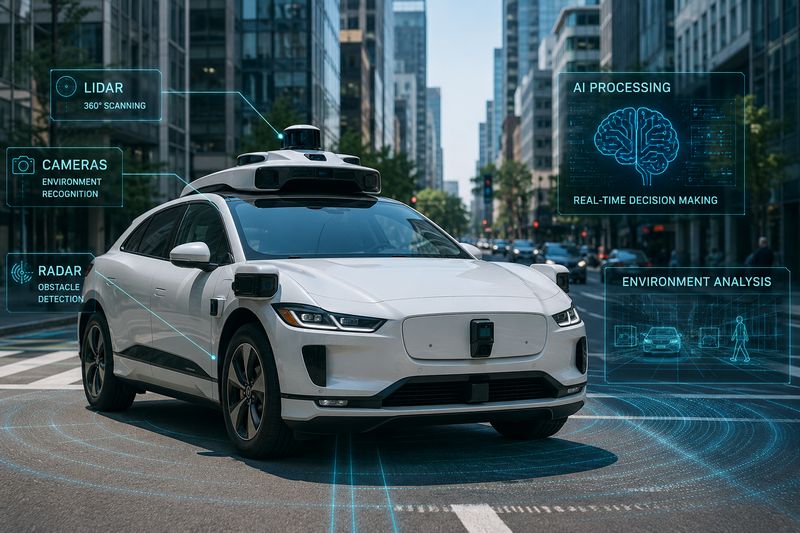
Interest in self-driving cars continues to grow because they have the potential to improve road safety, reduce traffic congestion, and make transportation more convenient. Understanding how these vehicles work begins with understanding how they differ from traditional cars and the technologies that make autonomous driving possible.
How Do Autonomous Vehicles Differ From Traditional Cars?
Traditional vehicles rely almost entirely on human drivers. The driver is responsible for steering, accelerating, braking, observing road conditions, and responding to unexpected situations. Even vehicles equipped with basic safety systems still depend on the driver to remain fully engaged behind the wheel.
Autonomous vehicles operate differently. They use a combination of hardware and software to monitor their environment and assist with or perform driving tasks. Cameras detect lane markings and traffic signs, radar tracks nearby vehicles, and onboard computers analyze this information in real time.
For example, a traditional car may warn a driver when drifting out of a lane, but an autonomous vehicle can actively steer itself back into the correct position. In more advanced systems, the vehicle can change lanes, adjust speed, and navigate traffic with limited driver involvement.
The key difference is that autonomous vehicles can make driving decisions based on data collected from their surroundings, while traditional vehicles rely on human judgment for nearly every action.
What Is the Difference Between Self-Driving and Driverless Cars?
The terms "self-driving" and "driverless" are often used interchangeably, but they do not always mean the same thing.
A self-driving car usually refers to a vehicle that can perform many driving tasks independently but may still require a human driver to supervise the system and take control when necessary. Most advanced vehicles available today fall into this category.
A driverless car refers to a vehicle designed to operate without any human intervention. These vehicles may not even include a steering wheel or pedals because no driver is expected to take control during operation.
For example, a vehicle equipped with advanced highway driving assistance may be considered self-driving because it still requires a person in the driver's seat. A fully autonomous robotaxi operating without a human driver would be considered driverless.
Understanding this distinction is important because most vehicles currently on public roads are not fully driverless, even if they include advanced autonomous features.
What Levels of Vehicle Automation Exist?
Not all self-driving technologies offer the same capabilities. The automotive industry uses a standardized classification system developed by SAE International to define different levels of automation. These levels range from no automation to complete autonomy.
Level 0 to Level 2 Driver Assistance
Level 0 vehicles have no automation. The driver performs all driving tasks, although warning systems may provide alerts.
Level 1 includes basic driver assistance features such as adaptive cruise control or lane-keeping assistance. The vehicle can assist with a single driving function, but the driver remains fully responsible.
Level 2 combines multiple automated functions. The vehicle may control steering, acceleration, and braking under certain conditions. However, the driver must continuously monitor the road and be prepared to intervene immediately.
Many modern vehicles currently sold with advanced driver assistance systems operate at Level 2. Features such as traffic-aware cruise control and lane-centering technology are common examples.
Level 3 Conditional Automation
Level 3 vehicles can handle most driving tasks in specific conditions without constant driver input. The vehicle monitors the environment and makes driving decisions independently during those situations.
However, the driver must remain available to take control when requested by the system. If road conditions become too complex or fall outside the vehicle's operating limits, human intervention is required.
Level 3 technology represents a significant step toward full autonomy, but regulatory and safety challenges have limited widespread deployment.
Level 4 and Level 5 Full Autonomy
Level 4 vehicles can operate without human assistance in specific environments or operating areas. For example, an autonomous shuttle may drive itself within a designated city zone or campus.
At this level, a human driver is not required during normal operation within approved conditions. However, the vehicle may not function autonomously in every situation or location.
Level 5 represents complete autonomy. A Level 5 vehicle can drive itself under all road, weather, and traffic conditions that a human driver could handle. No steering wheel, pedals, or driver supervision would be necessary.
Although Level 5 autonomy remains a long-term goal, most autonomous vehicle development today focuses on advancing Level 3 and Level 4 capabilities.
Which Technologies Power Self-Driving Cars?
Self-driving vehicles depend on multiple technologies working together simultaneously. These systems continuously collect data, interpret road conditions, and make driving decisions within fractions of a second.
Without advanced computing and sensing technology, autonomous driving would not be possible.
Artificial Intelligence and Machine Learning
Artificial intelligence serves as the decision-making engine behind autonomous vehicles. AI systems analyze massive amounts of information from sensors and cameras to understand the vehicle's surroundings.
Machine learning allows these systems to improve over time by processing large datasets collected during testing and real-world driving. The software learns to recognize vehicles, pedestrians, traffic signs, road markings, and countless driving scenarios.
For example, an AI system can identify a cyclist approaching an intersection and predict possible movements before deciding how the vehicle should respond.
The more data these systems receive, the better they become at handling complex driving situations.
Cameras, Radar, LiDAR, and Sensors
Autonomous vehicles rely on several sensing technologies to create a detailed view of the surrounding environment.
Cameras capture visual information such as lane markings, traffic lights, road signs, and nearby objects. Radar uses radio waves to detect the speed and distance of vehicles and obstacles, even in poor visibility conditions.
LiDAR technology emits laser pulses to create highly accurate three-dimensional maps of the vehicle's surroundings. This helps the system determine the precise location of nearby objects.
Additional sensors monitor factors such as wheel speed, steering angle, vehicle position, and acceleration. Together, these technologies provide the information necessary for safe autonomous operation.
GPS Mapping and Real-Time Data Processing
GPS technology helps autonomous vehicles determine their location and plan routes. However, self-driving cars require much more than standard navigation systems.
High-definition maps provide detailed information about roads, intersections, lane configurations, speed limits, and traffic controls. These maps help vehicles anticipate road conditions before they encounter them.
At the same time, powerful onboard computers process enormous amounts of data from cameras, radar, LiDAR, and other sensors in real time. This allows the vehicle to continuously update its understanding of the environment and make immediate driving decisions.
How Do Self-Driving Cars Work?
Self-driving cars rely on a combination of sensors, software, artificial intelligence, and high-performance computers to navigate roads with little or no human input. Unlike traditional vehicles that depend entirely on a driver’s decisions, autonomous vehicles continuously monitor their surroundings, analyze data, and make driving decisions in real time.
To accomplish this, self-driving systems must perform several complex tasks simultaneously. They need to identify objects, understand traffic conditions, predict the actions of other road users, and determine the safest route forward. These actions happen within fractions of a second and are repeated continuously throughout the journey.
How Autonomous Systems Detect Surroundings
One of the most important functions of a self-driving car is understanding what is happening around it. Autonomous systems achieve this by using multiple technologies that work together to create a detailed picture of the environment.
Cameras help identify lane markings, traffic signs, traffic lights, pedestrians, cyclists, and other vehicles. Radar measures the speed and distance of nearby objects, even in rain, fog, or darkness. LiDAR systems use laser pulses to create precise three-dimensional maps of the vehicle’s surroundings. Additional sensors track vehicle movement, steering position, wheel speed, and acceleration.
The information collected by these devices is combined into a single digital model of the environment. This process, often called sensor fusion, allows the vehicle to understand where objects are located and how they are moving.
For example, if a pedestrian begins crossing the street unexpectedly, the cameras may recognize the person, radar may measure the distance, and the onboard computer can combine this information to determine the appropriate response. This multi-layered approach improves accuracy and helps the vehicle react more safely than relying on a single sensor type.
How Vehicles Make Driving Decisions
Once an autonomous vehicle understands its surroundings, it must decide what action to take next. This is where artificial intelligence and advanced software play a critical role.
The vehicle continuously analyzes incoming data and evaluates possible driving scenarios. It predicts how nearby vehicles, pedestrians, and cyclists may behave over the next few seconds and chooses the safest course of action.
For example, if a slower vehicle is ahead, the system may determine whether it is safer to reduce speed, maintain distance, or change lanes. If a traffic light changes from green to yellow, the vehicle calculates whether it should stop safely or proceed through the intersection.
Decision-making software follows traffic laws while also prioritizing safety. The system constantly balances factors such as speed, road conditions, traffic flow, and obstacle avoidance.
These calculations happen thousands of times per minute. Advanced onboard computers process enormous amounts of information almost instantly, allowing the vehicle to respond quickly to changing road conditions.
How Self-Driving Cars Communicate With Other Vehicles
Many autonomous vehicle developers are exploring ways for vehicles to communicate directly with one another. This technology is often referred to as Vehicle-to-Vehicle (V2V) communication.
Through wireless communication systems, vehicles can share information such as speed, direction, location, braking activity, and road conditions. By exchanging this information, vehicles can anticipate potential hazards before they become visible through sensors alone.
For example, if a vehicle several cars ahead suddenly brakes due to an accident, nearby connected vehicles can receive an immediate warning. This allows autonomous systems to react faster and more smoothly, reducing the risk of collisions.
Some systems also support Vehicle-to-Infrastructure (V2I) communication. Traffic signals, road signs, and transportation networks can provide information about traffic patterns, construction zones, speed limits, and changing road conditions.
As connected transportation networks continue to develop, communication between vehicles and infrastructure could significantly improve traffic flow and road safety.
Why Testing and Data Collection Matter
Self-driving technology requires extensive testing before it can be deployed safely on public roads. Autonomous systems must learn how to handle an enormous variety of driving situations, including many rare and unpredictable events.
To achieve this, manufacturers collect data from millions of miles of real-world driving and countless hours of computer simulations. Every trip provides valuable information that helps improve the software's ability to recognize patterns and make safer decisions.
Engineers use this data to train machine learning models, identify weaknesses, and refine vehicle behavior. Simulated environments allow developers to test dangerous scenarios that would be difficult or unsafe to recreate on public roads.
For example, developers can simulate severe weather, sudden pedestrian crossings, complex intersections, or emergency vehicle encounters thousands of times. The system learns from each scenario and improves its ability to respond correctly.
This continuous cycle of testing, data collection, and software updates is one of the main reasons autonomous driving technology has advanced so rapidly over the past decade.
How Advanced Driver Assistance Systems Improve Safety
Advanced Driver Assistance Systems (ADAS) serve as the foundation for many self-driving technologies available today. These systems help drivers avoid accidents and reduce the likelihood of human error.
Common ADAS features include adaptive cruise control, automatic emergency braking, lane departure warnings, blind-spot monitoring, lane-keeping assistance, and traffic sign recognition. While these technologies do not make a vehicle fully autonomous, they assist drivers in maintaining safer control of the vehicle.
For example, automatic emergency braking can detect an imminent collision and apply the brakes if the driver does not react quickly enough. Lane-keeping systems can gently steer the vehicle back into its lane if it begins drifting unintentionally.
Human error contributes to the vast majority of traffic accidents. By assisting with routine driving tasks and providing faster reactions in critical situations, ADAS technologies help reduce many common causes of crashes.
Why Are Self-Driving Cars Becoming More Popular?
Self-driving cars were once considered a futuristic concept, but they are quickly becoming a major focus of the automotive industry. Advances in technology, increasing safety concerns, and growing investment from both public and private sectors have accelerated the development of autonomous vehicles. While fully autonomous cars are not yet common on public roads, more vehicles are being equipped with advanced driving technologies every year.
Consumers, businesses, and governments are all exploring the potential benefits of autonomous transportation. From improving road safety to reducing transportation costs, self-driving technology is attracting attention across many industries.
Growing Demand for Safer Transportation
One of the biggest reasons self-driving cars are gaining popularity is the desire for safer roads. Human error remains one of the leading causes of traffic accidents worldwide. Distracted driving, speeding, fatigue, impaired driving, and poor decision-making contribute to millions of crashes each year.
Autonomous vehicles are designed to reduce these risks by using technology that remains focused on driving at all times. Unlike human drivers, self-driving systems do not become tired, distracted by smartphones, or impaired by alcohol. They continuously monitor their surroundings and can react to hazards much faster than most people.
Many drivers are already familiar with safety technologies such as automatic emergency braking, lane-keeping assistance, and blind-spot monitoring. These systems have helped build confidence in vehicle automation and demonstrated how technology can improve safety behind the wheel.
As autonomous systems become more advanced, many experts believe they could significantly reduce accident rates and save lives. This potential safety benefit remains one of the strongest drivers of public interest in self-driving vehicles.
Advances in AI and Automotive Technology
Rapid improvements in artificial intelligence have played a major role in making self-driving cars more practical and reliable. Modern AI systems can process vast amounts of information from cameras, sensors, radar, and mapping systems within milliseconds.
Machine learning algorithms allow autonomous vehicles to recognize objects, predict behavior, and improve performance through continuous training and data analysis. The more driving scenarios these systems encounter, the better they become at handling complex situations.
At the same time, vehicle hardware has improved significantly. Sensors have become more accurate, onboard computers have become faster, and data processing capabilities have increased dramatically. Technologies that were once too expensive for commercial use are becoming more affordable and widely available.
For example, advanced driver assistance features that were previously limited to luxury vehicles can now be found in many mainstream models. As technology costs continue to decline, autonomous features are expected to become accessible to a larger number of consumers.
The combination of smarter software and more capable hardware has accelerated the development of self-driving vehicles and brought the industry closer to higher levels of automation.
Interest From Consumers, Businesses, and Governments
The growing popularity of self-driving cars is not driven solely by technology companies. Consumers, businesses, and governments all see potential value in autonomous transportation.
Many consumers are interested in the convenience that autonomous vehicles may offer. Features such as automated highway driving, self-parking systems, and reduced driving stress appeal to commuters and families alike. Some buyers also view autonomous technology as a way to improve safety and enhance the overall driving experience.
Businesses see opportunities to improve efficiency and reduce operating costs. Transportation companies, logistics providers, and delivery services are exploring how autonomous vehicles could lower labor expenses, improve route planning, and increase productivity.
Governments are also investing in autonomous vehicle research and infrastructure. Many cities and transportation agencies are studying how self-driving technology could improve traffic management, public transportation, and road safety. Regulatory agencies are working to develop rules that allow autonomous vehicles to operate safely while encouraging innovation.
This broad support from multiple sectors has helped create momentum for continued development and adoption of self-driving technologies.
Expansion of Autonomous Ride-Sharing and Delivery Services
Another factor driving the popularity of self-driving cars is the growth of autonomous transportation services. Several companies are already testing or operating autonomous ride-sharing and delivery programs in selected cities.
Autonomous ride-sharing services aim to provide transportation without requiring a human driver. Passengers can request a ride through a mobile app, and a self-driving vehicle transports them to their destination. These services have the potential to lower transportation costs, improve accessibility, and reduce the need for personal vehicle ownership in some areas.
The delivery industry is also investing heavily in autonomous technology. Self-driving delivery vehicles can transport packages, groceries, and other goods more efficiently while helping companies address driver shortages and rising operating costs.
For businesses, autonomous delivery services may improve scheduling flexibility and reduce expenses associated with traditional transportation methods. For consumers, these services could lead to faster deliveries and greater convenience.
What Are the Main Advantages of Self-Driving Cars?
Self-driving cars have the potential to transform the way people travel, work, and interact with transportation. While the technology is still evolving, many of its expected benefits are already attracting attention from consumers, businesses, and governments around the world. Autonomous vehicles are designed to improve safety, increase efficiency, reduce transportation costs, and make mobility more accessible for a wider range of people.
One of the most important advantages of self-driving cars is their ability to reduce the impact of human error. Since most traffic accidents are caused by mistakes made by drivers, removing or reducing those errors could significantly improve road safety. Autonomous systems can continuously monitor road conditions, maintain safe following distances, and respond quickly to hazards.
Self-driving vehicles may also help reduce traffic congestion. By communicating with other vehicles and making more efficient driving decisions, autonomous cars can maintain smoother traffic flow and reduce unnecessary braking and acceleration. This could lead to shorter travel times and less fuel consumption.
Convenience is another major benefit. Autonomous vehicles can reduce the stress associated with commuting, long-distance driving, and navigating busy traffic. Passengers may be able to use travel time more productively by working, relaxing, or handling personal tasks instead of focusing on driving.
Accessibility is also expected to improve. Self-driving technology could provide greater independence for elderly individuals, people with disabilities, and those who are unable to drive. Autonomous transportation services may help these individuals travel more easily without relying on family members, caregivers, or public transportation schedules.
From an economic perspective, autonomous vehicles may lower costs associated with accidents, insurance claims, vehicle repairs, and fuel consumption. Businesses involved in transportation, logistics, and delivery services could benefit from improved efficiency and reduced operating expenses.
Environmental benefits are often discussed as well. More efficient driving patterns, optimized routes, and reduced traffic congestion could lower fuel usage and decrease vehicle emissions. As autonomous technology becomes increasingly integrated with electric vehicles, the environmental impact may become even more significant.
Although challenges remain before fully autonomous transportation becomes widespread, the potential advantages continue to drive investment and innovation throughout the automotive industry.
Buy Advanced Safety Vehicles Directly From U.S. Auto Auctions
Many modern vehicles already include adaptive cruise control, lane-keeping assistance, automatic emergency braking, and other advanced driver-assistance features. Auto4Export helps buyers access thousands of auction vehicles equipped with modern safety technologies at competitive prices.
- ✅ Access to major U.S. insurance and dealer auctions
- ✅ Save thousands compared to dealership prices
- ✅ Vehicle history reports available before purchase
- ✅ Worldwide shipping and export assistance
How Can Self-Driving Cars Improve Road Safety?
One of the primary goals of self-driving technology is to make roads safer. Traffic accidents cause millions of injuries and fatalities every year, and human error plays a role in the vast majority of these incidents. Autonomous vehicles are designed to minimize common driving mistakes by relying on advanced sensors, artificial intelligence, and continuous environmental monitoring.
Unlike human drivers, self-driving systems do not become distracted, tired, or emotionally affected by stressful situations. They constantly analyze road conditions and make decisions based on data rather than human judgment alone. As autonomous technology continues to improve, many experts believe it could significantly reduce accident rates and improve overall road safety.
Reducing Human Driving Errors
Human error remains one of the leading causes of traffic accidents. Common mistakes include speeding, running red lights, misjudging distances, failing to yield, and making poor decisions under pressure. Even experienced drivers can make errors when faced with unexpected situations.
Self-driving cars are designed to reduce these risks by following programmed rules and continuously monitoring their surroundings. Sensors and cameras provide a constant stream of information that allows the vehicle to maintain awareness of nearby traffic, road conditions, and potential hazards.
For example, an autonomous vehicle can continuously track surrounding vehicles and automatically maintain a safe following distance. It can also monitor lane positioning more consistently than most human drivers. By reducing mistakes caused by inattention or poor judgment, self-driving technology has the potential to make driving significantly safer.
Preventing Distracted and Drunk Driving Accidents
Distracted driving has become a major safety concern in recent years. Smartphones, navigation systems, conversations, and other distractions can take a driver's attention away from the road for critical seconds. Similarly, alcohol and drug impairment can significantly reduce reaction times and decision-making abilities.
Autonomous vehicles do not experience these limitations. Self-driving systems remain focused on driving at all times and continuously process information from their sensors without becoming distracted.
While today's autonomous vehicles still often require human supervision, future fully autonomous systems could greatly reduce accidents caused by impaired or distracted driving. By removing the need for a person to actively control the vehicle, self-driving technology could help address two of the most common causes of serious crashes.
Faster Reaction Times Compared to Human Drivers
Reaction time is critical when avoiding accidents. Human drivers need time to recognize hazards, evaluate the situation, and respond appropriately. Even a delay of a few seconds can increase the likelihood of a collision.
Self-driving systems can process information and react much faster. Advanced computers analyze data from cameras, radar, LiDAR, and other sensors in milliseconds. This allows the vehicle to detect hazards and initiate braking, steering, or other corrective actions almost instantly.
For example, if a vehicle suddenly stops ahead, an autonomous system may begin braking before a human driver even realizes there is a problem. Faster reaction times can help reduce both the frequency and severity of accidents.
Although autonomous systems are not perfect, their ability to process large amounts of data rapidly gives them a significant advantage in many emergency situations.
Safer Driving in Heavy Traffic and Bad Weather
Driving in congested traffic or poor weather conditions can be challenging even for experienced drivers. Heavy traffic increases stress levels and requires constant attention, while rain, fog, snow, and darkness can reduce visibility and make road conditions more hazardous.
Autonomous vehicles use multiple sensing technologies to maintain awareness of their surroundings in situations where human drivers may struggle. Radar and other sensors can often detect objects that are difficult to see with the naked eye.
In heavy traffic, self-driving systems can maintain consistent spacing between vehicles, react quickly to changes in traffic flow, and reduce sudden braking events. This can help lower the risk of rear-end collisions and improve overall traffic safety.
While severe weather still presents challenges for autonomous technology, ongoing improvements in sensors, mapping systems, and artificial intelligence continue to enhance vehicle performance under difficult driving conditions.
Lower Risk of Fatigue-Related Crashes
Driver fatigue is a significant contributor to traffic accidents. Long work hours, overnight travel, and insufficient sleep can reduce alertness and impair judgment. Fatigued drivers may experience slower reaction times, reduced concentration, and even brief periods of unconsciousness behind the wheel.
Unlike humans, autonomous systems do not become tired. They can continuously monitor road conditions and perform driving tasks without experiencing fatigue-related declines in performance.
This advantage may be especially valuable for long-distance travel and commercial transportation. Autonomous driving systems can maintain consistent attention throughout a journey, helping reduce the risk of accidents caused by exhaustion.
How Can Autonomous Vehicles Reduce Traffic Congestion?
Traffic congestion is a major problem in cities and highways around the world. It wastes time, increases fuel consumption, contributes to air pollution, and creates frustration for millions of drivers every day. While building new roads can help in some cases, many transportation experts believe that smarter vehicle technology may be a more effective long-term solution.
Self-driving cars have the potential to improve traffic flow by making more efficient driving decisions than human drivers. Autonomous vehicles can maintain consistent speeds, communicate with other vehicles, respond quickly to changing traffic conditions, and optimize routes using real-time data. These capabilities could help reduce many of the factors that contribute to traffic congestion.
Although widespread adoption of autonomous vehicles is still years away, researchers believe they could play an important role in creating more efficient transportation networks in the future.
Smoother Traffic Flow Through Smart Driving
Human drivers often contribute to traffic congestion through inconsistent driving behavior. Sudden braking, unnecessary lane changes, delayed reactions, and aggressive acceleration can create disruptions that spread through traffic and slow down entire roadways.
Autonomous vehicles are designed to drive more predictably and consistently. They continuously monitor traffic conditions and adjust speed smoothly based on the movement of surrounding vehicles. Rather than reacting late to changing conditions, self-driving systems can anticipate traffic patterns and make gradual adjustments before problems develop.
For example, if traffic begins slowing ahead, an autonomous vehicle can reduce speed gradually instead of waiting until the last moment to brake. This smoother driving style helps reduce traffic waves that often lead to congestion.
As more autonomous vehicles enter the road network, coordinated driving behavior could create a more stable traffic environment with fewer disruptions and bottlenecks.
Reduced Stop-and-Go Traffic
Stop-and-go traffic is one of the most common and frustrating forms of congestion. It often develops when drivers repeatedly accelerate and brake in response to changing traffic conditions. Even small disturbances can trigger a chain reaction that causes vehicles behind to slow down significantly.
Self-driving cars can help reduce this problem by maintaining more precise control over speed and following distance. Advanced sensors allow autonomous vehicles to react quickly and smoothly to traffic changes, minimizing unnecessary acceleration and braking.
Because autonomous systems can process information from multiple vehicles simultaneously, they can maintain more consistent spacing between cars. This reduces the likelihood of sudden slowdowns spreading through traffic.
In heavy traffic conditions, autonomous vehicles may also cooperate with nearby vehicles to create smoother merging patterns and more efficient lane usage. Over time, these improvements could significantly reduce the frequency and severity of stop-and-go traffic on busy roads.
Better Route Optimization With Real-Time Navigation
One of the strengths of autonomous vehicles is their ability to process large amounts of information in real time. Modern self-driving systems can access live traffic updates, road conditions, construction alerts, weather information, and accident reports.
Using this data, autonomous vehicles can continuously evaluate alternative routes and select the most efficient path to a destination. Unlike traditional navigation systems that primarily provide recommendations, autonomous vehicles can automatically adjust their routes as conditions change.
For example, if an accident causes congestion on a highway, the vehicle may immediately identify a faster alternative route and redirect itself before significant delays occur.
As more connected vehicles share information with one another, route planning could become even more effective. Real-time traffic data collected from thousands of vehicles may help distribute traffic more evenly across available roads, reducing congestion in heavily traveled areas.
Improved Highway Efficiency
Highways are often affected by congestion caused by inconsistent vehicle speeds, frequent lane changes, and varying driver behavior. Autonomous vehicles have the potential to improve highway efficiency by maintaining steady speeds and more predictable driving patterns.
Self-driving systems can safely follow other vehicles at optimized distances while continuously monitoring surrounding traffic. This allows highways to accommodate more vehicles without sacrificing safety.
Vehicle-to-Vehicle communication may further improve efficiency by allowing autonomous cars to coordinate their movements. Groups of connected vehicles could travel together in organized formations, maintaining safe distances while maximizing roadway capacity.
For example, vehicles traveling at similar speeds may form coordinated traffic flows that reduce unnecessary lane changes and minimize disruptions. This could lead to smoother travel, fewer traffic jams, and improved use of existing highway infrastructure.
Rather than requiring additional lanes or costly road expansions, autonomous vehicle technology may help roads operate more efficiently with the infrastructure already in place.
Potential Reduction in Traffic Accidents and Delays
Traffic accidents are a major source of congestion. Even minor collisions can create significant delays as vehicles slow down, lanes close, and emergency responders arrive at the scene.
Since many accidents are caused by human error, self-driving vehicles could help reduce the number of crashes on the road. Autonomous systems are designed to maintain constant awareness of their surroundings, react quickly to hazards, and follow traffic rules consistently.
Fewer accidents would not only improve safety but also reduce traffic disruptions. Roads could remain open and operating normally more often, helping traffic move more efficiently.
In addition to preventing collisions, autonomous vehicles may respond more effectively when accidents do occur. Connected transportation systems could automatically reroute traffic, notify nearby vehicles of hazards, and help emergency services reach the scene faster.
How Do Self-Driving Cars Help Save Time?
Time is one of the most valuable resources for both individuals and businesses. Long commutes, traffic congestion, parking challenges, and daily transportation tasks consume countless hours each year. One of the most appealing benefits of self-driving cars is their potential to make transportation more efficient and give people more control over how they use their time.
Autonomous vehicles are designed to reduce the amount of attention required for driving while improving route planning, traffic management, and overall travel efficiency. As self-driving technology becomes more advanced, it could significantly change how people spend time during their daily journeys.
Whether commuting to work, running errands, or traveling long distances, autonomous vehicles may help transform travel time from a necessary task into a more productive and convenient experience.
More Productivity During Commutes
Many people spend a significant portion of their day behind the wheel. In large metropolitan areas, daily commutes can easily exceed one or two hours. During this time, drivers must remain fully focused on the road and cannot safely perform other activities.
Self-driving cars could change this by allowing passengers to use travel time more productively. Instead of concentrating on driving, commuters may be able to answer emails, participate in virtual meetings, review documents, study, read, or simply organize their schedules.
For business professionals, this could effectively turn travel time into additional working hours. Students might use their commute to complete assignments or prepare for classes. Parents could use the time to coordinate family schedules and manage household tasks.
Even people who choose not to work during their commute may benefit by using the time for relaxation, entertainment, or personal activities. The ability to reclaim previously unproductive travel time is one of the most frequently cited advantages of autonomous transportation.
Reduced Stress During Long Drives
Long-distance driving can be physically and mentally exhausting. Drivers must remain alert for extended periods, constantly monitor traffic conditions, and handle unexpected situations on the road. Traffic jams, construction zones, and heavy highway congestion often add even more stress to the experience.
Autonomous vehicles have the potential to reduce much of this burden. Advanced driving systems can manage routine driving tasks such as maintaining speed, staying within lanes, and responding to changing traffic conditions.
By reducing the amount of direct involvement required from the driver, self-driving technology may make long trips feel less tiring and more comfortable. Travelers could spend more time relaxing, listening to music, watching videos, or enjoying conversations with passengers.
This reduction in driving-related stress may also contribute to improved overall well-being, particularly for individuals who spend many hours each week on the road.
Better Efficiency for Daily Transportation
Self-driving cars are designed to optimize transportation efficiency in ways that human drivers often cannot. Autonomous systems continuously analyze traffic conditions, road closures, weather information, and navigation data to identify the fastest and most efficient routes.
Unlike traditional navigation systems that only provide route suggestions, autonomous vehicles can automatically adjust driving strategies in real time. If traffic conditions change unexpectedly, the vehicle can immediately calculate a better route without requiring driver input.
For example, if an accident causes congestion on a major roadway, a self-driving vehicle may reroute itself through less crowded streets before delays become severe. This can help reduce travel times and improve the overall efficiency of daily transportation.
In addition, autonomous vehicles can maintain smoother driving patterns that reduce unnecessary stops, inefficient acceleration, and wasted time in traffic. Over the course of weeks and months, these small improvements can add up to substantial time savings.
More Convenient Parking and Pick-Up Systems
Finding parking is often one of the most time-consuming parts of any trip. Drivers frequently spend several minutes searching for available spaces, navigating crowded parking lots, or walking long distances from parking areas to their destinations.
Self-driving cars may significantly simplify this process. Advanced autonomous systems could allow vehicles to drop passengers off directly at their destination before locating parking independently. Once parked, the vehicle could return when summoned through a mobile app.
For example, a person arriving at a busy airport, shopping center, or office complex may no longer need to search for a parking space. The vehicle could handle parking on its own while the passenger proceeds directly to their destination.
Autonomous pick-up systems may also improve convenience for families, elderly passengers, and individuals with mobility limitations. Instead of walking long distances through parking lots, passengers could request the vehicle to arrive at a specific location when needed.
These capabilities could save time, reduce frustration, and make transportation more seamless, especially in densely populated urban environments where parking is often limited.
How Can Self-Driving Cars Improve Accessibility and Mobility?
One of the most promising benefits of self-driving cars is their potential to make transportation more accessible to people who currently face mobility challenges. For many individuals, driving is essential for maintaining independence, accessing healthcare, finding employment, and participating in daily activities. However, not everyone is able to drive safely or has easy access to reliable transportation.
Autonomous vehicles could help bridge these gaps by providing safe, convenient, and flexible transportation options for a broader range of people. Elderly individuals, people with disabilities, residents of rural communities, and those who do not drive may all benefit from increased mobility made possible by self-driving technology.
As autonomous transportation systems continue to develop, they could play a major role in improving quality of life and expanding access to opportunities for millions of people.
Greater Independence for Elderly Drivers
Many older adults rely on personal vehicles to maintain their independence. Driving allows them to attend medical appointments, shop for groceries, visit friends and family, and participate in community activities. However, aging can affect vision, reaction times, hearing, and physical mobility, making driving more difficult and potentially less safe.
As a result, many seniors eventually reduce their driving or stop driving altogether. This can create challenges related to isolation, limited mobility, and dependence on others for transportation.
Self-driving cars could help older adults maintain their independence for a longer period. Autonomous systems can assist with navigation, lane positioning, traffic monitoring, and other driving tasks that may become more difficult with age.
For example, an elderly passenger could enter a destination into the vehicle and allow the autonomous system to handle most or all of the driving responsibilities. This could provide safe transportation while reducing the stress often associated with driving in heavy traffic or unfamiliar areas.
By extending mobility and reducing transportation barriers, self-driving vehicles may help older adults remain active and engaged in their communities.
Transportation Support for People With Disabilities
Transportation can be a significant challenge for people with physical, sensory, or cognitive disabilities. Many individuals depend on family members, caregivers, public transit systems, or specialized transportation services to travel to work, school, medical appointments, and social activities.
Self-driving vehicles have the potential to provide greater transportation independence for many of these individuals. Depending on vehicle design and accessibility features, autonomous transportation could allow passengers to travel without relying on another person to operate the vehicle.
For example, a person with limited mobility may be able to use a specially designed autonomous vehicle equipped with wheelchair access and voice-controlled navigation. Individuals with visual impairments may benefit from transportation systems that no longer require direct vehicle operation.
Autonomous ride-sharing services could further expand transportation options by providing on-demand access to vehicles specifically designed to accommodate various accessibility needs.
While challenges remain regarding vehicle design, regulations, and accessibility standards, self-driving technology has the potential to significantly improve mobility for millions of people living with disabilities.
Better Mobility in Rural and Underserved Areas
Transportation challenges are often more severe in rural communities and underserved regions. Public transportation options may be limited or unavailable, and essential services such as healthcare facilities, grocery stores, and employment centers may be located many miles away.
Residents in these areas frequently depend on personal vehicles for nearly all travel needs. Individuals who cannot drive may face substantial difficulties accessing services and opportunities.
Self-driving vehicles could help address some of these challenges by expanding transportation availability. Autonomous ride services and self-driving shuttles may provide affordable transportation options in locations where traditional public transit systems are not practical or cost-effective.
For example, an autonomous vehicle network could transport residents from remote communities to medical facilities, shopping centers, or public transportation hubs. This could improve access to essential services while reducing transportation barriers.
As autonomous technology becomes more widely available, it may help create new mobility solutions for communities that have historically lacked reliable transportation options.
Easier Transportation for Non-Drivers and Families
Not everyone who relies on transportation has a driver's license or the ability to drive. Teenagers, individuals who choose not to drive, and people temporarily unable to operate a vehicle often depend on family members, friends, or public transportation to reach their destinations.
Families frequently spend significant time providing transportation for children, elderly relatives, and other household members. School activities, medical appointments, sports events, and social commitments can create complex transportation schedules that require substantial coordination.
Self-driving vehicles may simplify many of these responsibilities. Autonomous transportation services could provide safe and convenient travel options for individuals who are unable to drive themselves.
For example, a parent may be able to schedule an autonomous vehicle to transport a teenager to an after-school activity. Elderly family members could travel independently to appointments without requiring assistance from relatives. Household transportation demands could become more flexible and efficient.
By reducing reliance on human drivers and expanding transportation access, self-driving cars could make everyday mobility easier for a wide range of individuals and families.
Find Smarter Vehicles for Less
Buy Advanced Safety Vehicles Directly From U.S. Auto Auctions
Many modern vehicles already include adaptive cruise control, lane-keeping assistance, automatic emergency braking, and other advanced driver-assistance features. Auto4Export helps buyers access thousands of auction vehicles equipped with modern safety technologies at competitive prices.
- ✅ Access to major U.S. insurance and dealer auctions
- ✅ Save thousands compared to dealership prices
- ✅ Vehicle history reports available before purchase
- ✅ Worldwide shipping and export assistance
What Environmental Benefits Can Self-Driving Cars Provide?
As concerns about climate change, air pollution, and energy consumption continue to grow, many researchers and policymakers are exploring how new transportation technologies can reduce environmental impact. Self-driving cars are often discussed as part of this conversation because autonomous driving systems have the potential to make transportation more efficient and sustainable.
While autonomous vehicles alone will not solve all environmental challenges, they may help reduce fuel consumption, lower emissions, improve traffic flow, and support the broader adoption of electric vehicles. By optimizing how vehicles operate and interact with transportation networks, self-driving technology could contribute to a cleaner and more efficient future.
The environmental benefits will depend on how autonomous vehicles are implemented, but many experts believe they could play an important role in reducing the transportation sector's environmental footprint.
Lower Fuel Consumption Through Efficient Driving
One of the most immediate environmental advantages of self-driving cars is their ability to drive more efficiently than many human drivers. Fuel consumption often increases due to aggressive acceleration, hard braking, excessive speeding, and inconsistent driving habits.
Autonomous vehicles are designed to maintain smoother and more predictable driving patterns. They can accelerate gradually, maintain optimal speeds, and avoid unnecessary braking whenever possible. These driving behaviors help reduce the amount of fuel required for a trip.
For example, a human driver may repeatedly accelerate and brake in heavy traffic, consuming additional fuel each time. A self-driving vehicle can anticipate changes in traffic flow and adjust speed more gradually, reducing energy waste.
Route optimization also contributes to fuel savings. Autonomous systems can analyze real-time traffic conditions and choose more efficient routes that reduce travel time and fuel usage.
Over millions of daily trips, even small improvements in driving efficiency could result in significant reductions in overall fuel consumption.
Reduced Carbon Emissions
Because fuel consumption and carbon emissions are closely connected, lower fuel usage generally leads to lower greenhouse gas emissions. Transportation remains one of the largest sources of carbon dioxide emissions worldwide, making efficiency improvements especially important.
By reducing unnecessary acceleration, idling, and traffic delays, autonomous vehicles may help decrease the amount of carbon dioxide released into the atmosphere. More efficient driving patterns can also reduce emissions of other pollutants that contribute to poor air quality.
For example, vehicles operating at steady speeds typically produce fewer emissions than vehicles constantly accelerating and braking in congested traffic. Autonomous systems are designed to maintain these smoother driving conditions whenever possible.
As self-driving technology becomes more widespread, the cumulative effect of millions of vehicles operating more efficiently could contribute to meaningful environmental benefits at a regional and national level.
However, the actual impact will depend on factors such as vehicle type, energy source, traffic conditions, and overall adoption rates.
Better Traffic Flow and Less Idling
Traffic congestion creates significant environmental problems. Vehicles stuck in traffic often spend long periods idling or moving at inefficient speeds, consuming fuel while making little progress toward their destinations.
Self-driving cars may help improve traffic flow by reducing many of the behaviors that contribute to congestion. Autonomous vehicles can maintain consistent spacing between cars, respond quickly to changing traffic conditions, and coordinate movements more effectively than human drivers.
When traffic flows more smoothly, vehicles spend less time idling at intersections, in traffic jams, and during stop-and-go conditions. Reduced idling means less fuel is burned unnecessarily and fewer emissions are released into the atmosphere.
For example, if autonomous vehicles can prevent small traffic disruptions from turning into large traffic jams, overall traffic efficiency may improve significantly. This could reduce both travel times and environmental impact.
Improved traffic flow benefits not only autonomous vehicles but also conventional vehicles sharing the same roads.
Integration With Electric Vehicles
Many experts view self-driving technology and electric vehicles as complementary innovations. While autonomous systems improve driving efficiency, electric vehicles eliminate tailpipe emissions entirely.
Several companies developing self-driving technology are also heavily investing in electric vehicle platforms. This combination could create transportation systems that are both highly efficient and significantly cleaner than traditional gasoline-powered vehicles.
Autonomous electric vehicles could automatically optimize charging schedules, select energy-efficient routes, and manage battery usage more effectively. Fleet operators may use self-driving electric vehicles for ride-sharing services, public transportation, and delivery operations, helping reduce urban emissions.
For consumers, the combination of electric power and autonomous technology could provide both environmental and economic benefits. Lower energy costs, reduced maintenance requirements, and cleaner transportation may make autonomous electric vehicles particularly attractive in the future.
As battery technology continues to improve, the integration of autonomous systems with electric vehicles may become one of the most significant developments in sustainable transportation.
Smarter Urban Transportation Systems
Self-driving cars could also support the development of smarter cities and more efficient transportation networks. Autonomous vehicles generate and process large amounts of data that can help improve traffic management and urban planning.
Connected transportation systems may allow vehicles, traffic signals, road infrastructure, and public transit networks to communicate with one another. This could help reduce congestion, optimize traffic signal timing, and improve the overall efficiency of transportation systems.
For example, autonomous vehicles could receive information about upcoming traffic conditions and adjust routes before congestion develops. Traffic management systems could use real-time data to coordinate vehicle movement more effectively across entire cities.
Smarter transportation networks may also reduce the need for excessive parking infrastructure. Autonomous ride-sharing services could decrease the number of vehicles required to serve urban populations, freeing land currently used for parking lots and garages.
By making transportation systems more efficient and coordinated, self-driving technology could help cities reduce emissions, improve air quality, and use resources more effectively.
What Economic Advantages Can Autonomous Vehicles Offer?
Beyond convenience and safety, self-driving cars have the potential to create significant economic benefits for individuals, businesses, and entire industries. Transportation affects nearly every part of the economy, from personal commuting and vehicle ownership to freight movement and global supply chains. Even small improvements in efficiency can result in substantial cost savings when applied across millions of vehicles and businesses.
Autonomous vehicles may help reduce transportation expenses, lower accident-related costs, improve productivity, and support the growth of new industries. At the same time, the development of self-driving technology is creating investment opportunities and driving innovation throughout the automotive and technology sectors.
While many of these economic benefits will develop gradually as autonomous technology becomes more widespread, they are among the key reasons governments, businesses, and investors continue to support autonomous vehicle development.
Lower Transportation Costs Over Time
One of the most commonly discussed advantages of autonomous vehicles is their potential to lower transportation costs. Driving more efficiently can reduce fuel consumption, vehicle wear, and maintenance expenses. Autonomous systems are designed to accelerate smoothly, maintain optimal speeds, and avoid unnecessary braking, all of which contribute to lower operating costs.
For private vehicle owners, these savings may accumulate over time through reduced fuel usage and fewer repairs caused by aggressive driving habits. Businesses operating vehicle fleets could see even greater benefits because small cost reductions multiplied across hundreds or thousands of vehicles can result in substantial savings.
Autonomous ride-sharing services may also help reduce transportation expenses for consumers. Instead of owning a personal vehicle, some individuals may choose to use autonomous transportation services on demand. This could eliminate costs associated with vehicle ownership, including insurance, maintenance, registration fees, and parking expenses.
As autonomous technology becomes more common and production costs decrease, the long-term cost of transportation may become more affordable for both individuals and businesses.
Reduced Insurance and Accident Expenses
Traffic accidents create enormous economic costs every year. Vehicle repairs, medical bills, legal expenses, insurance claims, lost productivity, and emergency response services all contribute to the financial burden associated with road accidents.
Because most accidents are linked to human error, autonomous vehicles have the potential to significantly reduce collision rates. If self-driving systems prove safer than human drivers, insurance companies may eventually adjust their pricing models to reflect lower levels of risk.
For consumers, this could translate into lower insurance premiums and fewer out-of-pocket repair expenses. Businesses that operate vehicle fleets could also benefit from reduced accident-related costs and fewer disruptions caused by vehicle damage.
Lower accident rates may produce broader economic benefits as well. Fewer crashes could reduce healthcare costs, decrease property damage, and minimize traffic delays that affect worker productivity and commercial transportation.
Although insurance models for autonomous vehicles are still evolving, many experts believe that improved safety could become one of the most significant economic advantages of self-driving technology.
Increased Productivity for Businesses
Transportation plays a critical role in business operations. Employees spend countless hours commuting, traveling between locations, making deliveries, and managing transportation-related tasks. Autonomous vehicles could help businesses use this time more efficiently.
For example, employees traveling in autonomous vehicles may be able to work during their commute instead of focusing on driving. Sales representatives, consultants, and service professionals could use travel time to respond to emails, prepare reports, participate in virtual meetings, or complete administrative tasks.
Businesses that rely on transportation services may also benefit from more efficient fleet management. Autonomous systems can optimize routes, reduce fuel usage, improve scheduling accuracy, and minimize delays caused by traffic congestion.
These productivity gains may help companies reduce operating costs while increasing overall efficiency. Over time, improved transportation efficiency can strengthen competitiveness and support business growth across many industries.
Growth of Delivery and Logistics Industries
The logistics and delivery sectors are expected to be among the biggest beneficiaries of autonomous vehicle technology. Companies involved in freight transportation, e-commerce fulfillment, and local delivery services are constantly seeking ways to improve efficiency while controlling costs.
Self-driving trucks, delivery vans, and autonomous last-mile delivery vehicles could help address several challenges facing the industry. Autonomous systems may improve route planning, reduce fuel consumption, and increase vehicle utilization. In some cases, vehicles may be able to operate for longer periods without interruptions associated with driver scheduling limitations.
For example, autonomous freight vehicles could help move goods more efficiently between distribution centers, warehouses, ports, and retail locations. Delivery companies may be able to provide faster service while reducing transportation costs.
As online shopping continues to expand worldwide, demand for efficient logistics solutions is likely to increase. Autonomous vehicle technology may become an important tool for helping businesses meet growing consumer expectations for faster and more reliable deliveries.
The economic impact could extend beyond individual companies, improving supply chain efficiency and supporting broader economic growth.
New Jobs and Investment Opportunities in Automotive Technology
While self-driving vehicles may automate certain transportation tasks, they are also creating entirely new industries and career opportunities. Developing, testing, manufacturing, maintaining, and supporting autonomous vehicles requires a highly skilled workforce across multiple disciplines.
Engineers, software developers, artificial intelligence specialists, cybersecurity experts, data analysts, and robotics technicians are already playing important roles in autonomous vehicle development. As the industry grows, demand for these professionals is expected to increase.
In addition to creating jobs, autonomous vehicle technology is attracting substantial investment from automakers, technology companies, venture capital firms, and government organizations. Billions of dollars are being invested in research, infrastructure, software development, and transportation innovation.
New businesses are also emerging around autonomous transportation services, connected vehicle technologies, mobility platforms, and smart infrastructure solutions. These developments may generate economic activity and encourage technological advancement across many sectors.
Although some traditional transportation roles may evolve as automation expands, the autonomous vehicle industry is expected to create numerous opportunities for innovation, entrepreneurship, and long-term economic growth.
How Can Self-Driving Cars Change Cities and Infrastructure?
The widespread adoption of self-driving cars could reshape not only how people travel but also how cities are designed and managed. For more than a century, urban infrastructure has been built around human-driven vehicles. Roads, parking facilities, traffic management systems, and public transportation networks have all been developed with human drivers in mind.
Autonomous vehicles introduce new possibilities for improving transportation efficiency and reducing the amount of space dedicated to vehicle storage and traffic management. As cities adapt to these technologies, urban planners may be able to redesign streets, improve public transportation systems, and create more efficient use of land.
While these changes will take years to develop, self-driving technology has the potential to influence the future layout and operation of cities around the world.
Reduced Need for Large Parking Areas
One of the most significant ways self-driving cars could change cities is by reducing the need for large parking facilities. Today, a substantial portion of urban land is dedicated to parking lots, garages, and street parking spaces.
Personal vehicles often remain parked for most of the day, occupying valuable space in city centers, residential neighborhoods, shopping districts, and office complexes. In many cases, parking infrastructure consumes land that could otherwise be used for housing, parks, businesses, or public amenities.
Autonomous vehicles may help reduce this demand in several ways. Self-driving cars could drop passengers off at their destinations and then park themselves in less crowded areas. Shared autonomous vehicle fleets may also reduce the overall number of vehicles required to serve urban populations.
For example, instead of every commuter driving a personal vehicle that remains parked all day, a fleet of autonomous vehicles could continuously transport passengers throughout the day. This would reduce the need for large parking facilities near offices, stores, and entertainment venues.
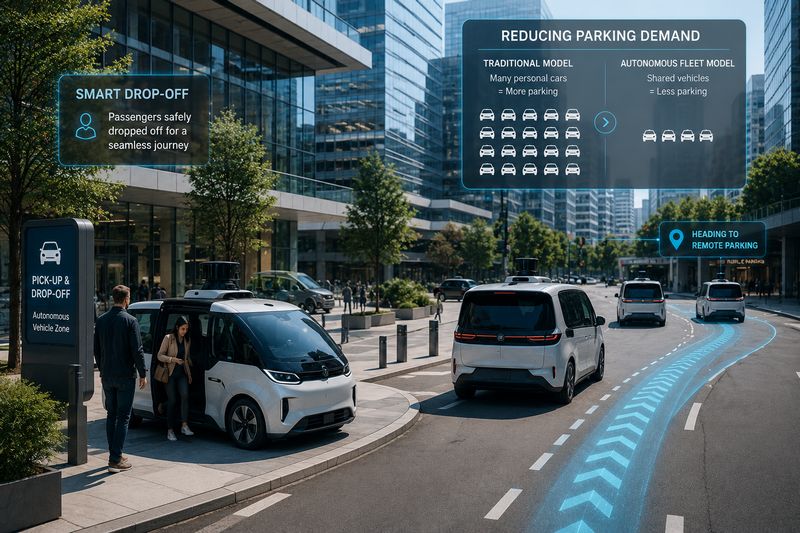
Over time, cities may be able to repurpose parking areas for more productive uses, creating additional space for development and community projects.
Smarter Urban Planning and Land Use
The reduction in parking requirements could have a major impact on urban planning. City planners constantly face challenges related to limited land availability, population growth, housing demand, and infrastructure expansion.
If fewer parking spaces are required, cities could gain greater flexibility in how land is used. Areas currently occupied by parking lots and garages could be converted into residential developments, commercial buildings, green spaces, or public facilities.
Autonomous vehicles may also influence street design. Roads could be redesigned to improve traffic flow, accommodate autonomous transportation services, and create safer environments for pedestrians and cyclists.
For example, cities might allocate more space to walking paths, bike lanes, and public gathering areas if fewer parking spaces and traffic lanes are needed. This could help improve quality of life while supporting more sustainable urban development.
Smarter land use could allow cities to grow more efficiently while making better use of limited urban space.
Improved Public Transportation Systems
Self-driving technology has the potential to enhance public transportation systems rather than replace them. Autonomous buses, shuttles, and transit vehicles could improve service reliability, reduce operating costs, and increase transportation accessibility.
Many public transit agencies struggle with labor shortages, budget constraints, and limited service coverage. Autonomous transit vehicles may help address some of these challenges by providing more flexible transportation options and reducing certain operational expenses.
For example, autonomous shuttles could transport passengers between residential neighborhoods and major transit stations. This could improve access to public transportation and make it easier for people to complete the first and last portions of their journeys.
Self-driving technology may also allow transit providers to offer more frequent service during periods of lower demand. Smaller autonomous vehicles could operate efficiently on routes that are not economically practical for traditional buses.
By improving connectivity and service flexibility, autonomous transportation systems may help strengthen public transit networks and encourage greater usage.
Better Integration With Smart Cities
Many cities are investing in smart infrastructure that uses technology and data to improve urban services. Self-driving cars could become an important part of these smart city ecosystems.
Connected transportation systems allow vehicles, traffic signals, road sensors, and communication networks to exchange information in real time. This data can be used to improve traffic management, reduce congestion, and enhance transportation efficiency.
For example, autonomous vehicles may receive information about traffic conditions, construction zones, weather hazards, and road closures before reaching those locations. Traffic management systems could adjust signal timing dynamically based on real-time traffic patterns.
Smart city infrastructure may also support emergency services by helping emergency vehicles move through traffic more efficiently. Connected transportation networks could automatically reroute nearby vehicles to create clear paths for first responders.
As cities continue adopting advanced technologies, autonomous vehicles may play a key role in creating more efficient and responsive urban transportation systems.
Filling Transportation Gaps in Public Transit
Even in cities with extensive public transportation systems, service gaps often exist. Certain neighborhoods may have limited transit access, while some areas experience reduced service during evenings, weekends, or low-demand periods.
These transportation gaps can make it difficult for residents to access jobs, healthcare, education, and other essential services. In many communities, individuals without access to a personal vehicle face significant mobility challenges.
Autonomous transportation services may help address these issues by providing flexible and cost-effective mobility solutions. Self-driving shuttles and ride-sharing vehicles could serve areas where traditional public transit is unavailable or financially difficult to operate.
For example, an autonomous shuttle could transport passengers from suburban neighborhoods to nearby train stations or bus terminals. Rural communities may benefit from on-demand transportation services that connect residents with healthcare providers, schools, and shopping centers.
By filling gaps in existing transportation networks, autonomous vehicles could help create more inclusive mobility systems that serve a broader range of communities.
How Are Businesses Using Autonomous Vehicles Today?
Although fully autonomous vehicles are still being developed and tested in many regions, businesses are already finding practical ways to use autonomous technology. Companies across transportation, logistics, retail, manufacturing, and technology sectors are investing heavily in automation to improve efficiency, reduce costs, and enhance customer experiences.
From self-driving delivery vehicles to autonomous freight transportation and warehouse robotics, many organizations view autonomous systems as a key part of the future of business operations. While adoption varies by industry and location, autonomous technologies are already moving beyond the testing phase and entering real-world commercial use.
These early applications provide valuable insights into how self-driving vehicles may reshape business operations in the coming years.
Contactless Delivery Services
One of the fastest-growing applications of autonomous technology is contactless delivery. Retailers, restaurants, grocery stores, and e-commerce companies are exploring autonomous delivery solutions to improve efficiency and meet growing consumer demand for fast and convenient service.
Autonomous delivery vehicles can transport packages, groceries, meals, and other products directly to customers without requiring a driver for every trip. Some companies are testing small self-driving robots that travel on sidewalks, while others are using autonomous vans that operate on public roads.
For consumers, these services can provide greater convenience and faster delivery times. Customers can receive orders at home, work, or designated pick-up locations with minimal human interaction.
Businesses benefit by reducing labor costs associated with last-mile delivery, which is often one of the most expensive parts of the supply chain. Autonomous delivery systems may also help companies operate more efficiently during periods of high demand.
As online shopping continues to grow, autonomous delivery services are expected to become an increasingly important part of the retail and logistics landscape.
Autonomous Taxi and Ride-Sharing Services
Several companies are actively developing autonomous ride-sharing services as an alternative to traditional taxis and rideshare platforms. These services use self-driving vehicles to transport passengers without requiring a human driver behind the wheel.
In certain cities, autonomous ride-sharing programs are already operating in limited areas. Passengers can request a ride through a mobile application, and an autonomous vehicle arrives to transport them to their destination.
For transportation providers, autonomous ride-sharing has the potential to reduce operating costs while increasing vehicle utilization. Vehicles can remain in service for longer periods and continuously transport passengers throughout the day.
Consumers may benefit from lower transportation costs, increased convenience, and improved mobility options. Autonomous ride-sharing services may also provide transportation access for individuals who cannot drive due to age, disability, or other limitations.
Although regulatory and technological challenges remain, autonomous ride-sharing is widely viewed as one of the most significant commercial applications of self-driving technology.
Self-Driving Trucks and Freight Transportation
The freight transportation industry is another sector experiencing significant interest in autonomous vehicle technology. Moving goods efficiently is critical to global supply chains, and transportation companies are constantly looking for ways to improve productivity and reduce costs.
Self-driving trucks have the potential to transform long-haul freight transportation. Autonomous systems can assist with highway driving, route optimization, fuel efficiency, and vehicle monitoring. Some companies are testing trucks capable of operating with minimal driver intervention during certain portions of a trip.
For logistics providers, autonomous trucking may help address driver shortages, improve delivery reliability, and reduce operating expenses. Long-distance freight routes that primarily involve highway driving are often viewed as particularly suitable for autonomous technology.
For example, self-driving trucks could transport goods between distribution centers, ports, and warehouses more efficiently while maintaining consistent driving performance. Autonomous systems may also improve fuel economy by optimizing speed and reducing unnecessary braking.
While fully driverless freight transportation is still developing, autonomous trucking is expected to play an increasingly important role in the future of logistics and supply chain management.
Warehouse and Industrial Automation Applications
Autonomous technology is not limited to public roads. Many businesses are already using autonomous systems inside warehouses, manufacturing facilities, and distribution centers.
Autonomous mobile robots can move inventory, transport materials, and assist with order fulfillment. These systems navigate warehouse environments independently, helping employees complete tasks more efficiently and reducing the need for manual transportation of goods.
In large fulfillment centers, autonomous robots often work alongside human employees to retrieve products, move inventory between storage areas, and prepare orders for shipment. This helps improve productivity while reducing operational bottlenecks.
Manufacturing facilities are also using autonomous vehicles to transport materials between production areas. These systems can operate continuously, follow predefined routes, and respond to changing production requirements in real time.
For businesses, warehouse automation can increase efficiency, improve inventory management, reduce labor-intensive tasks, and support faster order processing. As e-commerce continues to expand, demand for autonomous warehouse solutions is expected to grow significantly.
What Are the Advantages of Self-Driving Cars for Budget Buyers?
When people think about self-driving cars, they often imagine expensive new vehicles filled with cutting-edge technology. However, autonomous driving features are gradually becoming more common across the automotive market. As newer vehicles enter the market, many advanced safety and driver-assistance technologies eventually become available in used vehicles at much lower prices.
For budget-conscious buyers, self-driving technology may offer more than just convenience. Features designed to improve safety, reduce fuel consumption, and lower accident risks can also help reduce the overall cost of vehicle ownership. While fully autonomous vehicles are still relatively rare, many used vehicles already include technologies that provide some of the practical benefits associated with self-driving systems.
As the market evolves, buyers looking for affordable transportation may find increasing value in vehicles equipped with advanced driver assistance and autonomous driving features.
Potential Long-Term Savings on Transportation
One of the biggest concerns for budget buyers is the total cost of owning a vehicle. The purchase price is only part of the equation. Fuel costs, maintenance, repairs, insurance, and unexpected expenses can significantly increase the amount spent over time.
Many autonomous and semi-autonomous systems are designed to improve driving efficiency. Features such as adaptive cruise control, intelligent route planning, and traffic-aware driving assistance can help reduce unnecessary fuel consumption and vehicle wear.
For example, a driver who regularly commutes through heavy traffic may benefit from systems that maintain consistent speeds and reduce stop-and-go driving. Over several years, even modest fuel savings can add up to hundreds or thousands of dollars.
As autonomous technologies become more widespread, budget buyers may gain access to vehicles that help reduce operating costs without requiring the purchase of an expensive new model.
Lower Accident-Related Repair Costs
Vehicle repairs can be one of the most expensive aspects of ownership, especially after an accident. Even a minor collision can result in repair bills that quickly exceed a buyer's available budget.
Many self-driving technologies are designed specifically to help prevent accidents. Features such as automatic emergency braking, forward collision warning, lane departure alerts, blind-spot monitoring, and adaptive cruise control can reduce the likelihood of common driving mistakes.
For example, automatic emergency braking may help avoid a rear-end collision if traffic suddenly stops ahead. Blind-spot monitoring can alert drivers before changing lanes when another vehicle is difficult to see.
By reducing the frequency of accidents, these technologies may help owners avoid costly repairs, insurance deductibles, rental vehicle expenses, and time spent dealing with vehicle damage.
For buyers trying to keep ownership costs as low as possible, preventing even a single accident can generate substantial financial savings.
Better Fuel Efficiency Compared to Aggressive Human Driving
Driving habits have a significant impact on fuel consumption. Rapid acceleration, hard braking, speeding, and inconsistent speed control all increase fuel usage and place additional stress on vehicle components.
Autonomous and driver-assistance systems are designed to drive more efficiently than many human drivers. These systems maintain smoother acceleration, gradual braking, and more consistent speeds whenever possible.
For example, adaptive cruise control can automatically adjust vehicle speed based on traffic conditions while avoiding many of the inefficient driving behaviors that waste fuel. Some advanced systems can even anticipate traffic flow and adjust speed proactively.
For budget-conscious drivers who travel long distances or commute daily, improved fuel efficiency can generate meaningful savings over the life of the vehicle. Lower fuel consumption not only reduces operating expenses but may also contribute to lower maintenance costs due to reduced stress on brakes and drivetrain components.
Affordable Access to Advanced Safety Features Through Used Vehicles
One of the advantages of buying used vehicles is gaining access to premium technologies at a fraction of their original cost. Features that were once available only in luxury vehicles often become affordable after several years of depreciation.
Today, many used vehicles offer advanced safety technologies that were considered cutting-edge just a few years ago. Adaptive cruise control, lane-keeping assistance, automatic emergency braking, traffic sign recognition, and parking assistance systems are increasingly available in the used vehicle market.
For example, a buyer shopping for a five- or six-year-old vehicle may be able to purchase a model equipped with advanced driver-assistance systems for significantly less than the price of a new vehicle with similar features.
This creates an opportunity for budget buyers to benefit from technologies that improve safety and convenience without exceeding their financial limits. In many cases, purchasing a well-equipped used vehicle can provide better overall value than buying a new entry-level model.
Why Buyers Are Watching the Used Autonomous Vehicle Market
As self-driving technology continues to evolve, many buyers are paying close attention to the used autonomous vehicle market. Fully autonomous vehicles are still uncommon, but vehicles equipped with advanced driver-assistance systems are becoming increasingly available on the secondary market.
For budget-conscious shoppers, this trend creates opportunities to access newer technologies at more affordable prices. Buyers who previously could not afford advanced safety systems may soon find them available in used vehicles sold through dealerships, private sellers, and online auto auctions.
Some buyers are particularly interested in vehicles equipped with features such as highway driving assistance, adaptive cruise control, and semi-autonomous parking systems. These technologies can provide many practical benefits while remaining more affordable than the latest fully autonomous models.
As autonomous technology becomes more mainstream, the used market is expected to expand significantly. Budget buyers who monitor these developments may be able to purchase vehicles with advanced safety and convenience features while still maintaining a reasonable ownership budget.
What Challenges Still Limit Self-Driving Cars?
Despite the impressive progress made in autonomous vehicle technology, self-driving cars still face several important challenges. While many advanced driver-assistance systems are already available in modern vehicles, fully autonomous transportation remains a work in progress.
Engineers, automakers, technology companies, regulators, and transportation agencies continue working to address technical, legal, economic, and social obstacles that limit widespread adoption. Autonomous vehicles must operate safely in a wide variety of real-world situations, often under unpredictable conditions that can be difficult for even human drivers to handle.
Although self-driving technology has the potential to transform transportation, overcoming these challenges will be essential before fully autonomous vehicles become a common sight on roads around the world.
High Technology and Development Costs
One of the biggest barriers to widespread adoption is cost. Developing autonomous vehicle technology requires enormous investments in research, software development, testing, artificial intelligence, mapping systems, and sensor technology.
Self-driving vehicles rely on advanced hardware such as cameras, radar systems, LiDAR sensors, high-performance processors, and specialized communication equipment. These components can significantly increase vehicle production costs compared to traditional vehicles.
In addition to manufacturing expenses, companies must invest heavily in testing and validation. Autonomous systems require millions of miles of real-world driving data and countless simulated driving scenarios to ensure safe operation.
For consumers, these costs can translate into higher vehicle prices. Although technology generally becomes less expensive over time, many advanced autonomous features remain available primarily in higher-priced vehicles.
As production scales increase and technology continues to mature, costs are expected to decline. However, affordability remains a significant challenge in the near term.
Software Reliability and Cybersecurity Risks
Self-driving vehicles depend heavily on software. Every driving decision made by an autonomous system relies on complex algorithms that process enormous amounts of information in real time.
Even small software errors can create safety concerns. Autonomous systems must correctly identify road signs, pedestrians, vehicles, lane markings, and countless other objects under a wide range of conditions. Unexpected situations can sometimes challenge even the most advanced software.
For example, unusual road layouts, construction zones, temporary traffic controls, or rare driving scenarios may create situations that are difficult for autonomous systems to interpret correctly.
Cybersecurity presents another important concern. Connected vehicles communicate with software systems, cloud platforms, navigation services, and sometimes other vehicles. This connectivity creates potential opportunities for cyberattacks if security measures are inadequate.
Manufacturers invest heavily in cybersecurity protections, software updates, and system monitoring to reduce these risks. However, maintaining secure and reliable autonomous systems remains a major priority for the industry.
Difficulties in Severe Weather Conditions
Driving in severe weather remains one of the most challenging environments for autonomous vehicles. Rain, snow, fog, ice, and dust storms can reduce visibility and interfere with sensors that self-driving systems depend on to understand their surroundings.
For example, heavy snowfall may cover lane markings and road signs, making them difficult for cameras to detect. Dense fog can reduce the effectiveness of certain sensors, while rain may create visibility issues that complicate object recognition.
Human drivers often rely on experience, judgment, and context when navigating challenging weather conditions. Replicating this adaptability through software remains a difficult task.
Autonomous systems continue to improve through better sensors, more advanced artificial intelligence, and improved data processing capabilities. However, severe weather remains an area where many self-driving systems still face limitations.
As a result, some autonomous vehicles currently restrict certain self-driving functions when weather conditions become unfavorable.
Public Trust and Adoption Concerns
Technology alone is not enough to guarantee widespread adoption. Public confidence plays a critical role in determining how quickly self-driving vehicles become accepted.
Many people remain cautious about trusting a computer to control a vehicle. High-profile accidents involving autonomous systems have raised concerns about safety, reliability, and accountability.
For some drivers, giving up direct control of a vehicle can feel uncomfortable, especially in situations involving high speeds, complex traffic patterns, or unpredictable road conditions.
Consumers often want reassurance that autonomous systems can handle emergencies safely and consistently. Building that trust requires extensive testing, transparent communication, and demonstrated safety performance over long periods of time.
Public perception can also vary by region, age group, and personal experience with technology. Some individuals are eager to adopt autonomous vehicles, while others prefer traditional driving and remain skeptical about automation.
Increasing public confidence will likely be a gradual process that depends on continued technological improvements and successful real-world deployment.
Infrastructure Limitations
Road infrastructure in many areas was designed for human drivers, not autonomous vehicles. While self-driving systems are built to operate on existing roads, certain infrastructure limitations can make autonomous driving more challenging.
Poorly maintained road markings, faded lane lines, inconsistent traffic signs, and outdated road designs can create difficulties for autonomous systems that rely on visual cues to navigate safely.
Construction zones present another challenge. Temporary lane changes, altered traffic patterns, and unexpected obstacles often require rapid adaptation that may be difficult for some autonomous systems.
In addition, connected transportation networks that support vehicle-to-vehicle and vehicle-to-infrastructure communication are still being developed in many regions. These technologies could significantly improve autonomous vehicle performance but require substantial infrastructure investments.
For example, smart traffic signals, connected road sensors, and real-time communication systems may help autonomous vehicles operate more efficiently and safely. However, widespread deployment of this infrastructure will take time and significant financial resources.
As governments and transportation agencies continue modernizing infrastructure, autonomous vehicles are expected to benefit from better road conditions and improved connectivity. Until then, infrastructure limitations remain an important challenge for the future of self-driving transportation.
What Legal and Ethical Concerns Exist Around Autonomous Vehicles?
As self-driving technology continues to advance, it raises important legal and ethical questions that extend beyond engineering and vehicle performance. Autonomous vehicles have the potential to improve transportation, but they also challenge existing laws, regulations, and societal expectations regarding responsibility, safety, and privacy.
Traditional traffic laws were created with human drivers in mind. When a vehicle begins making decisions independently, questions arise about who is responsible for those decisions and how governments should regulate autonomous systems. In addition, autonomous vehicles rely heavily on data collection and artificial intelligence, creating concerns about privacy, cybersecurity, and ethical decision-making.
Addressing these issues will be essential for building public trust and ensuring that autonomous vehicles can operate safely and fairly within society.
Current Laws and Regulations for Self-Driving Cars
One of the biggest challenges facing autonomous vehicles is the lack of consistent regulations across different regions and countries. Governments are still working to determine how self-driving vehicles should be tested, certified, and operated on public roads.
In many areas, autonomous vehicle testing is permitted only under specific conditions. Some jurisdictions require a human safety driver to remain in the vehicle, while others allow limited operation without direct human supervision. Rules regarding data reporting, safety standards, and operational restrictions also vary significantly.
This regulatory uncertainty can slow the deployment of autonomous technology. Manufacturers and technology companies must ensure their vehicles comply with a wide range of legal requirements that may differ from one location to another.
Governments face the challenge of balancing innovation with public safety. Regulations must encourage technological progress while ensuring autonomous vehicles meet strict safety standards before widespread deployment.
As self-driving technology becomes more common, lawmakers will likely continue updating regulations to address new situations and technological developments.
Liability After Autonomous Vehicle Accidents
Determining responsibility after an accident involving an autonomous vehicle is one of the most complex legal issues facing the industry.
In a traditional accident, liability is often assigned to a driver whose actions contributed to the collision. However, when a vehicle is partially or fully controlling itself, responsibility may not be as straightforward.
Several parties could potentially share liability, including:
- The vehicle owner
- The driver or safety operator
- The vehicle manufacturer
- The software developer
- Component suppliers
- Maintenance providers
For example, if an autonomous vehicle fails to recognize a hazard because of a software malfunction, questions may arise regarding whether the manufacturer or software developer should be held responsible. If a vehicle owner ignores maintenance requirements or misuses the system, responsibility may fall elsewhere.
Insurance companies, regulators, and legal experts are actively exploring new frameworks for handling liability in autonomous vehicle accidents. Establishing clear rules will be critical for protecting consumers and providing certainty for manufacturers.
As autonomous systems become more capable, legal responsibility may gradually shift away from individual drivers and toward the companies responsible for designing and maintaining the technology.
Ethical Dilemmas in AI Decision-Making
Autonomous vehicles rely on artificial intelligence to make driving decisions in real time. While most situations involve routine tasks such as maintaining speed and staying within lanes, rare emergency scenarios can raise difficult ethical questions.
For example, an autonomous system may encounter a situation where an accident cannot be completely avoided. The vehicle may need to choose between multiple actions, each carrying different risks for passengers, pedestrians, cyclists, or other drivers.
These scenarios are often discussed as ethical dilemmas because they require balancing competing safety outcomes. Determining how an AI system should respond in such situations is far from simple.
Unlike human drivers, autonomous systems follow programmed rules and decision-making frameworks. Developers must determine how these systems prioritize safety, evaluate risks, and respond to emergencies.
Different people may have different opinions about what the "correct" decision should be in a given scenario. This makes creating universally accepted ethical guidelines particularly challenging.
Although such situations are rare, they highlight the broader question of how artificial intelligence should make decisions that affect human lives. Ongoing discussions among engineers, policymakers, ethicists, and legal experts continue to shape the development of these systems.
Data Privacy and Security Concerns
Self-driving cars generate and process enormous amounts of data. Cameras, sensors, GPS systems, navigation software, and connected services continuously collect information about vehicle operation and surrounding environments.
This data is essential for autonomous driving. It helps vehicles navigate roads, improve safety, receive software updates, and enhance system performance. However, extensive data collection also raises important privacy concerns.
Consumers may wonder how their information is stored, who has access to it, and how it may be used. Location histories, travel patterns, vehicle usage data, and other personal information could potentially be sensitive if not handled properly.
Cybersecurity is another major concern. Because autonomous vehicles rely on software and network connectivity, they may become targets for cyberattacks if adequate protections are not in place. Unauthorized access to vehicle systems could create safety risks and compromise user privacy.
To address these concerns, manufacturers invest heavily in encryption, secure communications, software validation, and regular security updates. Governments are also developing regulations designed to protect consumer data and establish cybersecurity standards for connected vehicles.
As autonomous technology evolves, maintaining strong privacy protections and cybersecurity safeguards will be essential for ensuring public confidence and long-term adoption.
Are Self-Driving Cars Fully Autonomous Yet?
Self-driving technology has advanced rapidly over the past decade, but fully autonomous vehicles are not yet widely available for everyday use. While many modern vehicles offer sophisticated driver-assistance systems that can automate certain driving tasks, most still require a human driver to supervise the vehicle and remain ready to take control when necessary.
This distinction is important because the term "self-driving" is often used broadly to describe technologies with very different capabilities. Some vehicles can assist with steering, braking, and acceleration under specific conditions, while true full autonomy would allow a vehicle to operate safely without any human intervention in virtually all environments.
Although the industry has made significant progress, several technological, legal, and infrastructure challenges must still be addressed before fully autonomous vehicles become common on public roads.
Why Most Vehicles Still Require Human Supervision
Most autonomous systems currently available to consumers operate at Level 2 or, in limited cases, Level 3 automation. These systems can assist with driving tasks but are not capable of handling every situation independently.
Roads present countless unpredictable scenarios that autonomous systems must interpret correctly. Construction zones, unusual traffic patterns, emergency vehicles, poor weather conditions, pedestrians behaving unexpectedly, and temporary road changes can create situations that remain difficult for even advanced software to manage perfectly.
Because of these limitations, most self-driving systems require a human driver to remain attentive and prepared to intervene if necessary. Even when a vehicle is controlling speed and steering, the driver is often legally responsible for monitoring the environment and responding when the system reaches its operational limits.
For example, many vehicles equipped with advanced highway-driving assistance can manage routine highway travel, but they may still require the driver to take control when exiting the highway, navigating complex urban environments, or encountering unusual road conditions.
Until autonomous systems can consistently handle a broader range of real-world situations without human assistance, supervision will remain an important safety requirement.
The Difference Between Driver Assistance and Full Autonomy
Many people assume that advanced driver-assistance features automatically mean a vehicle is fully autonomous. In reality, there is a significant difference between driver assistance and full self-driving capability.
Driver-assistance systems are designed to help human drivers. Features such as adaptive cruise control, lane-keeping assistance, automatic emergency braking, and traffic jam assistance can improve safety and convenience, but they do not eliminate the driver's responsibility.
These systems perform specific tasks while relying on the driver to remain engaged and aware of surrounding conditions. The vehicle may assist with steering and speed control, but the driver must still supervise the system and make critical decisions when necessary.
Full autonomy, often associated with Level 5 automation, represents a much higher level of capability. A fully autonomous vehicle would be able to operate under all normal driving conditions without requiring any human input. Passengers would simply enter a destination and allow the vehicle to complete the journey independently.
Currently, no consumer vehicle available to the general public offers unrestricted Level 5 autonomy. Most vehicles marketed with self-driving features remain advanced driver-assistance systems rather than fully autonomous vehicles.
Understanding this distinction helps consumers set realistic expectations about what current technology can and cannot do.
Which Companies Are Leading Autonomous Vehicle Development?
A wide range of automotive manufacturers and technology companies are investing heavily in autonomous vehicle research and development. Competition within the industry is intense because many organizations view autonomous transportation as a major part of the future mobility market.
Traditional automakers such as Tesla, General Motors, Ford Motor Company, and Mercedes-Benz have developed advanced driver-assistance systems and continue investing in autonomous technologies.
Technology-focused companies are also playing a major role. Organizations such as Waymo, NVIDIA, and Mobileye are developing software, artificial intelligence platforms, sensors, and autonomous driving systems.
Some companies focus on autonomous ride-sharing services, while others prioritize freight transportation, logistics, or personal vehicle applications. Several autonomous taxi services are already operating in selected cities, providing valuable real-world testing opportunities.
The diversity of companies involved highlights the complexity of autonomous vehicle development. Success requires expertise in software engineering, artificial intelligence, automotive manufacturing, mapping, cybersecurity, and transportation infrastructure.
How Autonomous Technology Is Expected to Evolve
Although fully autonomous vehicles are not yet commonplace, experts expect self-driving technology to continue improving steadily over the coming years. Advances in artificial intelligence, computing power, sensor technology, and connectivity are helping autonomous systems become more capable and reliable.
In the near term, consumers are likely to see continued improvements in driver-assistance features. Vehicles may become better at handling highway driving, traffic congestion, parking, and other routine driving tasks. These improvements will gradually reduce the amount of driver involvement required in specific situations.
Autonomous ride-sharing services and commercial transportation applications are also expected to expand. Many experts believe that controlled environments such as delivery routes, dedicated transit corridors, and specific urban service areas will see increased autonomous operations before fully unrestricted self-driving becomes common.
Longer term, advances in vehicle-to-vehicle communication, smart infrastructure, high-definition mapping, and machine learning could help autonomous systems operate safely in more complex environments. As technology improves and regulatory frameworks evolve, higher levels of automation may become increasingly practical.
For consumers, the transition to full autonomy will likely happen gradually rather than overnight. New vehicles will continue adding more sophisticated automation features year after year, creating a step-by-step path toward increasingly autonomous transportation.
What Does the Future of Self-Driving Cars Look Like?
The future of self-driving cars is one of the most discussed topics in the automotive and technology industries. While fully autonomous vehicles are not yet a standard part of everyday transportation, rapid advances in artificial intelligence, sensor technology, connectivity, and computing power continue to move the industry forward.
Many experts believe autonomous vehicles will gradually become more capable and more common over the coming decades. Rather than replacing traditional transportation overnight, self-driving technology is expected to evolve through a series of incremental improvements that expand vehicle capabilities and increase public confidence.
The future may include connected transportation networks, smarter cities, autonomous delivery services, advanced public transit systems, and new mobility solutions that make transportation safer, more efficient, and more accessible for millions of people.
Expansion of Autonomous Transportation Networks
One of the most significant developments expected in the future is the growth of autonomous transportation networks. Instead of relying solely on privately owned self-driving vehicles, many communities may adopt shared autonomous transportation services.
Autonomous ride-sharing fleets could provide on-demand transportation similar to today's rideshare services but without requiring human drivers. Passengers would simply request a vehicle through a mobile application and be transported to their destination by an autonomous system.
These networks could reduce the need for personal vehicle ownership in some urban areas. Instead of purchasing, insuring, and maintaining a vehicle, consumers may choose to use autonomous transportation only when needed.
Businesses are also expected to expand autonomous delivery and freight networks. Self-driving vehicles could move goods between warehouses, distribution centers, retail locations, and customers with greater efficiency and flexibility.
As these transportation networks grow, they may help improve mobility while reducing traffic congestion, parking demand, and transportation costs.
Growth of Smart Infrastructure and Connected Roads
Future autonomous vehicles are expected to operate alongside increasingly sophisticated transportation infrastructure. Roads, traffic signals, communication systems, and transportation networks may become more connected and intelligent over time.
Connected infrastructure allows vehicles to exchange information with traffic management systems and other road users. This communication can provide real-time updates about accidents, traffic congestion, construction zones, weather conditions, and road hazards.
For example, a self-driving vehicle approaching an intersection may receive information about traffic signal timing before the light becomes visible. Road sensors could provide warnings about icy pavement, construction activity, or obstacles ahead.
Smart infrastructure may also improve traffic management. Traffic signals could automatically adjust based on real-time vehicle movement, helping reduce congestion and improve traffic flow.
As cities invest in connected transportation technologies, autonomous vehicles may benefit from safer and more efficient operating environments. The combination of smart infrastructure and autonomous vehicles could significantly improve the overall performance of transportation systems.
Increasing Adoption of Electric Autonomous Vehicles
Many industry experts expect electric vehicles and autonomous technology to develop together. Both technologies focus on improving efficiency, reducing operating costs, and modernizing transportation.
Electric vehicles provide an ideal platform for autonomous systems because they rely heavily on advanced electronics, software integration, and digital controls. As battery technology improves and charging infrastructure expands, electric autonomous vehicles are expected to become increasingly common.
Several companies are already developing autonomous vehicles specifically designed as electric platforms. Future autonomous ride-sharing fleets, delivery vehicles, and public transportation systems may operate primarily using electric power.
This combination offers several potential benefits. Electric autonomous vehicles may reduce greenhouse gas emissions, lower fuel costs, decrease maintenance requirements, and support sustainability goals.
For consumers, the future may involve transportation systems that are both highly automated and environmentally friendly. As costs decline and technology improves, electric autonomous vehicles could become more accessible to a wider range of buyers.
How Self-Driving Technology Could Transform Daily Life
The long-term impact of autonomous vehicles may extend far beyond transportation itself. Self-driving technology has the potential to influence how people live, work, travel, and interact with their communities.
Daily commutes may become less stressful as vehicles handle routine driving tasks. Travel time could be used for work, relaxation, entertainment, or personal activities rather than focusing entirely on driving.
Families may benefit from more flexible transportation options. Elderly individuals, people with disabilities, and those who do not drive could gain greater independence and mobility through autonomous transportation services.
Businesses may experience improved productivity as employees use travel time more efficiently. Logistics and delivery companies could provide faster and more reliable services through autonomous transportation networks.
Cities may also change significantly. Reduced parking requirements, smarter traffic management systems, and improved transportation accessibility could influence urban design and land use. Areas currently devoted to parking infrastructure may be transformed into housing, parks, commercial developments, or public spaces.
For budget-conscious consumers, the future used vehicle market may eventually offer affordable access to advanced autonomous technologies that are currently available only in newer models. Just as features such as backup cameras and adaptive cruise control became more accessible over time, many self-driving capabilities may gradually become available across a broader range of vehicles.
Are Self-Driving Cars Worth It for Everyday Drivers?
As self-driving technology becomes more advanced and widely available, many consumers are asking a simple question: are self-driving cars actually worth it? The answer depends on a driver's needs, budget, daily routine, and comfort level with new technology.
For some people, autonomous features can provide meaningful benefits such as improved safety, reduced stress, and greater convenience. For others, concerns about cost, reliability, and limited real-world autonomy may outweigh the advantages for now.
The reality is that most vehicles currently available are not fully autonomous. However, many modern cars already include advanced driver-assistance systems that offer some of the practical benefits associated with self-driving technology. As these features become more common and affordable, they are likely to play a growing role in everyday transportation.
Key Benefits for Families and Commuters
Families and daily commuters are among the groups most likely to benefit from self-driving technology. Long commutes, heavy traffic, school drop-offs, and daily errands can consume a significant amount of time and create considerable stress.
Advanced driver-assistance features can make these routines easier and safer. Adaptive cruise control helps maintain safe following distances in traffic, while lane-centering systems reduce the effort required during long highway drives. Automatic emergency braking and collision warning systems provide additional protection in unexpected situations.
For families, these technologies can add an extra layer of safety when transporting children and other passengers. Parents often appreciate features that help monitor blind spots, assist with parking, and reduce the risk of accidents in crowded areas.
Commuters may also benefit from reduced driving fatigue. Spending an hour or more each day in traffic can be mentally exhausting. Semi-autonomous driving systems can help manage repetitive driving tasks, making daily travel less stressful.
Over time, these convenience and safety benefits can improve the overall driving experience and make transportation more manageable for busy households.
Potential Downsides Buyers Should Consider
Despite their advantages, self-driving technologies also come with limitations that buyers should carefully evaluate before making a purchase.
One of the biggest concerns is cost. Vehicles equipped with advanced autonomous features often carry higher purchase prices than comparable models without those technologies. Repairs can also be more expensive because cameras, sensors, radar systems, and other specialized components may require calibration or replacement after accidents.
Technology limitations are another important factor. Many systems work well under ideal conditions but may struggle in severe weather, poorly marked roads, or complex traffic situations. Drivers must understand that most current systems still require human supervision.
Some consumers may also feel uncomfortable relying heavily on software to perform driving tasks. Trust in autonomous technology varies widely, and not everyone is ready to hand over control to a computer, even partially.
In addition, software updates, cybersecurity concerns, and evolving regulations can create uncertainties about how autonomous systems will function over the long term.
For budget-conscious buyers, it is important to weigh these potential drawbacks against the expected benefits and determine whether the added technology provides sufficient value.
Who May Benefit Most From Autonomous Vehicles
While self-driving technology can benefit many drivers, some groups may gain more value than others.
Frequent commuters are often among the biggest beneficiaries. Drivers who spend long hours in traffic can appreciate systems that reduce fatigue and help manage repetitive driving tasks.
Older adults may also benefit from advanced safety technologies. Features such as automatic emergency braking, lane-keeping assistance, and parking assistance can help compensate for some age-related driving challenges while supporting independence.
People who regularly travel long distances may find autonomous driving features especially useful on highways. Systems that assist with speed control, lane positioning, and traffic monitoring can make extended trips more comfortable and less stressful.
Families often value the added safety features available in many vehicles equipped with autonomous technology. These systems can help reduce accident risks and provide greater peace of mind when transporting passengers.
For budget buyers, the greatest value may come from purchasing used vehicles that already include advanced driver-assistance features. This allows consumers to access newer technologies without paying the premium associated with brand-new vehicles.
What to Expect From Future Used Self-Driving Cars
One of the most interesting developments for budget-conscious buyers is the future growth of the used autonomous vehicle market. Historically, advanced automotive technologies often begin in luxury vehicles before becoming available in more affordable models over time.
Features such as backup cameras, adaptive cruise control, blind-spot monitoring, and automatic emergency braking followed this pattern. What was once expensive and exclusive eventually became common across many vehicle segments.
A similar trend is expected for autonomous driving technologies. As newer vehicles introduce increasingly advanced systems, many of today's self-driving features will eventually enter the used vehicle market at significantly lower prices.
For example, a buyer shopping for a used vehicle five to ten years from now may find models equipped with sophisticated highway-driving assistance, advanced parking systems, and enhanced safety technologies that are currently available only in newer vehicles.
This could create valuable opportunities for budget-conscious consumers. Rather than paying a premium for the latest autonomous vehicle, buyers may be able to purchase a well-maintained used vehicle that offers many of the same practical benefits at a fraction of the original cost.
For readers interested in saving money on vehicle ownership, this is particularly important. As autonomous technology becomes more common, online auto auctions and used vehicle marketplaces may provide affordable access to vehicles equipped with advanced safety and driver-assistance features.
Final Thoughts on the Advantages of Self-Driving Cars
Self-driving cars represent one of the most significant technological developments in the history of transportation. What once seemed like science fiction is gradually becoming reality as automakers and technology companies continue improving autonomous systems and introducing new features to everyday vehicles.
The potential advantages are substantial. Autonomous vehicles may help reduce traffic accidents caused by human error, improve transportation efficiency, lower fuel consumption, reduce congestion, and make mobility more accessible for millions of people. Families, commuters, businesses, elderly individuals, and people with disabilities could all benefit from safer and more convenient transportation options.
For businesses, self-driving technology may improve productivity, streamline logistics operations, and create new opportunities across transportation, delivery, and mobility services. Cities may benefit from smarter traffic management, improved public transportation systems, and more efficient use of valuable urban space.
At the same time, autonomous vehicles are not without challenges. High development costs, cybersecurity concerns, legal questions, infrastructure requirements, and public trust issues still need to be addressed before fully autonomous transportation becomes widespread. Today's vehicles remain largely dependent on human supervision, and true Level 5 autonomy is still a long-term goal rather than a current reality.
For everyday drivers, the most immediate benefits often come from advanced driver-assistance systems already available in many modern vehicles. Features such as adaptive cruise control, automatic emergency braking, lane-keeping assistance, and parking technologies provide many of the safety and convenience advantages associated with autonomous driving.
For budget-conscious buyers, the future may be particularly promising. As autonomous technologies become more common, many advanced features are expected to enter the used vehicle market. Just as backup cameras and blind-spot monitoring became affordable over time, self-driving capabilities will likely become available in a wider range of used vehicles at more accessible price points.
For example, a buyer searching for a vehicle through online auto auctions may eventually find affordable used models equipped with sophisticated driver-assistance systems that improve safety and reduce ownership costs. This could allow more consumers to benefit from advanced technology without paying the premium associated with purchasing a brand-new vehicle.
The transition to fully autonomous transportation will not happen overnight. Instead, it will occur through gradual improvements that make vehicles smarter, safer, and more capable year after year. As technology continues to evolve, autonomous driving features are likely to become a standard part of everyday transportation rather than a luxury available only to a limited group of drivers.
Ultimately, the future of self-driving cars is not just about removing the driver from the vehicle. It is about creating safer roads, improving mobility, increasing transportation efficiency, and giving people more freedom in how they travel. While challenges remain, the advantages of self-driving cars suggest that autonomous technology will play an increasingly important role in shaping the future of transportation.
Explore Auction Vehicles With Advanced Safety Features
As autonomous and driver-assistance technologies become more common, buyers can find increasingly affordable vehicles equipped with premium safety systems. Auto4Export gives you direct access to auction inventory across the United States, helping you save money while finding the right vehicle for your needs.
- ✅ Access over 300,000 auction vehicles
- ✅ Buy clean title and salvage vehicles
- ✅ Professional export and logistics support
- ✅ Fixed pricing with no hidden fees
Further Reading
Driver Assistance Technology and Safety Features for Parking, Backing, Lane, and Side
Car Safety Pt.1: Safety Features that Prevent Forward Collision
Software-Defined Vehicle (SDV): What It Is and Why It Matters for Modern Car Buyers
Electronic Stability Control: Must-Have Safety Feature for Cars

Do You Have Any Questions?
 Ask Question