


 Войти
Войти Зарегистрироваться





Аукционы без резервной цены могут помочь покупателям сэкономить тысячи долларов на подержанных и аварийных автомобилях, но многие начинающие участники торгов не до конца понимают, как они работают. В этом руководстве объясняются резервные цены, объявления о продаже без резервной цены, стратегии торгов, риски аукциона и как избежать переплаты на онлайн-автомобильных аукционах. Узнайте, как работают аукционы без резервной цены, прежде чем делать свою следующую ставку.
Что означает «отсутствие резервной цены» на аукционе?
Аукционы без резервной цены — один из самых популярных форматов в индустрии онлайн-автомобильных аукционов. Многие покупатели специально ищут объявления о продаже автомобилей без резервной цены, потому что они предоставляют реальную возможность приобрести транспортные средства по конкурентоспособным ценам без скрытых гарантий продавца.
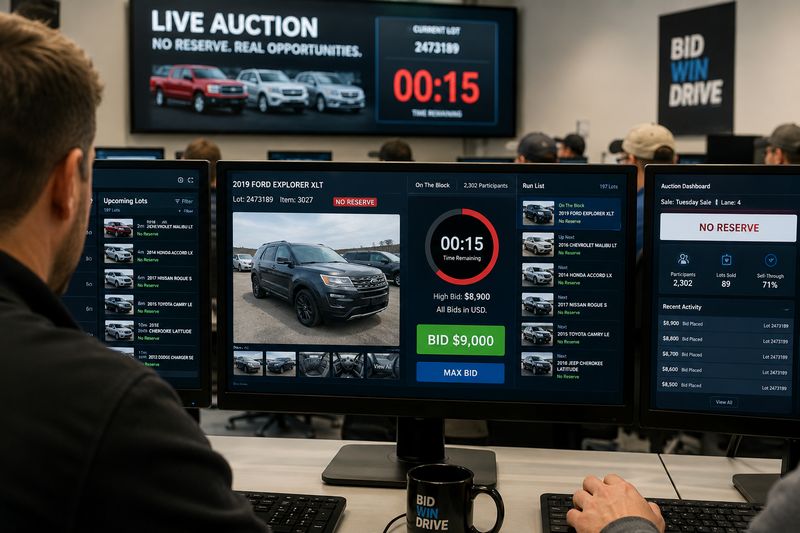
Для покупателей с ограниченным бюджетом крайне важно понимать, как работают аукционы без минимальной цены, прежде чем делать ставки. Такие аукционы могут предоставить отличные возможности для экономии средств, но они также проходят быстро и привлекают большую конкуренцию.
Знание разницы между аукционами с резервной ценой и без резервной цены помогает покупателям разрабатывать более продуманные стратегии торгов и избегать дорогостоящих ошибок.
Определение аукциона без резервной цены
Аукцион без минимальной цены означает, что продавец обязуется продать автомобиль тому, кто предложит наивысшую цену, независимо от окончательной стоимости.
Нет никаких скрытых минимальных цен, которые должны быть достигнуты до официального оформления продажи.
Если начальная цена торгов:
- 100 долларов
- 500 долларов
- 1000 долларов
Даже если окончательная цена окажется ниже ожидаемой, автомобиль все равно будет продан тому, кто предложит самую высокую цену.
Например, если на автомобиль, выставленный на продажу без резервной цены, поступает самая высокая ставка в размере 4500 долларов, продавец не может отказаться от продажи только потому, что рассчитывал получить 6000 долларов.
Это создает условия, гарантирующие продажу.
Покупатели часто предпочитают аукционы без минимальной цены, потому что знают, что продавец не сможет внезапно отказаться от выигрышной ставки после окончания аукциона.
Как работают аукционы без минимальной цены
Аукционы без минимальной цены работают аналогично традиционным аукционам, но без цены, гарантирующей защиту продавца.
Обычно этот процесс включает в себя:
- Список транспортных средств
- Размещение стартового предложения
- Конкурентные торги в режиме реального времени
- Автомобиль достанется тому, кто предложит самую высокую цену.
В ходе аукциона покупатели делают ставки друг на друга до истечения времени аукциона.
После окончания аукциона:
- Побеждает тот, кто предложит самую высокую цену.
- Сделка становится обязательной.
- Начинается оплата и получение автомобиля.
В отличие от аукционов с установленной минимальной ценой, продавец не ждет утверждения окончательной цены после завершения торгов.
Например, если в торгах участвуют только два участника, и итоговая ставка остается относительно низкой, автомобиль все равно будет продан.
Такой формат вызывает ажиотаж, потому что покупатели знают, что каждая ставка имеет немедленное значение.
Почему продавцы выбирают аукционы без минимальной цены
На первый взгляд, аукционы без минимальной цены могут показаться рискованными для продавцов, поскольку не гарантируется минимальная цена.
Однако многие продавцы по-прежнему предпочитают этот формат по ряду причин.
Аукционы без минимальной цены часто выгодны продавцам:
- Продавайте автомобили быстрее
- Привлечь больше участников торгов
- Повысить видимость аукциона
- Избегайте нераспроданных товаров.
- Улучшение денежного потока
Многие дилеры, компании по прокату автомобилей и страховые компании предпочитают быструю оборачиваемость запасов, а не длительное хранение транспортных средств.
Например, страховая компания, продающая поврежденный автомобиль, может отдавать приоритет быстрой реализации, а не максимизации прибыли с каждого доллара.
Объявления без минимальной цены также привлекают больше внимания покупателей, поскольку участники торгов чувствуют, что у них есть реальная возможность выиграть автомобиль.
Такое более широкое участие в торгах порой приводит к неожиданно высокому росту цен за счет конкурентной борьбы.
Почему покупатели любят аукционы без минимальной цены
Покупатели часто предпочитают аукционы без минимальной цены, потому что этот процесс кажется более прозрачным и справедливым.
На аукционах с резервной ценой покупатели могут потратить время на торги, только чтобы обнаружить, что продавец отказывается от окончательного предложения.
Аукционы без минимальной цены устраняют эту неопределенность.
К преимуществам для покупателей относятся:
- Гарантированная продажа тому, кто предложит наивысшую цену.
- Прозрачная среда торгов
- Меньше скрытого контроля со стороны продавца.
- Потенциальные возможности для выгодных сделок
- Упрощенное планирование стратегии торгов
Например, покупатель с ограниченным бюджетом, ищущий подлежащую ремонту Toyota Corolla, может чувствовать себя увереннее, делая агрессивные ставки на аукционе без минимальной цены, поскольку нет скрытой минимальной цены, препятствующей продаже.
Покупатели также ценят то, что продавец не может вести отдельные переговоры после окончания аукциона.
Это обеспечивает более удобный и быстрый процесс покупки.
Аукционы без минимальной цены против традиционных аукционов
Главное отличие аукционов без резервной цены от традиционных аукционов с резервной ценой заключается в контроле со стороны продавца.
На аукционе с резервной ценой:
- Продавец устанавливает скрытую минимальную цену.
- Автомобиль будет продан только в том случае, если ставки достигнут указанной суммы.
- Продавец может отклонить предложение, набравшее наивысшую цену.
На аукционе без минимальной цены:
- Скрытого минимального порога не существует.
- Победителем автоматически становится тот, кто предложит самую высокую цену.
- Продавец не может отказаться от сделки впоследствии.
Аукционы с резервной ценой защищают продавцов от продажи по слишком низкой цене, в то время как аукционы без резервной цены отдают приоритет гарантированной продаже и более быстрым сделкам.
Для покупателей аукционы с резервной ценой иногда могут вызывать разочарование, потому что:
- Победившие заявки могут быть отклонены.
- Переговоры могут продолжиться и после этого.
- Окончательное одобрение продажи пока неясно.
Аукционы без минимальной цены обычно кажутся более простыми и прозрачными.
Почему аукционы без минимальной цены распространены на автомобильных аукционах
Аукционы без минимальной цены чрезвычайно распространены в автомобильной промышленности, поскольку автомобили являются высоколиквидными активами с постоянным спросом со стороны покупателей.
На онлайн-автоаукционах ежедневно продаются тысячи автомобилей, в том числе:
- подержанные автомобили
- Утилизированные транспортные средства
- Обмен автомобилей у дилера
- арендованный автопарк
- Конфискованные транспортные средства
Продавцы часто отдают приоритет скорости и оборачиваемости запасов, а не длительному хранению автомобилей по немного более высоким ценам.
Что такое резервная цена на аукционе?
Резервная цена — одно из важнейших понятий, которое покупатели должны понимать, прежде чем участвовать в онлайн-автомобильных аукционах. Многие участники, делающие ставки впервые, приходят в замешательство, когда, предложив самую высокую цену, всё равно не выигрывают автомобиль.
Обычно это происходит потому, что резервная цена не была достигнута.
Для покупателей с ограниченным бюджетом понимание резервной цены помогает избежать разочарования и улучшить стратегию торгов на автомобильных аукционах, как в очном, так и в онлайн-формате.
Знание того, как работают резервные цены, также помогает покупателям оценить, насколько реалистична оценка продавцом стоимости автомобиля, прежде чем тратить время на активные торги.
Определение резервной цены
Резервная цена — это минимальная сумма, которую продавец готов получить за автомобиль на аукционе.
Если ставки не достигают минимальной суммы, продавец может отклонить сделку, даже если формально один из участников торгов предложил самую высокую цену.
Например:
- Начальная ставка на автомобиль может составлять 1000 долларов.
- Зарезервированная продавцом цена может тайно составлять 7500 долларов.
- Если торги остановятся на отметке в 6800 долларов, продавец может отказаться от сделки.
Это означает, что одной лишь самой высокой ставки недостаточно, чтобы гарантировать покупателю победу в аукционе.
В аукционной индустрии, в том числе и в следующих областях, минимальные цены являются распространенной практикой:
- Автомобильные аукционы
- Аукционы классических автомобилей
- аукционы оборудования
- Художественные аукционы
Они помогают продавцам избежать продажи ценных активов по слишком низкой цене.
How Reserve Prices Protect Sellers
Reserve prices mainly exist to protect sellers from weak market conditions or low bidding activity.
Without reserve protection, sellers risk losing money if:
- Buyer participation is low
- Market demand drops suddenly
- The auction occurs during slow seasons
- Vehicle pricing fluctuates unexpectedly
For example, a dealer selling a low-mileage Toyota Tacoma may not want the truck sold far below market value simply because few bidders participated that day.
Reserve pricing gives sellers more control over minimum acceptable value.
This is especially important for:
- Expensive vehicles
- Luxury cars
- Rare models
- Low-mileage inventory
- Clean-title vehicles
Insurance companies, dealerships, and wholesalers often use reserve pricing to reduce financial risk during auctions.
Public Reserve vs Hidden Reserve
Reserve prices may be either public or hidden depending on the auction platform.
A public reserve means buyers know the minimum required amount upfront.
For example, the listing may clearly state:
- “Reserve: $8,000”
This creates transparency because buyers understand exactly what number must be reached.
A hidden reserve works differently.
In many online auto auctions, the reserve amount remains secret. Buyers only see messages such as:
- “Reserve Not Met”
- “Reserve Met”
during bidding.
This uncertainty often creates frustration because buyers do not know how far they are from the seller’s required price.
Hidden reserves are far more common in online auto auctions because sellers want flexibility while still encouraging competitive bidding.
Minimum Bid vs Reserve Price
Many first-time buyers confuse the minimum bid with the reserve price, but they are completely different.
The minimum bid is simply the amount required to start bidding.
The reserve price is the seller’s true minimum acceptable sale amount.
For example:
- Minimum bid: $500
- Reserve price: $6,500
Even if bidding rises from $500 to $5,500, the seller may still reject the sale because the reserve was not reached.
Low starting bids are often used to attract buyer attention and increase participation.
This creates excitement and encourages more bidding activity.
However, buyers should understand that low starting prices do not necessarily mean the vehicle will sell cheaply.
How Auction Houses Use Reserve Prices
Auction platforms use reserve pricing to balance the interests of both sellers and buyers.
Reserve auctions help attract more seller inventory because sellers feel protected against extremely low final prices.
Auction houses often use reserve systems to:
- Encourage more vehicle listings
- Increase seller confidence
- Protect market pricing stability
- Support dealer inventory liquidation
Online auto auction platforms may display reserve-related messages such as:
- Reserve Met
- Reserve Not Met
- On Approval
These statuses help buyers understand whether the seller is likely to accept the current highest bid.
For example:
- “Reserve Met” usually means the vehicle will sell if bidding ends at that point
- «Резервная цена не достигнута» означает, что продавец всё ещё может отклонить текущее предложение.
Понимание этих терминов крайне важно перед участием в онлайн-аукционах.
Почему некоторые продавцы устанавливают высокие резервные цены?
Некоторые продавцы намеренно устанавливают очень высокие резервные цены, потому что твердо верят в ценность автомобиля.
Такое часто случается со следующими случаями:
- Автомобили с небольшим пробегом
- Редкие комплектации
- Грузовики с высоким спросом
- Роскошные внедорожники
- спортивные автомобили
Например, продавец, предлагающий Lexus GX или Toyota Tacoma без обременений, может рассчитывать на цену, близкую к розничной рыночной стоимости, поскольку спрос остается чрезвычайно высоким.
В чём разница между аукционами с установленной минимальной ценой и аукционами без минимальной цены?
Понимание разницы между аукционами с резервной ценой и без резервной цены крайне важно для всех, кто покупает автомобили на онлайн-автоаукционах. Многие покупатели, впервые приобретающие автомобиль, сосредотачиваются только на самом транспортном средстве, не понимая, как правила аукциона влияют на окончательный процесс продажи.
Формат аукциона меняется:
- Стратегия покупателя
- Контроль продавца
- поведение участников торгов
- Ожидаемые окончательные цены
Для покупателей с ограниченным бюджетом знание принципов работы резервных систем может помочь избежать разочарования и повысить шансы на получение более выгодных предложений на автомобильных аукционах.
Гарантированная продажа против условной продажи
Главное отличие аукционов с резервной ценой от аукционов без резервной цены заключается в том, гарантируется ли продажа.
На аукционе без минимальной цены:
- Победителем автоматически становится тот, кто предложит самую высокую цену.
- Продавец не может отклонить окончательное предложение.
- Транспортное средство должно быть продано по окончании аукциона.
Это создает условия, гарантирующие продажу.
На аукционе с резервной ценой:
- Продавец устанавливает минимально приемлемую цену.
- Автомобиль будет продан только в том случае, если ставки достигнут указанной суммы.
- Продавец может отклонить предложение, набравшее наивысшую цену.
Это создает условия для условной продажи.
Например:
- Автомобиль, выставленный на продажу без минимальной цены, с наивысшей ставкой в 4500 долларов, продан немедленно.
- Даже если минимальная цена составляла 6000 долларов, автомобиль, выставленный на аукцион с установленной минимальной ценой, может так и не быть продан.
Это различие кардинально меняет подход покупателей к участию в торгах.
Различия в уровне уверенности покупателей
Многие покупатели чувствуют себя увереннее, участвуя в аукционах без минимальной цены, потому что этот процесс кажется более прозрачным.
На аукционах с резервной ценой покупатели иногда испытывают разочарование по следующим причинам:
- Они не знают размер резерва.
- Продавец может отклонить окончательное предложение.
- Переговоры могут продолжиться и после окончания аукциона.
Например, покупатель может часами следить за аукционом, сделать самую высокую ставку и все равно проиграть, потому что минимальная цена не была достигнута.
Аукционы без минимальной цены устраняют большую часть этой неопределенности.
Покупатели знают:
- Побеждает тот, кто предложит самую высокую цену.
- Продавец не может отказаться от сделки.
- Результаты аукциона являются окончательными.
Это часто увеличивает участие покупателей и стимулирует более активные торги.
Покупатели, ориентирующиеся на бюджет, особенно ценят возможность узнать, действительно ли у них есть шанс выиграть автомобиль, прежде чем тратить время на участие в торгах.
Риски и выгоды продавца
Аукционы с установленной минимальной ценой и без нее создают для продавцов совершенно разные риски.
Аукционы с резервной ценой защищают продавцов от:
- Слабые рыночные условия
- Участие участника, предложившего самую низкую цену
- Неожиданно низкие окончательные цены
Например, продавец Lexus RX с небольшим пробегом может установить резервную цену, чтобы избежать продажи по цене ниже рыночной.
Аукционы без минимальной цены сопряжены с большим риском, поскольку продавец обязан принять любую ставку, которая будет предложена на самом высоком уровне.
Однако аукционы без минимальной цены также обладают важными преимуществами:
- Более быстрые продажи
- Рост интереса со стороны покупателей
- Более высокая активность участников торгов
- Сокращение нераспроданных запасов
Страховые компании и автосалоны часто используют форматы страхования без резервных сумм, поскольку они отдают приоритет оборачиваемости запасов и денежному потоку.
Некоторые продавцы даже добиваются более высоких окончательных цен за счет агрессивной конкуренции на торгах, вызванной отсутствием минимальной цены.
Как меняется поведение участников торгов
Поведение участников торгов существенно меняется в зависимости от формата аукциона.
На аукционах с резервной ценой покупатели иногда делают более осторожные ставки, потому что опасаются:
- Резерв может быть нереалистичным.
- Продавец в любом случае может отклонить предложения.
- Время, потраченное на участие в торгах, может быть потрачено впустую.
Эта неопределенность может снизить энтузиазм покупателей.
На аукционах без минимальной цены торги обычно становятся более агрессивными, потому что покупатели знают:
- Каждая ставка имеет значение
- Этот автомобиль точно будет продаваться.
- Скрытой защиты продавца нет.
Например, два покупателя с ограниченным бюджетом, конкурирующие за Toyota Tacoma на аукционе без минимальной цены, могут продолжать агрессивно торговаться, потому что оба знают, что автомобиль непременно достанется тому, кто предложит самую высокую цену.
Такая конкурентная среда часто повышает интерес к аукционам и увеличивает число участников.
Однако, если покупатели потеряют самодисциплину, это также может увеличить риск эмоционального завышения цен.
Прозрачность цен в обоих типах аукционов.
Прозрачность ценообразования — еще одно важное отличие аукционов с резервной ценой от аукционов без резервной цены.
Аукционы без минимальной цены обычно проще для понимания покупателями, потому что:
- Скрытых минимальных требований нет.
- Побеждает всегда тот, кто предложит самую высокую цену.
- Динамика цен кажется более прямой.
Аукционы с резервной ценой менее прозрачны, потому что покупатели часто не знают:
- Сумма резерва
- Ожидания продавца
- Насколько близка текущая заявка к одобрению?
Аукционные платформы могут отображать такие сообщения, как:
- Резервный Мет
- Резерв не выполнен
- После утверждения
Однако покупатели по-прежнему могут не знать фактическую минимально приемлемую цену продавца.
Для покупателей, впервые участвующих в аукционе, эта скрытая система ценообразования может показаться запутанной.
Аукционы без минимальной цены, как правило, обеспечивают более простой и предсказуемый процесс торгов.
Какой тип аукциона лучше подходит для покупателей с ограниченным бюджетом?
Для многих покупателей с ограниченным бюджетом аукционы без минимальной цены часто предоставляют лучшие возможности.
В число преимуществ могут входить:
- Более прозрачные торги
- Более быстрые решения о покупке
- Реальные возможности купить по цене ниже рыночной.
- После этого переговоры с продавцом займутся меньшими трудностями.
Однако аукционы без минимальной цены также привлекают большую конкуренцию, поскольку многие покупатели специально ищут именно такие лоты.
Аукционы с резервной ценой иногда тоже создают возможности.
Например, покупатели могут начать переговоры после аукционов, на которых не была достигнута минимальная цена, если продавцы заинтересованы в быстрой реализации товара.
Как работает аукцион без минимальной цены: пошаговая инструкция
No-reserve auctions may look simple from the outside, but understanding the full process helps buyers avoid confusion and costly mistakes. Many first-time auction buyers focus only on placing bids without understanding how the auction actually moves from listing to final vehicle pickup.
For budget-conscious buyers, knowing each step helps create better bidding strategies and prevents unexpected surprises after winning a vehicle.
The overall process is designed to move vehicles quickly while allowing buyers from around the world to compete online in real time.
Vehicle Listing and Auction Setup
The process starts when the seller lists the vehicle on the auction platform.
The listing usually includes:
- Vehicle photos
- VIN number
- Title information
- Mileage
- Damage description
- Auction condition announcements
- Auction date and time
In no-reserve auctions, the seller agrees upfront that the vehicle will sell to the highest bidder regardless of final price.
Vehicles sold this way may include:
- Dealer trade-ins
- Salvage vehicles
- Insurance total-loss vehicles
- Fleet inventory
- Repossessed vehicles
For example, an insurance company may list a damaged Toyota Camry as a no-reserve vehicle to sell it quickly instead of holding inventory longer.
Auction platforms organize listings before the live auction begins so buyers can research vehicles ahead of time.
Starting Bid Process
Once the auction opens, bidding begins at the starting price set by the platform or seller.
The opening bid may sometimes be very low, such as:
- $100
- $500
- $1,000
Low starting bids are often used to attract buyer attention and encourage bidding activity.
However, buyers should understand that a low starting bid does not guarantee a cheap final price.
During this stage, buyers may:
- Place manual bids
- Use proxy bidding systems
- Monitor competing offers
For example, a buyer searching for a budget-friendly Honda CR-V may place an early bid simply to track the vehicle more closely during the auction.
The bidding process continues until the auction timer expires.
Live Bidding Competition
As the auction progresses, competition between buyers often becomes more intense.
In popular no-reserve auctions, bidders may compete aggressively because everyone knows:
- The vehicle will definitely sell
- The highest bid automatically wins
- The seller cannot reject the final offer
This creates excitement and faster bidding activity compared to reserve auctions.
For example, high-demand vehicles such as:
- Toyota Tacoma
- Honda Civic
- Lexus RX
- Tesla Model Y
often attract many competing bidders at online auctions.
Auction platforms usually extend the timer briefly when last-second bids are placed. This helps prevent “sniping” and gives all buyers a fair opportunity to respond.
Budget buyers should remain disciplined during live bidding because emotional competition can quickly push prices beyond safe limits.
What Happens When the Auction Ends
When the timer reaches zero and no additional bids are placed, the auction officially ends.
In a no-reserve auction:
- The highest bidder automatically wins
- No seller approval is needed afterward
- The sale becomes binding immediately
This is one reason many buyers prefer no-reserve auctions.
There is no uncertainty about:
- Hidden reserve prices
- Seller rejection
- Post-auction negotiations
For example, if the highest bid on a no-reserve Ford F-150 is $8,700 when the auction closes, the vehicle sells immediately at that price.
The winning buyer then moves to payment and vehicle release steps.
How Winning Bids Are Finalized
After the auction ends, the platform finalizes the transaction between buyer and seller.
The winning bidder usually receives:
- Purchase confirmation
- Invoice details
- Payment instructions
- Pickup deadlines
- Vehicle documentation requirements
Auction fees are then added to the final bid amount.
These may include:
- Buyer fees
- Internet bidding fees
- Gate fees
- Documentation fees
- Storage fees if pickup is delayed
For example, a buyer winning a vehicle for $5,000 may ultimately pay significantly more after auction-related charges are included.
Budget buyers should always calculate total costs before bidding aggressively.
Payment and Vehicle Pickup Process
Once the invoice is issued, buyers must complete payment within the auction platform’s required timeframe.
Payment methods often include:
- Bank wire transfer
- Certified funds
- Approved payment systems
After payment clears, buyers arrange:
- Vehicle pickup
- Domestic transportation
- Export shipping if needed
Auction vehicles are usually sold as-is, meaning buyers become fully responsible for the vehicle after purchase.
Storage fees may begin accumulating if vehicles are not removed quickly.
For international buyers, shipping coordination becomes especially important after winning the auction.
At Auto4Export, many buyers use assistance with transportation and export logistics after purchasing vehicles through U.S. online auto auctions.
How Online Auto Auctions Handle No-Reserve Sales
Online auto auction platforms are designed to process large numbers of no-reserve transactions quickly and efficiently.
Modern auction systems allow buyers to:
- Search inventory worldwide
- Place bids remotely
- Monitor auctions live
- Review VIN history
- Compare pricing trends
Platforms such as Copart and IAAI frequently use no-reserve formats for:
- Insurance vehicles
- Dealer inventory
- Fleet liquidation
- Salvage vehicles
Because no-reserve vehicles must sell when bidding ends, these listings often attract higher buyer attention and stronger bidding activity.
What Does “Reserve Met” Mean?
“Reserve Met” is one of the most important auction statuses buyers will see during online vehicle bidding. Understanding this term helps buyers know whether the seller is officially committed to selling the vehicle at the current bid level.
For many first-time auction buyers, reserve-related messages can feel confusing. However, learning how reserve status works is extremely important for building smarter bidding strategies and avoiding wasted time during online auto auctions.
Reserve status often changes buyer behavior dramatically once the minimum seller requirement has been reached.
Definition of Reserve Met
“Reserve Met” means the bidding has reached or exceeded the seller’s minimum acceptable price.
At this point:
- The seller is committed to selling the vehicle
- The highest bidder will win if the auction ends immediately
- Additional seller approval is no longer required
For example:
- A seller may secretly set a reserve price of $7,000
- Once bidding reaches $7,000 or more, the listing changes to “Reserve Met”
After that, the vehicle effectively functions much more like a no-reserve auction because the seller can no longer reject the final bid amount.
This status gives buyers confirmation that the vehicle will officially sell when the auction closes.
Why Buyers Watch Reserve Status Carefully
Experienced auction buyers pay close attention to reserve status because it changes the level of sale certainty.
Before reserve is met:
- The seller may still reject the final offer
- Buyers do not know the seller’s minimum price
- Bidding may feel uncertain
After reserve is met:
- Buyers know the vehicle will sell
- The highest bid becomes much more meaningful
- Auction momentum often increases
For example, a buyer watching a Lexus RX auction may hesitate to bid aggressively while the listing still shows “Reserve Not Met.”
Once the status changes to “Reserve Met,” the buyer may become more confident because the auction now guarantees a completed sale.
Budget-conscious buyers especially monitor reserve status carefully to avoid wasting time bidding on vehicles sellers are unlikely to release.
What Happens After Reserve Is Met
Once reserve is met, the auction process becomes far more straightforward.
The vehicle now follows a simple rule:
- Highest bidder wins when the auction ends
At this stage:
- The seller loses the ability to reject the current bid
- The auction becomes much more transparent
- Buyers compete directly against each other only
For example, if bidding reaches the reserve amount early in the auction, all remaining activity focuses entirely on bidder competition rather than seller approval concerns.
The auction may still continue for several minutes or even hours depending on the platform and bidding activity.
However, the major uncertainty about whether the seller will approve the sale disappears once reserve is officially met.
How Reserve Met Increases Buyer Confidence
Reserve Met status often creates a psychological shift for buyers.
Before reserve is met, many bidders feel uncertain because:
- The seller may still reject the vehicle sale
- The reserve amount remains hidden
- Their bids may ultimately mean nothing
Once reserve is met, buyers gain confidence because:
- The auction becomes binding
- The seller is officially committed
- The bidding process feels more transparent
For example, buyers may suddenly become more active in bidding once they see Reserve Met appear during the auction.
This added confidence often increases participation and creates stronger competition between buyers.
Для покупателей, впервые участвующих в аукционе, статус «Reserve Met» также упрощает понимание процесса, поскольку аукцион начинает функционировать больше как традиционная публичная продажа.
Почему цены часто растут быстрее после достижения резервной цены
Цены на аукционах часто растут более резко после достижения минимальной цены, поскольку поведение покупателей меняется мгновенно.
Когда покупатели понимают, что автомобиль точно продастся, конкуренция становится более эмоциональной и острой.
Несколько факторов способствуют более быстрому росту цен:
- Повышение доверия покупателей
- Страх потерять транспортное средство
- Более активное участие в торгах
- Снижение неопределенности в отношении одобрения продавца.
Например, аукцион по продаже Toyota Tacoma может оставаться относительно вялым, пока не будет достигнута минимальная цена.
Что означает «Резерв не достигнут»?
«Резервная цена не достигнута» — один из наиболее распространенных статусов, с которыми сталкиваются покупатели на онлайн-аукционах автомобилей. Многие участники торгов, делающие самую высокую ставку, испытывают замешательство или разочарование, когда, сделав самую высокую ставку, они все равно официально не выигрывают автомобиль.
Это происходит потому, что минимальная приемлемая цена продавца еще не достигнута.
Понимание принципа работы аукциона с гарантированной минимальной ценой крайне важно для покупателей, участвующих в таких аукционах, особенно для тех, кто ограничен в средствах и стремится избежать траты времени и эмоциональной энергии на конкурентные торги.
Определение невыполнения резервного фонда
«Резервная цена не достигнута» означает, что текущая максимальная ставка по-прежнему ниже минимальной приемлемой цены продажи, установленной продавцом.
Даже если формально кто-то предложил самую высокую цену, продавец еще не обязан завершать сделку.
Например:
- Текущая максимальная ставка: 6200 долларов США
- Скрытая минимальная цена продавца: 7500 долларов США.
На аукционной платформе отобразится сообщение «Резервная цена не достигнута», поскольку требуемая продавцом сумма еще не достигнута.
Это означает, что продавец по-прежнему имеет право на:
- Отклонить предложение, предложившее наивысшую цену.
- Продолжите переговоры после этого.
- Выставьте автомобиль на продажу позже.
Статус "Резервная цена не достигнута" очень распространен на онлайн-автомобильных аукционах с участием дилерских центров, оптовиков и частных продавцов.
Почему продавец может отклонить предложение, набравшее наивысшую цену
Продавцы отклоняют предложения, если считают, что окончательная цена слишком низка по сравнению с рыночной стоимостью автомобиля или финансовыми ожиданиями.
На это решение могут повлиять несколько причин:
- Высокий рыночный спрос
- Небольшой пробег автомобиля
- Без обременений на право собственности.
- Недавний дорогостоящий ремонт
- Высокие ожидания по ценам в розничной торговле
Например, продавец Toyota Tacoma с небольшим пробегом может считать, что его стоимость значительно выше, чем текущая активность на аукционе.
Даже если самая высокая предложенная цена кажется покупателям разумной, продавец все равно может отказаться от сделки, если она не соответствует его финансовым целям.
Некоторые продавцы также устанавливают резервные цены, исходя из следующих факторов:
- Непогашенные остатки по кредитам
- Оценка страховых рисков
- затраты дилера на складские запасы
- Вопросы, касающиеся аукционных сборов.
Установление минимальной цены обеспечивает продавцам защиту от неблагоприятных условий торгов.
Могут ли покупатели продолжать переговоры после аукциона?
Да, иногда покупатели могут вести переговоры даже после завершения аукционов, на которых резервная цена не была достигнута.
Обычно это происходит посредством послеаукционной коммуникации между:
- Аукционная платформа
- Продавец
- Победитель торгов
Например:
- Highest bid: $8,000
- Seller reserve: $9,000
The seller may contact the bidder and ask whether they are willing to increase the offer.
Sometimes buyers and sellers eventually agree on a middle number.
This process is often called:
- On Approval
- Post-sale negotiation
- Seller approval process
Negotiations may succeed when:
- The seller becomes motivated to move inventory quickly
- Buyer demand is weak
- The price gap is relatively small
However, buyers should never assume negotiations will automatically lead to a deal.
What Happens if Reserve Is Never Reached
If reserve is never reached and negotiations fail, the vehicle usually does not sell.
The seller may then choose to:
- Relist the vehicle later
- Lower the reserve price
- Move the vehicle to another auction
- Keep the inventory temporarily
For example, a dealer may relist the same SUV several weeks later with:
- A lower reserve
- A no-reserve format
- Different timing during stronger market demand
Some vehicles appear at multiple auctions repeatedly because sellers continue rejecting bids below their expectations.
Budget-conscious buyers often notice these repeat listings when sellers remain unrealistic about pricing.
Unsold inventory creates additional costs for sellers, including:
- Storage expenses
- Auction fees
- Depreciation risk
- Delayed cash flow
Over time, some sellers eventually become more flexible.
Why Reserve-Not-Met Auctions Can Be Frustrating
Reserve-not-met auctions often frustrate buyers because the process feels less transparent and less predictable.
Common frustrations include:
- Not knowing the reserve amount
- Wasting time on unsuccessful bidding
- Emotional disappointment after “winning” but not buying
- Difficulty planning bidding strategy
For example, a buyer may spend hours monitoring a Honda CR-V auction, place the highest bid, and still lose the vehicle because the seller expected several thousand dollars more.
This uncertainty causes some buyers to avoid reserve auctions entirely.
Why Sellers Choose No-Reserve Auctions
Many buyers focus mainly on the advantages of no-reserve auctions for bidders, but sellers also benefit from this auction format in several important ways. No-reserve auctions create speed, urgency, and stronger buyer participation, which helps sellers move inventory more efficiently.
For dealerships, insurance companies, rental fleets, and wholesalers, fast inventory turnover is often more important than waiting for the absolute highest possible price.
Understanding why sellers choose no-reserve auctions helps buyers better understand how online auto auction markets operate.
Faster Vehicle Sales
One of the biggest advantages of no-reserve auctions for sellers is speed.
Because the vehicle is guaranteed to sell when bidding ends, sellers avoid long delays caused by:
- Failed auctions
- Reserve negotiations
- Unsold inventory relisting
For example, a dealership with older trade-in inventory may prefer selling vehicles immediately instead of waiting several more weeks for retail buyers.
No-reserve listings often generate faster decisions because buyers know:
- The seller cannot reject bids
- The vehicle will definitely sell
- The process moves quickly
This helps sellers clear inventory much faster compared to traditional reserve auctions.
Fast sales are especially important in the automotive industry because vehicles continuously lose value over time through depreciation.
Creating More Buyer Interest
No-reserve auctions usually attract significantly more buyer attention than reserve auctions.
Buyers actively search for no-reserve listings because they know:
- The vehicle will actually sell
- There are no hidden reserve prices
- Every bidder has a real chance to win
For example, a no-reserve Toyota Tacoma will often attract far more bidders than a similar truck listed with a hidden reserve.
This increased buyer activity creates:
- More auction traffic
- Higher bidder participation
- Greater visibility for the seller’s inventory
Auction platforms also tend to promote no-reserve listings more aggressively because buyers engage with them more frequently.
More attention usually increases the chances of competitive bidding later.
Encouraging Competitive Bidding
No-reserve auctions create a stronger sense of urgency and competition among buyers.
Because bidders know the vehicle must sell, many become more emotionally invested during live bidding.
This often creates aggressive bidding wars.
For example, two buyers competing for a low-mileage Honda CR-V may continue raising bids rapidly because both know:
- The seller cannot reject the final offer
- Whoever bids highest wins immediately
This competitive environment sometimes pushes final sale prices surprisingly high.
Even though sellers remove reserve protection, strong bidder competition may still produce excellent results.
Some sellers intentionally choose no-reserve formats specifically to create this auction momentum.
Selling Vehicles Quickly for Cash Flow
Cash flow is extremely important for dealerships, wholesalers, and insurance companies.
Holding inventory too long creates ongoing costs such as:
- Storage fees
- Financing expenses
- Depreciation
- Insurance costs
- Reduced inventory space
No-reserve auctions help sellers convert vehicles into cash quickly.
For example, an insurance company handling large numbers of salvage vehicles may prioritize fast liquidation over maximizing every individual sale price.
The faster vehicles sell:
- The faster money returns to the business
- The more inventory space becomes available
- The lower long-term holding costs become
This is one reason large-volume sellers frequently prefer no-reserve formats.
Avoiding Unsold Inventory
Reserve auctions sometimes fail because bidding never reaches the seller’s minimum price.
When this happens, sellers must often:
- Relist the vehicle
- Pay additional auction fees
- Wait for another auction cycle
- Continue storing the vehicle
Unsold inventory becomes expensive over time.
For example, a dealer may repeatedly relist an older luxury sedan with a high reserve price while buyer interest continues falling.
No-reserve auctions eliminate much of this problem because the vehicle always sells at the end of bidding.
This gives sellers more certainty and helps reduce inventory buildup.
Many sellers prefer guaranteed sales over repeatedly gambling on higher reserve pricing.
Why Dealers and Insurance Companies Use No-Reserve Auctions
Dealers and insurance companies are among the largest users of no-reserve auctions in the automotive market.
Insurance companies especially rely heavily on no-reserve formats because they process large numbers of:
- Salvage vehicles
- Flood vehicles
- Theft recoveries
- Collision-damaged inventory
Their goal is usually fast liquidation instead of maximizing retail profit.
Dealerships also use no-reserve auctions to move:
- Older trade-ins
- High-mileage inventory
- Wholesale vehicles
- Vehicles outside retail demand
For example, a dealer may choose no-reserve auctions to quickly clear aging inventory before newer vehicles arrive.
Why Buyers Prefer No-Reserve Auctions
No-reserve auctions are extremely popular among online auto auction buyers because they create a simpler and more transparent bidding experience. Many experienced bidders actively search for no-reserve listings before considering reserve auctions.
For budget-conscious buyers, no-reserve auctions often feel more fair because every participant knows the vehicle will definitely sell when the auction ends.
This creates real opportunities to save money, especially for buyers who research vehicles carefully and remain disciplined during bidding.
Equal Chance to Win the Vehicle
One of the biggest reasons buyers prefer no-reserve auctions is that every bidder has a real chance to win the vehicle.
In reserve auctions, buyers may spend time bidding only to discover:
- The reserve price was too high
- The seller rejected the final offer
- The vehicle did not officially sell
This uncertainty discourages many bidders.
In a no-reserve auction:
- The highest bid always wins
- The seller cannot reject the final price
- Every participant competes under the same rules
For example, a buyer bidding on a Honda Civic in a no-reserve auction knows that if their final bid is highest when the timer ends, the vehicle becomes theirs.
This creates a more direct and predictable auction experience.
More Transparent Pricing
No-reserve auctions are generally easier for buyers to understand because there are no hidden reserve prices.
The bidding process becomes more transparent since buyers know:
- The vehicle will definitely sell
- The current highest bid matters immediately
- No secret seller minimum exists
In reserve auctions, buyers often feel uncertain because they do not know:
- The reserve amount
- Whether their bids are close to approval
- If the seller will accept the final price
For example, a reserve auction may continue showing “Reserve Not Met” even after aggressive bidding activity.
This lack of transparency can make strategy planning difficult.
No-reserve auctions remove much of this confusion and create a cleaner bidding environment.
Possibility of Lower Final Prices
Many buyers search for no-reserve listings because they hope to purchase vehicles below normal market value.
This sometimes happens when:
- Bidder participation is low
- Auctions occur during slow market periods
- Sellers prioritize speed over maximum profit
- Less popular inventory receives limited attention
For example, a vehicle listed during a quiet weekday auction may sell cheaper than a similar vehicle during a high-traffic weekend sale.
Budget-conscious buyers especially appreciate the possibility of finding:
- Dealer trade-ins
- Salvage vehicles
- Fleet inventory
- High-mileage commuter cars
at lower-than-expected prices.
While competitive bidding can still push prices high, no-reserve auctions create more realistic bargain opportunities compared to heavily protected reserve auctions.
Less Hidden Seller Control
Many buyers prefer no-reserve auctions because sellers have less control once bidding begins.
In reserve auctions, sellers can still:
- Reject the highest bid
- Negotiate afterward
- Relist the vehicle later
This sometimes makes buyers feel their time and bidding effort were wasted.
In no-reserve auctions:
- The seller commits upfront to selling
- The auction result becomes final automatically
- There is no post-auction rejection process
For example, buyers do not need to wait for “seller approval” after winning a no-reserve listing.
This creates a faster and less stressful buying experience.
Buyers appreciate knowing the auction outcome depends only on bidder competition rather than hidden seller decisions.
Better Opportunities for Budget Buyers
Budget buyers often prefer no-reserve auctions because they create more opportunities to save money compared to traditional dealerships.
At dealerships, pricing usually includes:
- Dealer markup
- Financing overhead
- Advertising expenses
- Retail profit margins
Online no-reserve auctions may allow buyers to purchase vehicles closer to wholesale pricing.
For example, a budget buyer searching for a fuel-efficient Toyota Corolla may find auction pricing significantly lower than local retail dealership prices.
This becomes especially attractive for buyers willing to:
- Handle minor repairs
- Purchase salvage vehicles
- Arrange transportation independently
- Research inventory carefully
At Auto4Export, many buyers monitor no-reserve auction inventory specifically because it can create lower-cost buying opportunities across major U.S. auto auction platforms.
Easier Auction Strategy Planning
No-reserve auctions also make strategy planning simpler for buyers.
Because the highest bid automatically wins, buyers can focus entirely on:
- Market value research
- Repair cost estimates
- Budget limits
- Timing their bids correctly
There is less uncertainty compared to reserve auctions where hidden seller expectations complicate bidding strategy.
Pros and Cons of No-Reserve Auctions
No-reserve auctions create exciting opportunities for both buyers and sellers, but they also come with important risks. Many people focus only on the possibility of cheap prices without fully understanding how this auction format affects bidding behavior and final outcomes.
For budget-conscious buyers especially, understanding both the advantages and disadvantages of no-reserve auctions helps build smarter strategies and prevents emotional mistakes during competitive bidding.
Like any auction format, no-reserve sales work best when buyers and sellers understand the risks involved before participating.
Advantages for Buyers
No-reserve auctions are extremely attractive to buyers because they offer transparency and real opportunities to purchase vehicles below retail market pricing.
Many auction buyers specifically search for no-reserve listings because they know:
- The vehicle will definitely sell
- The seller cannot reject the final bid
- The auction process moves faster and feels more direct
For buyers willing to research vehicles carefully, no-reserve auctions can create significant savings opportunities.
Potential for Bargain Deals
One of the biggest advantages of no-reserve auctions is the possibility of finding bargain deals.
Sometimes vehicles sell below expected market value because:
- Fewer bidders participate
- Auctions occur during slow periods
- Sellers prioritize speed over profit
- Certain listings receive less attention
For example, a commuter sedan listed during a weekday auction may receive fewer bids than a similar vehicle listed during peak weekend hours.
Budget buyers often search for:
- Older fuel-efficient cars
- Salvage vehicles
- High-mileage commuter cars
- Dealer trade-ins
because these categories sometimes produce strong value opportunities.
While not every no-reserve auction ends cheaply, buyers at least know the vehicle will definitely sell to the highest bidder.
Transparent Bidding Environment
No-reserve auctions are generally more transparent than reserve auctions.
There are no hidden reserve prices preventing the sale after bidding ends.
Buyers know:
- The highest bid wins
- The seller cannot reject the sale
- Every bidder competes under the same rules
This removes much of the frustration associated with reserve auctions where buyers may spend time bidding without knowing whether the seller will actually approve the final price.
For first-time buyers especially, no-reserve auctions are often easier to understand and follow.
Faster Auction Decisions
No-reserve auctions also create faster buying decisions.
Once bidding ends:
- The highest bidder wins immediately
- No additional seller approval is needed
- Payment and pickup move forward quickly
This helps buyers avoid lengthy post-auction negotiations.
For example, buyers do not need to wait hours or days wondering whether the seller will accept the offer.
The process feels more efficient and predictable, which many buyers prefer.
Disadvantages for Buyers
Despite their advantages, no-reserve auctions also create important risks for buyers.
Тот же ажиотаж, который создает возможности для выгодных сделок, может также привести к агрессивной конкуренции и эмоциональным ошибкам.
Покупатели, которые не проводят надлежащего исследования автомобилей, могут переплатить или приобрести проблемные экземпляры.
Усиление конкуренции
Поскольку аукционы без минимальной цены пользуются популярностью, они часто привлекают большое количество участников торгов.
Транспортные средства, пользующиеся высоким спросом, такие как:
- Toyota Tacoma
- Honda CR-V
- Лексус РХС
- Tesla Model Y
может столкнуться с жесткой конкуренцией со стороны покупателей по всему миру.
Повышенная активность может быстро привести к росту цен.
Например, покупатель с ограниченным бюджетом, надеющийся приобрести недорогой грузовик, может обнаружить десятки других претендентов, нацеленных на то же самое объявление без минимальной цены.
Формат гарантированной продажи привлекает больше участников, потому что покупатели знают, что их ставки действительно имеют значение.
Риски эмоционального завышения цен
Одна из самых больших опасностей на аукционах без минимальной цены — это эмоционально завышенные ставки.
Во время аукционов вживую покупатели могут эмоционально привязаться к выигрышу автомобиля.
Это часто приводит к следующему:
- Игнорирование первоначальных бюджетов
- Переоценка стоимости автомобиля
- Недооценка стоимости ремонта
- Агрессивная конкуренция лишь ради «победы».
Например, покупатель может продолжать делать ставки на подержанный внедорожник, значительно превышая его реальную стоимость ремонта, поскольку конкуренция создает давление и ощущение срочности.
Покупателям, стремящимся сэкономить, всегда следует устанавливать четкие максимальные лимиты ставок до начала аукциона.
Дисциплина крайне важна во время динамичных торгов без установления минимальной цены.
Ограниченные возможности для осмотра
Многие автомобили, продаваемые на аукционах, имеют ограниченный доступ для осмотра.
Это особенно часто встречается в следующих случаях:
- Утилизированные транспортные средства
- Страховые автомобили
- Оптовый товарный запас дилера
Покупатели часто полагаются главным образом на:
- Фотографии с аукциона
- Отчеты об истории автомобиля
- Объявления о состоянии
без предварительного физического осмотра или проверки транспортного средства.
Например, автомобиль может выглядеть чистым на фотографиях, но при этом оставаться незамеченным:
- Проблемы с трансмиссией
- Повреждение подвески
- Проблемы с электричеством
- Некачественный ремонт
Это создает дополнительные риски по сравнению с традиционными покупками в автосалонах.
Преимущества для продавцов
Аукционы без минимальной цены также предоставляют продавцам ряд важных преимуществ.
Многие автосалоны, страховые компании и оптовые продавцы предпочитают этот формат, поскольку он помогает быстро и эффективно распродавать товарные запасы.
Структура гарантированной продажи обеспечивает более активное взаимодействие с покупателями и более быструю оборачиваемость товарных запасов.
Ускоренный процесс продаж
Одно из главных преимуществ продавца — скорость.
Автомобили, продаваемые без минимальной цены, продаются сразу после окончания торгов.
Это уменьшает:
- Задержки с повторным размещением объявления
- Время переговоров
- Проблемы с нераспроданными запасами
- Затраты на долгосрочное хранение
Например, страховые компании, занимающиеся обработкой большого количества аварийных автомобилей, часто отдают приоритет быстрой реализации, а не максимизации цены продажи каждого отдельного автомобиля.
Быстрая продажа улучшает денежный поток и снижает нагрузку на управление запасами.
Повышенное внимание покупателей
Объявления о продаже без резервной цены обычно привлекают значительно больше внимания покупателей.
Покупатели активно ищут эти аукционы, потому что знают:
- Этот автомобиль точно будет продаваться.
- Скрытых резервных цен нет.
- Возможно, существуют выгодные предложения.
Повышенная заметность часто приводит к увеличению аудитории участников торгов.
Auction platforms may also promote no-reserve listings more aggressively because they generate stronger buyer engagement.
Stronger Auction Momentum
No-reserve auctions often create stronger bidding momentum.
As buyers compete aggressively, prices can rise quickly through emotional competition.
For example, two bidders competing for a low-mileage Honda Civic may continue raising bids rapidly because they know the vehicle will absolutely sell to the highest offer.
This auction energy sometimes helps sellers achieve surprisingly strong final sale prices despite removing reserve protection.
Disadvantages for Sellers
Although no-reserve auctions create fast sales, sellers also accept significant financial risks by removing reserve protection.
Final prices become less predictable and may fluctuate heavily depending on buyer participation and market conditions.
Risk of Selling Below Market Value
The biggest seller risk is selling below expected market value.
If bidding activity is weak, the vehicle still must sell regardless of final price.
For example, a luxury SUV listed during a slow auction period may sell thousands below the seller’s expectations if buyer demand is low.
This risk makes some sellers uncomfortable with no-reserve formats.
Unpredictable Final Prices
No-reserve auctions create uncertainty because sellers cannot fully predict the final outcome.
Prices depend heavily on:
- Buyer demand
- Market conditions
- Auction timing
- Vehicle popularity
- Seasonal trends
Some vehicles sell above expectations while others sell below.
This unpredictability creates both opportunity and risk for sellers.
Pressure During Weak Market Conditions
Weak used-car market conditions create additional pressure for no-reserve sellers.
During slower economic periods:
- Buyer participation may decline
- Vehicle demand may weaken
- Auction pricing may fall rapidly
For example, rising fuel prices or economic uncertainty may reduce demand for large luxury SUVs or performance vehicles.
How Reserve Prices Are Calculated
Reserve prices are not random numbers chosen by sellers without research. In most online auto auctions, reserve pricing is based on multiple factors related to market value, vehicle condition, demand, and seller financial goals.
Understanding how reserve prices are calculated helps buyers better predict auction behavior and recognize when sellers may have unrealistic expectations.
For budget-conscious buyers, this knowledge is useful because it helps determine whether a vehicle is worth pursuing or whether the reserve price is likely too high for a realistic deal.
Market Value and Demand
One of the biggest factors affecting reserve prices is current market value.
Sellers study:
- Retail market pricing
- Wholesale auction pricing
- Recent comparable sales
- Local market demand
- Seasonal trends
before deciding on reserve amounts.
Vehicles with strong demand usually receive higher reserves.
For example:
- Toyota Tacoma
- Honda CR-V
- Lexus RX
- Toyota RAV4 Hybrid
often carry stronger reserve prices because buyers consistently compete for these models.
Demand changes reserve pricing significantly.
A fuel-efficient commuter car may receive a higher reserve during periods of high fuel prices, while large luxury SUVs may struggle during weaker economic conditions.
Sellers try to balance realistic market value with the possibility of competitive bidding activity.
Vehicle Condition and Mileage
Vehicle condition plays a major role in reserve pricing decisions.
Sellers evaluate factors such as:
- Mechanical condition
- Cosmetic appearance
- Accident history
- Title status
- Mileage
- Service history
A clean-title vehicle with low mileage usually receives a higher reserve than a similar vehicle with salvage history or major damage.
For example:
- A clean-title Honda Civic with 45,000 miles may carry a much stronger reserve than a rebuilt-title Civic with 140,000 miles.
Mileage heavily affects buyer confidence and resale value.
Vehicles with:
- Strong maintenance history
- No major accidents
- Clean interiors
- Low wear levels
typically justify higher reserve expectations.
Meanwhile, vehicles with visible damage or uncertain mechanical condition may receive lower reserves to encourage buyer participation.
Auction Fees and Seller Costs
Reserve prices often include seller-related financial costs.
Sellers may calculate reserves based on:
- Auction listing fees
- Transportation expenses
- Reconditioning costs
- Storage fees
- Loan balances
- Administrative expenses
For example, a dealership may spend money preparing a vehicle before auction, including:
- Detailing
- Minor repairs
- Tire replacement
- Transportation to auction facilities
The seller may then raise the reserve price to recover those expenses.
Some sellers also calculate reserves based on outstanding financing balances to avoid losing money on the sale.
Budget buyers should understand that reserve pricing sometimes reflects business expenses beyond the vehicle itself.
Current Used Car Market Trends
Reserve prices change constantly based on used car market conditions.
During periods of high demand, sellers may increase reserve expectations aggressively.
Factors affecting market trends include:
- Fuel prices
- Interest rates
- Vehicle shortages
- Seasonal demand
- Economic conditions
- Supply chain disruptions
For example, during periods of limited inventory, used Toyota hybrids and midsize trucks often receive significantly higher reserve pricing because buyers compete heavily for them.
In weaker markets, sellers may lower reserves to ensure vehicles actually sell.
Market conditions can shift quickly, which is why reserve pricing changes frequently even for similar vehicles.
Experienced auction buyers monitor these trends carefully before bidding.
Dealer Expectations and Profit Margins
Dealerships often calculate reserve prices based on expected profit margins.
Many dealers purchase vehicles intending to:
- Recondition them
- Resell them retail
- Protect minimum profit targets
For example, a dealer may buy a trade-in SUV for $12,000, spend another $2,000 preparing it for sale, and then set a reserve based on expected resale profit.
Dealers usually compare:
- Wholesale values
- Retail pricing
- Auction demand
- Inventory age
before finalizing reserve amounts.
Some dealers set realistic reserves to move inventory quickly, while others intentionally set aggressive reserves hoping buyers will overbid during strong competition.
Budget-conscious buyers often avoid listings where dealer reserve expectations appear unrealistic compared to market value.
Insurance Company Valuation Methods
Insurance companies calculate reserve pricing differently from dealerships.
Their primary goal is usually fast inventory liquidation after total-loss claims.
Insurance companies often base valuation on:
- Actual cash value (ACV)
- Damage severity
- Salvage recovery estimates
- Vehicle age
- Mileage
- Current market pricing
For example, a flood-damaged SUV may receive a lower reserve because the insurer wants to recover part of the payout quickly rather than maximize profit.
Insurance companies process large volumes of vehicles, including:
- Collision-damaged cars
- Theft recoveries
- Flood vehicles
- Hail-damaged inventory
Because speed matters heavily in insurance auctions, reserve pricing may sometimes be more realistic compared to dealership inventory.
Types of Vehicles Commonly Sold With No Reserve
No-reserve auctions include a wide variety of vehicles across the automotive market. Many buyers associate no-reserve listings only with damaged salvage cars, but in reality, many different vehicle types are sold this way every day.
Dealerships, insurance companies, rental fleets, wholesalers, and private sellers all use no-reserve auctions to move inventory quickly.
For budget-conscious buyers, understanding which vehicle categories commonly appear in no-reserve auctions can help identify the best opportunities for savings and avoid unrealistic expectations during bidding.
Used Cars
Standard used cars are among the most common vehicles sold in no-reserve auctions.
These may include:
- Economy sedans
- Family SUVs
- Pickup trucks
- Commuter cars
- Older high-mileage vehicles
Dealers often send older trade-ins directly to wholesale auctions instead of keeping them on retail lots.
For example, vehicles such as:
- Toyota Corolla
- Honda Civic
- Ford Fusion
- Nissan Altima
frequently appear in no-reserve auction inventory.
Budget-conscious buyers often target these vehicles because they may sell below dealership pricing while still offering reliable transportation.
Condition varies significantly, so buyers should always review:
- Vehicle history reports
- Auction photos
- Mileage
- Title status
before bidding.
Salvage Vehicles
Salvage vehicles are extremely common in no-reserve auctions.
These vehicles were usually declared total losses by insurance companies after:
- Collisions
- Floods
- Hail damage
- Theft recovery
- Fire damage
Insurance companies prioritize fast liquidation, which is why many salvage vehicles sell with no reserve.
For example, a collision-damaged Toyota Camry may be listed as a guaranteed-sale vehicle simply because the insurer wants to recover part of the payout quickly.
Salvage auctions attract:
- Rebuilders
- Exporters
- Parts dealers
- Budget buyers
However, salvage vehicles carry higher risk and require careful research before bidding.
Rebuilt Title Cars
Rebuilt-title vehicles are also common in no-reserve auction markets.
These vehicles were previously salvage vehicles but later repaired, inspected, and legally returned to the road.
Rebuilt-title vehicles may offer strong value because they often sell cheaper than clean-title versions of the same model.
For example:
- A rebuilt-title Honda CR-V
- A rebuilt Lexus RX
- A repaired Toyota Tacoma
may cost thousands less than equivalent clean-title vehicles.
Many buyers search specifically for rebuilt-title inventory because they want lower purchase prices while still getting relatively modern vehicles.
However, repair quality matters heavily.
Buyers should carefully inspect:
- Structural repairs
- Paint quality
- Airbag systems
- Frame condition
before purchasing rebuilt vehicles.
Dealer Trade-Ins
Dealer trade-ins are another major category sold through no-reserve auctions.
When customers purchase newer vehicles, dealerships often receive older cars as trade-ins.
Some trade-ins:
- Are too old for retail sale
- Have high mileage
- Need repairs
- Do not fit dealership inventory standards
Instead of spending time preparing these vehicles for retail lots, dealers frequently move them quickly through no-reserve wholesale auctions.
For example, an older SUV with cosmetic wear may sell at auction even if it still drives well mechanically.
Budget buyers sometimes find strong deals in dealer trade-in inventory because these vehicles may require only minor repairs or cosmetic improvements.
Fleet and Rental Vehicles
Fleet and rental companies regularly sell large numbers of vehicles through no-reserve auctions.
These may include:
- Rental sedans
- Commercial vans
- Fleet pickup trucks
- Corporate commuter vehicles
Rental companies replace inventory frequently to maintain newer fleets.
As a result, many former rental vehicles enter auctions with:
- Consistent maintenance history
- Predictable mileage
- Large inventory volume
For example, former rental Toyota Camrys or Nissan Rogues are commonly seen at online auto auctions.
Fleet vehicles may show higher mileage, but many were serviced regularly according to company schedules.
Because fleet companies prioritize fast turnover, no-reserve formats are extremely common in this category.
Luxury Cars
Luxury vehicles also appear regularly in no-reserve auctions.
These may include:
- BMW
- Mercedes-Benz
- Lexus
- Audi
- Porsche
Luxury inventory enters auctions through:
- Dealer trade-ins
- Lease returns
- Insurance claims
- Bank repossessions
For example, an older BMW 7 Series may sell no-reserve because dealerships prefer avoiding long-term storage on aging luxury inventory.
Luxury vehicles can create attractive bargain opportunities, but buyers should carefully consider:
- Maintenance costs
- Insurance expenses
- Repair pricing
- Electronic system complexity
Cheap purchase prices do not always mean low ownership costs.
Budget buyers should remain realistic about long-term maintenance when bidding on luxury auction vehicles.
Classic Cars
Классические и коллекционные автомобили иногда появляются и на аукционах без минимальной цены.
К ним могут относиться:
- Винтажные маслкары
- Старые спортивные автомобили
- Коллекционные автомобили
- Старинные грузовики
Некоторые продавцы используют форматы без минимальной цены, чтобы вызвать ажиотаж и стимулировать конкурентные торги среди коллекционеров.
Например, редкие классические Mustang или старые грузовики Chevrolet могут привлечь к себе пристальное внимание покупателей, поскольку они уверены, что автомобиль будет продан.
Аукционы классических автомобилей часто вызывают сильные эмоции, поскольку спрос со стороны коллекционеров может сильно варьироваться в зависимости от редкости и состояния.
Покупателям следует тщательно изучить стоимость реставрации, прежде чем делать ставки на подержанные автомобили.
Мотоциклы, лодки и квадроциклы
Аукционы без минимальной цены не ограничиваются автомобилями и грузовиками.
Многие аукционные платформы также продают:
- Мотоциклы
- Лодки
- Гидроциклы
- Квадроциклы
- Внедорожники
- Снегоходы
Страховые компании часто выставляют эти автомобили на аукцион после аварий, обнаружения угона или повреждений, вызванных стихийными бедствиями.
Например:
- Лодки, поврежденные наводнением
- мотоциклы после аварии
- Конфискованные квадроциклы
Все они могут быть представлены на аукционе без минимальной цены.
Аукционы без минимальной цены на онлайн-автомобильных аукционах
Онлайн-автомобильные аукционы сделали покупку автомобилей без минимальной цены доступнее, чем когда-либо. Теперь покупатели могут ежедневно просматривать тысячи аукционных объявлений из любой точки мира, не посещая физические аукционные площадки.
Аукционы без минимальной цены особенно популярны в интернете, поскольку они вызывают ажиотаж, ускоряют торги и гарантируют продажу после завершения аукциона.
Для покупателей с ограниченным бюджетом онлайн-аукционы без минимальной цены могут предоставить возможность приобрести автомобили по ценам ниже, чем в традиционных дилерских центрах, — однако крайне важно понимать, как работают эти платформы, прежде чем делать ставки.
Как на онлайн-аукционах отображаются объявления без резервной цены
Большинство онлайн-платформ для автомобильных аукций четко указывают в своих объявлениях автомобили, не имеющие минимальной цены.
К распространённым обозначениям могут относиться:
- Без резерва
- Чистая продажа
- Абсолютная распродажа
- Гарантированная продажа
Эти надписи сообщают покупателям, что автомобиль обязательно будет продан тому, кто предложит самую высокую цену.
В объявлениях об аукционе обычно также отображается:
- Фотографии автомобиля
- VIN-номер
- Описание повреждений
- Пробег
- Статус тайтла
- Дата аукциона
- Текущая сумма предложения
Например, покупатели, ищущие экономичные автомобили для ежедневных поездок, могут отфильтровать предложения, выбрав, в частности, Toyota Corolla или Honda Civic без резервной цены.
Многие покупатели предпочитают такие объявления, потому что знают, что нет скрытой минимальной цены, которая могла бы помешать продаже в дальнейшем.
На онлайн-аукционных платформах часто особо выделяются автомобили, продаваемые без минимальной цены, поскольку такие объявления привлекают более активных участников торгов.
Аукционы Copart без резервной цены
Copart — одна из крупнейших онлайн-платформ для автомобильных аукций в США, которая часто предлагает автомобили без минимальной цены.
В Copart часто используются такие термины, как:
- Чистая продажа
- После утверждения
- Минимальная ставка
описать условия продавца.
Продажа автомобилей без резервной цены осуществляется на аукционах по следующим причинам:
- Победителем автоматически становится тот, кто предложит самую высокую цену.
- Одобрение продавца после этого не требуется.
Среди множества автомобилей, выставленных на продажу без резервной цены на аукционе Copart, можно выделить следующие:
- Автомобили после аварии
- Страховые автомобили
- Товары, поврежденные наводнением
- Возврат украденного
- Обмен автомобилей у дилера
For example, insurance companies often use Copart no-reserve listings to liquidate damaged vehicles quickly.
Copart auctions move fast, especially for high-demand models like:
- Toyota Tacoma
- Honda CR-V
- Ford F-150
Budget buyers should always review:
- Auction photos
- VIN history reports
- Title information
- Damage descriptions
before bidding aggressively.
IAAI No-Reserve Auctions
IAAI also operates large online vehicle auctions featuring many no-reserve listings.
Like Copart, IAAI handles inventory such as:
- Insurance total-loss vehicles
- Dealer inventory
- Fleet vehicles
- Repossessed cars
IAAI no-reserve vehicles are often identified using:
- Pure Sale
- No Reserve
- Auction-specific sale terms
Many buyers search IAAI for repairable vehicles because insurance companies frequently liquidate inventory quickly through guaranteed-sale auctions.
For example, buyers looking for affordable hybrid vehicles may find salvage Toyota Prius or Honda Accord Hybrid listings at lower prices compared to retail dealerships.
IAAI auctions can become highly competitive, especially for:
- Low-mileage vehicles
- Run and Drive inventory
- Fuel-efficient models
Understanding auction terms and fees is extremely important before bidding.
Dealer Auction Platforms
Dealer-only auction platforms also feature no-reserve inventory regularly.
These auctions often include:
- Trade-ins
- Lease returns
- Wholesale inventory
- Rental fleet vehicles
Dealer platforms move large amounts of inventory quickly, which is why no-reserve formats are common.
For example, dealerships may use no-reserve auctions to clear:
- Older inventory
- High-mileage vehicles
- Vehicles outside local demand
Dealer auctions may include cleaner inventory compared to salvage auctions, but competition can also become stronger because professional buyers participate heavily.
Some dealer auctions require:
- Dealer licenses
- Broker access
- Auction memberships
Budget buyers without dealer licenses often use broker services to access these platforms.
Timed Auctions vs Live Auctions
Online no-reserve auctions usually operate through either timed auctions or live auctions.
Timed auctions allow buyers to place bids over a scheduled period, often lasting:
- Several hours
- One full day
- Multiple days
The highest bid wins once the timer expires.
Live auctions work differently.
Vehicles move through the auction in real time with live bidding competition happening quickly.
For example, a live auction vehicle may sell within only a few minutes as bidders compete aggressively.
Both formats have advantages:
Timed auctions:
- Allow more research time
- Reduce pressure slightly
- Let buyers monitor multiple vehicles
Live auctions:
- Create faster excitement
- Move inventory quickly
- Often trigger emotional bidding competition
Budget-conscious buyers should choose the format that best matches their comfort level and bidding discipline.
How Proxy Bidding Works
Most online auto auctions use proxy bidding systems.
Proxy bidding allows buyers to enter their maximum bid amount upfront while the system automatically bids only when necessary.
For example:
- Buyer maximum bid: $8,000
- Current auction price: $5,000
The system automatically increases bids gradually against competing bidders instead of jumping directly to $8,000 immediately.
How No-Reserve Auctions Work at Copart and IAAI
Copart and IAAI are two of the largest online auto auction platforms in the United States. Both platforms sell thousands of vehicles daily, including salvage cars, dealer inventory, fleet vehicles, and insurance total-loss vehicles.
Many buyers search these auctions specifically for no-reserve opportunities because they can offer lower prices and more transparent bidding compared to traditional dealership sales.
However, Copart and IAAI use several auction terms that first-time buyers often misunderstand.
Understanding how no-reserve systems actually work on these platforms is extremely important before placing bids.
Understanding Pure Sale Listings
On both Copart and IAAI, “Pure Sale” usually means the vehicle is being sold without reserve.
This means:
- The highest bidder wins
- The seller cannot reject the final bid
- No additional approval is required afterward
Pure Sale listings are very popular among buyers because they create a guaranteed-sale environment.
For example, if a Pure Sale Honda Civic receives a final highest bid of $4,800, the vehicle sells immediately at that amount once the auction closes.
Many buyers actively filter auction inventory specifically for Pure Sale listings because they want:
- Faster purchase decisions
- More transparent pricing
- Realistic chances to win vehicles
Insurance companies frequently use Pure Sale formats when liquidating damaged vehicles quickly.
Seller Approval vs Guaranteed Sale
Not every vehicle listed at Copart or IAAI automatically sells to the highest bidder.
Some auctions still require seller approval even after bidding ends.
The key difference is:
Guaranteed Sale:
- Highest bid wins automatically
- No seller approval needed
- Sale becomes final immediately
Seller Approval:
- Seller reviews highest bid afterward
- Seller may accept or reject the offer
- Negotiation may continue later
For example, a vehicle listed as Pure Sale behaves like a guaranteed sale.
Meanwhile, another vehicle may end “On Approval,” meaning the seller still decides whether the price is acceptable.
Budget buyers should always review sale type carefully before bidding because it affects the entire auction strategy.
How Minimum Bids Affect Buyers
Minimum bids are common at both Copart and IAAI.
This is the minimum amount required before buyers can participate in bidding.
For example:
- Current minimum bid: $2,500
This does not necessarily mean the seller will accept $2,500.
Many buyers confuse minimum bids with reserve prices, but they are completely different.
A minimum bid simply controls where bidding starts.
The actual seller expectations may still be much higher unless the vehicle is listed as Pure Sale.
Minimum bids affect buyers because they:
- Limit very low bidding activity
- Help sellers filter serious buyers
- Increase initial auction momentum
Budget-conscious buyers should never assume low minimum bids guarantee cheap final prices.
High-demand vehicles can still rise dramatically during live bidding.
What “On Approval” Means
“On Approval” is one of the most important auction terms buyers must understand.
This status means:
- The auction ended
- The highest bidder did not automatically win yet
- The seller still needs to approve the final price
For example:
- Highest bid: $7,200
- Seller expected more money
The auction may now enter an approval stage where the seller decides whether to:
- Accept the bid
- Reject the bid
- Negotiate with the buyer
This creates uncertainty because buyers do not know whether the seller will finalize the deal.
Many first-time auction buyers become frustrated after learning that being the highest bidder does not always guarantee winning the vehicle.
Why Some Vehicles Still Require Seller Confirmation
Even at large auction platforms, many sellers still want final control over pricing.
Seller confirmation is common because sellers may want protection against:
- Weak bidding activity
- Market fluctuations
- Unexpectedly low prices
Dealers, leasing companies, and financial institutions often use seller approval systems because they want flexibility during uncertain market conditions.
For example, a dealer selling a low-mileage Lexus RX may not want the SUV sold significantly below wholesale market value simply because fewer buyers participated that day.
Seller confirmation also allows negotiation opportunities after auctions end.
Sometimes sellers accept lower offers later if they become motivated to move inventory quickly.
Auction Fees Buyers Must Expect
Many first-time buyers focus only on final bid prices while forgetting about auction fees.
Both Copart and IAAI charge additional fees that can significantly increase total purchase cost.
Common fees include:
- Buyer fees
- Internet bidding fees
- Gate fees
- Documentation fees
- Storage fees
- Environmental fees in some cases
For example, a buyer winning a vehicle for $5,000 may ultimately pay much more after all auction charges are added.
Common Auction Terms Buyers Should Know
Online auto auctions use many industry-specific terms that can confuse first-time buyers. Understanding these terms is extremely important before participating in live bidding because auction rules directly affect pricing, seller control, and final purchase conditions.
For budget-conscious buyers, learning auction terminology helps avoid costly misunderstandings and improves bidding confidence during competitive sales.
Many auction mistakes happen simply because buyers misunderstand how the platform actually works.
Reserve Price
A reserve price is the minimum amount the seller is willing to accept for the vehicle.
If bidding does not reach the reserve amount:
- The seller may reject the final bid
- The vehicle may not officially sell
- Negotiations may continue afterward
For example, a vehicle may receive a highest bid of $6,000, but the seller may still refuse the sale if the reserve was set at $7,500.
Reserve prices protect sellers from weak bidding activity and low final sale prices.
No Reserve
A no-reserve auction means the vehicle will sell to the highest bidder regardless of final price.
There is no hidden minimum amount required.
For example:
- Highest bid: $4,200
- Auction ends
- Vehicle automatically sells at $4,200
Buyers often prefer no-reserve auctions because the process feels more transparent and predictable.
No-reserve listings are extremely popular in online auto auctions because they create stronger bidder participation and faster sales.
Reserve Met
“Reserve Met” means bidding has reached or exceeded the seller’s minimum acceptable price.
At this point:
- The seller is committed to the sale
- The highest bidder will officially win if bidding ends
- Additional seller approval is no longer required
For example, once the reserve is met on a Lexus RX auction, buyers know the SUV will definitely sell to the highest bidder.
Reserve Met status usually increases buyer confidence and often creates more aggressive bidding activity.
Reserve Not Met
“Reserve Not Met” means the current highest bid is still below the seller’s minimum required amount.
Even if someone is technically winning the auction, the seller may still reject the sale afterward.
For example:
- Highest bid: $5,500
- Seller reserve: $7,000
The seller may refuse to release the vehicle unless bidding increases or negotiations continue later.
Reserve Not Met auctions sometimes frustrate buyers because the highest bid does not guarantee winning the vehicle.
Pure Sale
“Pure Sale” is commonly used at platforms such as Copart and IAAI to indicate a guaranteed-sale vehicle.
Pure Sale listings function similarly to no-reserve auctions.
This means:
- The highest bidder automatically wins
- No seller approval is needed afterward
- The sale becomes final immediately when bidding ends
Many experienced buyers specifically search for Pure Sale listings because they eliminate reserve uncertainty.
Buy It Now
“Buy It Now” allows buyers to purchase a vehicle immediately at a fixed price without waiting for the auction to finish.
For example, a vehicle may show:
- Current bid: $4,000
- Buy It Now price: $6,500
A buyer willing to pay the full fixed amount can secure the vehicle instantly.
Buy It Now options are useful for buyers who:
- Want to avoid bidding wars
- Need vehicles quickly
- Believe the fixed price is reasonable
However, buyers should still research market value carefully before using Buy It Now pricing.
Starting Bid
The starting bid is the minimum amount required to begin bidding on a vehicle.
This amount is not necessarily the seller’s reserve price.
For example:
- Starting bid: $500
- Seller reserve: $6,000
Low starting bids are often used to attract attention and encourage bidding activity.
Many first-time buyers mistakenly assume low starting bids mean the vehicle will sell cheaply, but competitive bidding may quickly raise prices much higher.
Proxy Bid
A proxy bid allows buyers to enter their maximum bid amount while the auction system automatically increases bids when necessary.
For example:
- Buyer maximum proxy bid: $8,000
- Current auction price: $5,000
The platform raises bids gradually only when competing buyers place new offers.
Proxy bidding helps buyers:
- Avoid constant manual bidding
- Stay within preset limits
- Participate in multiple auctions simultaneously
However, buyers should still set realistic maximum budgets beforehand.
On Approval
“On Approval” means the highest bid still requires seller review after the auction ends.
The seller may:
- Accept the offer
- Reject the offer
- Negotiate further
For example, a vehicle may end at $7,500 but remain On Approval because the seller expected a higher final price.
This creates uncertainty because buyers do not yet officially own the vehicle.
Many reserve auctions transition into On Approval status after bidding closes.
Run and Drive
“Run and Drive” means the vehicle was able to:
- Start under its own power
- Move forward during auction intake
However, this term does not guarantee the vehicle is mechanically healthy or road-ready.
For example, a Run and Drive vehicle may still have:
- Engine problems
- Transmission issues
- Suspension damage
- Electrical faults
Buyers should never assume Run and Drive means the vehicle needs no repairs.
Vehicle history reports and inspections remain extremely important.
As-Is Sale
Most auction vehicles are sold “As-Is.”
This means:
- No warranty is provided
- The buyer accepts all risks
- The seller is not responsible for future problems
Once purchased, the buyer becomes fully responsible for:
- Repairs
- Transportation
- Registration
- Mechanical issues
For example, if a buyer discovers engine damage after winning the auction, the seller is usually not obligated to help.
Are No-Reserve Cars Cheaper?
Many buyers assume that no-reserve cars always sell for extremely low prices. While no-reserve auctions can create excellent bargain opportunities, the reality is more complicated.
Some vehicles do sell below market value, especially when buyer participation is weak or sellers prioritize fast liquidation. However, strong competition can also push no-reserve vehicles far above expected pricing.
For budget-conscious buyers, understanding why some no-reserve cars become cheap while others become expensive is extremely important before participating in online auto auctions.
Why Some Vehicles Sell Below Market Value
No-reserve auctions sometimes produce lower-than-market prices because sellers remove minimum price protection.
If bidding activity remains weak, the vehicle still must sell when the auction ends.
Several factors may cause lower final pricing:
- Fewer active bidders
- Poor auction timing
- High vehicle mileage
- Cosmetic damage
- Salvage titles
- Limited buyer interest
Например, на аукцион в будний день после обеда выставленный на продажу седан с большим пробегом для ежедневных поездок может прийти гораздо меньше участников торгов, чем популярный грузовик, выставленный на продажу в часы пик.
Страховые компании также часто отдают приоритет быстрой ликвидации, а не максимизации прибыли.
Это создает возможности для покупателей, готовых:
- Тщательно изучите транспортные средства.
- Примите во внимание косметические недостатки.
- Выполнение мелкого ремонта
- Приобретение товаров из старых запасов.
В подобных ситуациях покупатели с ограниченным бюджетом иногда экономят тысячи долларов по сравнению с ценами в дилерских центрах.
Почему конкуренция по-прежнему может подталкивать цены вверх
Даже без установления минимальной цены, аукционы без резервной цены могут стать чрезвычайно конкурентными.
Популярные автомобили часто привлекают:
- Дилеры
- Экспортеры
- Восстановители
- Розничные покупатели
- Профессиональные участники аукциона
Например, объявления без резервной цены, включающие:
- Toyota Tacoma
- Honda CR-V
- Лексус РХС
- Tesla Model Y
Это может спровоцировать ожесточенные торги, поскольку спрос со стороны покупателей остается чрезвычайно высоким.
Когда покупатели понимают, что автомобиль точно будет продан, торги часто становятся более эмоциональными.
Некоторые участники торгов продолжают повышать ставки просто потому, что не хотят упустить автомобиль в пользу конкурентов.
В результате автомобили, проданные без резервной цены, иногда продаются:
- По рыночной стоимости
- Цены выше оптовых
- Удивительно близкие к ценам дилерских центров.
Покупателям, ориентирующимся на бюджет, следует сохранять самообладание и не полагать, что каждый автомобиль, продаваемый без резервной цены, автоматически означает выгодную сделку.
Сезонный спрос и цены
Сезонные тенденции оказывают существенное влияние на ценообразование на аукционах без минимальной цены.
В определенные периоды года цены на некоторые виды транспортных средств растут.
Примеры включают:
- Внедорожники и полноприводные автомобили зимой
- Кабриолеты весной и летом
- Пикапы во время строительного сезона
- Экономичные гибриды в периоды высоких цен на бензин
Например, на Toyota RAV4 AWD без минимальной цены в снежные месяцы могут по-разному реагировать покупатели на летних аукционах.
Сезонный спрос влияет на:
- Конкуренция покупателей
- Окончательные цены предложений
- Уровни активности аукционов
Выставление автомобилей на продажу в периоды спада сезона иногда позволяет сэкономить больше.
Опытные покупатели на аукционах часто внимательно отслеживают сезонные тенденции, прежде чем делать активные ставки.
Как популярность автомобиля влияет на конечную цену
Популярность автомобиля — один из важнейших факторов, влияющих на окончательную цену на аукционе без резервной цены.
Надежные, экономичные и востребованные модели обычно привлекают большее количество участников торгов.
К числу транспортных средств, за которые обычно ведется ожесточенная борьба на торгах, относятся:
- Toyota Corolla
- Хонда Сивик
- Toyota Tacoma
- Лексус GX
- Форд Ф-150
Эти модели сохраняют высокую стоимость при перепродаже, потому что покупатели доверяют им:
- Надежность
- Экономия топлива
- Наличие запчастей
- Долгосрочные затраты на эксплуатацию
Например, даже подержанные грузовики Toyota часто продаются по удивительно высоким ценам, потому что спрос со стороны покупателей остается чрезвычайно высоким.
Между тем, менее популярные автомобили обладают следующими характеристиками:
- Плохая репутация в плане надежности
- Дорогостоящие затраты на ремонт
- Слабый спрос на вторичном рынке
На аукционах без минимальной цены товар может быть продан значительно дешевле.
Покупатели с ограниченным бюджетом иногда находят более выгодные предложения, выбирая менее модные, но все же надежные автомобили.
Почему недорогим автомобилям без резервной цены может потребоваться ремонт
Низкие цены на аукционах часто сопряжены с компромиссами.
Vehicles selling far below market value may require:
- Mechanical repairs
- Cosmetic work
- Transmission service
- Suspension repairs
- Bodywork
- Electrical troubleshooting
For example, a cheap no-reserve luxury SUV may appear attractive initially but later require thousands of dollars in repairs and maintenance.
Some low-priced auction vehicles may carry:
- Salvage titles
- Flood history
- High mileage
- Poor maintenance records
- Previous accident damage
This is why buyers should always review:
- Vehicle history reports
- Auction photos
- Damage descriptions
- Title status
- Repair estimates
before bidding.
Risks of Buying Cars at No-Reserve Auctions
No-reserve auctions can create excellent savings opportunities, but they also come with serious risks buyers should understand before placing bids. Many first-time auction buyers focus only on low prices while ignoring hidden problems that can turn a cheap purchase into an expensive mistake.
Unlike traditional dealership sales, auction vehicles are usually sold quickly and with limited guarantees.
For budget-conscious buyers, understanding these risks is critical to avoiding unexpected repair costs, financial losses, and disappointing purchases.
Buying Without Inspection
One of the biggest risks in no-reserve auctions is buying vehicles without a proper physical inspection.
Many online auction buyers rely only on:
- Photos
- Basic descriptions
- Auction announcements
- Vehicle history reports
without seeing the vehicle in person.
For example, a car may appear clean in auction photos while hiding:
- Suspension damage
- Poor repair work
- Engine leaks
- Interior water damage
Some auction vehicles are located far from the buyer, making inspections difficult or expensive.
This creates uncertainty because buyers cannot fully evaluate:
- Driving quality
- Engine performance
- Transmission behavior
- Brake condition
before purchasing.
Budget buyers should always understand that auction vehicles carry more risk than traditional retail dealership cars.
Hidden Mechanical Problems
Many auction vehicles have hidden mechanical issues that are not immediately visible in photos or auction listings.
Common hidden problems may include:
- Engine damage
- Transmission failure
- Electrical problems
- Cooling system issues
- Suspension wear
- Turbocharger problems
For example, a vehicle marked “Run and Drive” may still require thousands of dollars in repairs shortly after purchase.
“Run and Drive” only means the vehicle was able to:
- Start under its own power
- Move during auction intake
It does not guarantee long-term mechanical reliability.
Luxury vehicles especially can become dangerous purchases if buyers underestimate future repair costs.
A cheap auction BMW or Mercedes-Benz may later require repairs that exceed the original purchase price.
Salvage and Rebuilt Titles
Many no-reserve auction vehicles carry salvage or rebuilt titles.
These titles often indicate the vehicle previously experienced:
- Major accidents
- Flood damage
- Theft recovery
- Fire damage
- Insurance total-loss status
For example, a rebuilt-title SUV may look attractive because of its lower price, but poor-quality repairs may create long-term safety and reliability problems.
Some rebuilt vehicles were repaired professionally, while others received minimal cosmetic fixes only.
Buyers should carefully inspect:
- Structural repairs
- Airbag systems
- Frame alignment
- Paint consistency
- Water damage signs
before bidding aggressively on salvage or rebuilt inventory.
Budget-conscious buyers can still find value in salvage vehicles, but careful research is extremely important.
Missing Service Records
Auction vehicles often have incomplete or missing maintenance history.
Without service records, buyers may not know whether the vehicle received proper care over time.
Missing records may hide problems such as:
- Delayed oil changes
- Poor transmission maintenance
- Cooling system neglect
- Timing belt issues
- Brake wear
For example, a vehicle with relatively low mileage may still have serious mechanical wear if maintenance was ignored.
Fleet vehicles and rental cars sometimes receive regular servicing, but not every auction vehicle comes with detailed documentation.
Buyers should remain cautious when maintenance history is unclear or inconsistent.
Transportation and Storage Costs
Many first-time buyers underestimate additional costs after winning an auction.
The final bid price is only part of the total expense.
Buyers may also need to pay for:
- Auction fees
- Transportation
- Export shipping
- Storage charges
- Loading fees
- Port handling costs
For example, a buyer winning a cheap salvage vehicle in another state may later discover transportation costs are far higher than expected.
Storage fees can also become expensive if vehicles are not picked up quickly after purchase.
Budget buyers should always calculate total ownership cost before bidding rather than focusing only on the auction price.
Overpaying Due to Auction Excitement
Auction excitement creates emotional pressure that can cause buyers to overpay.
Live bidding environments often trigger competitive behavior, especially for:
- Popular SUVs
- Fuel-efficient hybrids
- Pickup trucks
- Low-mileage vehicles
For example, two buyers competing for a Toyota Tacoma may continue raising bids rapidly simply because neither wants to lose.
This emotional bidding can easily push prices:
- Above market value
- Beyond repair-adjusted pricing
- Higher than dealership alternatives
Budget-conscious buyers should always set maximum bid limits before the auction begins.
Discipline is one of the most important skills in successful auction buying.
Why Vehicle History Reports Matter
Vehicle history reports are extremely important in no-reserve auctions because they help buyers identify hidden risks before bidding.
History reports may reveal:
- Previous accidents
- Salvage titles
- Flood damage
- Mileage inconsistencies
- Auction history
- Service records
- Ownership history
For example, a vehicle may appear clean visually while the VIN report shows:
- Multiple collisions
- Previous airbag deployment
- Flood-related insurance claims
Tips for Winning No-Reserve Auctions
Winning a no-reserve auction is not only about placing the highest bid. Successful buyers usually prepare carefully before the auction even starts. They research vehicles, calculate total costs, and stay disciplined during competitive bidding.
For budget-conscious buyers, smart preparation is what separates a good deal from an expensive mistake.
No-reserve auctions move quickly, and emotional decisions can easily lead to overpaying. Following a clear strategy helps buyers stay focused and improve their chances of finding real savings at online auto auctions.
Set a Maximum Budget Before Bidding
One of the most important auction rules is setting a maximum budget before bidding starts.
This budget should include:
- Vehicle price
- Auction fees
- Transportation costs
- Repair expenses
- Registration fees
- Insurance costs
For example, a buyer with a total budget of $10,000 should not spend the entire amount on the winning bid alone.
Many first-time buyers forget about:
- Buyer fees
- Shipping charges
- Repair surprises
and later struggle financially after winning the auction.
Setting firm spending limits helps buyers avoid emotional overbidding during competitive auctions.
Discipline is extremely important in no-reserve sales because the excitement can quickly push prices higher.
Research Vehicle Market Value
Before placing bids, buyers should always research the vehicle’s actual market value.
This includes checking:
- Retail dealership pricing
- Private seller listings
- Recent auction sales
- Mileage comparisons
- Trim level pricing
For example, buyers researching a Toyota RAV4 should compare:
- Clean-title pricing
- Salvage-title pricing
- Local market demand
- Typical repair costs
This helps determine whether the auction vehicle is truly a good deal.
Without market research, buyers may accidentally overpay simply because the auction environment feels competitive.
Knowing realistic market value also helps buyers recognize when sellers have unrealistic pricing expectations.
Review Auction Photos Carefully
Auction photos provide extremely important clues about vehicle condition.
Buyers should carefully inspect images for:
- Body panel gaps
- Paint inconsistencies
- Frame damage signs
- Water damage indicators
- Airbag deployment
- Tire wear
- Rust
- Interior condition
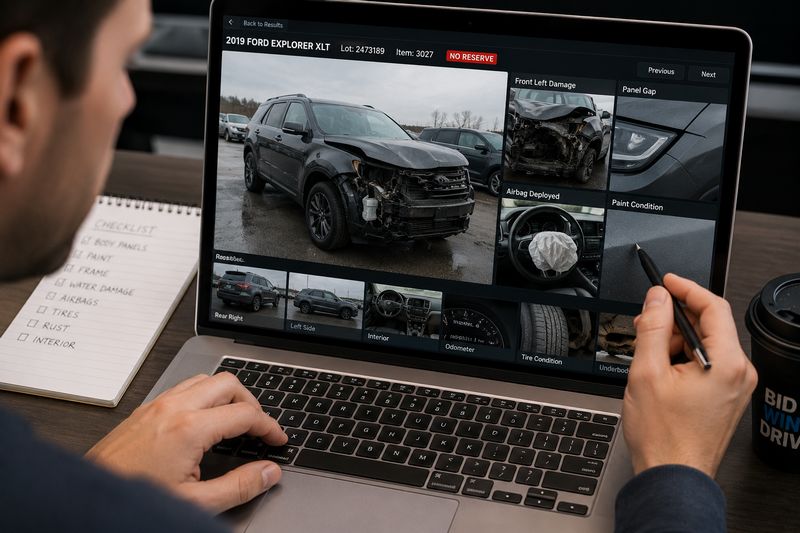
For example, uneven body panel alignment may suggest previous structural repairs after an accident.
Buyers should also zoom in on:
- Dashboard warning lights
- Windshield condition
- Engine bay photos
- Suspension components
Auction photos rarely tell the full story, but careful visual review can help identify potential problems before bidding.
Use VIN Reports and History Checks
Vehicle history reports are one of the most valuable tools for auction buyers.
VIN checks can reveal:
- Accident history
- Flood damage
- Salvage titles
- Previous auction sales
- Odometer inconsistencies
- Airbag deployment records
- Ownership history
For example, a vehicle may appear clean in auction photos while the VIN report shows multiple previous accidents or flood-related insurance claims.
Budget-conscious buyers should never skip history reports, especially for:
- Salvage vehicles
- Rebuilt-title cars
- Luxury vehicles
- Flood-zone inventory
At Auto4Export, many buyers use vehicle history information to better evaluate auction inventory before placing bids.
Understand Auction Fees Before Bidding
Auction fees can significantly increase the final purchase price.
Many first-time buyers focus only on the bid amount and forget about additional charges such as:
- Buyer fees
- Internet bidding fees
- Gate fees
- Documentation fees
- Storage charges
For example, a vehicle won for $5,500 may ultimately cost several thousand dollars more after all fees and transportation expenses are included.
Budget buyers should calculate total cost before bidding aggressively.
Understanding the full financial picture helps prevent unpleasant surprises after winning the auction.
Watch Multiple Similar Auctions
Experienced buyers rarely bid on the first vehicle they see.
Instead, they monitor multiple similar auctions to understand:
- Typical final pricing
- Buyer demand trends
- Seasonal pricing patterns
- Popular trim levels
For example, buyers interested in Honda CR-V auctions may watch several similar listings before placing bids themselves.
This helps create realistic pricing expectations and improves bidding confidence.
Watching multiple auctions also helps buyers recognize:
- Overpriced inventory
- Weak market periods
- Better-value opportunities
Patience is often one of the most important advantages budget buyers can use.
Avoid Emotional Bidding Wars
Emotional bidding is one of the biggest reasons buyers overpay at no-reserve auctions.
Competitive live bidding creates pressure and urgency, especially for popular vehicles such as:
- Toyota Tacoma
- Lexus GX
- Tesla Model Y
- Honda Civic
Some buyers continue raising bids simply because they do not want to lose.
This emotional behavior often pushes prices beyond reasonable market value.
Budget-conscious buyers should:
- Stay calm
- Follow pre-set limits
- Ignore emotional competition
- Walk away when pricing exceeds value
There will always be more vehicles available in future auctions.
Winning the auction matters less than buying the right vehicle at the right price.
Bid at the Right Time
Auction timing can affect final pricing significantly.
Some buyers prefer early bidding to show interest, while others wait until the final moments before increasing offers.
Timed auctions and live auctions behave differently, but strategic timing can still influence competition.
For example:
- Weekday auctions may attract fewer bidders
- Late-night auctions may reduce competition
- Holiday periods sometimes create weaker bidding activity
Some experienced buyers avoid early aggressive bidding because it may attract additional competitors unnecessarily.
No-Reserve Auctions for Budget Buyers
No-reserve auctions are especially attractive for budget-conscious buyers because they can provide access to vehicles at prices significantly lower than traditional dealerships. Many buyers with limited budgets use online auto auctions to search for reliable transportation, repairable vehicles, or lower-cost alternatives to expensive retail inventory.
However, saving money at auction requires more than simply bidding on the cheapest vehicle available. Smart buyers focus on research, repair estimates, and long-term ownership costs before placing bids.
For buyers willing to stay patient and disciplined, no-reserve auctions can create real opportunities to save thousands of dollars.
Why Budget Buyers Can Save Thousands
Traditional dealerships include many additional costs in retail vehicle pricing.
These may include:
- Dealer profit margins
- Reconditioning expenses
- Advertising costs
- Financing overhead
- Sales commissions
Online no-reserve auctions often allow buyers to purchase vehicles closer to wholesale market value.
For example, a used Toyota Corolla selling at a dealership for $15,000 may appear at auction for substantially less depending on:
- Mileage
- Title status
- Vehicle condition
- Market demand
Budget buyers can sometimes save thousands by:
- Purchasing older vehicles
- Accepting cosmetic damage
- Handling minor repairs
- Buying directly from auction inventory
Many auction buyers prioritize practical transportation instead of perfect cosmetic condition.
This mindset often creates stronger savings opportunities.
Best Types of Auction Cars for Cheap Deals
Certain vehicle categories tend to offer better value for budget buyers at no-reserve auctions.
Popular lower-cost auction choices include:
- Fuel-efficient commuter sedans
- Older Toyota and Honda models
- High-mileage but reliable vehicles
- Cosmetic-damage vehicles
- Fleet vehicles
- Dealer trade-ins
For example, vehicles such as:
- Toyota Corolla
- Honda Civic
- Hyundai Elantra
- Ford Fusion
often provide strong value because repair costs remain relatively affordable and parts are widely available.
Budget buyers should generally focus on vehicles with:
- Strong reliability reputations
- Cheap replacement parts
- Lower insurance costs
- Simple mechanical systems
These vehicles are often easier and cheaper to maintain long-term.
Salvage Vehicles vs Clean Title Vehicles
One of the biggest decisions auction buyers face is choosing between salvage-title and clean-title vehicles.
Clean-title vehicles usually offer:
- Easier financing
- Higher resale value
- Lower insurance complications
- More buyer confidence
However, clean-title vehicles often cost more at auction because demand remains stronger.
Salvage vehicles may sell significantly cheaper because they were previously declared total losses by insurance companies.
For example, a salvage-title Honda CR-V may cost thousands less than a clean-title version of the same SUV.
This creates potential savings opportunities, especially for buyers comfortable with repairs.
However, salvage vehicles also carry additional risks such as:
- Hidden damage
- Ремонт конструкций
- Ограничения страхования
- Более низкая будущая стоимость при перепродаже
Покупателям с ограниченным бюджетом следует сравнить общую стоимость с учетом ремонта, прежде чем принимать решение о том, какой вариант обеспечит лучшую общую выгоду.
Когда автомобили без резервной цены стоят риска
Не каждый недорогой автомобиль, проданный на аукционе, является разумной покупкой.
Некоторые автомобили, продаваемые без резервной цены, становятся выгодными покупками только тогда, когда риски управляемы, а затраты на ремонт остаются реалистичными.
Например, транспортное средство, обладающее следующими характеристиками:
- Незначительные косметические повреждения
- Мелкий ремонт после столкновения
- Естественный износ
Если цена останется достаточно низкой, то предложение может по-прежнему быть очень выгодным.
Тем временем, транспортные средства со следующими характеристиками:
- Серьезное повреждение рамы
- История наводнений
- отказ двигателя
- Проблемы с электрической системой
могут быстро обернуться финансовой катастрофой.
Автомобили, продаваемые без резервной цены, обычно оправдывают риск для покупателей, если:
- Разберитесь в стоимости ремонта.
- Тщательно изучите историю автомобиля.
- Придерживайтесь бюджета.
- Избегайте эмоциональных ставок.
Покупателям, ориентирующимся на бюджет, следует сосредоточиться на общей стоимости владения, а не просто гнаться за самой низкой ценой покупки.
Как оценить стоимость ремонта перед покупкой
Умение точно оценить стоимость ремонта — один из важнейших навыков при покупке товаров на аукционе.
Перед участием в торгах покупателям следует изучить:
- Фотографии с аукциона
- Отчеты об истории VIN-номеров
- Описание повреждений
- Цены на запасные части
- затраты на рабочую силу
Например, повреждения передней части автомобиля могут потребовать гораздо большего, чем просто замена бампера.
К числу скрытых ремонтных работ могут относиться:
- Повреждение опоры радиатора
- Проблемы с подвеской
- Замена датчика
- срабатывание подушки безопасности
- Ремонт системы охлаждения
Покупателям также следует провести исследование:
- Местные ставки оплаты труда
- Наличие запчастей
- Цены в автомалярных и кузовных мастерских
Многие опытные покупатели закладывают дополнительный финансовый запас на случай непредвиденного ремонта, поскольку автомобили, выставленные на аукцион, часто имеют скрытые проблемы.
Недооценка стоимости ремонта — одна из самых распространенных ошибок среди покупателей, впервые приобретающих товары на аукционе.
Почему терпение важно на аукционах
Терпение — одно из самых ценных преимуществ, которыми могут обладать покупатели с ограниченным бюджетом на онлайн-автомобильных аукционах.
Многие неопытные участники торгов теряют терпение и:
- Быстро переплатить
- Эмоциональная погоня за популярными автомобилями
- Не стоит упускать лучшие возможности в будущем.
Опытные покупатели часто следят за аукционами в течение нескольких недель, прежде чем совершить покупку.
Это помогает им понять:
- Тенденции ценообразования на рынке
- Сезонный спрос
- Типичное поведение участников торгов
- Более выгодные возможности для реализации товарных запасов
Например, покупателям, проигравшим один аукцион, не следует сразу же паниковать и делать более высокие ставки на следующий доступный автомобиль.
Распространённые ошибки, которые допускают покупатели, впервые участвующие в аукционе.
Онлайн-автомобильные аукционы могут предоставить отличные возможности для покупателей с ограниченным бюджетом, но начинающие участники часто совершают дорогостоящие ошибки, поскольку слишком много внимания уделяют низким ценам и недостаточно – общим затратам на владение и рискам, связанным с автомобилем.
Многие новички участвуют в аукционах, полагая, что любой дешевый автомобиль автоматически является выгодной покупкой. В действительности же успешная покупка на аукционе требует тщательного исследования, планирования и дисциплины.
Понимание наиболее распространенных ошибок помогает покупателям избежать финансовых проблем и повысить свои шансы на поиск надежных автомобилей по справедливым ценам.
Игнорирование аукционных сборов
Одна из самых распространенных ошибок, которые допускают покупатели, приобретающие жилье впервые, — это игнорирование аукционных сборов.
Many buyers focus only on the winning bid amount and forget about additional charges such as:
- Buyer fees
- Internet bidding fees
- Gate fees
- Documentation fees
- Storage charges
For example, a buyer may win a vehicle for $4,500 but later discover the total invoice exceeds $6,000 after all fees are included.
Some auction platforms increase fees based on vehicle price, meaning more expensive purchases create larger additional charges.
Budget-conscious buyers should always calculate:
- Final bid amount
- Auction fees
- Transportation costs
- Repair expenses
before deciding how much to bid.
Skipping Vehicle History Reports
Another major mistake is skipping VIN history checks to save money.
Some buyers try to avoid paying for vehicle reports and rely only on auction photos or seller descriptions.
This can be extremely risky.
Vehicle history reports may reveal:
- Salvage titles
- Flood damage
- Previous accidents
- Odometer inconsistencies
- Airbag deployment
- Multiple auction sales
For example, a vehicle that appears clean visually may actually have severe accident history hidden in its VIN records.
Skipping history reports often leads to expensive surprises after purchase.
At Auto4Export, many buyers review vehicle history information carefully before bidding at major U.S. online auto auctions.
Not Understanding Title Types
Many first-time buyers do not fully understand vehicle title branding.
This creates serious problems later involving:
- Registration
- Insurance
- Resale value
- Repair costs
Common title types include:
- Clean title
- Salvage title
- Rebuilt title
- Flood title
- Lemon title
For example, a rebuilt-title SUV may seem attractively priced but later prove difficult to insure or resell.
Some buyers mistakenly believe salvage vehicles are always minor repair projects when many actually suffered major structural or flood damage.
Understanding title types is extremely important before bidding aggressively on lower-priced inventory.
Overestimating Repair Skills
Many beginners underestimate how difficult and expensive vehicle repairs can become.
This is especially common with:
- Salvage vehicles
- Luxury cars
- Flood-damaged inventory
- Modern vehicles with advanced electronics
For example, replacing visible front-end damage may also require:
- Sensor calibration
- Airbag replacement
- Cooling system repairs
- Suspension alignment
- Electrical troubleshooting
Some buyers assume they can repair vehicles cheaply themselves without fully understanding labor complexity or parts pricing.
Overestimating repair ability often turns cheap auction vehicles into expensive financial problems.
Budget buyers should remain realistic about their mechanical skills and available repair resources.
Bidding Without a Budget
One of the fastest ways to lose money at auction is bidding without a clear budget limit.
Live bidding environments create excitement and emotional pressure, especially for high-demand vehicles such as:
- Toyota Tacoma
- Honda CR-V
- Lexus RX
- Tesla Model Y
Without a fixed spending limit, buyers often:
- Chase competitors emotionally
- Ignore repair costs
- Overpay far above market value
For example, a buyer may continue increasing bids simply because they do not want another bidder to win.
Successful auction buyers always establish maximum limits before bidding begins and stick to them regardless of auction excitement.
Forgetting Shipping Costs
Transportation costs are another major expense many first-time buyers forget to calculate.
Auction vehicles may need:
- Domestic shipping
- Port transportation
- International export shipping
- Loading services
- Container handling
For example, a buyer purchasing a cheap vehicle several states away may later discover transportation costs eliminate most of the expected savings.
Storage fees can also become expensive if buyers delay pickup after purchase.
Budget-conscious buyers should always estimate total delivery cost before bidding, especially when purchasing vehicles far from their location.
Buying Based Only on Low Price
The biggest mistake many beginners make is buying vehicles simply because they appear cheap.
Low prices alone do not guarantee good value.
Some extremely cheap auction vehicles may hide:
- Severe mechanical problems
- Flood damage
- Structural repairs
- Missing parts
- Expensive electronic failures
For example, a luxury SUV selling for a surprisingly low price may later require repair costs exceeding the vehicle’s market value.
How Auto4Export Helps Buyers at No-Reserve Auctions
Buying vehicles through no-reserve auctions can create excellent savings opportunities, but the process can also feel overwhelming for first-time buyers. Online auctions move quickly, auction terms can be confusing, and buyers must often handle transportation, paperwork, and export logistics after winning a vehicle.
Auto4Export helps buyers access major U.S. auto auctions while simplifying many parts of the buying and export process.
For budget-conscious buyers especially, having support during auction research and shipping coordination can help reduce costly mistakes and improve buying confidence.
Access to Major U.S. Auto Auctions
One of the biggest advantages of working with Auto4Export is access to major U.S. online auto auctions.
Buyers can search inventory from platforms such as:
- Copart
- IAAI
- Manheim
- Dealer auctions
- Insurance auctions
This gives buyers access to thousands of vehicles daily, including:
- Used cars
- Salvage vehicles
- Dealer trade-ins
- Trucks
- SUVs
- Motorcycles
- Boats and ATVs
Many of these listings include no-reserve or Pure Sale vehicles that can create strong savings opportunities compared to retail dealership pricing.
For budget buyers, wider auction access increases the chances of finding affordable inventory that matches both budget and repair expectations.
Help Reviewing Vehicle History Reports
Vehicle history reports are extremely important when buying auction vehicles, especially no-reserve inventory.
Auto4Export helps buyers review important information such as:
- Accident history
- Title status
- Flood damage records
- Mileage inconsistencies
- Auction history
- Ownership records
For example, a vehicle may look clean in photos while VIN records reveal:
- Previous structural damage
- Multiple auction sales
- Insurance total-loss history
This type of research helps buyers avoid expensive mistakes before placing bids.
Budget-conscious buyers especially benefit from reviewing vehicle history carefully because repair costs and hidden damage can quickly eliminate expected savings.
Assistance With Auction Bidding
Many first-time buyers feel nervous during live online auctions because bidding moves quickly and competition can become intense.
Auto4Export assists buyers with:
- Understanding auction rules
- Explaining sale types
- Reviewing bidding strategy
- Helping calculate total costs
For example, buyers may need help understanding terms such as:
- Pure Sale
- Reserve Not Met
- On Approval
- Run and Drive
Auction support helps buyers avoid emotional overbidding and better understand how online auction systems work.
This becomes especially useful for first-time buyers unfamiliar with live auction environments.
Shipping From All Major U.S. Ports
After winning a vehicle, transportation and shipping become extremely important.
Auto4Export helps arrange shipping from major U.S. ports, making it easier for international buyers to move purchased vehicles overseas.
This may include coordination through ports across the United States depending on vehicle location and export destination.
Shipping support helps buyers manage:
- Domestic transportation
- Port delivery
- Container loading
- Export paperwork
- Logistics coordination
For budget buyers, proper shipping planning helps reduce unexpected transportation expenses and delays after purchase.
Vehicle Export Services Worldwide
Many buyers at U.S. online auto auctions purchase vehicles specifically for export.
Auto4Export assists customers shipping vehicles internationally to multiple regions worldwide.
Export support may include:
- Vehicle documentation
- Export processing
- Container shipping
- Port coordination
- International logistics assistance
This becomes especially important for buyers purchasing:
- Salvage vehicles
- Repairable cars
- Dealer inventory
- Export-friendly SUVs and trucks
For international budget buyers, U.S. online auctions can create access to vehicles often unavailable or far more expensive in local markets.
Having export assistance simplifies a process that may otherwise feel complicated for first-time buyers.
Support for First-Time Auction Buyers
First-time auction buyers often underestimate how complex online vehicle auctions can become.
Common beginner mistakes include:
- Ignoring auction fees
- Misunderstanding title types
- Underestimating repairs
- Overbidding emotionally
- Forgetting shipping costs
Auto4Export helps buyers better understand the auction process before purchasing vehicles.
Final Thoughts on No-Reserve Auctions
No-reserve auctions have become one of the most popular ways to buy vehicles through online auto auction platforms. They create excitement, transparency, and real opportunities for buyers to purchase vehicles below traditional dealership prices.
For budget-conscious buyers especially, no-reserve auctions can provide access to affordable inventory that may otherwise feel financially out of reach.
However, successful auction buying requires preparation, patience, and careful research. The buyers who save the most money are usually the ones who understand both the opportunities and the risks before placing bids.
Why No-Reserve Auctions Attract So Many Buyers
No-reserve auctions attract large numbers of buyers because they create a more direct and transparent buying experience.
Buyers know:
- The vehicle will definitely sell
- The seller cannot reject the highest bid
- Every bid matters immediately
This creates excitement and stronger buyer confidence compared to reserve auctions where hidden pricing may block the sale afterward.
Many buyers also search for no-reserve listings because they hope to find:
- Bargain deals
- Lower-than-retail pricing
- Repairable vehicles
- Wholesale inventory opportunities
For example, budget buyers looking for reliable commuter vehicles often monitor no-reserve Toyota Corolla or Honda Civic auctions because these models combine affordability with long-term reliability.
The guaranteed-sale structure is one of the biggest reasons no-reserve auctions remain extremely popular across online auto auction platforms.
Understanding Risks Before Bidding
Despite the savings opportunities, no-reserve auctions also carry serious risks buyers must understand beforehand.
Auction vehicles are often sold:
- As-Is
- Without warranties
- With limited inspections
- With hidden mechanical risks
For example, a cheap SUV at auction may later require:
- Transmission repairs
- Suspension work
- Airbag replacement
- Electrical troubleshooting
Many first-time buyers focus too heavily on low purchase prices while underestimating total repair and ownership costs.
This is especially risky with:
- Salvage vehicles
- Flood-damaged cars
- Luxury vehicles
- High-mileage inventory
Successful buyers remain realistic about the possibility of hidden problems and unexpected expenses after purchase.
How Research Helps Buyers Save Money
Research is one of the most important parts of successful auction buying.
Smart buyers carefully review:
- Vehicle history reports
- Auction photos
- VIN records
- Market pricing
- Repair estimates
- Title status
before placing bids.
For example, VIN reports may reveal:
- Previous collisions
- Flood history
- Multiple auction sales
- Odometer inconsistencies
This information helps buyers avoid vehicles likely to create expensive problems later.
Research also helps buyers estimate whether a vehicle is truly a good value after considering:
- Repairs
- Transportation
- Auction fees
- Long-term maintenance costs
The buyers who save the most money at auction are usually the ones who spend the most time researching beforehand.
Why Budget Buyers Should Watch No-Reserve Listings
Budget-conscious buyers often benefit the most from no-reserve auctions because these sales can create opportunities unavailable at traditional dealerships.
Many dealership prices include:
- Retail markup
- Financing overhead
- затраты на восстановление
- Расходы на рекламу
Аукционные лоты иногда позволяют покупателям приобретать автомобили по ценам, значительно приближенным к оптовой рыночной стоимости.
Например, внедорожник или седан, пригодный для ремонта, может быть продан на аукционах на тысячи долларов дешевле, чем в розничных магазинах.
Покупатели с ограниченным бюджетом, готовые:
- Примите во внимание косметические недостатки.
- Выполнить мелкий ремонт
- Тщательно изучите инвентарь.
- Сохраняйте терпение во время торгов.
Нередко можно найти выгодные предложения.
На Auto4Export многие покупатели отслеживают объявления о продаже автомобилей без резервной цены, поскольку такие предложения могут создавать возможности для покупки по более низким ценам на крупных американских автомобильных аукционных площадках.
Как найти выгодные предложения на автомобильных аукционах
Самые выгодные сделки на аукционах обычно заключаются благодаря подготовке, а не удаче.
Как правило, успешные покупатели:
- Составьте реалистичные бюджеты.
- Внимательно изучите историю автомобиля.
- Избегайте эмоциональных ставок.
- Разберитесь в стоимости ремонта.
- Терпеливо следите за несколькими аукционами.
Например, терпеливые покупатели часто ждут:
- Более короткие периоды соревнований
- Товары в лучшем состоянии
- Более реалистичные возможности ценообразования
вместо того, чтобы переплачивать во время ожесточенных торгов.
Аукционы без минимальной цены вознаграждают покупателей, которые проявляют дисциплину и ориентируются на долгосрочную ценность, а не на краткосрочное удовольствие.
Для покупателей с ограниченным бюджетом онлайн-автомобильные аукционы могут стать одним из наиболее эффективных способов приобретения доступных автомобилей — особенно в сочетании с тщательным изучением рынка, грамотной стратегией торгов и реалистичным планированием владения.
Читать далее
Понимание терминов аукционной продажи: что такое предварительная ставка, аукцион и цена «Купить сейчас»?
Полное руководство по покупке автомобилей на автомобильных аукционах в США.
Что такое прокси-ставки на автомобильных аукционах?
Различные методы аукционной покупки автомобилей, позволяющие сэкономить.

У вас есть вопросы?
 Задать вопрос