


 Log in
 Sign Up





Many buyers wonder when a car officially becomes a classic and what that means for price, insurance, and long-term value. This short guide explains the real age rules, how definitions vary, and why not every old car qualifies. It will help you understand listings better, avoid overpaying at auctions, and spot cars with real potential even on a limited budget.
What Is a Classic Car?
If you're shopping for a car on a budget, you’ve probably seen older models labeled as “classic.” But what does that really mean? The answer is not always straightforward. Understanding this term can help you avoid overpaying and spot real value—especially when browsing auction listings.
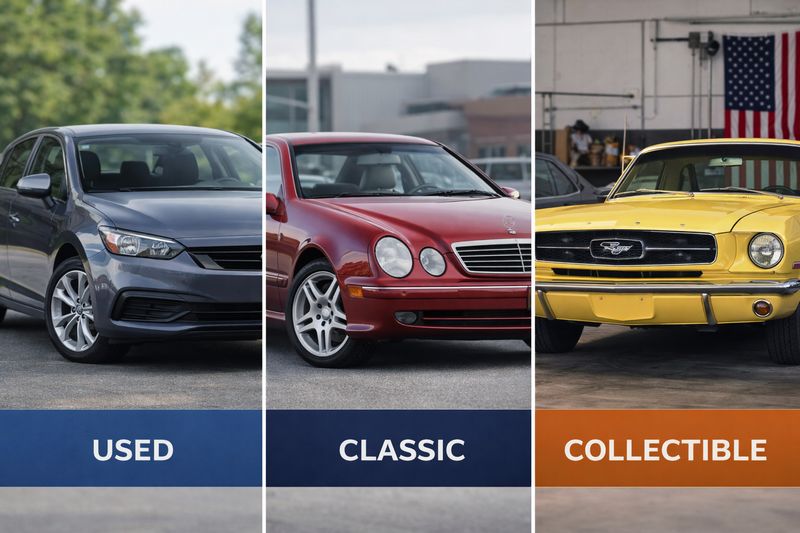
Simple definition for beginners
A classic car is usually an older vehicle that has some special value beyond just transportation. In most cases, this means the car is at least 15–25 years old and has qualities that make it interesting to collectors or enthusiasts.
For example, a 2000s sedan you find at a low price is just a used car. But if that same car has a unique design, limited production, or strong reputation, it might be considered a classic.
Think of it this way:
- A regular old car gets cheaper every year
- A classic car can hold value or even increase over time
If you’re buying from an auction, this difference matters. Two cars may cost the same today, but one could be a better long-term deal.
Why the term “classic” can vary
There is no single rule that defines a classic car. Different groups use different standards.
- Insurance companies may require the car to be 20–25 years old
- Car clubs might focus more on design, rarity, or historical value
- Some countries have official age rules for registration
This is why you might see the same car described differently depending on where you look.
For a budget buyer, this can be confusing—but also useful. Sometimes a car is not yet officially a classic, which means:
- It’s still affordable
- But it has the potential to become more valuable
That’s where smart buyers find good deals at auctions.
Classic vs used vs collectible cars
It’s easy to mix these terms, but they are not the same.
Used car
This is any car that has had a previous owner. Most cars at auctions fall into this category. They are usually chosen for low price and daily use.
Classic car
An older vehicle with lasting appeal. It may still be affordable, but it stands out because of its design, history, or popularity.
Collectible car
This is a step above. These cars are often rare, in excellent condition, and more expensive. People buy them not just to drive, but as an investment.
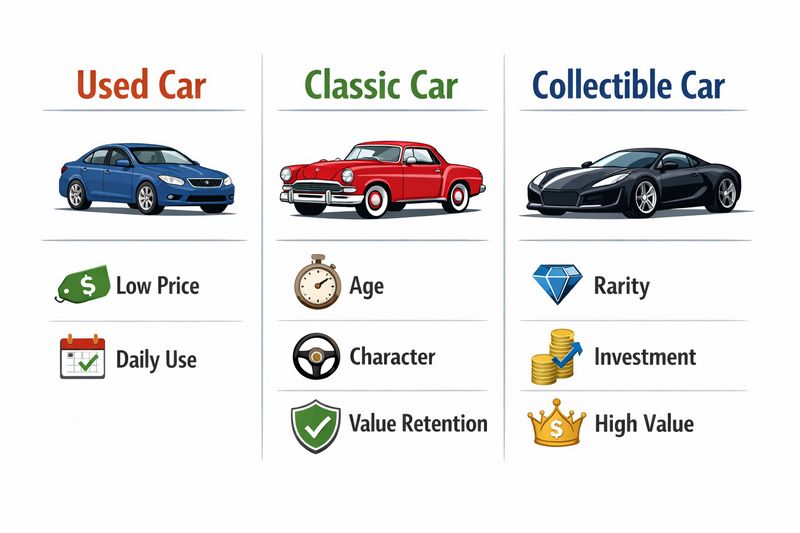
Here’s a simple example:
- You find a cheap 15-year-old car at auction → likely just used
- You find a well-known older model with strong demand → classic
- You find a rare, fully restored version of that model → collectible
Know What You’re Really Paying For
Not every “classic” car is worth the price. Before placing a bid, estimate the real value of the vehicle — including auction fees, transport, and export costs — to avoid overpaying.
- ✅ Full cost calculation before bidding
- ✅ Transparent auction and service fees
- ✅ Export and shipping cost estimation
- ✅ Data-driven decisions for budget buyers
How Old Does a Car Need to Be to Be Considered a Classic
One of the most common questions budget buyers ask is simple: “At what age does a car become a classic?” The answer depends on who you ask. There is no single global rule, but there are general age ranges that most people and organizations follow.
General age rule (15, 20, 25+ years explained)
In most cases, a car starts entering “classic” territory somewhere between 15 and 25 years old.
Here’s how it usually breaks down:
- 15+ years: Some enthusiasts and sellers already call these “young classics” or “modern classics.” These cars are still relatively cheap and often used daily.
- 20+ years: This is the more common threshold where cars start gaining classic status in many listings and insurance categories.
- 25+ years: In the U.S., this is a widely accepted milestone. Many insurers and clubs begin treating the vehicle as a full classic at this point.
For example, a 2003 sedan might still look like an ordinary used car today. But in a few years, it may already qualify as a classic under insurance rules—even if it’s not rare or expensive.
For buyers on a budget, this is important: cars just crossing the 20–25 year mark are often still affordable but may gain attention from collectors soon.
Differences by country and organization
The definition of a classic car is not the same everywhere.
- In the United States, many insurers and registration systems use the 25-year rule, but some programs start at 20 years.
- In the United Kingdom, “historic vehicles” are typically over 40 years old, with tax benefits attached.
- Some car clubs define classics more flexibly, focusing on design, rarity, or cultural impact, not just age.
Even within the same country, definitions can vary. One insurance company may call a car a classic at 20 years, while another may require 25.
This is why two identical cars at auction might be labeled differently depending on the seller or platform.
Why age alone is not always enough
Even though age is important, it is not the only factor that matters.
A 25-year-old car is not automatically a classic. For example:
- A mass-produced, high-mileage commuter car may still be seen as just an old used vehicle
- A well-preserved or rare model from the same year could already be considered a classic
Other factors often matter just as much:
- Condition of the car
- How many were originally produced
- Whether the model has cultural or historical value
- Demand from collectors
What Features Define a Classic Car
Age alone doesn’t fully explain why a car becomes a classic. Many older vehicles are simply “old cars,” while others gain special status and long-term value. For budget buyers, understanding these features helps you spot cars that may be worth more than their price suggests.
Age
Age is the first and most obvious factor. Most classic cars are at least 20–25 years old, but age by itself is not enough.
For example, a 2001 economy sedan might be old, but it does not automatically become a classic. On the other hand, a 2001 performance or limited-edition model may already attract collector interest.
Age is the starting point—but not the full story.
Historical or cultural significance
Some cars become classics because they represent a specific time, trend, or cultural moment.
These cars often:
- Introduced new technology
- Appeared in movies or pop culture
- Represented a major shift in design or engineering
For example, a car that was once a symbol of affordable freedom or early innovation may later gain classic status, even if it was not expensive when new.
For budget buyers, these are often overlooked opportunities at auctions—cars that were “everyday vehicles” but now carry nostalgic value.
Rarity and production numbers
Rarity plays a big role in defining a classic car. If only a small number of units were produced, the car is more likely to gain long-term value.
Two cars from the same year can have very different futures:
- A mass-produced sedan with millions of units → usually stays cheap
- A limited production model → may become highly desirable
At auctions, checking production numbers can help you avoid buying something that will always stay low in value.
Condition and originality
Condition is one of the biggest factors for classic status. A well-preserved or properly restored car is far more valuable than a heavily modified or neglected one.
Collectors often prefer:
- Original engine and parts
- Factory paint or correct restoration
- Minimal modifications
Even a rare car can lose value if it has been heavily altered or poorly maintained. For budget buyers, this is important—sometimes a slightly more expensive but original car is a better long-term choice than a cheaper, heavily modified one.
Recognition by collectors and clubs
A car often becomes a “true classic” when it is recognized by enthusiast communities, clubs, or official organizations.
This recognition can come from:
- Classic car clubs
- Insurance classifications
- Collector groups and forums
When a model is widely discussed and respected by enthusiasts, its status becomes stronger. This also affects demand, which can slowly increase prices over time.
For auction buyers, this is a useful signal: if a model has an active fan base, it is more likely to hold or increase its value.
Market value and demand
Finally, a car becomes a classic when people are willing to pay extra for it—not just as transportation, but as something special.
Market demand is influenced by:
- Popularity among collectors
- Availability of spare parts
- Reputation of the model
- Trends in the automotive market
Sometimes a car becomes a classic only after prices start rising. This means timing matters. A model that is still affordable today may become more expensive once demand increases.
Classic vs Vintage vs Antique Cars: Key Differences
Many buyers use the words “classic,” “vintage,” and “antique” as if they mean the same thing. In reality, these categories describe different types of older vehicles. Understanding the differences helps you avoid confusion when browsing auctions and makes it easier to spot real value within your budget.
What is a vintage car (typically pre-1930s)
A vintage car is usually defined as a vehicle built before the 1930s. These are some of the earliest automobiles and are now extremely rare.
Vintage cars often have:
- Very basic mechanical systems
- Minimal comfort features
- Hand-built or early mass-production design
For most budget buyers, vintage cars are not realistic purchases. They are often expensive, fragile, and require specialized maintenance. You will rarely see them at regular online auctions.
Still, knowing the term helps you understand listings and avoid confusion when older vehicles are labeled as “vintage” in a loose marketing sense.
What is an antique car (25+ or 45+ years depending on region)
An antique car is typically a vehicle that is 25 years or older, though in some regions or clubs the definition starts at 45 years or more.
Antique cars are usually:
- No longer used as daily transportation
- Preserved or restored for display and collection
- Recognized for their historical value
For example, a car from the late 1980s or early 1990s may already qualify as antique depending on the rules applied.
For budget buyers, antique cars can sometimes appear at auctions, but they often require careful inspection. Lower prices can be tempting, but maintenance costs can be higher than expected.
What is a modern classic (youngtimer cars)
A modern classic, often called a “youngtimer,” is a relatively newer car that is starting to gain classic status. These are usually vehicles from the 1990s to early 2010s.
Youngtimers are interesting because they:
- Are still affordable compared to true classics
- Can be used as daily drivers
- Often have growing collector interest
Examples include older performance sedans, early sports cars, or well-designed models that are disappearing from the roads.
For budget-conscious buyers, this category is often the most attractive. You get a usable car today with potential to increase in value over time.
Why these categories matter for buyers
Understanding these labels is important because they directly affect:
- Price
- Maintenance expectations
- Insurance options
- Future resale value
At auctions, the same car might be labeled differently depending on the seller. One listing may call it “classic,” another may say “antique,” even if the car is simply an older used vehicle.
For a buyer on a budget, this can be risky—but also full of opportunity. If you understand the categories, you can:
- Avoid overpaying for a regular old car
- Identify undervalued youngtimers
- Focus on models with real collector potential
When Does a Car Become a Classic for Insurance
Insurance companies often define a “classic car” differently than car buyers or collectors. For them, the focus is not just age or style, but risk, usage, and value protection. That’s why a car may be considered a classic for insurance purposes even if it doesn’t look like a collector’s item yet.
Typical insurance age requirements
Most insurance providers require a car to be at least 20 to 25 years old to qualify for classic car insurance. However, some companies are more flexible and may accept younger vehicles if they meet certain conditions.
For example:
- A 25-year-old sedan may qualify automatically
- A 15–20-year-old sports or limited-edition model may also be eligible
This is important for budget buyers. If you find a car at auction that is close to this age range, it may become cheaper to insure than a newer daily driver.
Usage restrictions (limited mileage, storage rules)
Classic car insurance usually comes with specific rules. The most common ones include:
- Limited annual mileage (often 2,000–7,500 miles per year)
- No daily commuting use in many cases
- Requirement to store the car in a garage or secure location
For example, if you buy an older BMW or Mustang at auction and plan to use it for commuting every day, it may not qualify for classic coverage.
These restrictions exist because insurers assume classic cars are driven less and are better maintained.
Agreed value vs actual cash value
One of the biggest advantages of classic car insurance is how the car is valued.
- Actual cash value (ACV): Used for regular cars. The payout decreases over time as the car depreciates.
- Agreed value: Used for classic cars. You and the insurer agree on the car’s value in advance.
This matters a lot for buyers on a budget. If you buy a classic or near-classic car from an auction and restore it, agreed value insurance can protect your investment much better than standard policies.
For example, if you spend time and money restoring a $6,000 auction car and it later becomes worth $10,000, agreed value coverage ensures you are protected at that higher amount.
Is classic car insurance cheaper?
In many cases, yes—classic car insurance is often cheaper than regular auto insurance. But this depends on how you use the car.
It is usually cheaper because:
- The car is driven less
- Owners are assumed to be more careful
- The risk of accidents is lower
However, it is not always the best option for everyone. If you plan to use the car daily, standard insurance may be required, even if the car is old.
Does Classic Status Affect Taxes and Registration
In the United States, a car’s “classic” status can sometimes change how it is taxed and registered. However, the benefits are not the same in every state. Some owners save money, while others mainly get simpler registration rules or special plates. For budget buyers, these differences can affect long-term ownership costs.
Tax benefits for classic cars
Some states offer reduced taxes or special valuation rules for older vehicles. Instead of taxing the car based on its market value, the state may use a fixed or lower valuation for classic vehicles.
This can help owners save money, especially if:
- The car is older but still in good condition
- The market value is high, but the tax system does not fully reflect it
For example, a well-preserved older muscle car bought at auction might have a higher real-world value, but lower tax liability in certain states. This makes classic cars more attractive for long-term ownership.
Special registration plates
Many states offer classic or historic license plates for qualifying vehicles. These plates often come with benefits such as:
- Lower registration fees
- Easier renewal processes
- Recognition of the car’s historical status
However, these plates are usually not for daily driving. They are designed for hobby or limited-use vehicles.
For budget buyers, this can be a small but useful saving. If you plan to buy an older car at auction and use it occasionally, historic plates may reduce yearly costs.
Emissions and inspection exemptions
One of the biggest advantages of classic status in some states is exemption from certain emissions tests or safety inspections.
Depending on the state, classic cars may be:
- Exempt from emissions testing
- Subject to reduced inspection requirements
- Allowed special rules for older engines
This is especially helpful for owners of older vehicles that would otherwise fail modern emissions standards.
For example, a 1990s car purchased cheaply at auction might be difficult to pass strict emissions tests in some states—but could be exempt if it qualifies as a classic.
State-by-state differences in the U.S.
There is no single federal rule for classic cars in the U.S. Everything depends on state regulations.
Some examples of differences include:
- Some states recognize classics at 20 years, others at 25+ years
- Some offer tax and inspection benefits, while others offer none
- Usage rules can vary widely (some allow limited daily use, others do not)
This means two identical cars bought at auction can have completely different ownership costs depending on where you register them.
Costs of Owning a Classic Car
Buying a classic car at a good price—especially from an auction—can feel like a smart deal. But the real cost often shows up after purchase. Unlike modern cars, classics can require more attention, time, and money to keep them running properly.
Maintenance and upkeep
Classic cars usually need more regular maintenance than newer vehicles. Even if the car looks fine, older systems naturally wear out over time.
Common maintenance needs include:
- Frequent oil and fluid changes
- Brake system checks and replacements
- Cooling system repairs
- Electrical system fixes
For budget buyers, this is important. A cheap classic at auction might look like a win, but routine upkeep can slowly add up if the car hasn’t been properly maintained.
Availability of parts
One of the biggest challenges with classic cars is finding replacement parts.
Depending on the model:
- Common cars may still have widely available parts
- Rare or discontinued models may require special ordering
- Some parts may only be available used or refurbished
For example, a popular older sedan might still have affordable parts online. But a rare imported model could require long waiting times and higher costs.
This is something many first-time buyers underestimate when shopping at auctions.
Repair challenges
Classic cars are often harder to repair because they are not as standardized as modern vehicles. Mechanics may need more time to diagnose and fix issues.
Challenges include:
- Outdated engine designs
- Lack of modern diagnostic systems
- Need for specialized knowledge
This can mean higher labor costs, even for simple repairs. A basic fix on a modern car might take an hour, while the same issue on a classic could take several hours or more.
Storage and protection
Proper storage is essential for preserving a classic car. Unlike daily drivers, these vehicles are more sensitive to weather and long periods of inactivity.
Owners often need:
- A garage or covered storage space
- Protection from moisture and rust
- Battery maintenance during long storage periods
- Regular start-ups or inspections
For budget buyers, this is an often overlooked cost. Even if the car itself is cheap, lack of proper storage can quickly lead to expensive damage.
Safety considerations vs modern cars
Classic cars do not meet modern safety standards. This is one of the most important differences compared to newer vehicles.
Key safety limitations include:
- No advanced driver assistance systems
- Limited or no airbags in older models
- Less effective crash protection
- Outdated braking and handling systems
For example, a low-cost classic car from an auction may be fun to drive on weekends, but it is not as safe as a modern daily driver.
Benefits of Owning a Classic Car
Even though classic cars can come with higher maintenance costs, they also offer unique advantages that attract many budget-conscious buyers. Unlike regular used cars, they can provide both financial and personal value over time—especially if you choose the right model at auction.
Potential value appreciation
One of the biggest attractions of classic cars is the possibility that they can increase in value. While not every old car becomes expensive, certain models do grow in price as they become more rare or desirable.
This often happens when:
- A model becomes harder to find in good condition
- Collector interest increases over time
- The car gains cultural or historical importance
For example, a car bought cheaply at auction today might not seem special now, but in a few years it could become much more desirable. For budget buyers, this creates an opportunity: you are not just buying transportation, but possibly a future asset.
Lower depreciation compared to new cars
New cars lose value quickly, especially in the first few years. Classic cars behave differently.
In many cases:
- New cars lose value every year
- Classic cars slow down in depreciation
- Well-kept classics can even stabilize in price
This means that a carefully chosen older car from an auction may hold its value better than a newer, more expensive vehicle. For people trying to save money, avoiding fast depreciation is already a financial win.
Collector appeal and uniqueness
Classic cars stand out because they are no longer common on the road. This uniqueness is a big part of their appeal.
Owners often enjoy:
- Driving something rare and different
- Receiving attention from car enthusiasts
- Owning a model with a strong identity
Even a budget-friendly classic found at an auction can feel special compared to modern mass-produced vehicles. For many buyers, this emotional satisfaction is worth more than technical specifications.
Emotional and lifestyle value
Beyond money and practicality, classic cars offer a strong emotional connection. Many people associate them with memories, childhood experiences, or a certain era of design and driving.
This can include:
- Nostalgia for older automotive styles
- Enjoyment of hands-on driving experience
- A sense of pride in restoring or preserving a vehicle
For example, a buyer on a limited budget might choose an older classic instead of a basic modern car simply because it brings more joy to own and drive on weekends.
Most Desirable Classic Cars Ever Made
Some classic cars stand out far beyond others. They are not just old vehicles—they are symbols of design, engineering, and history. While most of them are far outside a budget buyer’s range today, understanding them helps you see what makes certain models valuable in the long run.
Volkswagen Beetle
Volkswagen Beetle is one of the most recognizable cars in the world. It became popular because it was simple, affordable, and easy to maintain.
For decades, it was the “people’s car,” used by families across different countries. Today, it is a classic because of its cultural impact and massive global presence.
Even budget buyers at auctions often come across older Beetles. While not all are expensive, well-preserved versions are becoming more desirable over time.
Aston Martin DB5
Aston Martin DB5 is famous for its connection to luxury and cinema. It became globally known as the car associated with James Bond films.
This model represents:
- Elegant British design
- High-end craftsmanship
- Strong cultural recognition
Because of its fame and limited production, the DB5 is now one of the most valuable classic cars in the world. Even damaged or incomplete versions can sell for very high prices.
Ferrari 250 GTO
Ferrari 250 GTO is often considered the ultimate collector’s car. It was built for racing, with extremely limited production numbers.
Key reasons for its legendary status:
- Extremely rare (only a small number produced)
- Strong racing history
- High performance for its era
Today, it is one of the most expensive classic cars ever sold. It is far beyond the budget range of most buyers, but it represents the peak of collector demand.
Rolls-Royce Silver Ghost
Rolls-Royce Silver Ghost is a symbol of early luxury automotive engineering. It helped establish Rolls-Royce as a leader in premium cars.
This model is known for:
- Exceptional build quality for its time
- Smooth and reliable performance
- Historical importance in automotive development
Many surviving units are preserved in museums or private collections, making it a true historical artifact.
Why these models became legends
These cars became legends not just because they are old, but because they represent something bigger than transportation.
They stand out due to:
- Innovation for their time
- Cultural or historical importance
- Rarity and survival rate
- Strong emotional and visual identity
Each of these models tells a story that goes beyond engineering.
What makes them expensive today
The high prices of these classic cars are driven by a combination of factors:
- Extremely limited supply
- Strong global demand from collectors
- Historical and cultural significance
- Proven track record of value growth
Unlike normal used cars, these vehicles are seen as investments. As a result, they are often sold through auctions or private collections at very high prices.
Modern Classics: Affordable Options for Budget Buyers
Not all classic cars are out of reach. Some modern classics are still relatively affordable, especially at online auctions. These cars are often called “youngtimers” and are becoming more popular because they combine driving enjoyment with long-term value potential.
Porsche 911 (older generations)
Porsche 911 older generations are some of the most respected modern classics in the car world. Even early air-cooled or 1990s models are now gaining strong attention from collectors.
Why buyers like them:
- Iconic sports car design
- Strong performance and driving feel
- Long history of demand in the market
At auctions, these models can still vary widely in price. High-mileage or damaged units may be within reach for budget buyers, but condition plays a huge role in value.
Audi Quattro
Audi Quattro is a legendary rally-inspired car that helped change how people see all-wheel-drive performance vehicles.
It stands out because:
- It introduced advanced AWD technology to performance cars
- It has a strong motorsport history
- It remains highly recognizable among enthusiasts
Well-preserved examples are becoming harder to find, which is slowly increasing their value. Even older or repair-needed versions can attract interest at auctions.
BMW E30 M3
BMW E30 M3 is one of the most iconic performance sedans ever built. It was originally designed for racing homologation, which gives it strong collector appeal today.
Key reasons it is popular:
- Balanced driving performance
- Classic boxy design that is now highly desirable
- Strong motorsport heritage
Even though clean examples are expensive, project cars or auction units sometimes appear at lower prices, making it one of the more “aspirational” modern classics for budget buyers.
Why these cars are gaining value
Modern classics like these are increasing in popularity for several reasons:
- Fewer well-preserved examples remain
- Enthusiast demand is growing
- They represent a “golden era” of analog driving
- Younger collectors are entering the market
As a result, prices often rise slowly but steadily. For budget buyers, this creates a potential opportunity: entering the market early before values peak.
What to look for at auctions
When searching for modern classics at auctions, it’s important to focus on condition and history rather than just price.
Key things to check:
- Accident or salvage history
- Engine and transmission condition
- Originality (avoid heavily modified cars if possible)
- Availability of parts for repairs
- Documentation and service records
At auction, a cheap car is not always a good deal. A slightly more expensive but well-documented example can save a lot of money in repairs later.
Avoid Expensive Mistakes at Auctions
Classic and modern classic cars at auctions can hide costly issues. Get access to vehicle history, condition insights, and expert support before you bid.
- ✅ Vehicle history and auction reports
- ✅ Identification of hidden damage and risks
- ✅ Support before and during bidding
- ✅ Help choosing the right lot
Future Classic Cars: What to Buy Now
Many of today’s everyday cars could become tomorrow’s classics. For budget buyers, this is one of the most interesting parts of the market. Instead of paying high prices for already-famous models, you can try to identify cars early—before they become widely recognized by collectors.
What makes a future classic
A future classic is a car that is not highly valuable yet, but shows signs that it could be in the future.
Common signs include:
- Unique design or last-generation styling
- Limited production or special trims
- Strong performance or innovative technology
- Emotional or cultural impact
- Growing interest from enthusiasts
For example, a car that is still common on the road today might slowly gain attention as newer models replace it. Over time, scarcity increases, and interest grows.
For budget buyers at auctions, this is where opportunity often begins—before prices rise.
Popular models to watch
There are several types of cars that often appear on “future classic” lists. While not every example becomes valuable, these categories are worth watching:
- Older performance sedans and coupes from the 2000s–2010s
- Early turbocharged or hybrid models that marked a shift in technology
- Manual transmission versions of popular models
- Limited edition trims with unique styling or features
For example, some enthusiasts already consider later-generation sports sedans and early modern SUVs as potential future collectibles. These cars are still relatively affordable today, especially in auction markets.
The key idea is not to chase hype, but to look for models that are slowly disappearing from everyday use.
Risks and rewards for investors
Buying a future classic is not a guaranteed investment. It comes with both potential upside and real risks.
Possible rewards:
- Car value may increase over time
- Lower entry price compared to established classics
- Opportunity to enjoy the car while it gains value
- Strong demand if the model becomes popular
Possible risks:
- The car may never increase in value
- Maintenance costs can exceed expectations
- Market trends can change quickly
- Some models stay “just used cars” forever
For example, a budget buyer might purchase a clean, affordable auction car hoping it becomes valuable in the future. In reality, only a small percentage of cars achieve strong appreciation.
Buying a Classic Car at Auction: What You Need to Know
Buying a classic or near-classic car at auction can be one of the most affordable ways to enter this market. Many budget buyers look at online auctions because prices are often lower than dealership or private sales. But auctions also come with risks, so it’s important to know what to expect before you place a bid.
How to find classic cars at salvage auctions
Classic cars often appear at online salvage and insurance auctions, where vehicles are sold after accidents, theft recovery, or insurance claims.
To find them, buyers usually:
- Search by year (20–30+ years old vehicles)
- Filter by make and model with collector potential
- Look for listings labeled as “classic,” “project,” or “repairable”
- Check auction platforms regularly for new inventory
For example, a budget buyer might find an older sports coupe listed as “minor damage” or “non-running,” but still with strong restoration potential.
The key is consistency—good classic opportunities don’t stay available for long.
Pros and cons of buying classics from auctions
Buying from auctions can be a smart move, but it is not risk-free.
Pros:
- Lower purchase prices compared to dealerships
- Access to rare or discontinued models
- Opportunity to buy “project cars” for restoration
- Wide selection in one place
Cons:
- Limited ability to fully inspect the car
- Possible hidden mechanical or structural damage
- No guarantees or warranties in most cases
- Competition from experienced buyers
For budget-conscious buyers, auctions are attractive because they offer cheaper entry points—but careful selection is essential to avoid expensive mistakes.
How to check history and authenticity
Before buying a classic car at auction, it’s important to verify its background. Many issues are not visible in photos.
Key steps include:
- Running a vehicle history report
- Checking accident, flood, or theft records
- Reviewing mileage consistency
- Confirming VIN details match documents
- Looking for service or ownership history if available
Authenticity matters too. Some models may be modified or incorrectly represented, which can reduce their value significantly.
For example, a car advertised as a rare trim may actually be a base version with aftermarket upgrades.
Red flags to avoid
Not every auction deal is a good opportunity. Some warning signs should make buyers think twice:
- Incomplete or missing vehicle history
- Severe frame or structural damage
- Signs of flood or fire damage
- Poor-quality or unclear listing photos
- Unrealistically low price compared to similar models
- Heavily modified vehicles pretending to be “collector-grade”
For budget buyers, the biggest mistake is focusing only on price. A cheap car with serious hidden issues can quickly become more expensive than a better-quality option.
How to Protect and Preserve a Classic Car
Owning a classic car is not only about buying it at the right price. The real challenge starts after the purchase. If you want to keep the car in good condition—and protect its value—you need to take care of it properly. This is especially important for budget buyers who often purchase older or auction vehicles that may already need attention.
Proper maintenance routines
Classic cars need consistent maintenance to stay reliable. Unlike modern vehicles, they are more sensitive to wear and age, even if they are not driven often.
Basic maintenance usually includes:
- Regular oil and fluid changes
- Cooling system checks to prevent overheating
- Brake system inspections
- Tire condition monitoring
- Periodic engine start-ups even during long storage
For example, a budget buyer who buys an older car at auction might only use it on weekends. Even in this case, skipping maintenance can quickly lead to expensive repairs. Small issues in classic cars tend to grow faster if ignored.
Documentation and service history
Keeping proper records is one of the simplest ways to protect a classic car’s value. Buyers and collectors often care just as much about history as they do about condition.
Important documents include:
- Repair and service receipts
- Ownership history
- Restoration records (if applicable)
- Parts replacement details
For example, a car with a clear maintenance record from the moment it was bought at auction will usually be more attractive to future buyers than a similar car with no documentation. Even if you are on a budget, saving receipts and notes can make a big difference later.
Storage best practices
Where and how you store a classic car has a huge impact on its condition. Poor storage can cause damage even if the car is not being used.
Best practices include:
- Keeping the car in a dry, covered garage
- Protecting it from moisture and temperature changes
- Using a car cover for extra protection
- Disconnecting or maintaining the battery during long storage
- Starting the engine periodically to keep systems active
For budget buyers, storage is often overlooked. But even a low-cost classic from an auction can lose value quickly if exposed to rust, sun damage, or humidity.
Keeping originality vs modifying
One of the most important decisions for classic car owners is whether to keep the car original or modify it.
In general:
- Original cars are usually more valuable to collectors
- Modified cars may be more enjoyable to drive but often lose value
Originality includes:
- Factory parts and engine
- Original interior design
- Stock paint and trim
For example, a lightly worn but original auction car can sometimes be worth more than a fully restored or heavily modified version of the same model.
However, not all modifications are bad. Some budget buyers improve safety or reliability, such as upgrading brakes or replacing worn components. The key is balance—keeping as much originality as possible while ensuring the car remains safe and usable.
Challenges and Controversies in Classifying Classic Cars
Even though the idea of a “classic car” sounds simple, in reality it is often debated. Different groups use different rules, and this creates confusion for buyers—especially those shopping on a budget at auctions. What one person calls a classic, another may simply call an old used car.
Disagreements between insurers and collectors
One of the biggest disagreements comes from insurers and car enthusiasts.
- Insurance companies focus on risk, mileage, and repair costs. They often use strict age rules like 20 or 25 years.
- Collectors and car clubs care more about rarity, design, and emotional or historical value. They may consider a car a classic much earlier.
For example, an insurer might still treat a 2005 sedan as just an old vehicle, while enthusiasts already see it as a “modern classic.” This difference affects pricing, insurance options, and how the car is marketed at auctions.
For budget buyers, this can be confusing. A car labeled “classic” in a listing may not qualify for any benefits yet.
Age vs cultural value debate
Another major debate is whether age alone should define a classic car.
Some people argue:
- A car becomes classic only after reaching a certain age (20–25+ years)
Others believe:
- A car becomes classic when it has cultural or historical importance, regardless of age
For example, a vehicle that appeared in movies, changed automotive design, or defined a generation might be considered a classic earlier than expected.
This is why some relatively “young” cars are already highly desirable, while older cars may never gain classic status at all.
For budget buyers, this means age is not enough. A cheap old car at auction is not automatically a good investment.
Market trends changing definitions
The classic car market is not fixed—it changes over time. What is considered ordinary today may become valuable tomorrow, depending on trends.
Market changes are influenced by:
- Rising interest from younger collectors
- Disappearance of manual transmissions and analog driving features
- Popularity of certain brands or body styles
- Media exposure and online communities
For example, cars that were once ignored are now gaining attention because they represent a “last generation” of simple driving before modern technology took over.
This shifting perception means definitions of “classic” continue to evolve. A car that is affordable at auction today might become much more desirable in a few years simply because the market changed.
Conclusion: When Is the Right Time to Buy a Classic Car
Choosing the right time to buy a classic car is less about finding a perfect moment and more about understanding value, condition, and your own budget goals. For many buyers, especially those shopping at auctions, success comes from patience and smart decision-making rather than timing the market.
Key takeaways for budget buyers
The main idea is simple: not every old car is a good classic, and not every classic is expensive. Many affordable opportunities appear at auctions, but only a few of them are truly worth long-term attention.
For budget buyers, the most important lessons are:
- Focus on condition, not just age
- Look for models with growing interest, not just popularity today
- Understand that “classic” status varies by insurance, collectors, and market trends
- Avoid buying only based on emotional appeal
For example, a cheap older car might look attractive at first, but without demand or proper history, it may never gain value.
How to choose the right model at auction
When browsing auction listings, the best approach is to think beyond the price tag.
A smart buyer usually:
- Compares similar models and their long-term demand
- Checks whether parts and repairs are still affordable
- Looks for originality and clean history reports
- Focuses on cars with strong enthusiast communities
Even at a budget level, it’s possible to find “hidden gems”—cars that are not yet expensive but already show signs of becoming more desirable over time.
The key is to balance practicality with potential. A good classic should still be usable, not just collectible.
Final tips to avoid overpaying
Overpaying at auctions is one of the most common mistakes, especially for beginners. It often happens when buyers get emotionally attached or underestimate repair costs.
To avoid this, remember:
- Set a strict budget before bidding
- Always include repair and transport costs in your calculations
- Avoid heavily damaged cars unless you fully understand restoration costs
- Don’t rely only on “classic” labels in listings
- Compare auction prices with real market values
A smart purchase is not the cheapest car—it is the one that fits your budget today and doesn’t create unexpected expenses tomorrow.
Buy Classic Cars from U.S. Auctions with Confidence
Now you understand how classic cars work and where real value is. The next step is finding the right vehicle and calculating the full cost before you buy. Auto4Export gives you access to auctions with full support and transparent pricing.
- ✅ Access to Copart, IAAI, Manheim and more
- ✅ Worldwide shipping from all U.S. ports
- ✅ Full export documentation support
- ✅ Fixed pricing with no hidden fees
Further Reading
Classic, Vintage, and Antique Cars: A Quick Look at the Differences
The Joys of Classic Cars
4 Timeless BMW Classics Every Collector Should Know About
Best 60s Vehicles: Muscle, Style, and Icons of an Era

Do You Have Any Questions?
 Ask Question