


 Log in
 Sign Up





Proxy bidding is one of the easiest ways to buy cars at auction without overpaying — but many beginners don’t fully understand how it works. In this guide, you’ll learn how proxy bidding helps you stay within budget, avoid emotional decisions, and win vehicles smarter, especially when buying from U.S. auto auctions.
What Is Proxy Bidding
If you don’t want to sit in front of your screen during a live auction, proxy bidding can do the work for you. It’s one of the most useful tools for buyers who want to stay within budget and avoid emotional decisions. Understanding how it works is key to buying cars smarter — not just faster.
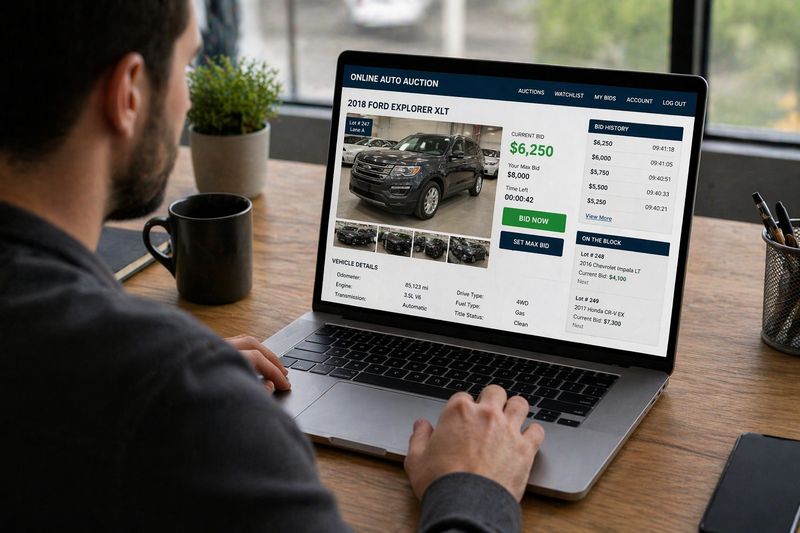
Simple Definition of a Proxy Bid
A proxy bid is your maximum price for a vehicle, set in advance. The auction system then automatically places bids for you, increasing step by step until your limit is reached.
You don’t need to click every time someone outbids you. The system does it for you.
For example:
You decide your max budget for a car is $5,000. You enter that amount as your proxy bid. The auction platform will keep increasing your bid automatically — $3,000 → $3,500 → $4,000 — only as needed to stay in the lead, but never above $5,000.
This helps you stay disciplined and avoid overpaying.
How Proxy Bidding Works in Auctions
Proxy bidding follows a simple logic, but it’s very powerful when used correctly.
Here’s how it works step by step:
- You set your maximum bid before or during the auction
- The system places the next minimum bid on your behalf
- If another buyer bids, the system automatically increases your bid
- This continues until:
- You win the auction, or
- Your maximum bid is reached
For example:
- You set a max bid of $5,000
- Another buyer bids $3,200
- The system automatically raises your bid to $3,300 (or the next increment)
This process happens instantly, without you being online.
That’s why proxy bidding is especially useful if:
- You’re in a different time zone
- You’re busy during the auction
- You don’t want to react emotionally under pressure
Proxy Bidding vs Live Bidding
Both proxy bidding and live bidding are used in auctions, but they work very differently.
Proxy bidding:
- Automatic
- Based on your preset maximum
- No need to stay online
- Helps control emotions and stick to budget
Live bidding:
- Manual (you click each bid)
- Requires real-time participation
- Can be stressful and fast-paced
- Higher risk of overbidding
For example, many beginners start with live bidding and get caught in the moment. They keep clicking “bid” just to win — and end up paying more than planned.
Where Proxy Bidding Came From
Proxy bidding didn’t appear by accident. It was created to solve real problems in auctions — limited access, time constraints, and the risk of emotional overbidding. To understand why it’s so useful today, it helps to see how it evolved.
History of Proxy Bidding Systems
Before online auctions existed, bidding was done in person. If you wanted to buy a car, you had to physically attend the auction and raise your hand to place each bid.
This created several problems:
- You had to be there at a specific time
- You could miss deals if you were busy
- Auctions were limited to local buyers
To solve this, auctions introduced absentee bidding — an early version of proxy bidding. Buyers could leave their maximum price with an agent or auction staff, and someone would bid on their behalf.
As auctions moved online, this idea became automated. Instead of a person placing bids for you, the system started doing it instantly and more accurately.
Today, proxy bidding is a standard feature on most online auto auction platforms.
Why Auctions Introduced Proxy Bidding
Auction platforms introduced proxy bidding to make the process more efficient and accessible.
Here are the main reasons:
1. More participation
Not every buyer can join a live auction. Proxy bidding allows people to participate from anywhere, at any time.
For example, you might be working, sleeping, or in a different time zone when the auction happens. Proxy bidding lets you still compete without being online.
2. Faster auctions
Automated bids speed up the process. Instead of waiting for each manual click, the system instantly increases bids based on set limits.
3. Higher competition
When more people can participate easily, more bids are placed. This benefits the auction platform and sellers.
4. More controlled bidding for buyers
Proxy bidding also protects buyers from impulsive decisions. Instead of reacting emotionally in real time, you set your limit in advance.
For example, a budget buyer can decide: “I will not pay more than $4,500 for this car.” Once that limit is set, the system enforces it — no matter how intense the auction becomes.
Why Proxy Bidding Matters for Car Buyers
Proxy bidding is not just a convenient feature — it can directly affect how much you pay for a car. Whether you’re buying your first vehicle or purchasing multiple cars from auctions, using this tool the right way can help you stay within budget and avoid costly mistakes.
Benefits for Budget Buyers
For buyers with limited budgets, proxy bidding is one of the safest ways to participate in auctions.
It helps you:
- Set a strict price limit before the auction starts
- Avoid emotional decisions during fast bidding
- Compete without being online all the time
For example, imagine you found a car you like and your total budget is $4,000. Without proxy bidding, you might get caught in the moment and keep increasing your bid just to win.
With proxy bidding, you set your maximum once — and the system never goes above it. This protects you from overpaying.
It’s especially useful if:
- You are new to auctions
- You want to control every dollar
- You don’t have time to monitor live bidding
Benefits for Professional and High-Volume Buyers
For experienced buyers or dealers, proxy bidding is about efficiency.
They often:
- Bid on multiple vehicles at the same time
- Cannot attend every live auction
- Need to move fast across different platforms
Proxy bidding allows them to:
- Place bids on several cars in advance
- Let the system manage bidding automatically
- Focus on strategy instead of manual actions
For example, a buyer may set proxy bids on 5–10 vehicles at once. Instead of watching each auction, they review results later and see which cars they won.
This saves time and increases the chances of securing deals.
How Proxy Bidding Helps Control Spending
One of the biggest risks in auctions is overpaying. Prices can rise quickly, and it’s easy to lose track of your budget.
Proxy bidding solves this problem by forcing you to decide your limit before the auction begins.
This creates discipline:
- You think about the car’s real value in advance
- You include fees, repairs, and transport in your calculation
- You avoid last-second emotional decisions
For example, a car may look cheap at $3,000, but after fees and shipping, the total cost could reach $5,000+. If you don’t plan ahead, you might bid too high and lose your savings advantage.
With proxy bidding, you calculate your full cost first, then set a maximum bid that makes sense.
How Proxy Bidding Works Step by Step
Proxy bidding may sound complex at first, but the process is actually very simple. Once you understand how each step works, you can use it confidently to stay within your budget and avoid mistakes.
Setting Your Maximum Bid
Everything starts with your maximum bid — the highest price you are willing to pay for the car.
This is the most important decision.
Before setting it, you should consider:
- The market value of the vehicle
- Auction fees
- Transport and delivery costs
- Possible repair expenses
For example, if your total budget is $6,000 and you expect $1,000 in extra costs, your maximum bid should be around $5,000 — not more.
Once you enter this number, the system will never go above it.
How the System Automatically Increases Your Bid
After you place your proxy bid, the auction platform starts working for you.
Instead of placing your full amount immediately, the system:
- Starts with the next minimum bid
- Increases your bid step by step
- Only raises it when necessary to stay in the lead
For example:
- Current price is $3,000
- You set a max bid of $5,000
- The system may place $3,100 or $3,200 (depending on increment rules)
It will continue increasing your bid automatically as competition appears.

This helps you stay competitive without overpaying too early.
What Happens When Another Buyer Bids
When another buyer places a bid, the system reacts instantly.
Here’s what happens:
- If their bid is below your maximum, your proxy automatically increases to stay ahead
- If their bid is higher than your current bid but still below your max, you remain the highest bidder
For example:
- Your max bid: $5,000
- Current price: $3,200
- Another buyer bids $3,500
The system immediately raises your bid to around $3,600 (or the next increment), keeping you in the lead.
This happens in seconds, without any action from you.
What Happens When Your Maximum Is Reached
Once the auction price reaches your maximum, the system stops bidding.
At this point:
- You will either win the auction (if no one bids higher), or
- You will be outbid if another buyer exceeds your limit
For example:
- Your max bid: $5,000
- Another buyer bids $5,100
The system will not go higher than your limit, and you lose the auction.
This is actually a good thing — it protects you from paying more than you planned.
Use Proxy Bidding to Stay Within Budget
Winning an auction is easy — staying profitable is not. Auto4Export helps you use proxy bidding the right way by calculating your real maximum bid based on total cost, so you don’t overpay or make emotional decisions.
- ✅ Smart max bid calculation based on real market data
- ✅ Support for Copart, IAAI, and dealer-only auctions
- ✅ Guidance for budget buyers and first-time bidders
- ✅ Access to 200,000+ vehicles across U.S. auctions
Proxy Bidding vs Manual Bidding
Both proxy bidding and manual (live) bidding can help you win cars at auction — but the experience and results can be very different. Choosing the right approach often comes down to your time, discipline, and how strictly you want to control your budget.
Speed and Convenience
Proxy bidding is built for convenience. You set your maximum price once, and the system handles the rest.
With proxy bidding:
- No need to stay online during the auction
- No need to react to every new bid
- You can participate in multiple auctions at the same time
Manual bidding is more hands-on:
- You must watch the auction live
- You click each bid yourself
- You need fast reactions, especially in competitive auctions
For example, if you’re working or in a different time zone, manual bidding becomes difficult. Proxy bidding allows you to stay in the game without being present.
Emotional vs Automated Bidding
This is where the biggest difference shows.
Manual bidding is emotional:
- You see other bidders pushing the price up
- You feel pressure to “win”
- You may ignore your original budget
Proxy bidding is controlled:
- You decide your limit in advance
- The system follows your rules
- No emotional decisions during the auction
For example, many beginners say, “I’ll stop at $4,000,” but during live bidding, they keep clicking until $4,500 or $5,000 — just to win.
With proxy bidding, that cannot happen. The system stops exactly at your limit.
Risk of Overpaying
Manual bidding has a higher risk of overpaying.
Why?
- Fast-paced environment
- Pressure from other bidders
- Fear of missing out on a deal
Proxy bidding reduces this risk:
- Your maximum bid is fixed
- The system never exceeds it
- You stay within your planned budget
For example, if a car’s real value (including fees and repairs) is $5,000, but you get carried away and bid $5,800 manually, you lose your savings advantage.
With proxy bidding, you would set your limit at $5,000 — and either win at a fair price or walk away.
Where Proxy Bidding Is Used in Car Auctions
Proxy bidding is now a standard feature across most car auction formats. Whether you’re buying a clean-title vehicle or a salvage car, chances are the platform supports automated bidding. Knowing where it’s used helps you take full advantage of it — especially if you’re trying to save money and avoid overpaying.
Online Auto Auction Platforms
Most modern car auctions operate online, and proxy bidding is built into their systems.
These platforms allow you to:
- Set your maximum bid in advance
- Let the system compete for you automatically
- Participate from anywhere, without attending live
For example, if you find a car late at night but the auction is scheduled for the next morning, you can place a proxy bid and go about your day. The system will handle the bidding while you’re offline.
This is especially useful for international buyers or anyone with a busy schedule.
Dealer-Only Auctions
Some auctions are restricted to licensed dealers, but proxy bidding is still widely used there.
In these environments:
- Buyers often bid on multiple vehicles at once
- Speed and efficiency are critical
- Proxy bidding helps manage high volume
For example, a dealer may set proxy bids on several cars before the auction starts. Instead of watching each lot, they review results later and focus only on the vehicles they won.
If you’re working with a broker or service like Auto4Export, they can place proxy bids on your behalf in these dealer-only auctions — giving you access without needing a license.
Salvage and Insurance Auctions
Proxy bidding is heavily used in salvage and insurance auctions, where many budget buyers shop for deals.
These auctions include:
- Damaged or repairable vehicles
- Insurance write-offs
- Repossessed or impounded cars
For example, if you’re looking for a lower-cost vehicle to repair or resell, you may be bidding against many other buyers. Proxy bidding helps you stay competitive without constantly monitoring the auction.
It’s also useful when:
- Auctions run quickly
- Multiple buyers are bidding at the same time
- Prices change in seconds
In these cases, manual bidding can be stressful and risky. Proxy bidding gives you a structured approach.
Platforms That Support Proxy Bidding
Most major car auction platforms today include proxy bidding as a standard feature. However, each platform has its own rules, interface, and bidding behavior. Understanding these differences helps you avoid confusion and use the tool more effectively.
Copart Proxy Bidding
Copart is one of the most popular salvage auction platforms, and proxy bidding is a core part of how it works.
On Copart:
- You can place a pre-bid before the live auction starts
- Your proxy bid becomes active during the live sale
- The system automatically increases your bid to stay competitive
For example, you might place a proxy bid of $4,000 the day before the auction. When the live auction begins, Copart will bid for you in real time.
One important detail:
Even with a proxy bid, you can still join the live auction and adjust your strategy if needed.
IAAI Proxy Bidding
IAAI (Insurance Auto Auctions) also offers a similar proxy bidding system, but with its own structure.
On IAAI:
- You can place bids before the auction
- The system uses automatic increments during bidding
- Proxy bids compete directly with live bidders
For example, if you set a maximum bid and another buyer places a lower bid, the system instantly raises your bid to keep you in the lead.
IAAI auctions can move quickly, so proxy bidding is especially useful if you don’t want to miss opportunities.
Manheim and Dealer Auction Proxy Tools
Manheim is a dealer-only auction platform, and its proxy tools are designed for high-volume buyers.
In these systems:
- Dealers can set maximum bids across multiple vehicles
- Advanced tools help track and manage bids
- Proxy bidding is often integrated with inventory and pricing data
For example, a dealer may set proxy bids on 10 vehicles at once and let the system handle everything during the auction.
If you’re working through a broker like Auto4Export, they can use these tools on your behalf — giving you access without needing a dealer license.
Other Online Auction Platforms
Beyond the major names, many smaller or niche platforms also support proxy bidding.
These may include:
- Regional auction platforms
- Specialty vehicle auctions (classic cars, motorcycles, equipment)
- Online-only auction marketplaces
While the interface may differ, the core idea is the same:
- You set a maximum price
- The system bids automatically
- You stay within your limit
For example, even on smaller platforms, proxy bidding can help you avoid overpaying — especially when multiple buyers are competing for the same vehicle.
Key Proxy Bidding Features to Look For
Not all proxy bidding systems are the same. Some platforms offer better tools that give you more control and transparency. If you understand what features matter, you can avoid mistakes and make smarter bidding decisions — especially when every dollar counts.
Automatic Bid Increments
Automatic bid increments are the core of any proxy bidding system.
This feature controls how the system increases your bid:
- It raises your bid in small predefined steps
- It only increases when another bidder competes
- It never jumps directly to your maximum
For example:
- Current price: $3,000
- Your max bid: $5,000
- Another bidder places $3,200
The system may increase your bid to $3,300 — not $5,000.
This helps you:
- Stay competitive
- Avoid overpaying too early
- Win at the lowest possible price
Bid History and Transparency
A good platform should show clear bid history.
This includes:
- Previous bids
- Time of each bid
- Current highest bid
Why it matters:
Transparency helps you understand:
- How competitive the auction is
- How fast prices are increasing
- Whether it’s worth continuing
For example, if you see many rapid bids in a short time, it may indicate high demand — and a higher final price.
Without this feature, you’re bidding blindly.
Real-Time Notifications
Notifications keep you informed without needing to watch the auction constantly.
Important alerts include:
- When you are outbid
- When your proxy bid is active
- When the auction is about to end
- When you win or lose
For example, if someone outbids you close to your limit, you get notified and can decide whether to increase your max bid or walk away.
This is especially useful if:
- You are bidding on multiple cars
- You are not watching the auction live
- You want to react quickly when needed
Maximum Bid Controls
This is one of the most important features for budget buyers.
A good system should allow you to:
- Set a clear maximum bid
- Adjust or cancel it before the auction ends
- Stay fully in control of your limit
For example, after researching a car, you may decide your safe max bid is $4,500. The system ensures you never exceed that — no matter how intense the auction becomes.
This feature protects you from:
- Emotional decisions
- Last-second overbidding
- Paying more than the car is worth
Common Concerns About Proxy Bidding
Many buyers, especially beginners, feel unsure about using proxy bidding. It can seem like the system is “bidding against you” or pushing prices higher. In reality, most concerns come from misunderstanding how it works. Let’s break down the most common ones.
Can Proxy Bidding Drive Prices Up
This is one of the most common questions.
Proxy bidding itself does not increase prices. It simply follows the bids already placed by real buyers.
What actually happens:
- Multiple buyers set their maximum bids
- The system compares those limits
- The price rises only as needed to determine the highest bidder
For example:
- Buyer A sets $5,000
- Buyer B sets $4,800
The system will raise the price close to $4,800 — not because it wants to increase the price, but because two buyers are competing.
So the real reason prices go up is competition, not proxy bidding.
Is Proxy Bidding Fair
Yes, proxy bidding is fair because it follows the same rules for all participants.
Every buyer:
- Sets a maximum bid
- Competes based on that limit
- Uses the same automatic system
There is no advantage given to one bidder over another.
In fact, proxy bidding can make auctions more fair because:
- It removes reaction speed as a factor
- It reduces emotional bidding
- It gives everyone equal opportunity, even if they are not online
For example, a buyer in a different time zone has the same chance to win as someone watching the auction live.
Can Other Bidders See My Max Bid
No — your maximum bid is not visible to other buyers.
Other bidders can only see:
- The current highest bid
- The bid history (depending on the platform)
They cannot see your limit.
However, they may guess that a proxy bid exists if:
- The system immediately outbids them
- The price keeps increasing automatically
For example, if someone places a bid and is instantly outbid multiple times, they may realize another buyer has set a higher maximum.
But your exact number remains private.
Technical Issues and Delays
Like any online system, proxy bidding depends on technology — and sometimes issues can happen.
Possible problems include:
- Internet connection delays
- Platform lag during high traffic
- Late updates in bid status
For example, during a very active auction, you may see a delay in updates or notifications. This can create confusion if you are also trying to bid manually.
That’s why it’s important to:
- Set your proxy bid early
- Avoid relying on last-second manual changes
- Use reliable platforms or trusted intermediaries
Know the True Price Before You Place a Bid
Auction price is only part of the deal. Auto4Export helps you estimate full vehicle cost — including fees, transport, and export — so your proxy bid is based on real numbers, not guesswork.
- ✅ Full cost breakdown before bidding
- ✅ Accurate shipping and export estimates
- ✅ Help avoiding hidden fees and risks
- ✅ Better control over your total budget
Best Practices for Using Proxy Bidding
Proxy bidding is powerful, but only if you use it correctly. Many beginners lose money not because the system is bad, but because they set the wrong strategy. These simple practices help you stay in control and get better deals.
Setting a Realistic Maximum Bid
Your maximum bid is the most important number in the entire process.
Set it based on logic, not эмоции:
- Decide your total budget first
- Subtract fees, transport, and repairs
- Use the remaining amount as your max bid
For example, if your total budget is $7,000:
- Auction fees: $800
- Shipping: $1,200
- Repairs: $1,000
Your safe max bid is around $4,000.
If you skip this step, you may “win” the auction but lose money overall.
Researching Vehicle Value Before Bidding
Never place a proxy bid without knowing the real value of the car.
Check:
- Market prices for similar vehicles
- Mileage and condition
- Title type (clean, salvage, rebuilt)
- Auction history if available
For example, a car may look like a good deal at $3,500, but if similar models sell for $3,800 in better condition, it’s not a smart buy.
Doing research helps you:
- Set a realistic max bid
- Avoid overpriced vehicles
- Identify real opportunities
Factoring in All Fees and Transport Costs
Many buyers focus only on the auction price — this is a mistake.
Your final cost includes:
- Auction fees
- Buyer premiums
- Storage fees (if delayed)
- Transportation
- Repairs
For example:
- Winning bid: $4,000
- Fees: $900
- Shipping: $1,200
Total: $6,100
If your budget was $5,500, you’ve already gone over — even though the bid looked “cheap.”
Always calculate the full cost before bidding, not after.
Knowing When to Walk Away
One of the biggest advantages of proxy bidding is that it helps you walk away automatically.
If the price goes above your limit:
- Do nothing
- Let the system stop
- Move on to the next vehicle
For example, if your max bid is $4,500 and the price reaches $4,600, you lose the auction — but you also avoid overpaying.
Many beginners try to “just add a little more” in live bidding. That’s how budgets get broken.
When Is Proxy Bidding Most Effective
Proxy bidding is useful in many situations, but there are specific cases where it becomes especially powerful. If you know when to rely on it, you can increase your chances of winning auctions while staying within your budget.
Time Zone and Live Auction Conflicts
Not all buyers can attend auctions in real time. This is one of the biggest reasons proxy bidding exists.
Common situations:
- You live in a different time zone
- The auction takes place during your work hours
- You cannot stay online for several hours
For example, many U.S. auctions happen during the day. If you are overseas or busy at work, you might miss the entire event. With proxy bidding, you simply set your maximum bid in advance, and the system participates for you.
This allows you to:
- Compete without being present
- Avoid missing good deals
- Stay active in multiple auctions at once
High-Competition Vehicles
Proxy bidding is especially effective when many buyers are competing for the same vehicle.
This includes:
- Popular models
- Low-mileage vehicles
- Cars with clean titles or minor damage
In these situations, auctions move fast, and manual bidding becomes difficult.
For example, if several buyers are bidding within seconds, reacting manually can lead to mistakes or missed opportunities. Proxy bidding ensures your bid is placed instantly every time, without delay.
It also helps you:
- Stay competitive automatically
- Avoid panic decisions
- Stick to your pre-set budget
Buyers Who Cannot Attend Live Auctions
Not everyone wants to sit and watch auctions all day — and you don’t have to.
Proxy bidding is ideal for:
- Busy buyers
- People bidding on multiple vehicles
- Beginners who want a simpler process
For example, if you are reviewing several cars at once, you can set proxy bids on each of them. Instead of monitoring every auction, you check the results later and see which vehicles you won.
This approach saves time and reduces stress.
It also makes the process more structured:
- You plan your bids in advance
- You avoid emotional reactions
- You stay focused on your budget
Common Mistakes with Proxy Bidding
Proxy bidding is designed to protect your budget — but only if you use it правильно. Many buyers make simple mistakes that cancel out its benefits. Knowing these mistakes in advance can save you hundreds or even thousands of dollars.
Setting Max Bid Too High
This is the most common mistake.
Many buyers set a maximum bid based on what they want to pay — not what they should pay.
For example:
- You really like a car
- You stretch your budget “just a little”
- You set a max bid higher than planned
The problem:
The system will follow your number exactly. If your max bid is too high, you may win — but at a bad price.
A better approach:
- Decide your total budget first
- Subtract all extra costs
- Set a strict, realistic max bid
Remember: proxy bidding doesn’t fix a bad strategy — it only executes it.
Forgetting Buyer Fees
Many beginners focus only on the auction price and forget about additional costs.
Common fees include:
- Auction buyer fees
- Documentation fees
- Storage fees (if delayed)
- Broker or service fees
For example:
- Winning bid: $4,000
- Fees: $800–$1,000
Your real cost is already $4,800–$5,000 — before transport or repairs.
If you ignore fees when setting your proxy bid, you will go over budget even if the auction price looks low.
Chasing Bids Emotionally
Even with proxy bidding, some buyers still get emotional — especially during live auctions.
Typical behavior:
- You set a proxy bid
- Someone outbids you
- You increase your max bid just to “win”
This defeats the purpose of proxy bidding.
For example, you planned to stop at $4,500. But when you get outbid, you raise your max to $5,000… then $5,500. At that point, you are no longer following a strategy — you are reacting emotionally.
Smart buyers:
- Set their max once
- Trust their calculation
- Walk away if needed
Not Reviewing Vehicle Condition
Proxy bidding is automatic — but your decision to bid should not be.
A common mistake is placing bids without fully checking the vehicle:
- Damage details
- Title status
- Missing parts
- Repair costs
For example, a car may look cheap at $3,000, but hidden damage could require $2,500 in repairs. Your “good deal” quickly becomes expensive.
Before placing any proxy bid:
- Review photos carefully
- Check reports and history
- Estimate repair costs
Proxy Bidding for Budget Buyers
If your goal is to save money, proxy bidding can become your best tool. It helps you stay disciplined, avoid emotional decisions, and compete effectively — even with a limited budget. The key is using it strategically, not randomly.
How to Use Proxy Bids to Avoid Overpaying
The main advantage of proxy bidding is control. You decide your limit once, and the system follows it.
To avoid overpaying:
- Set your true maximum based on total cost, not just auction price
- Include fees, transport, and repairs in your calculation
- Do not change your max bid during the auction
For example:
You have a total budget of $6,000. After calculating all extra costs, you set a max bid of $4,200. Even if the bidding gets intense, the system will stop at your limit.
This protects you from:
- Last-second decisions
- Pressure from other bidders
- Paying more than the car is worth
How to Win More Auctions with a Fixed Budget
Many buyers think they need a bigger budget to win more auctions. In reality, strategy matters more.
With proxy bidding, you can:
- Place bids on multiple vehicles, not just one
- Target cars with less competition
- Stick to your price range consistently
For example, instead of putting your entire budget into one car, you can:
- Set proxy bids on 3–5 vehicles
- Let the system compete for each one
- Win whichever stays within your limit
This increases your chances of success without increasing your spending.
Smart buyers don’t chase one car — they create multiple opportunities.
Managing Multiple Proxy Bids at Once
One of the biggest advantages of proxy bidding is the ability to manage several auctions at the same time.
To do this effectively:
- Track your bids in a simple list (car, max bid, expected total cost)
- Avoid setting max bids that would exceed your total budget if you win multiple cars
- Prioritize which vehicles you actually want
For example:
If your total budget is $6,000, don’t set three proxy bids of $5,000 each. If you win all three, you won’t be able to pay.
A better approach:
- Set lower, controlled bids across several vehicles
- Expect to win only one or two
- Be ready to cancel or adjust if needed
This method helps you:
- Stay within budget
- Increase your chances of winning
- Avoid financial mistakes
How Auto4Export Helps Clients Use Proxy Bidding
Proxy bidding is powerful, but most beginners use it incorrectly. That’s where Auto4Export helps. Instead of guessing your maximum bid or reacting during the auction, you get a clear strategy based on real numbers and experience. This reduces risk and helps you stay within budget.
Setting Smart Maximum Bids
Many buyers lose money because they set the wrong maximum bid. They either go too high and overpay, or too low and miss good deals.
Auto4Export helps you:
- Analyze the vehicle’s real market value
- Estimate repair costs based on condition
- Adjust your max bid to match your total budget
For example, instead of guessing “maybe $5,000 is okay,” you get a calculated number like:
- Safe max bid: $4,200
- Expected total cost: $6,000
This makes your proxy bid a planned decision, not a guess.
Auction Strategy Support
Winning auctions is not just about placing a bid — it’s about choosing the right cars and timing.
Auto4Export helps you:
- Select vehicles with better price potential
- Avoid high-competition lots where prices spike
- Decide when to use proxy bidding vs live bidding
For example, if a vehicle is likely to attract many buyers, you may need a different strategy than for a less popular listing.
This kind of guidance helps you:
- Avoid common beginner mistakes
- Focus on real deals
- Increase your chances of winning at the right price
Full Cost Calculation Before You Bid
One of the biggest mistakes buyers make is ignoring the full cost.
Auto4Export calculates everything before you place a bid:
- Auction fees
- Delivery and shipping costs
- Export documentation (if needed)
- Estimated repairs
For example:
- Auction price: $4,000
- Fees: $900
- Shipping: $1,200
Total: $6,100
Knowing this in advance helps you set the correct proxy bid and avoid going over budget.
Monitoring Live Auctions for You
Even with proxy bidding, some situations require attention during the live auction.
Auto4Export can:
- Monitor the auction in real time
- Adjust strategy if needed
- Step in when competition changes
For example, if bidding behavior looks unusual or prices rise too fast, adjustments can be made before it’s too late.
This is especially useful if:
- You are in a different time zone
- You are bidding on multiple cars
- You don’t have time to watch auctions live
The key idea is simple:
Auto4Export turns proxy bidding into a controlled, data-driven process — helping you buy cars smarter, not just cheaper.
From Auction Bid to Delivery — We Handle Everything
Auto4Export makes buying from U.S. auctions simple. From proxy bidding strategy to international shipping, you get full support at every step — so you can focus on finding the right car, not dealing with logistics.
- ✅ Bidding support and auction strategy guidance
- ✅ Pickup from any auction in the USA
- ✅ Container and RoRo shipping worldwide
- ✅ Export documents and customs handled for you
Further Reading
Ultimate Guide to Buying Cars at US Auto Auctions
Understanding Auction Sale Terms: What is Pre-bid, Auction, and Buy Now Price?
Top 10 Ways to Save Money At Car Auctions
Ultimate Guide to Adesa Automotive Auctions: Tips for Bidders & Buyers

Do You Have Any Questions?
 Ask Question