


 Log in
 Sign Up




Car repair insurance can seem like a safety net, but scammers often target budget-conscious drivers with fake policies and hidden fees. This guide helps you spot common repair and insurance scams, avoid costly mistakes, and make smarter choices when buying coverage or repairs for your vehicle. Stay informed, protect your money, and get the repairs or insurance you actually need.
Why Car Repair and Insurance Scams Target Budget Buyers
Buying used or salvage cars from auctions (higher risk of scammers)
Budget-conscious buyers often turn to online auto auctions like Auto4Export to get a good deal on used or salvage cars. While these vehicles can be affordable, they also come with higher risks of hidden damage or prior poor repairs. Scammers know this and may target auction buyers by offering quick fixes, inflated estimates, or unnecessary repair services to cash in on cars that already need work. For example, a minor fender dent might be labeled as frame damage to justify a costly repair.
Desperation tactics: “You need this repair right now”
Scammers often create a sense of urgency. A repair shop or insurance adjuster might say: “If you don’t fix this immediately, your car could fail completely.” Budget buyers, especially those relying on a single car, may feel pressured to approve expensive repairs without getting a second opinion. This tactic takes advantage of the fact that delaying repairs could be inconvenient, making people more likely to overspend.
How scammers exploit lack of technical knowledge
Many budget buyers don’t have the technical expertise to evaluate car repairs or insurance claims. Scammers exploit this by using jargon, showing unnecessary parts, or presenting confusing estimates. For instance, a shop might claim the entire braking system needs replacement when only a worn pad or rotor is the real issue. Understanding basic car mechanics, comparing multiple repair quotes, and asking for detailed explanations can help buyers avoid falling for these tricks.
Common Car Repair Scams
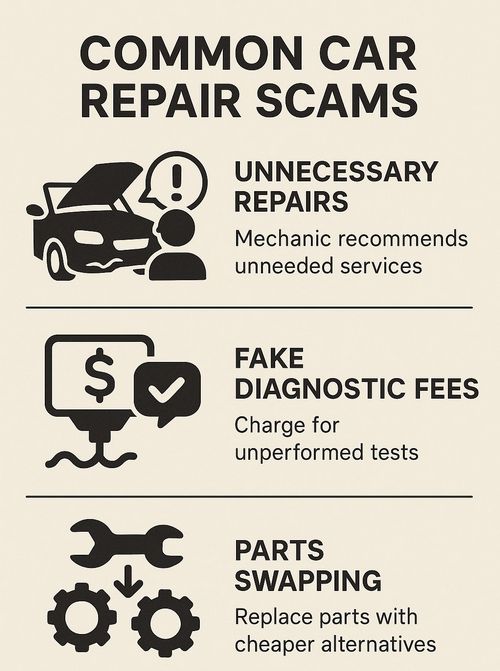
Unnecessary Repairs (“Your engine could blow any moment”)
Some repair shops pressure buyers into paying for repairs they don’t need. A classic tactic is alarming statements like: “Your engine could fail any moment if we don’t replace this part.” Budget-conscious buyers may panic and approve expensive work, even though a simple inspection or minor maintenance could suffice. Always ask for a second opinion before authorizing costly repairs.
Fake Diagnostic Fees (charging for issues that don’t exist)
Shops sometimes charge for diagnosing problems that aren’t real. You may be billed for a “computer check” or “engine scan” that flags imaginary issues. This scam inflates your bill while giving you nothing in return. Always request a detailed report showing what was actually found and cross-check with another trusted mechanic if possible.
Parts Swapping (removing working parts and replacing with broken ones)
A more serious scam is parts swapping, where a working component is replaced with a cheaper or broken one, then billed as a needed replacement. For example, a functioning alternator or battery could be swapped, forcing a future repair that benefits the shop financially. Always inspect old parts when they are returned to you and document them before leaving the shop.
Inflated Labor Hours and Hidden Fees
Some mechanics exaggerate labor time or add hidden fees to increase the bill. A job that takes one hour may be billed as three, or extra charges for “shop supplies” and “hazard disposal” may appear. Budget buyers should request a clear labor breakdown and question unusually high hourly rates or unexplained line items.
Used parts billed as new parts
A common scam is installing used or refurbished parts but charging for brand-new components. For instance, a shop might replace a brake rotor with a used one but bill it as new, or claim a remanufactured alternator is brand-new. Always request part invoices and inspect packaging when possible.
Mystery noises scam (“we hear something strange, leave it here”)
Shops may claim they hear unexplained noises and insist the car be left overnight for a “full diagnostic.” Once left, extra repairs or unnecessary replacements can be added. Budget-conscious buyers should avoid leaving vehicles without a clear estimate and should ask for proof of the issue before approving any additional work.
Common Car Insurance Scams
Fake extended warranty / mechanical breakdown insurance
Some companies or agents sell fake extended warranties or mechanical breakdown coverage that doesn’t actually exist. Buyers may pay hundreds or thousands for protection that will never pay out. Budget-conscious car owners should verify the insurer’s credentials and read the policy carefully to ensure coverage is legitimate and not just a high-priced scam.
Claim denial loopholes (“pre-existing damage” excuses)
Insurance companies sometimes deny claims using vague pre-existing damage or wear-and-tear excuses. For example, a minor scratch or rust spot may be labeled as a reason to reject a claim for a legitimate accident. Always document your vehicle’s condition with photos and reports before filing a claim, and know your policy’s terms to challenge unfair denials.
Premium inflation after minor claims
After filing a small or legitimate claim, some insurers inflate premiums disproportionately or pressure you into dropping coverage. Budget buyers may unknowingly overpay for minor claims, effectively turning a small payout into a long-term financial loss. Comparing policies and insurers can help avoid getting trapped in this cycle.
Ghost brokers selling fake insurance
Ghost brokers are fraudsters who sell fake insurance policies, leaving drivers uninsured. These scams often target buyers seeking cheaper coverage online. If the policy is not recognized by the state or the insurer, you risk fines, penalties, or uncovered damages. Always confirm your policy with the official insurer before paying.
Car crash insurance scams (staged accidents)
Some individuals or groups stage accidents to collect insurance payouts, sometimes involving your car without your knowledge. These scams can lead to unexpected claims, legal headaches, and higher premiums. Stay vigilant, park in secure areas, and avoid unknown repair shops or towing companies that may be linked to staged crash networks.
Junkyard / Scrap Car Scams (If you decide to scrap instead of repair)
Too-low offer + hidden towing fees
Some junkyards or scrap dealers offer a very low price for your car but then tack on extra fees for towing or “processing”. For budget-conscious sellers, this can turn what seems like a decent sale into a poor deal. Always get a clear, written quote including all fees before agreeing to scrap your vehicle.
Unlicensed scrapyards
Selling to an unlicensed or unregulated scrapyard is risky. These yards may disappear without paying you, fail to provide proper disposal paperwork, or improperly handle hazardous materials. Check for licenses, reviews, and local compliance before handing over your car to avoid fraud or legal trouble.
Payment scams (bait-and-switch pricing)
Some buyers use bait-and-switch tactics, quoting a high price initially but reducing it when you arrive, claiming additional “costs” or “damaged parts” justify the lower payment. Budget-conscious sellers should confirm payment terms in writing and avoid accepting verbal agreements to protect themselves.
“Doing you a favor” pressure tactics
Scammers often present themselves as doing you a favor: “We’ll take your car off your hands quickly, no hassle.” This pressure tactic can push sellers into accepting low offers or hidden fees without comparison. Always take time to shop around and evaluate multiple scrapyards to ensure a fair price and safe transaction.
Salvage Auction–Related Scams to Watch Out For
VIN tampering or cloning
Some dishonest sellers alter or clone a vehicle’s VIN (Vehicle Identification Number) to hide its true history. This can make a stolen or severely damaged car appear legitimate. Budget-conscious buyers need to verify the VIN through official databases, like the National Motor Vehicle Title Information System (NMVTIS), to avoid buying a car with a hidden past.

Fake titles or title washing
Title washing occurs when a car’s salvage or junk title is altered to appear clean. This scam hides prior damage or total-loss history, making the vehicle seem more valuable than it is. Always check the title history through trusted sources and be cautious of listings that lack complete documentation.
Vehicles advertised as “minor damage” when structural damage exists
Some auctions or sellers misrepresent cars as having minor cosmetic damage when, in fact, the vehicle has major structural issues. For budget buyers, this can result in unexpectedly high repair costs. Carefully review all photos, damage reports, and, if possible, order a pre-bid inspection to spot hidden problems.
Odometer rollback
Odometer rollback is when the mileage on a car is illegally reduced to make it appear less used. Cars with artificially low mileage can command higher prices, but may have serious wear and tear that isn’t obvious. Always cross-check mileage records from previous owners, service records, or auction history to avoid overpaying for a vehicle.
How to Avoid Car Repair Scams
Ask for a written estimate before approving any work
Always request a detailed written estimate that breaks down parts, labor, and fees before authorizing any repairs. This ensures there are no surprises and gives you a reference to compare with other shops. Budget-conscious buyers should avoid verbal agreements, as they can be exploited by unscrupulous mechanics.
Request old parts back as proof of replacement
When a repair is completed, ask the shop to return the old parts. This confirms that replacements were actually made and prevents scams like parts swapping, where functional components are replaced with broken ones. Documenting old parts also helps if a dispute arises over the quality of work.
Get a second opinion on expensive repairs
For high-cost repairs, it’s wise to seek a second opinion from another trusted mechanic. This helps verify whether the suggested repair is truly necessary and prevents overpaying for unnecessary services. Even a small fee for a second opinion can save hundreds on a major repair.
Never approve repairs over the phone
Avoid approving repairs remotely or over the phone without seeing the car or a written estimate. Scammers may pressure you to authorize unnecessary work, taking advantage of your trust. Always review estimates and the condition of your car in person before giving the go-ahead.
Check shop’s certifications and reviews
Before choosing a repair shop, verify certifications, licenses, and customer reviews. Certified mechanics and reputable shops are less likely to engage in scams. Reading online reviews, asking for references, and confirming affiliations with professional organizations can protect you from fraud and ensure reliable service.
How to Avoid Insurance Scams
Verify that insurance providers are licensed in your state/country
Before buying any policy, confirm the insurer is officially licensed in your state or country. Ghost brokers and fraudulent companies often sell fake coverage to unsuspecting buyers. Checking with your state’s Department of Insurance or official regulator ensures the company is legitimate and authorized to provide coverage.
Read exclusions—understand what’s NOT covered
Many scams rely on hidden exclusions or fine print to deny claims. Always read the policy carefully and understand what is not covered, such as pre-existing damage, specific mechanical issues, or certain types of accidents. Knowing the exclusions helps you avoid unexpected denials and ensures the coverage meets your needs.
Never pay through untraceable methods (gift cards, cash apps)
Legitimate insurers do not request payment via gift cards, Venmo, or other untraceable methods. Scammers often ask for these forms of payment because they are hard to trace and recover. Always pay through secure, verifiable channels like credit card, bank transfer, or official online portals.
Get everything in writing
Never rely on verbal promises. Always get the policy, coverage details, and any claims correspondence in writing. Written documentation protects you in case of disputes and provides proof if the insurer tries to deny or alter coverage later. For budget-conscious buyers, this simple step can prevent costly mistakes and lost claims.
Red Flags That Signal a Scam
Pressure tactics (“sign now or price doubles”)
Scammers often use high-pressure tactics to rush buyers into decisions. Statements like “Sign now or the price doubles” or “This deal won’t last” are meant to exploit urgency and fear. Budget-conscious buyers should take their time, compare quotes, and never feel forced to approve work or insurance immediately.
No paperwork, no invoices
A clear warning sign is when a shop, insurer, or buyer refuses to provide proper paperwork, receipts, or invoices. Legitimate businesses always give documentation of services, parts, or policies. Lack of paperwork makes it difficult to verify work, track payments, or dispute fraudulent charges.
Payment requested before inspection
If a mechanic, junkyard, or insurance agent demands full payment before inspecting the car or starting work, it’s likely a scam. Genuine services require evaluation before quoting a price. Never pay upfront for repairs, scrapping, or insurance without seeing a detailed estimate or policy.
Offers that change last minute
Be cautious of prices, terms, or coverage that suddenly change at the last moment. This tactic pressures buyers into accepting less favorable deals. Always confirm offers in writing and take time to review them carefully before committing, especially when purchasing salvage or repair services on a budget.
Safe Practices for Car Buyers (Especially at Auctions)
Decode the VIN before bidding
Before placing a bid, check the car’s VIN (Vehicle Identification Number) to verify its history. This can reveal previous accidents, salvage or junk titles, odometer discrepancies, and flood damage. Budget-conscious buyers can avoid expensive surprises by using reliable VIN lookup services or official databases like NMVTIS.
Request a professional pre-purchase inspection
Whenever possible, hire a qualified mechanic to perform a pre-purchase inspection. This helps identify hidden damage, potential repair costs, and safety issues before you commit to a purchase. Even a small fee for an inspection can save hundreds or thousands by avoiding a car that’s been misrepresented.
Estimate repair costs before purchase
Always calculate potential repair costs in advance, including parts, labor, and any additional fees. Knowing the total investment helps you determine whether the auction price fits your budget. Budget buyers should add a buffer for unexpected repairs to avoid overspending after the purchase.
Don’t let sellers push emotional urgency (“this car will be gone in 1 hour!”)
Scammers often try to create false urgency to pressure buyers into hasty decisions. Phrases like “This car won’t last!” or “Bid now or miss out!” are common tactics. Stay calm, take your time, and make decisions based on research and facts, not fear. This approach helps budget-conscious buyers avoid overpaying or falling for scams.
Best Practices When Scrapping or Selling Your Car
Ask for junkyard license
Before selling or scrapping your car, verify that the junkyard or scrap dealer is properly licensed. A licensed yard is more likely to operate legally, pay you fairly, and handle your vehicle safely. This protects you from scams, legal trouble, and improper disposal of hazardous materials.
Clarify towing costs
Always confirm whether towing fees are included in the offer. Some junkyards advertise a high purchase price but deduct unexpected towing or processing fees, reducing your actual payout. Clear communication prevents unpleasant surprises and ensures you get the amount you were promised.
Confirm how and when you will be paid
Discuss payment methods and timing before handing over your vehicle. Reputable buyers provide payment via traceable methods like check, bank transfer, or verified digital payment. Avoid cash-only or untraceable methods, which are common in scams and may leave you unpaid.
Cancel registration and remove plates
Once the sale is complete, cancel your vehicle registration and remove your license plates. This ensures you are no longer legally responsible for the car, prevents fines, and protects you if the vehicle is later used illegally. Keep proof of sale for your records, especially for budget-conscious buyers looking to close the transaction safely.
Real Examples of Scams (Short Scenarios)
“We found another issue” repair shop scam
A budget buyer brought a used car to a local repair shop for a minor brake fix. The mechanic called an hour later saying, “We found another serious issue with your engine, it must be fixed immediately or it will fail.” Pressured, the buyer approved a costly repair, only to later discover that the engine was fine and the additional parts were unnecessary. This classic scam preys on urgency and lack of technical knowledge.
Fake insurance sold through social media
A driver saw an online ad on social media for cheap car insurance that promised full coverage. After paying via gift card, the “insurer” disappeared, and the driver’s policy never existed. When filing a claim, the driver realized they were completely uninsured. Scammers often target budget-conscious buyers looking for low premiums, exploiting trust and haste.
Title washed salvage car sold as clean
An auction buyer purchased a “minor damage” vehicle listed with a clean title. After repairs, a VIN check revealed the car had a previous salvage title that was illegally washed. The hidden damage increased repair costs significantly and reduced resale value. This scam demonstrates the importance of verifying titles and vehicle history before purchasing, especially at auctions.
How Auto4Export Helps Buyers Avoid Scams
Full title transparency
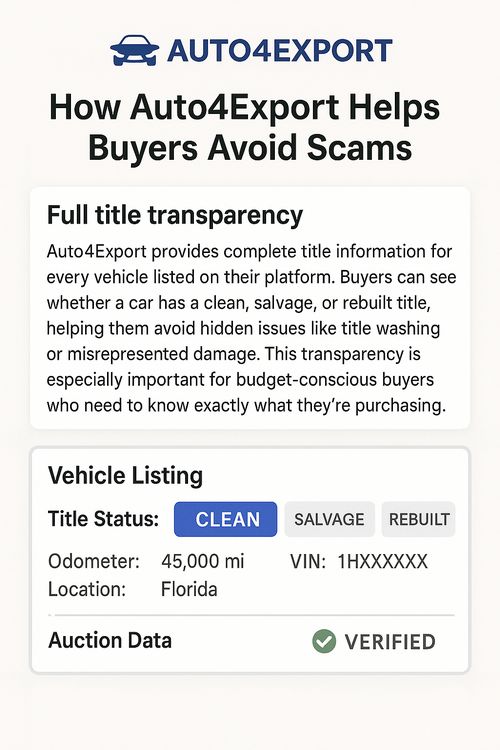
Auto4Export provides complete title information for every vehicle listed on their platform. Buyers can see whether a car has a clean, salvage, or rebuilt title, helping them avoid hidden issues like title washing or misrepresented damage. This transparency is especially important for budget-conscious buyers who need to know exactly what they’re purchasing.
Verified auction data and car history
All vehicles on Auto4Export come with verified auction data and detailed history reports, including previous accidents, damage types, and mileage records. This reduces the risk of buying cars with hidden problems or fraudulent documentation. Buyers can make informed decisions without relying solely on seller descriptions.
Assistance with paperwork and export logistics
Auto4Export supports buyers through paperwork, registration requirements, and export logistics, ensuring that all transactions are legal and properly documented. For first-time or budget buyers, this guidance prevents scams related to unlicensed sellers, incorrect titles, or improper shipping procedures, making the entire buying process safer and smoother.
Are you interested in buying a vehicle from US auctions?
With this being said – you can still export vehicles and save up a few thousand dollars with Auto4Export. We have an inventory of over 150k plus vehicles with titles you can export for you to choose from. Once you have placed your bid and won the auction a Bill of Sale document is then emailed to you as proof of purchase – after full payments have been made.
To gain access and get started on your purchase, sign up for free.
Further Reading
5 Most Important Parts to Replace After Buying a Used Vehicle
Unlocking the Secrets: Understanding Vehicle History Reports
Vehicle Frame Damage: How It Impacts Car Purchases and What You Need to Know

Do You Have Any Questions?
 Ask Question